



Sony has officially launched the new A7 V, describing it as a “dramatic evolution” of its full-frame mirrorless line. The camera combines a new sensor design, AI-driven autofocus, expanded video modes and improved ergonomics to serve hybrid stills and video workflows.
Sensor, speed and processing
The A7 V introduces a newly developed 33-megapixel RS CMOS full-frame sensor that is partially stacked for faster readout. This enables blackout-free continuous shooting at up to 30 frames per second in 14-bit RAW, with autofocus and auto-exposure tracking. The new BIONZ XR2 image processor with integrated AI processing unit is said to deliver a 30 percent improvement in subject recognition and tracking speed.
A “Pre-Capture” feature buffers up to one second of images before the shutter press, useful for sports or wildlife photography. Sony claims up to 16 stops of dynamic range for improved highlight and shadow latitude.

Autofocus and subject tracking
The autofocus system offers 759 phase-detection points across 94 percent of the frame, recalculating AF and AE up to 60 times per second. Sony’s AI-based recognition model improves subject detection for people, animals and objects, maintaining focus during movement or occlusion. The camera also introduces AI-assisted auto-white-balance, analysing the light source to maintain consistent colour tones.
Video capabilities
For video, the A7 V records oversampled 4K 60p using the full sensor width, derived from 7K capture. It also records 4K 120p in Super 35 mode for slow-motion or cropped workflows. The faster sensor readout reduces rolling-shutter artefacts, while the Dynamic Active Mode adds digital stabilisation for handheld work.
Handling, connectivity and power
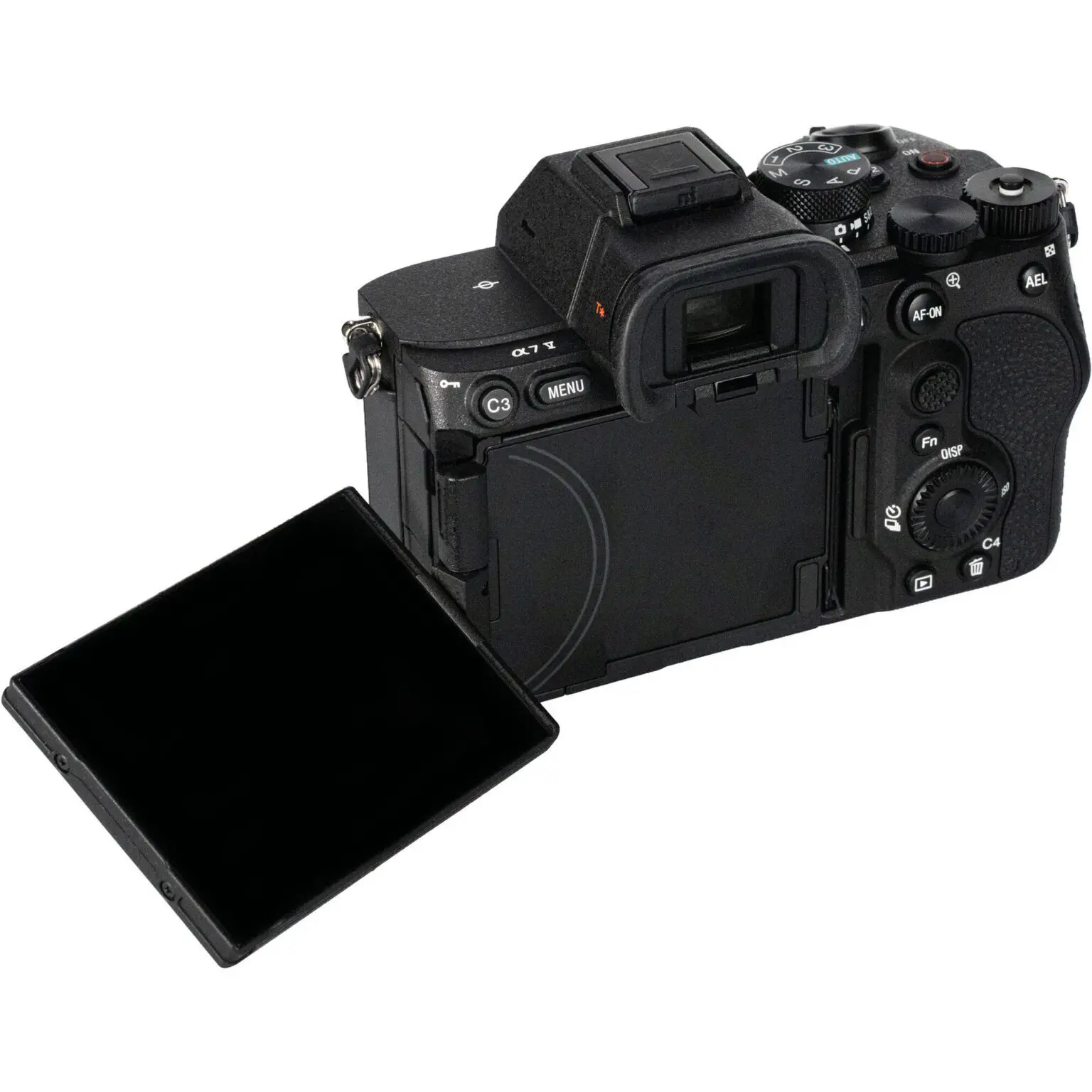
Sony reworked usability with a four-axis vari-angle monitor for flexible framing and improved menus. Connectivity includes Wi-Fi 6E and dual USB-C ports for faster data transfer. The A7 V uses the NP-FZ100 battery, rated for around 630 shots via EVF or 750 via LCD, and includes a “Low Brightness” mode to extend runtime. Thermal control has been enhanced to sustain longer 4K recording sessions. Sony also introduced a new standard zoom, the FE 28–70 mm f/3.5–5.6 OSS II, optimised for continuous shooting and the A7 V’s full-frame capabilities.
Availability and positioning
The A7 V body is expected by December 2025 at about USD 2,899, with the 28–70 mm kit lens following in February 2026. Sony positions the model as a versatile full-frame hybrid below its flagship Alpha 1 and A9 series, balancing high-speed stills and professional video features.
What remains unclear
Several aspects remain unverified, including long-take heat management, compression quality in 4K 120p, and the actual field-of-view crop in Super 35 mode. All published information stems from Sony’s official announcements. Independent testing will be required to confirm real-world thermal limits, dynamic range and rolling-shutter behaviour.
Get it here for somewhere around 2900 USD. And remeber: Professionals conduct practical tests before adopting the A7 V for production work.
