Table of Contents Show
The Hochschule für Fernsehen und Film München (HFF Munich) is one of Germany’s leading film schools, offering specialised programmes in directing, production, cinematography, screenwriting, and visual effects. Infinity Hotel is a surrealist short film produced by the school’s VFX students, Vanessa Chu, Vanessa Ramovic, Jim Obmann, Emil Pogolski, Sonja Latussek, and Elena Rid, in collaboration with the departments of Screenwriting and Production. Directed by Professor Matthias Zentner, and supported by Prof. Jürgen Schopper, Prof. Sinje Gebauer and Dr. Rodolfo Anes Silveira, the project combines live-action cinematography, 3D scanning, and digital environments.
A production report by the Students
Written by Vanessa Ramovic, Jim Obmann,
Sonja Latussek, Elena Rid, Emil Pogolski and Vanessa Chu.
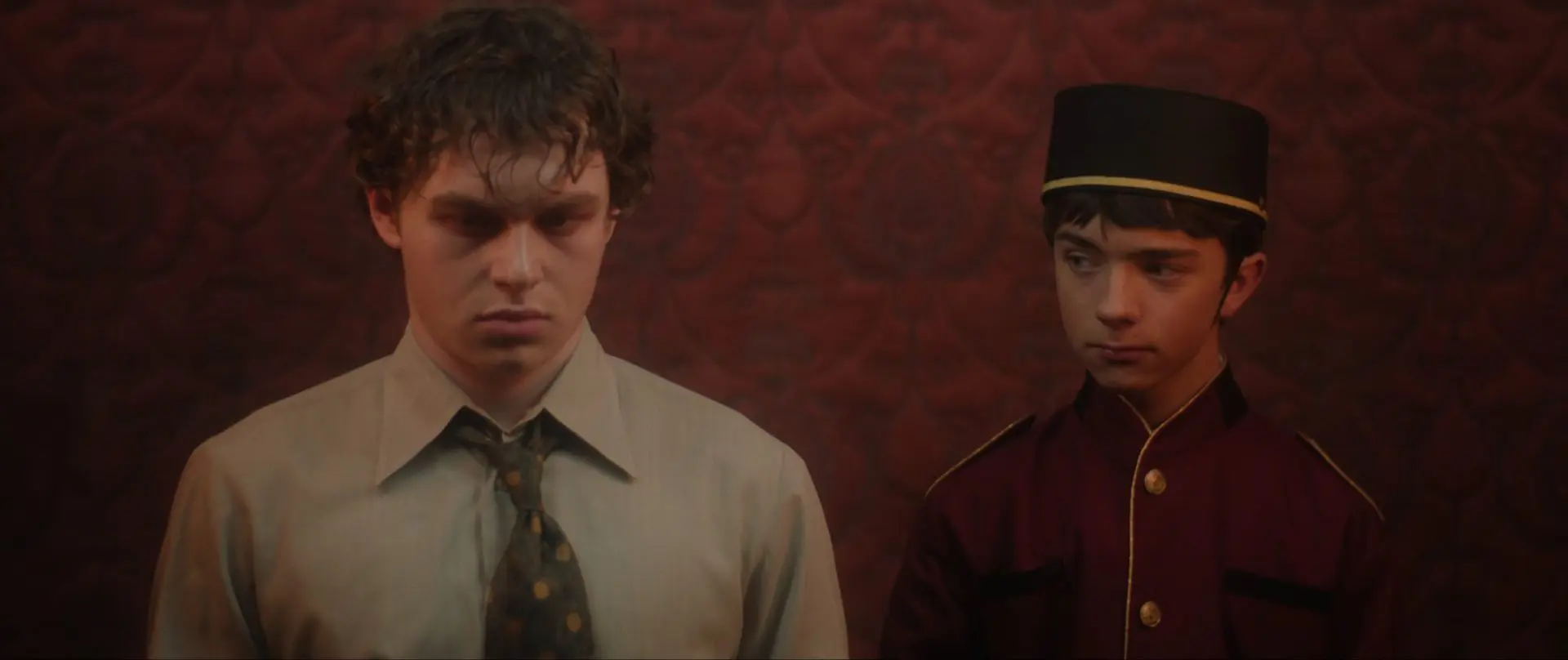
After completing our first animated short films as visual effects students at the University of Television and Film Munich, we selected our next joint film project. The basic idea of INFINITY HOTEL, written by students Michael Schwärzler and Jakob Smolinski, immediately suggested weaving reality and surrealism together. Themes such as inner fears and memories accompany our protagonist, Clarence, an insurance salesman travelling from hotel to hotel. He enters a strange hotel room and quickly realises that something about this Infinity Hotel cannot be right. He not only wanders through twisting corridors and distorted staircases, but also through fragments of his own memories, confronting them.
INFINITY HOTEL is a collaborative film project between the VFX students and the screenwriting and production departments at HFF Munich. Directed by Professor Matthias Zentner, the film gave us the opportunity to contribute to many parts of the production process and to realise a story that would hardly exist without visual effects.
Our experiences from the animated short films WOODLAND and LITTLE STAR, created in the first year of study, helped us build on existing knowledge while acquiring new expertise. Unlike full CGI animated short films, the main challenge this time was producing photorealistic assets and shots for a live-action film. The following article reflects on our experiences during production and outlines how the visual effects of INFINITY HOTEL were created.
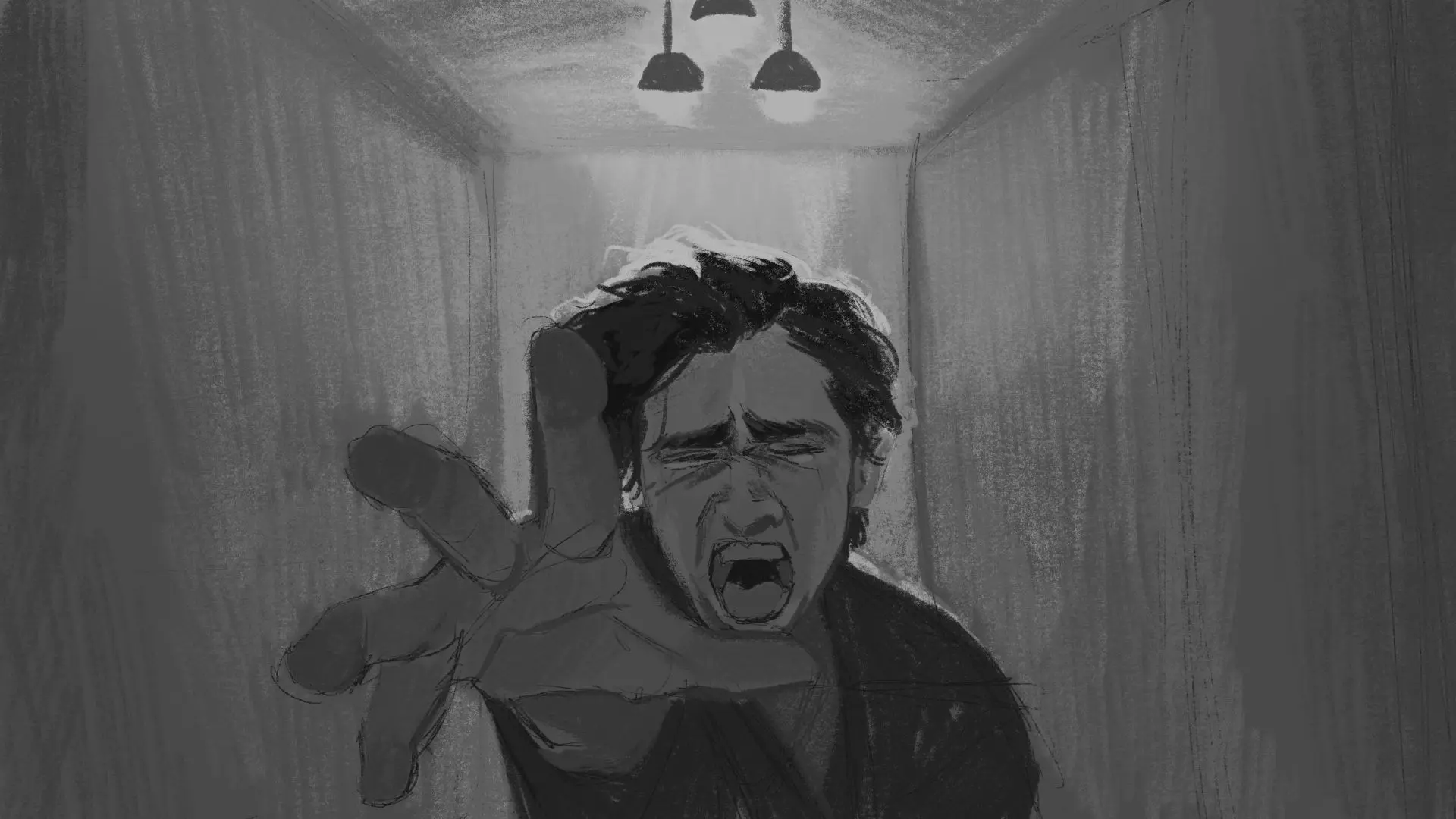
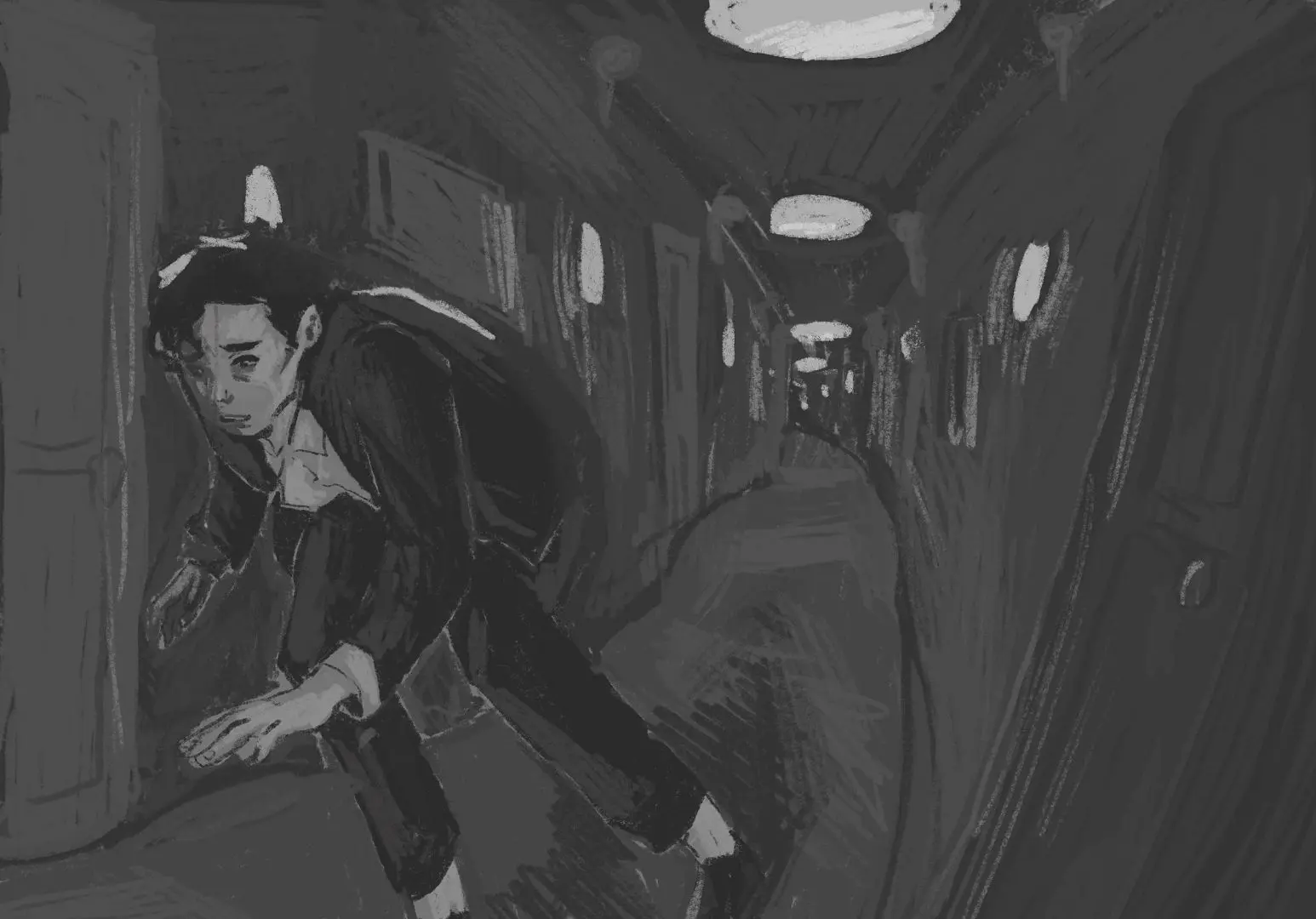
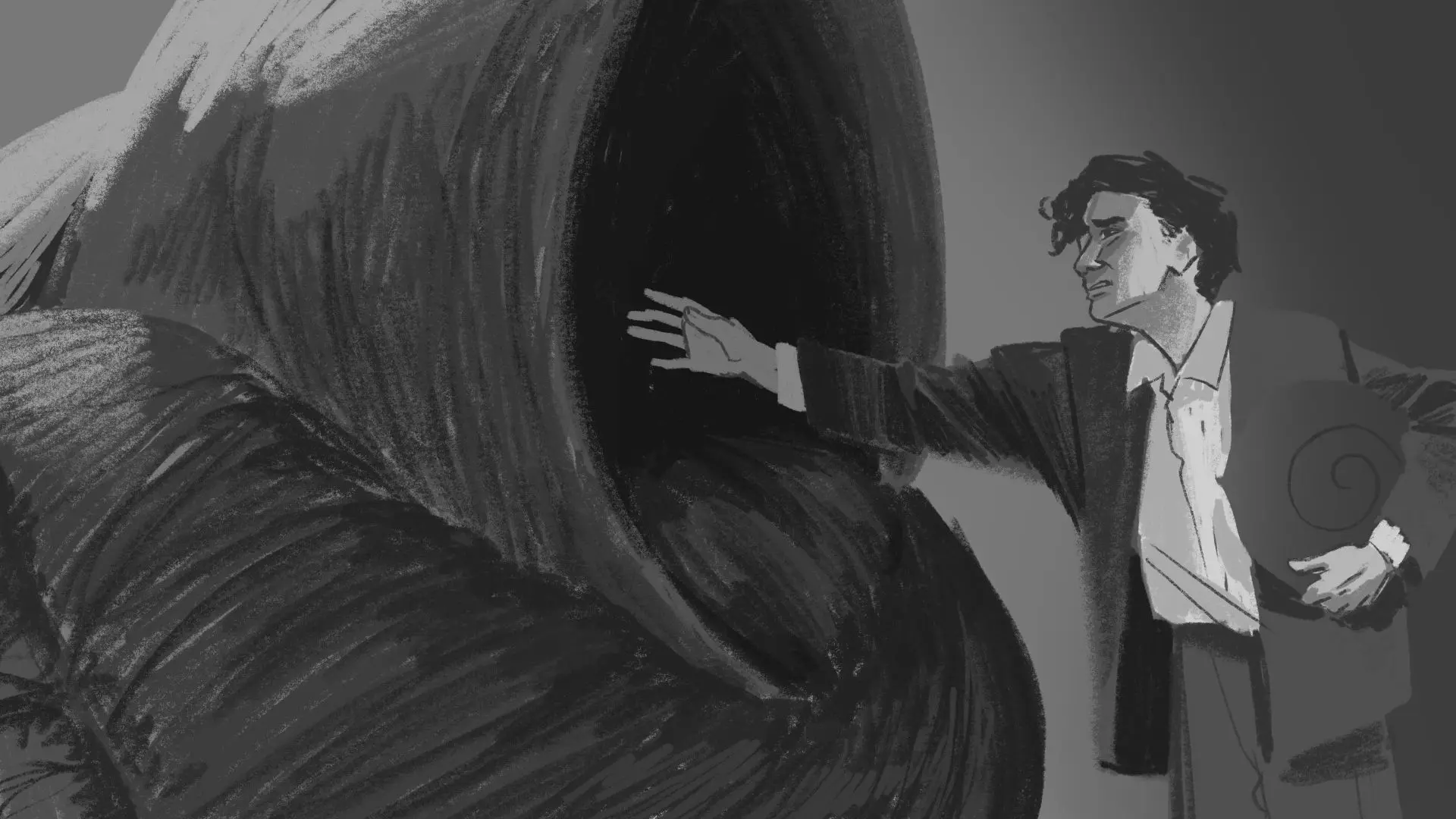
Concept & Painting!
In the early stages of script development, we explored the visual identity of the mysterious Infinity Hotel. The VFX students designed the protagonist’s childhood living room, the hotel corridors and colour palettes, and created initial storyboard elements for planned VFX sequences. A concept art seminar with Luis Guggenberger encouraged us to give free rein to our imagination and broaden our creative horizons.
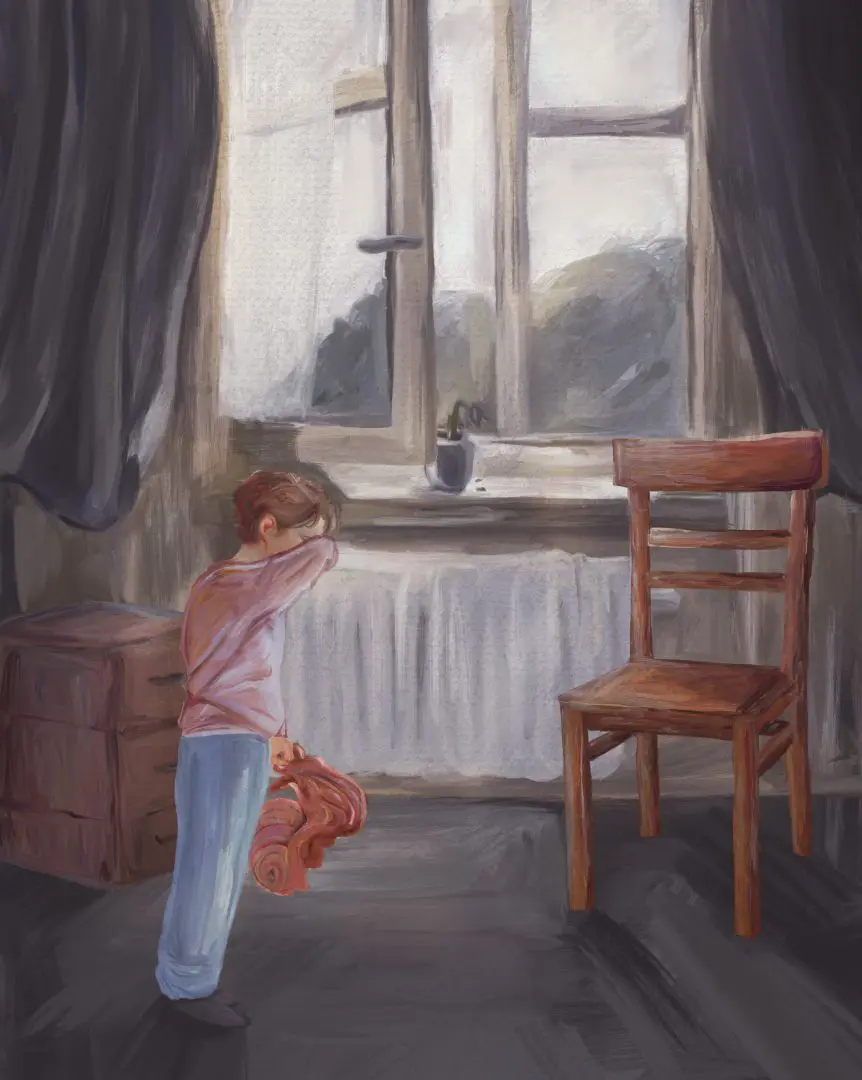
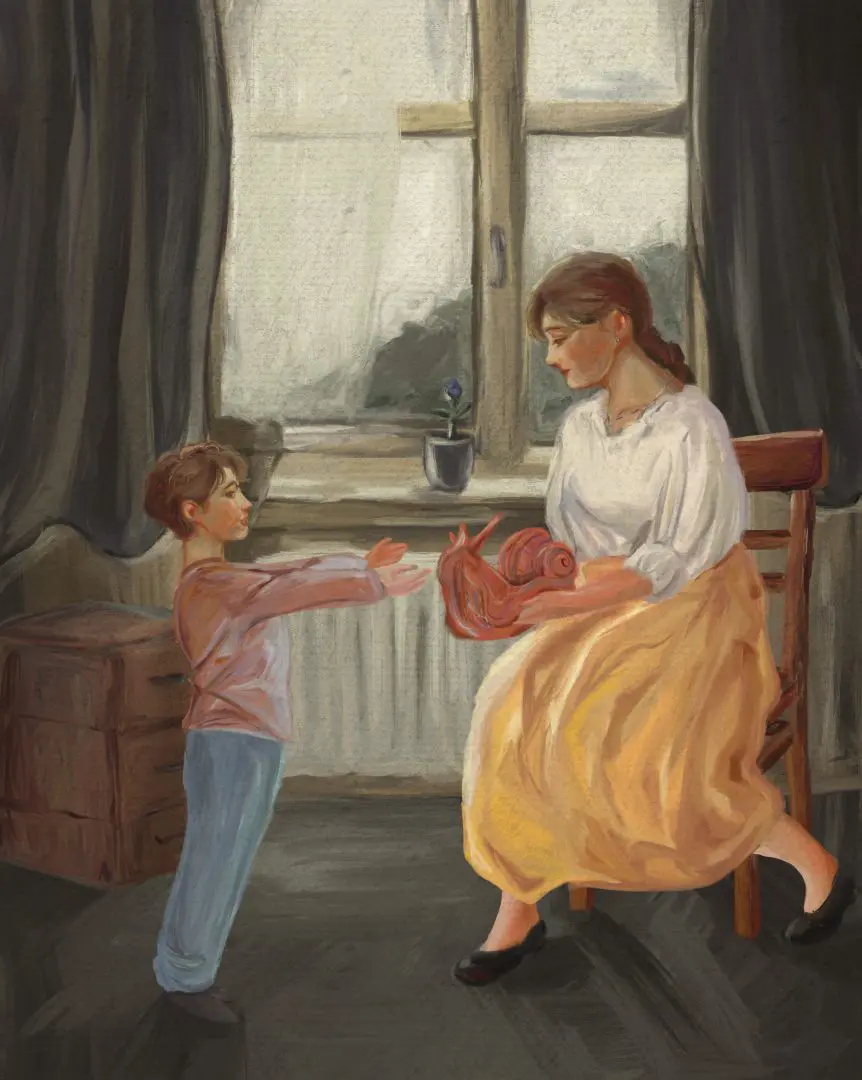
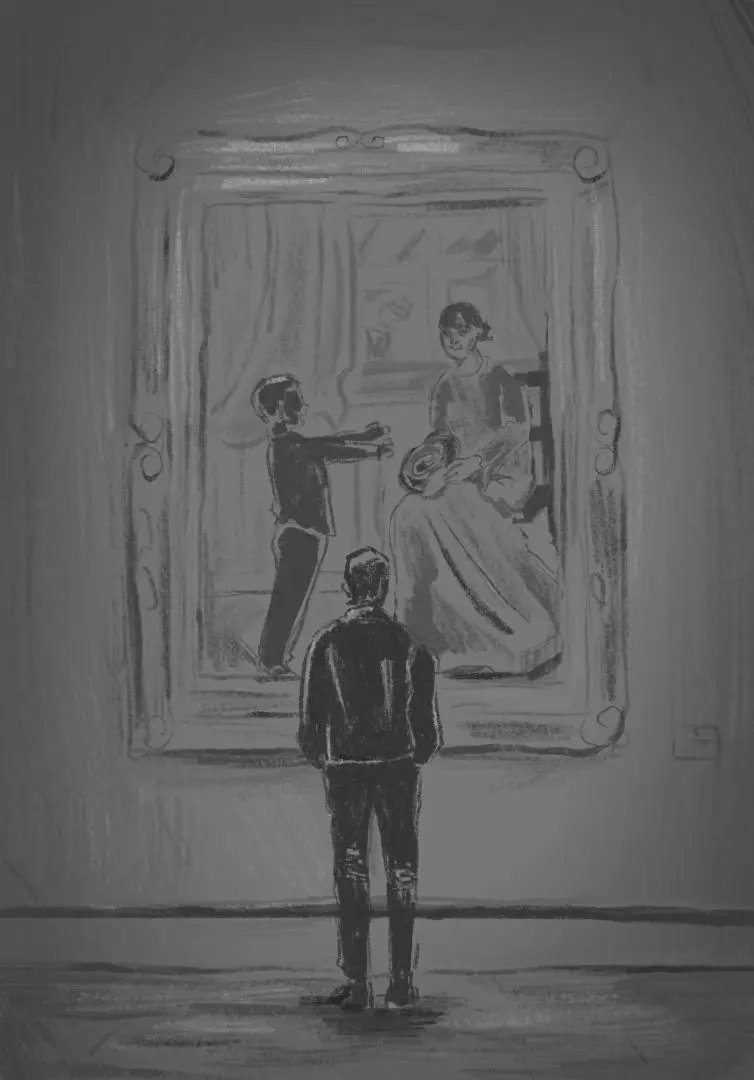
Paintings play a central role in the film. Early in production, we gained valuable insight into the work of the production design department through collaboration with Eva Maria Stiebler, who printed our digitally designed paintings onto canvas and brought them to life. Vanessa Ramovic, Vanessa Chu and Emil Pogolski created the paintings that Clarence observes before entering the ominous hotel room.
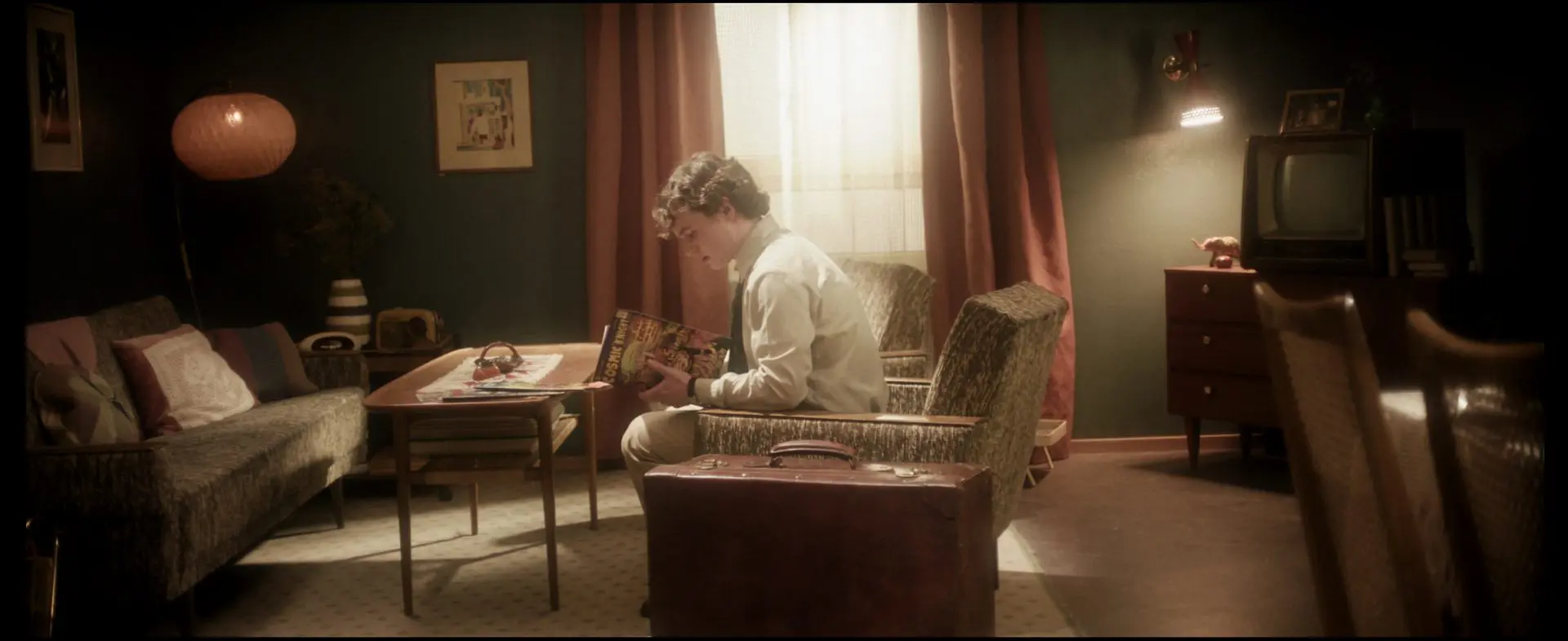

Each painting exists in two versions, each representing a fragmented glimpse into his memories or dreams. One version might show young Clarence playing with a toy rocket or receiving his stuffed snail from his mother. The second versions depict distorted pasts and desires, such as the boy as a real astronaut, abstracted with a snail shell instead of a head, or alone and silent in his childhood living room without his mother. The paintings act as clues to the character’s past. Four works were digitally painted in Procreate and printed on large canvases by Eva Maria Stiebler, framed in wood for the set. Two additional paintings were created as charcoal drawings on paper.

Comics!
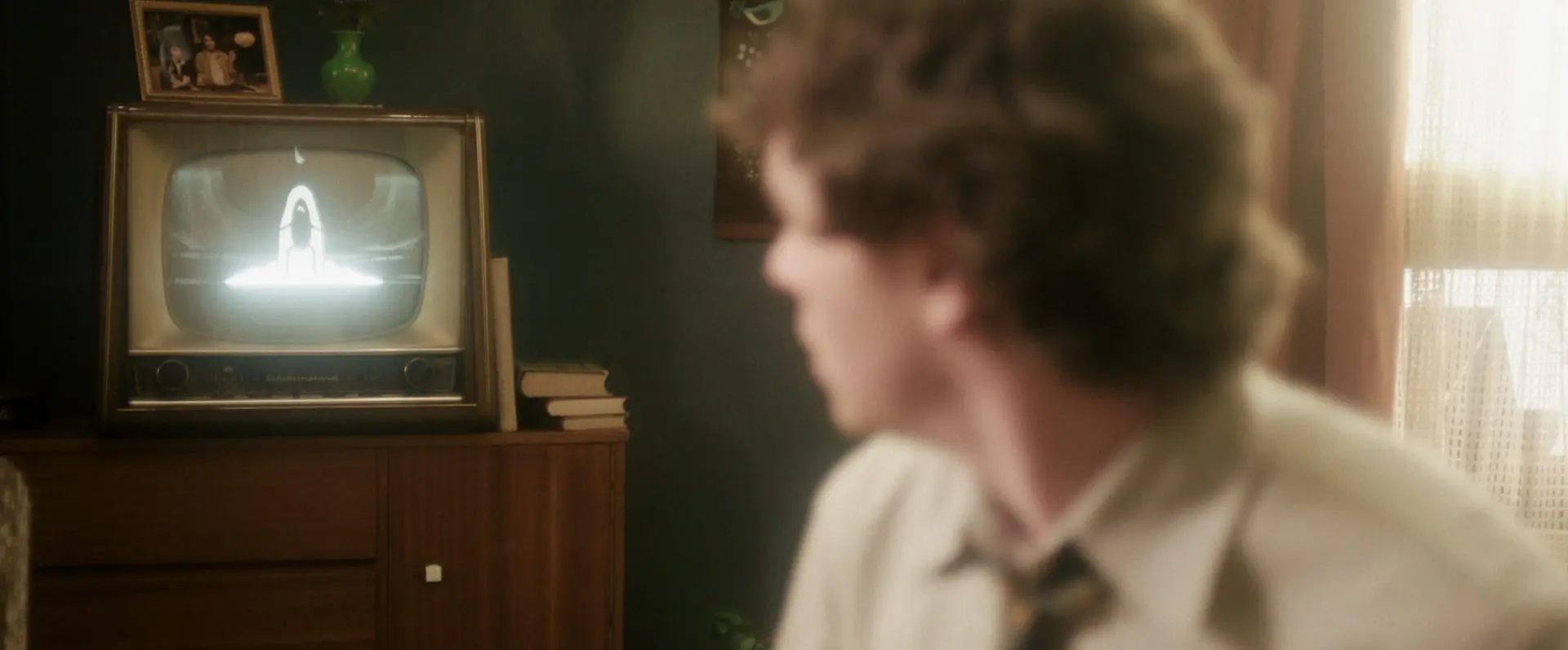
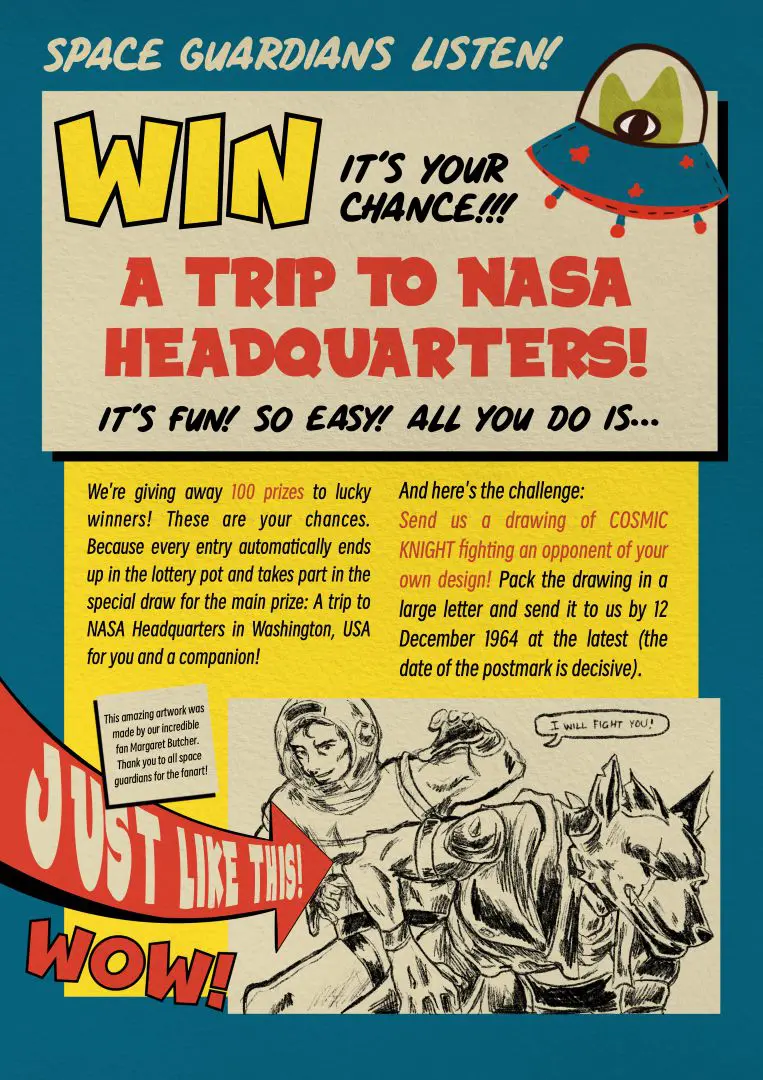
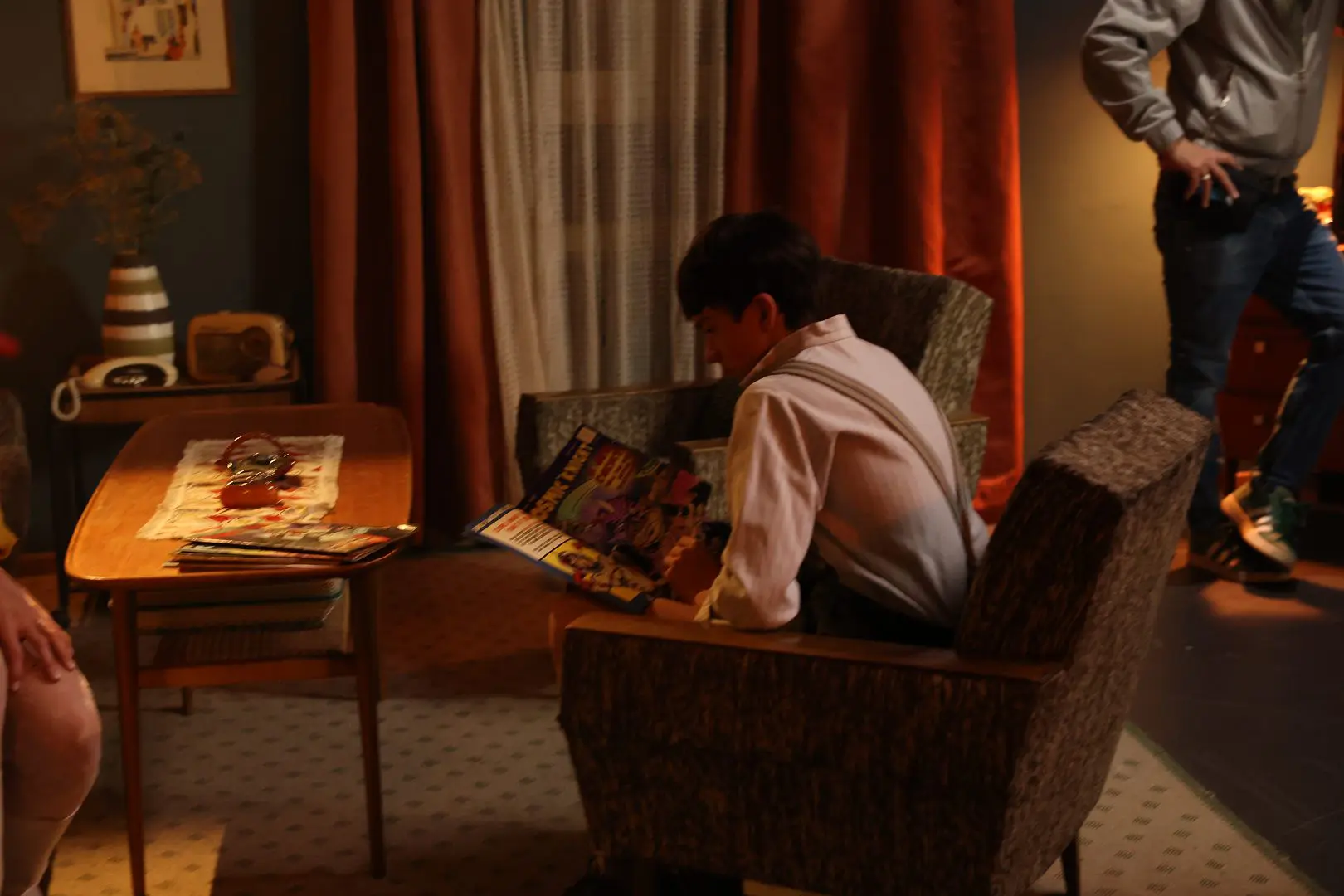
The comic books lying on the hotel room table were illustrated by Vanessa Ramovic and depict the adventurous “Cosmic Knight” Clarence’s childhood hero and career role model. Sonja Latussek animated the Cosmic cartoon shown on the small CRT television behind Clarence using the drawing and animation software Krita. She aligned the hero’s origin story with the comic books and portrayed his journey into space. Each frame was drawn individually, giving the cartoon its distinctive two-dimensional charm. In collaboration with production design, the animation was played back on the television on set.
The Endless Spiral
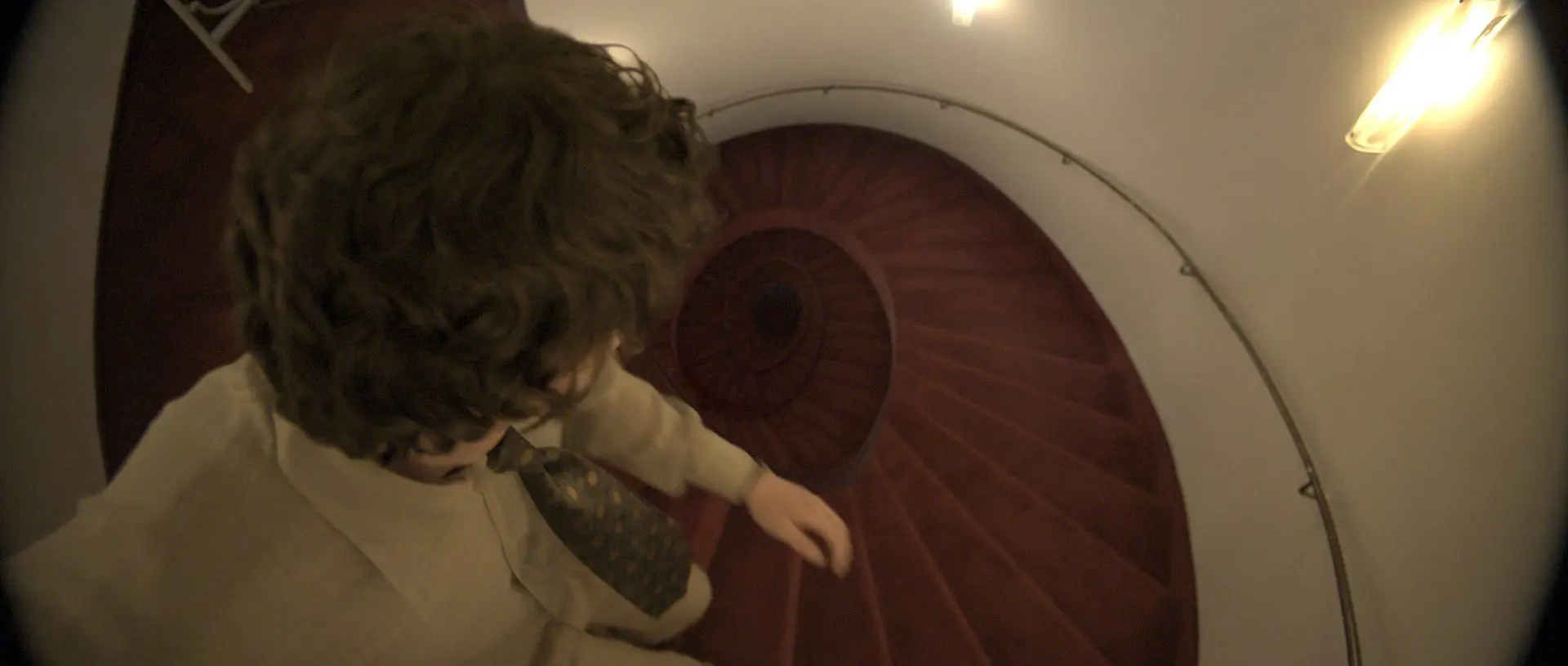
From the start of pre-production, we aimed to visualise Clarence’s inner emotional state. The red spiral staircase at our second Munich location provided an ideal opportunity to depict his descent into memory. Since the physical set could not accommodate infinite depth, Vanessa and Jim digitally extended the staircase. They captured a 360-degree FARO LiDAR scan of the stairwell, converting the spatial data into a 3D environment.
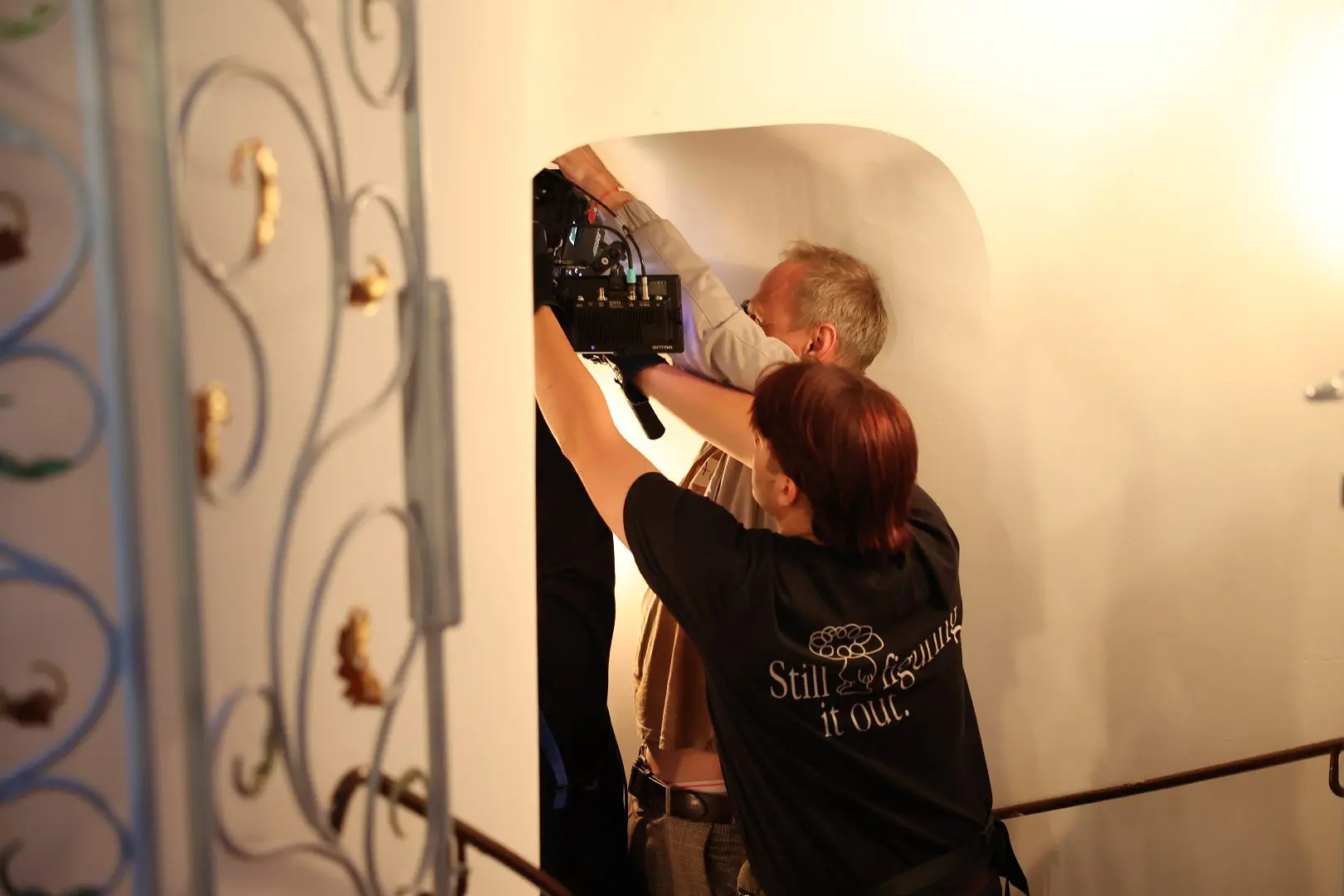
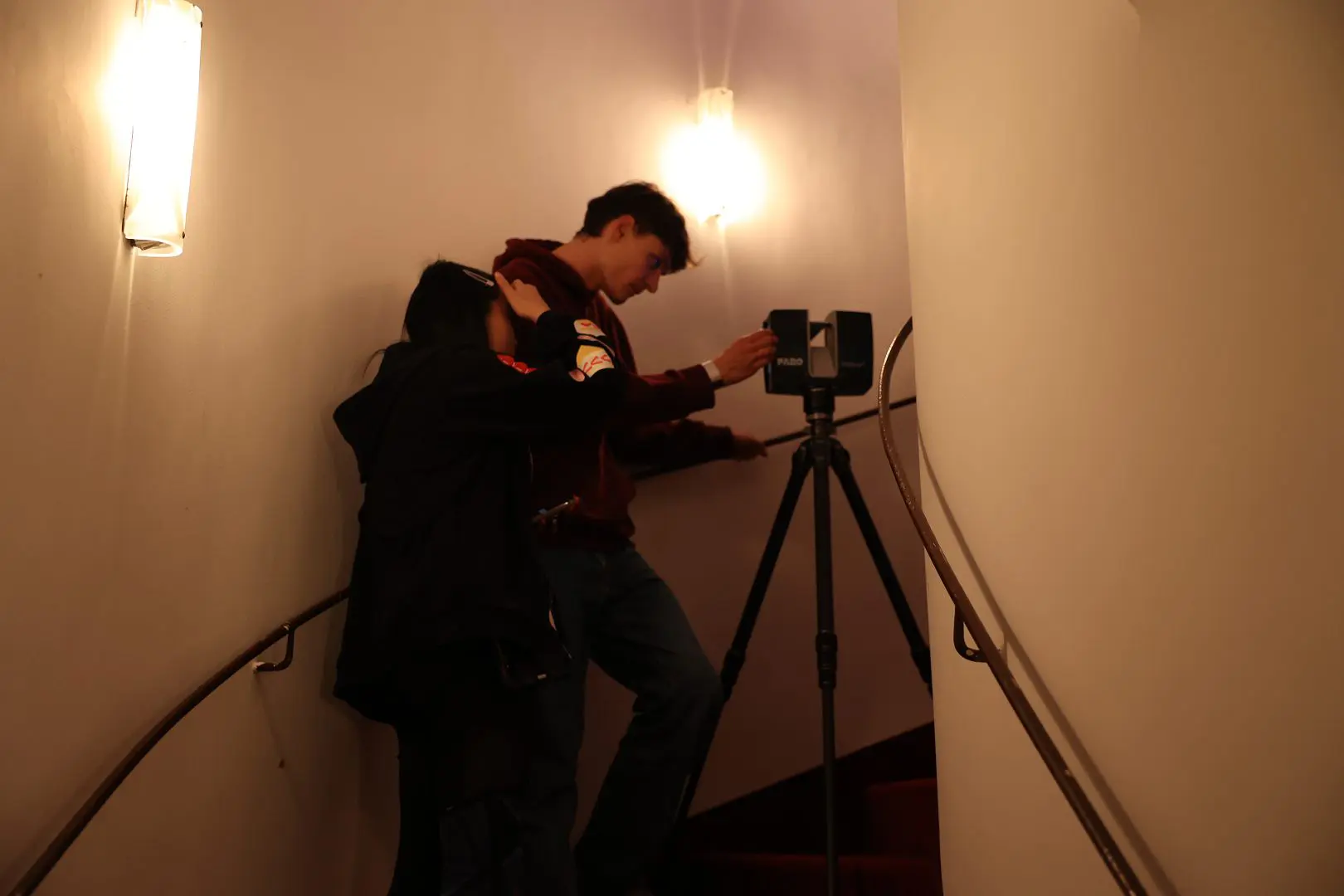

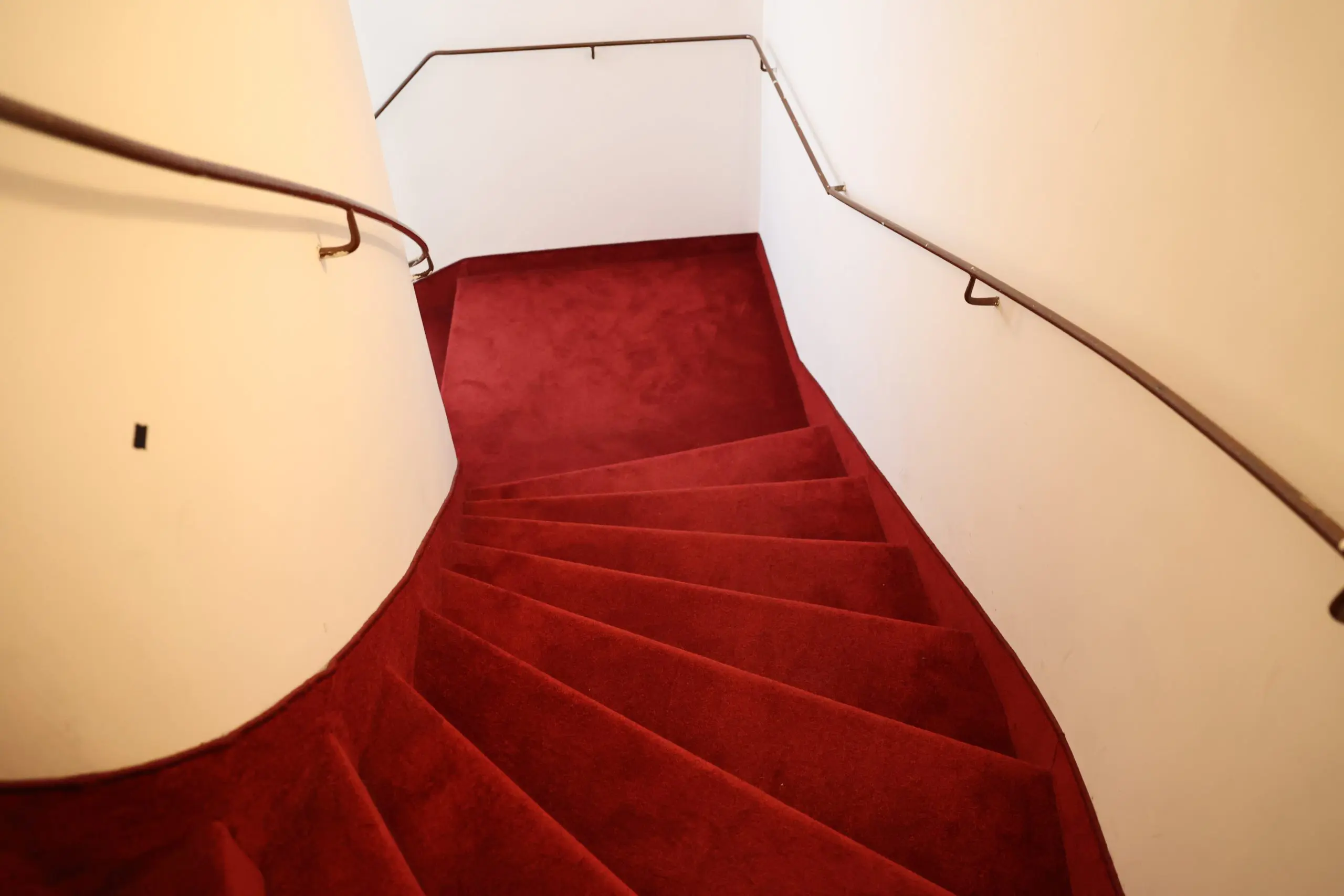
It was striking to see how precisely the point clouds generated by Faro Scene replicated the physical world. The resulting model was adjusted and extracted in Blender, where Vanessa and Jim animated the structure. The deformation of the staircase was particularly complex and was achieved using a geometry node system in Blender. Vanessa recreated the staircase texture in Substance Painter, based on reference photos taken on location by the entire VFX team.
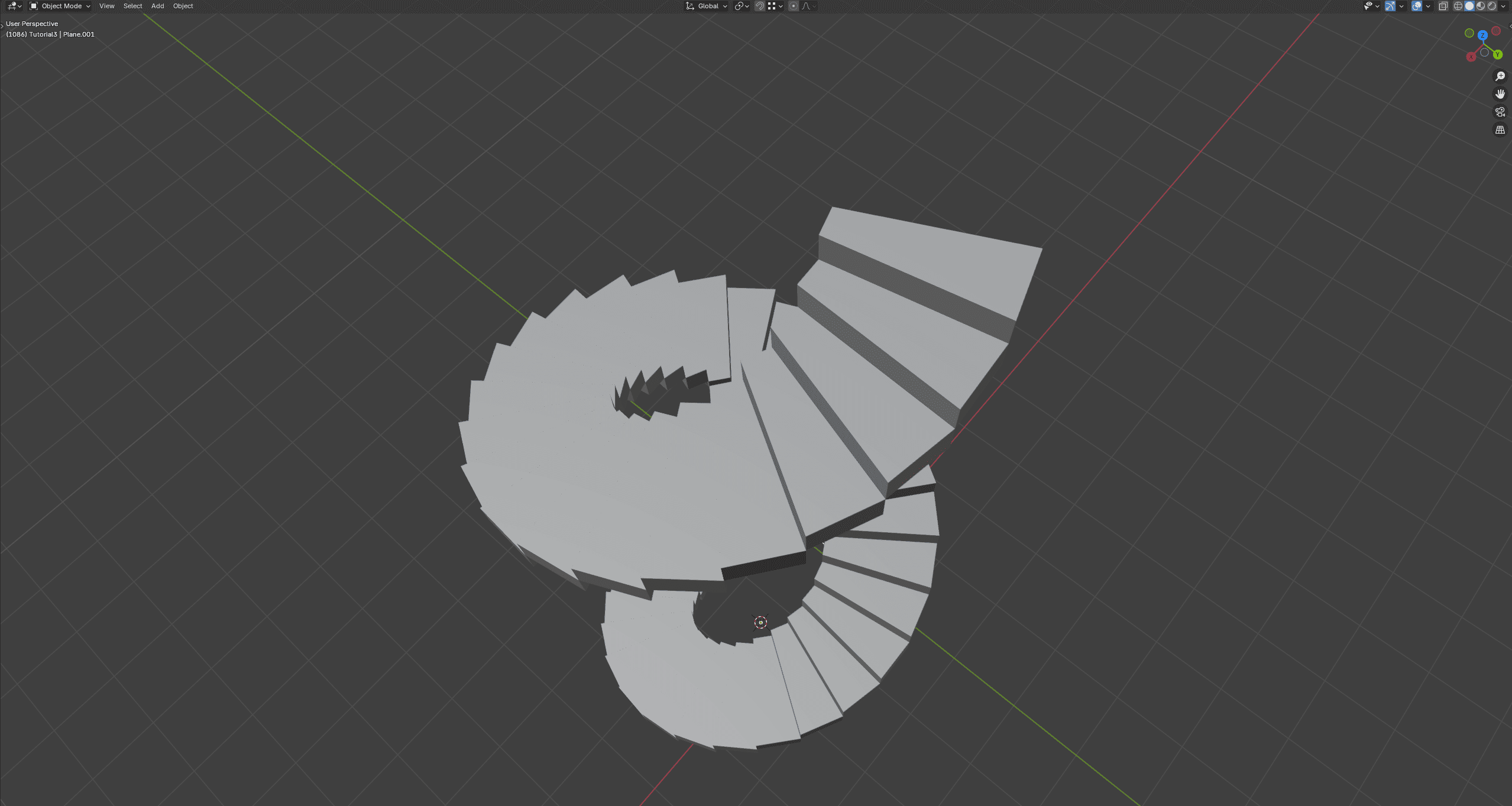
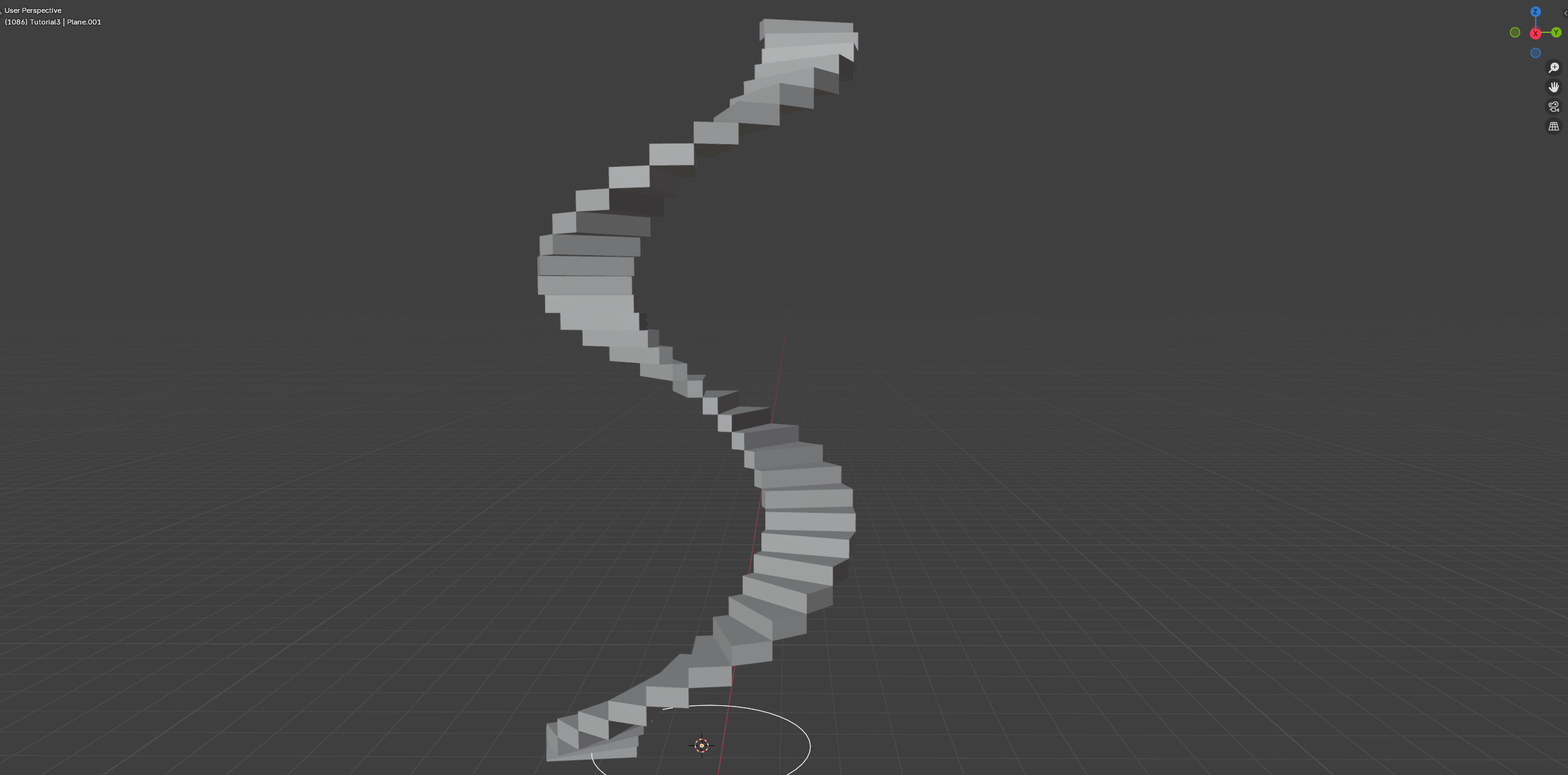
The final compositing step involved integrating the digital staircase into the original footage. With guidance from lecturer Martin Tallosy, Vanessa learned how to use rotoscoping in Nuke to create nearly invisible transitions between plate and CG elements. Martin supported the integration of CG footage into all VFX shots and helped with initial colour adjustments. Lecturer Ando Avila taught us to track handheld camera movement using 3D Equalizer, enabling Vanessa and Jim to transfer the motion to the digital 3D model. Working closely with our instructors allowed us to explore new tools and combine traditional sets with digital visual effects.
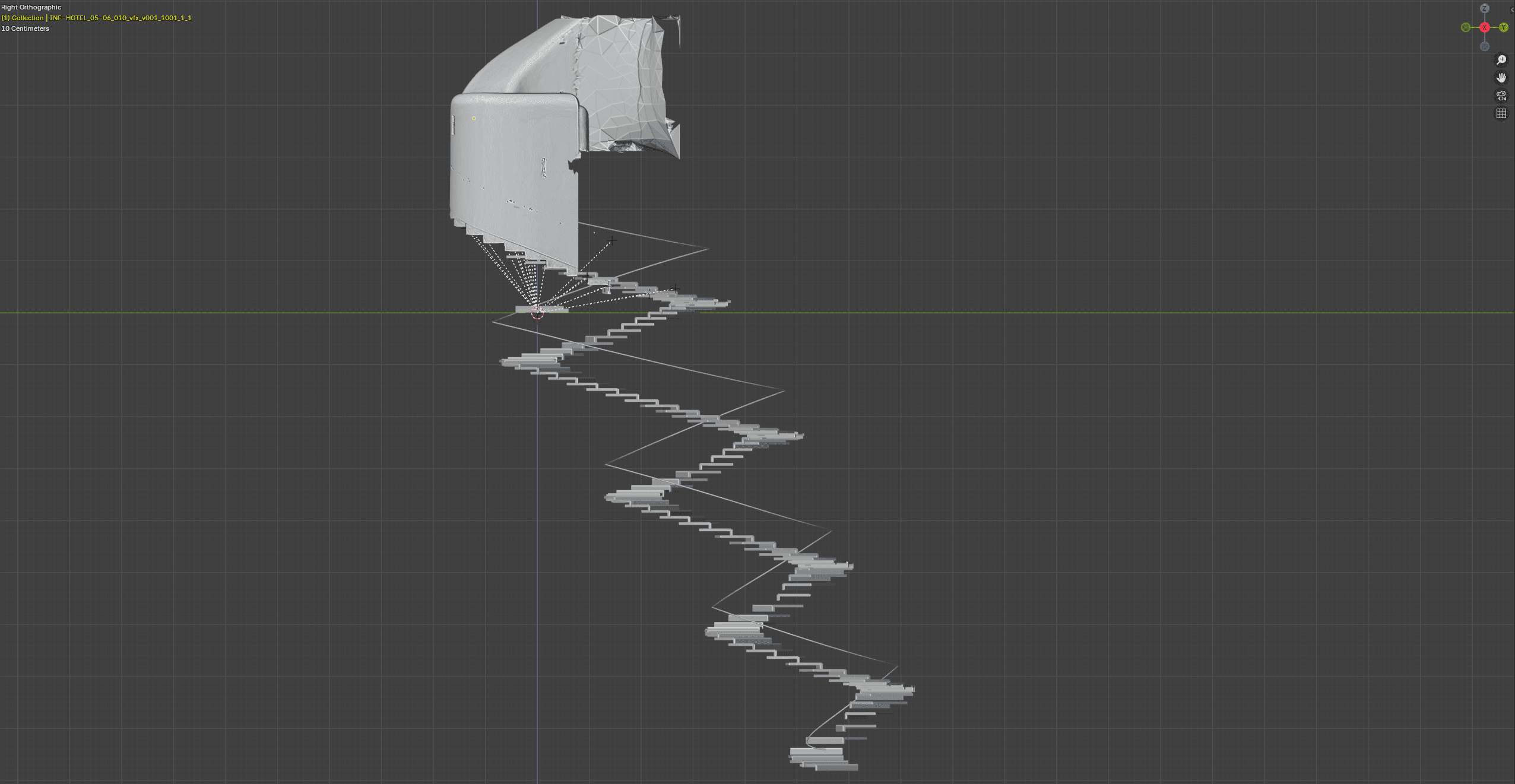
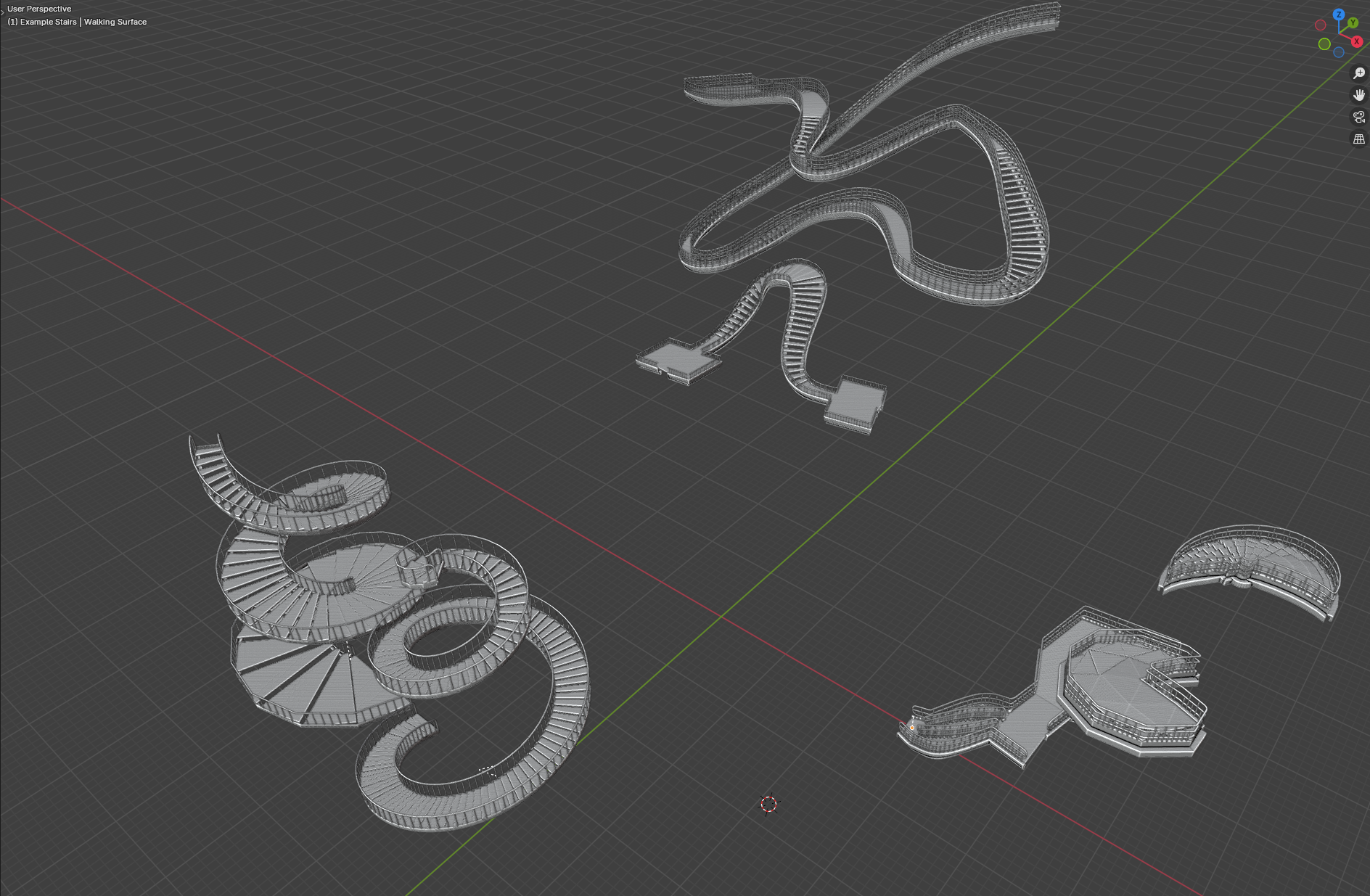
The particular challenge with the spiral staircase was that the real staircase on set did not have a perfect circular shape. This required us to develop a believable transition from the set staircase into our circular CG spiral staircase that extends into depth. It was also meant to feel less steep and cramped than the real-world reference. Another challenge lay in the angles of the steps. On the real staircase, the steps were not perpendicular to the circle’s tangent at their respective positions, but instead met the circular form at a slightly offset angle. For the set extension, however, we wanted an aesthetic solution that would integrate more harmoniously into the staircase. Our goal was therefore to build a transition in which the skewed angles of the set staircase would gradually evolve into the perfect roundness of the digital staircase. We opted for a smooth progression: the closer one gets to the real staircase, the more angled the steps become, while further down they eventually align perfectly perpendicular to the respective circle tangent. This created a flowing transition between the physical and the digital staircase.
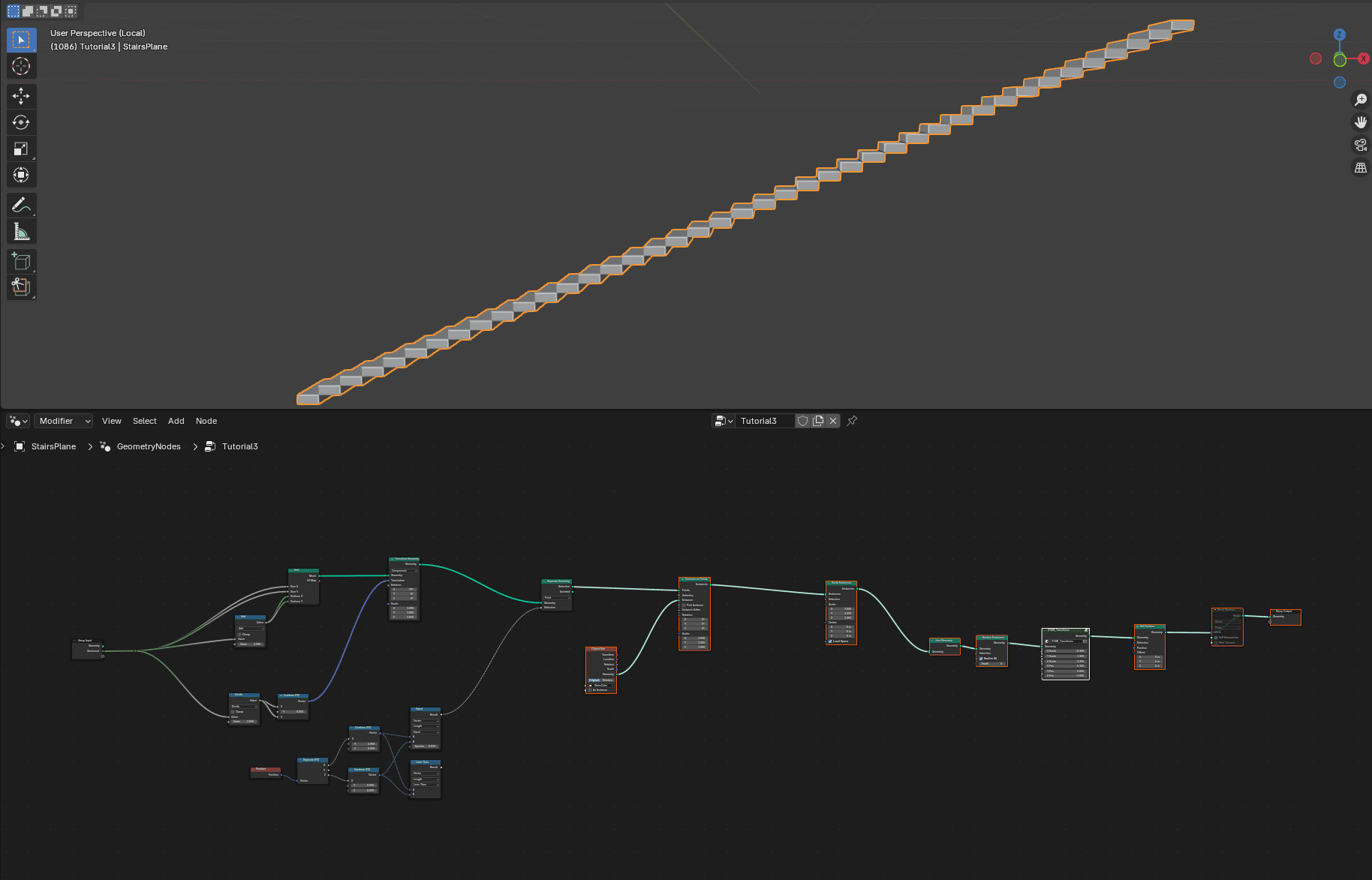
Vanessa Chu found it particularly challenging to implement the staircase in perspective in a way that felt believable while simultaneously conveying an endless depth. Normally, depth is not perceived very clearly in spiral staircases. However, in order to tell the story that this staircase extends infinitely, we had to work with tilted CG spiral staircases. Vanessa Chu and Jim Obmann therefore searched for a method to display the 3D model at an angle and stretch it in depth without introducing errors in the geometry.
By the time the iterations and feedback from Jürgen and Matthias were incorporated, the basic animation workflow had already been established. The professors’ feedback therefore focused primarily on lighting conditions and the intensity of the animation. Jim developed a workaround using a geometry node system and found a solution that allowed the staircase to be stretched in depth. Physically, this staircase is not correct, but for our visual storytelling this approach worked very well. At this point, physics was deliberately bent a little in order to convey the desired impression of infinite depth.
An Elevator Ride into the Psyche
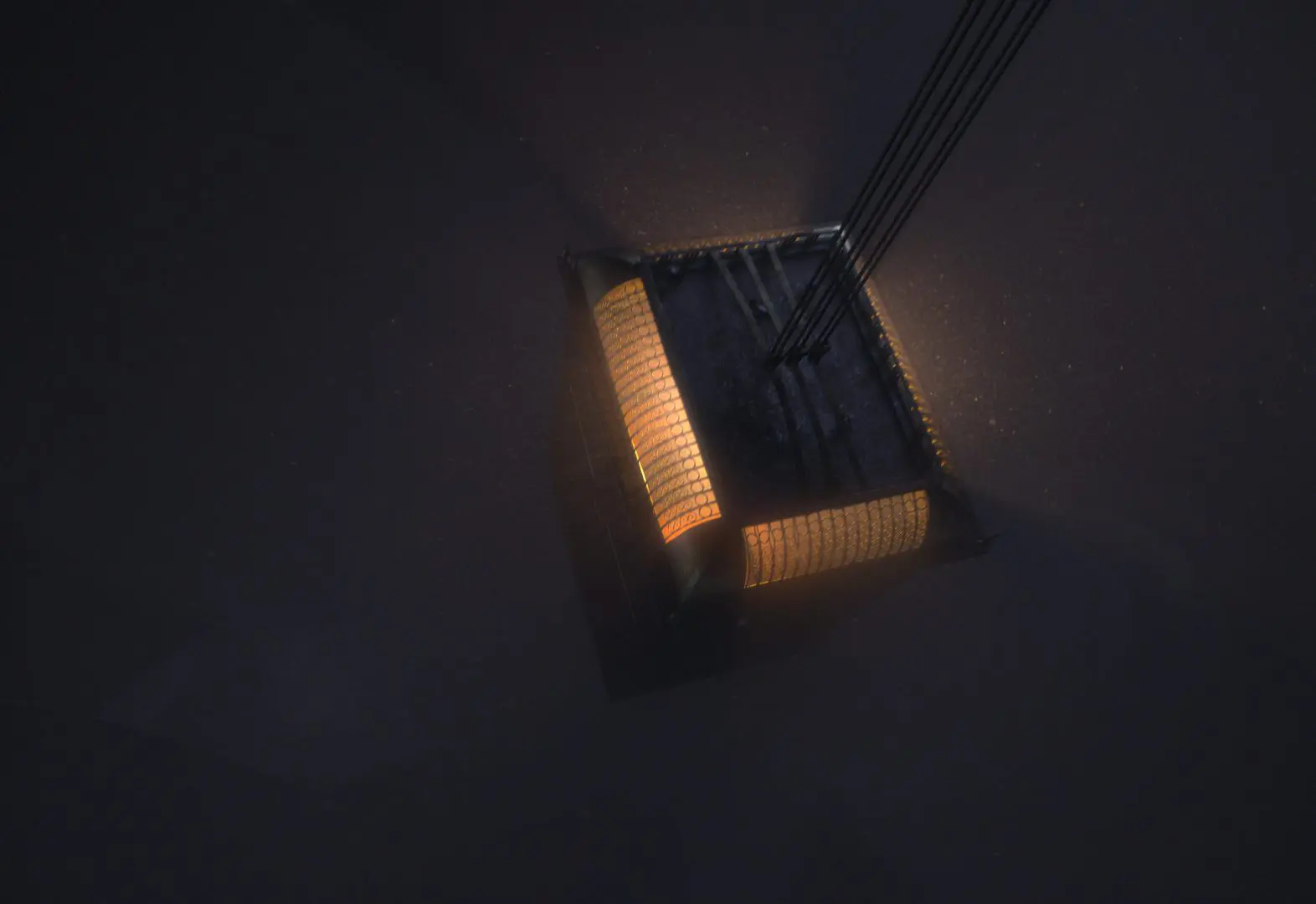
The elevator was symbolically conceived in the script as a vehicle transporting Clarence through different layers of memory. In winter 2024, Emil previsualised the first elevator scenes, experimenting with lighting and composition to send the elevator into a threatening depth populated by oversized snails.
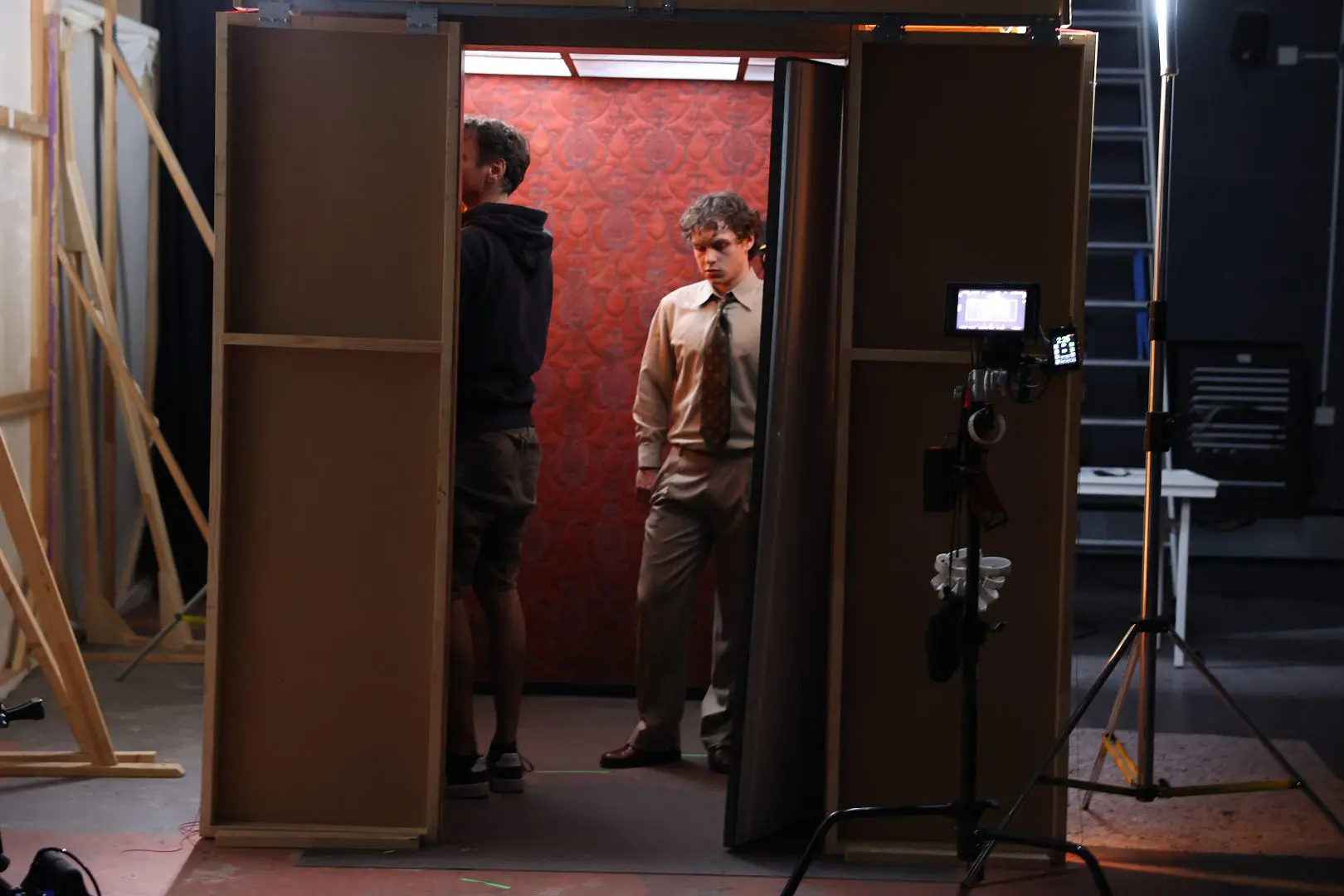

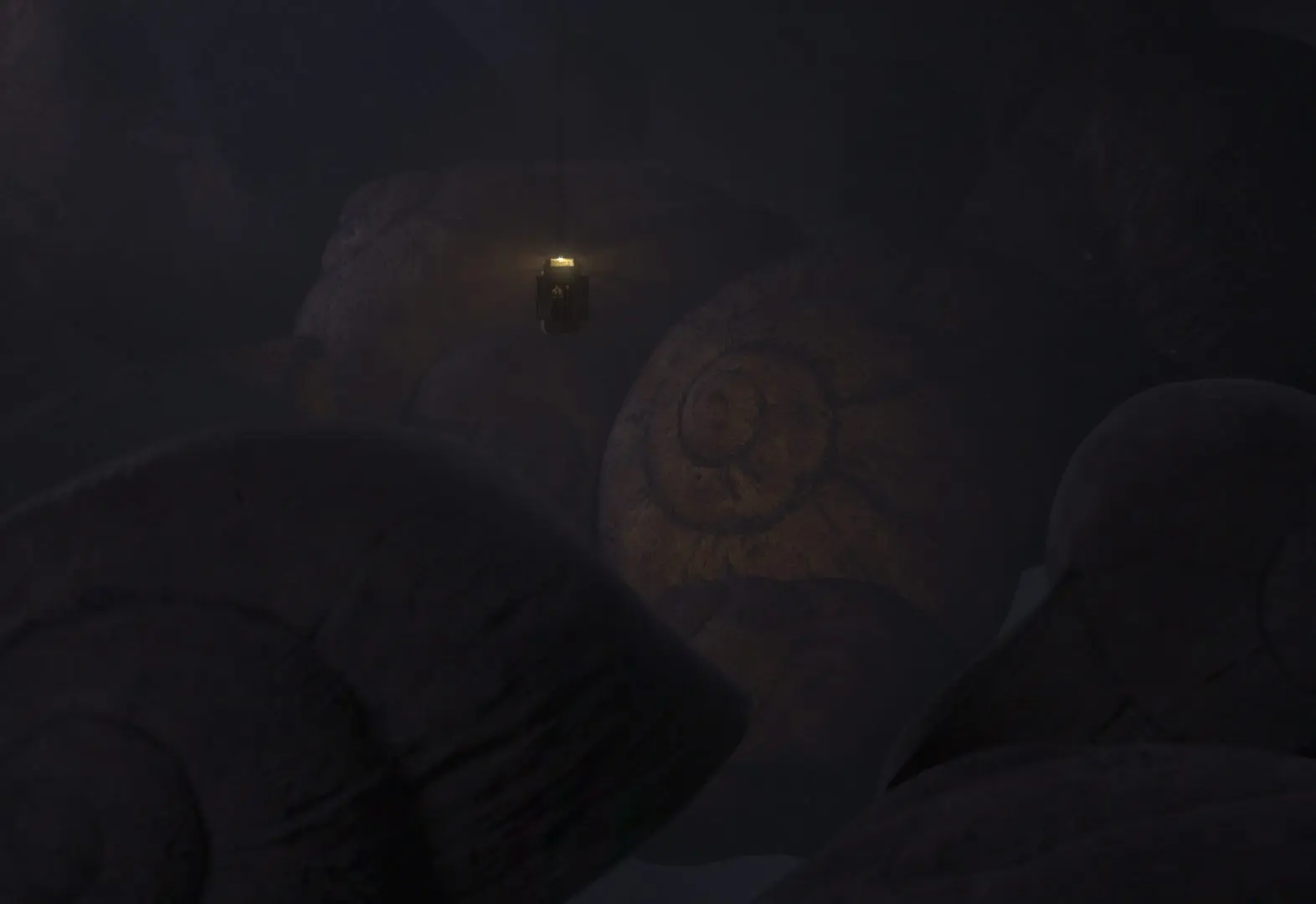
After Vanessa developed the elevator design through multiple concept drawings, collaboration with production designer Eva Maria Stiebler became essential. While the elevator appeared as a 3D object in full CG shots, it was also built physically in the HFF film studio. Digital concepts and real-world patination informed each other, as Vanessa’s designs guided the construction, which in turn defined the dimensions for Emil’s 3D model.
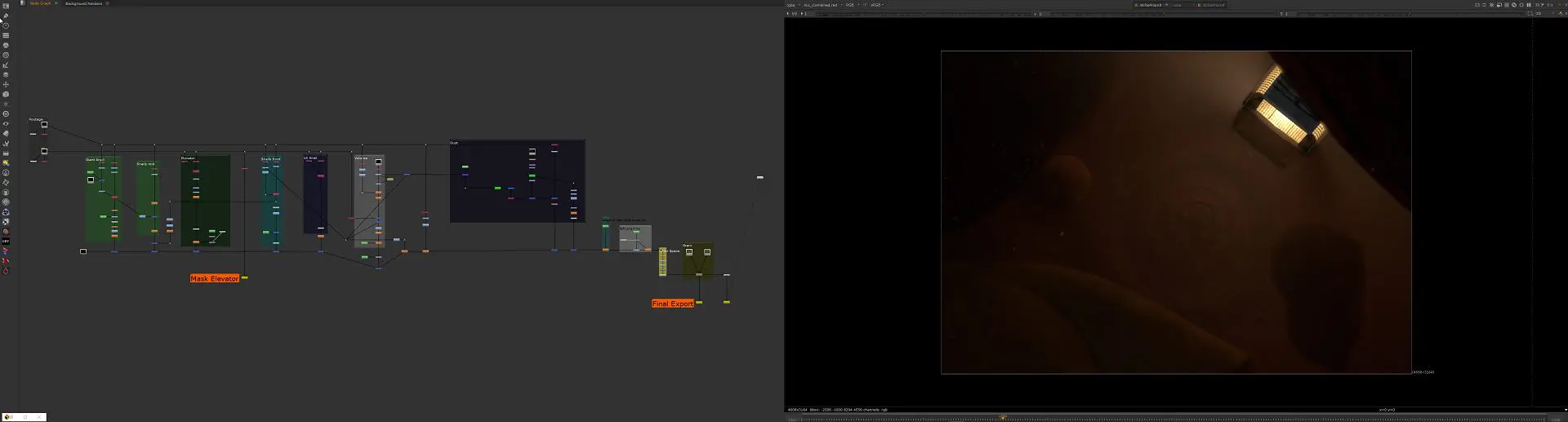
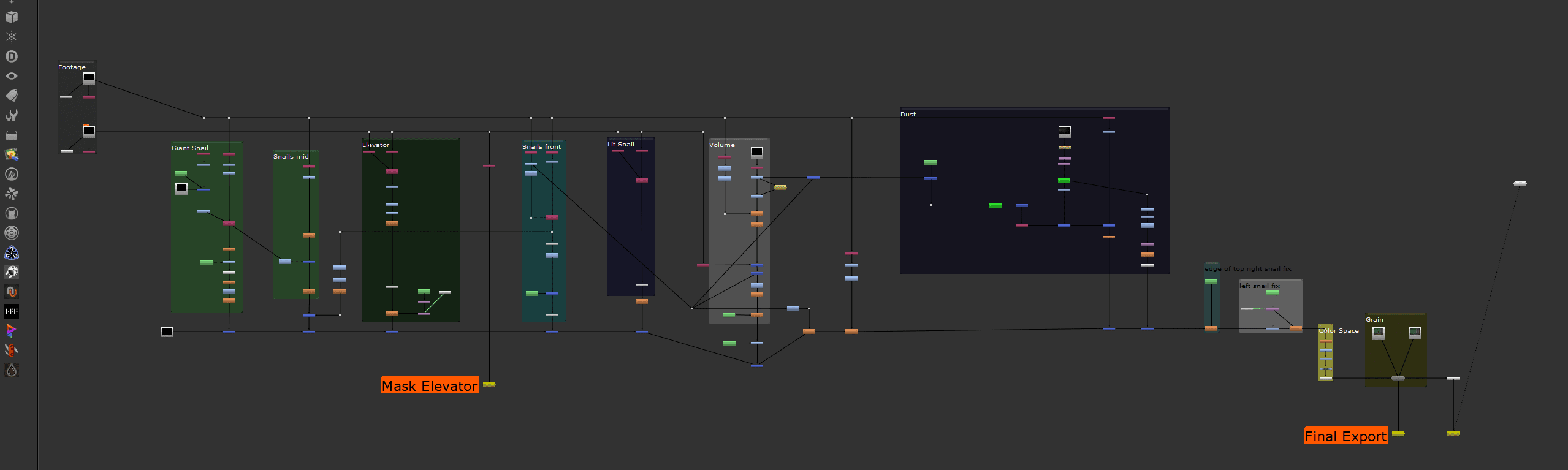
Sonja Latussek supported the team with detailed textures, giving the elevator a realistic appearance. She also carefully textured small debris objects placed on the elevator roof. Once models were finalised, Emil and Vanessa developed the layout for three full CG shots, stacking snail shells in front of a dark background. Elevator chain swings and dangerous pendulum movements were animated by Vanessa. In consultation with director Matthias Zentner and Professor Jürgen Schopper, Emil built the lighting setup, handled compositing, and fine-tuned lighting digitally.
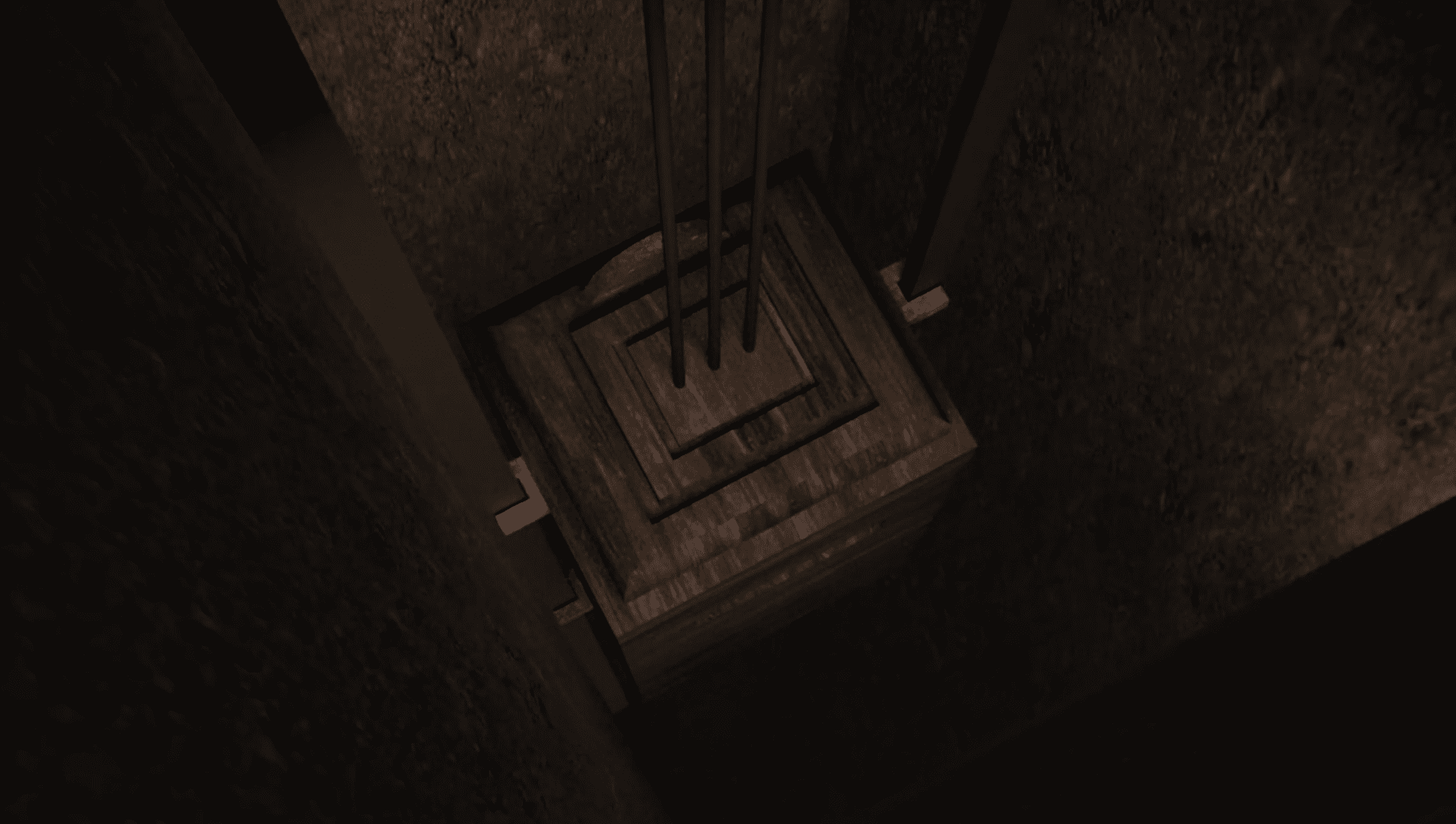
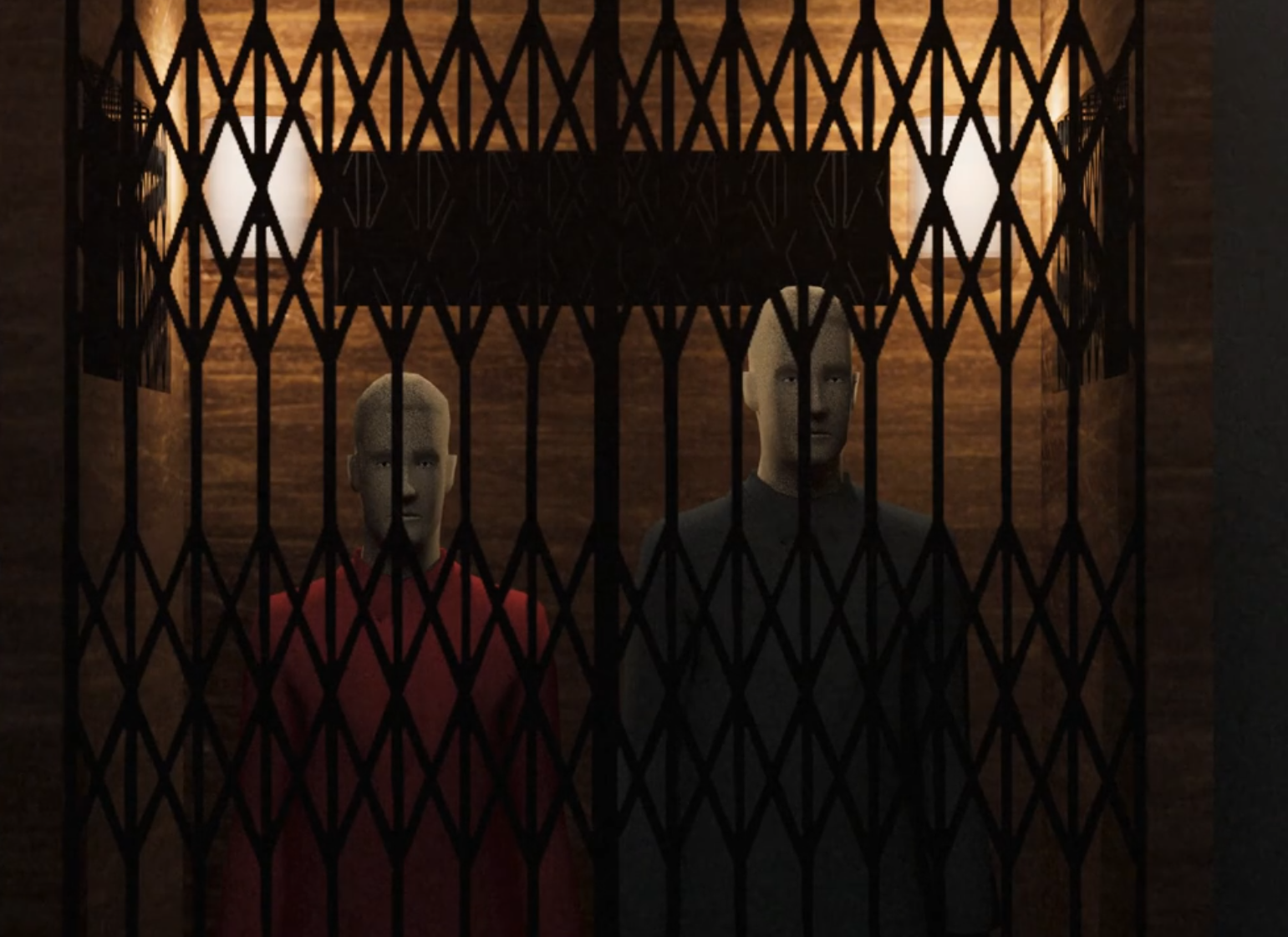
A central task was the transfer of Vanessa Ramovic’s concept drawings into a precise 3D model. A key aspect of this work was creating a coherent connection between the set construction and the digital elevator. To ensure this, particular attention was paid to a dimensionally accurate approach. In retrospect, Emil Pogolski and Vanessa Ramovic would primarily invest more time in texturing and look development. They would also carry out tests under the actual lighting conditions of the shots at an earlier stage, in order to better align materiality and mood.

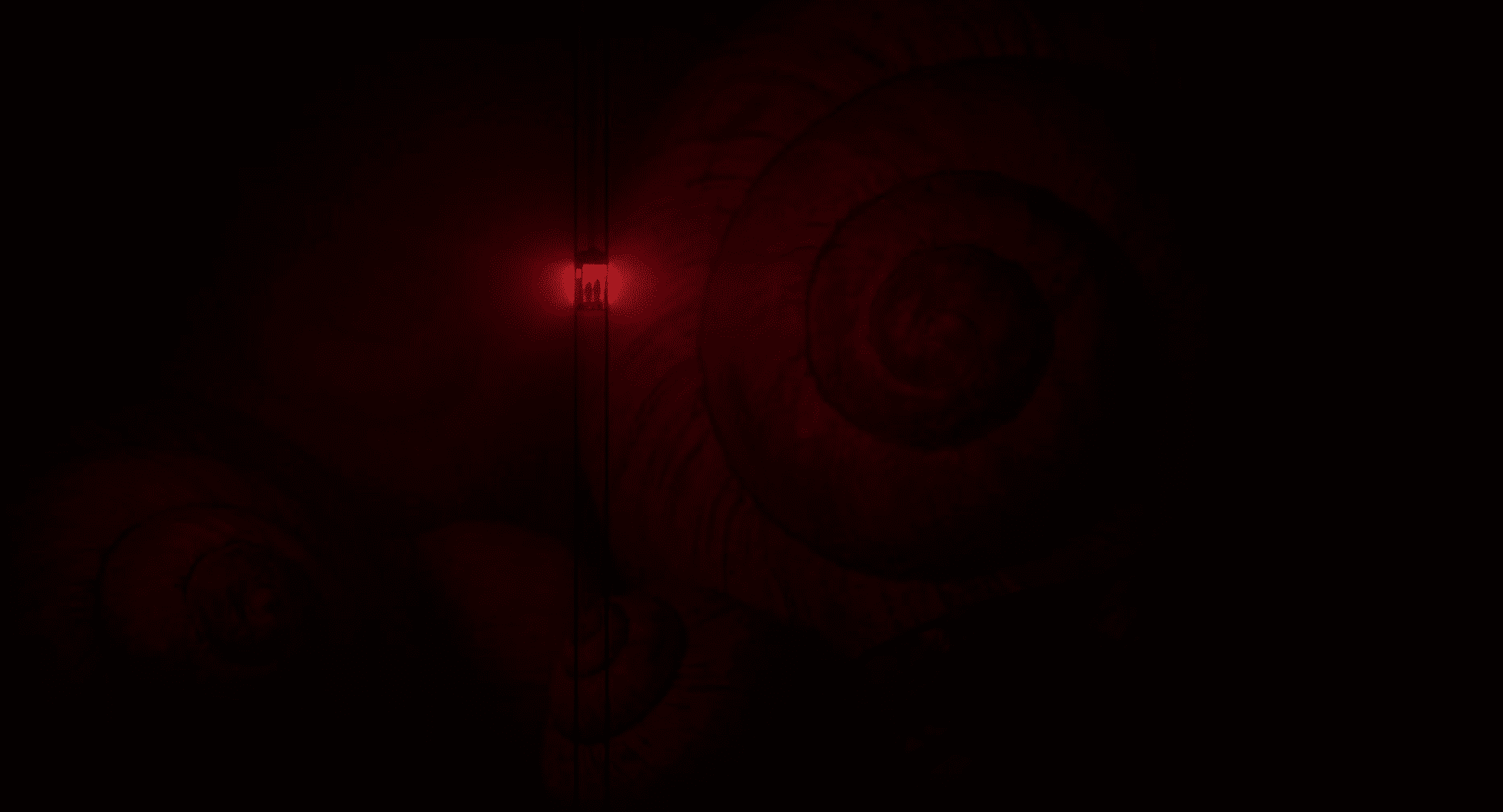
To integrate the realistic elevator into the surreal environment, Jim inserted real footage of the actors inside the physical elevator into the digital model opening. Emil added digital dust particles to intensify the ominous abyss and blend live-action and CGI seamlessly.
The Distoring Corridor
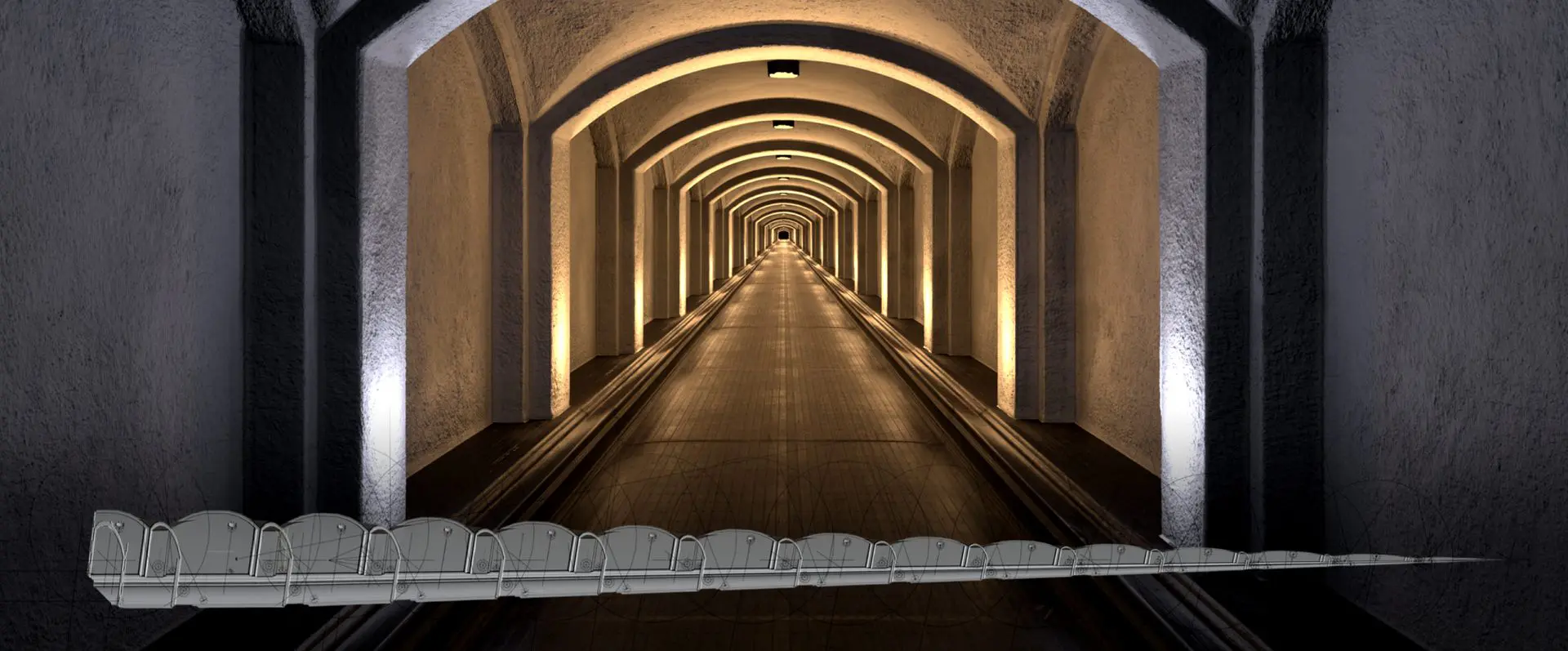
Another highlight was the hotel corridor that begins to warp and distort. After Vanessa Chu and Elena Rid created initial concepts, Jim modelled the corridor based on a long basement room at the location, captured via FARO LiDAR scanning and photogrammetry. Since the corridor needed to deform dynamically, Jim tested various geometry node systems to allow distortion at arbitrary points.
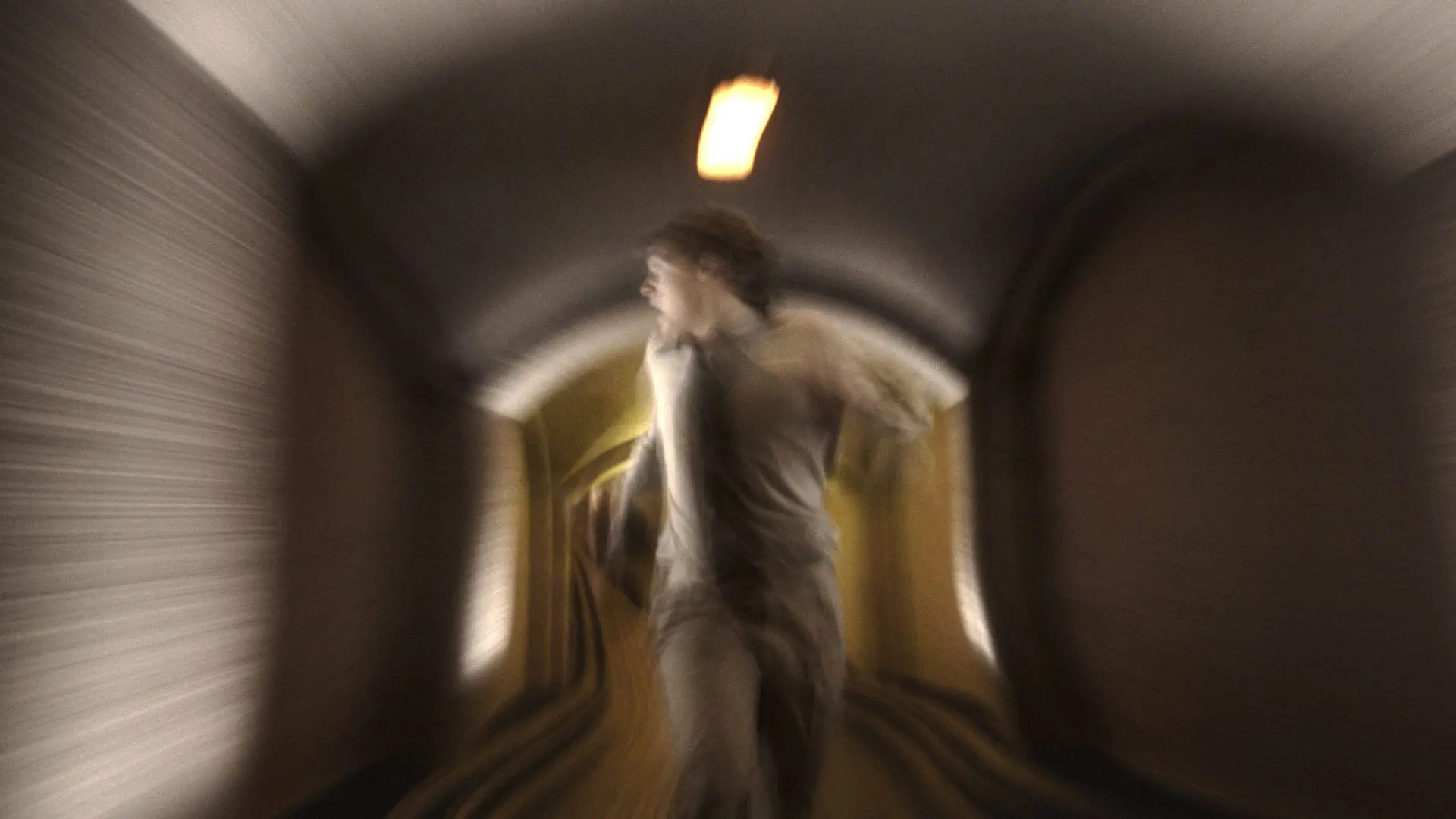
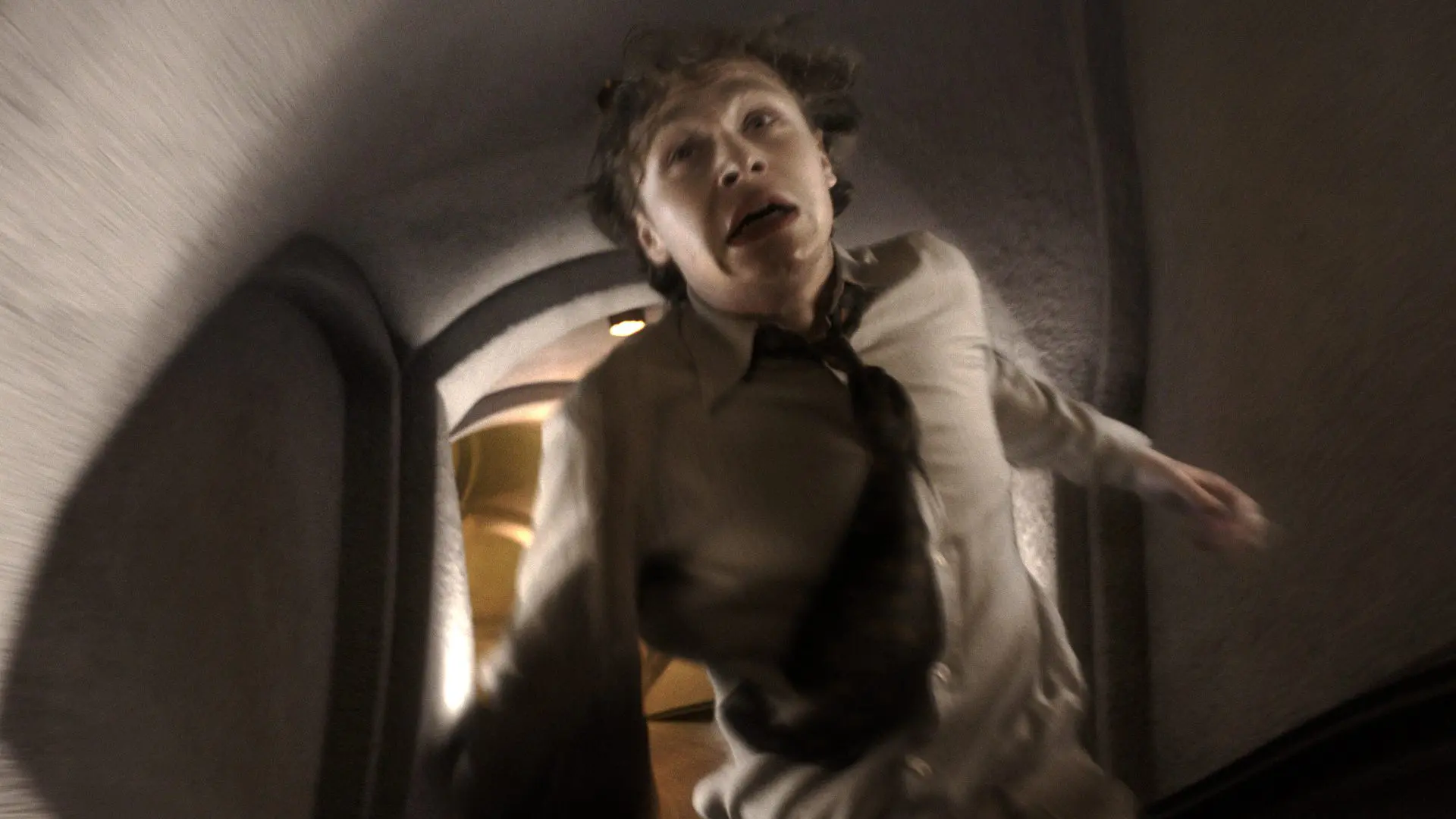
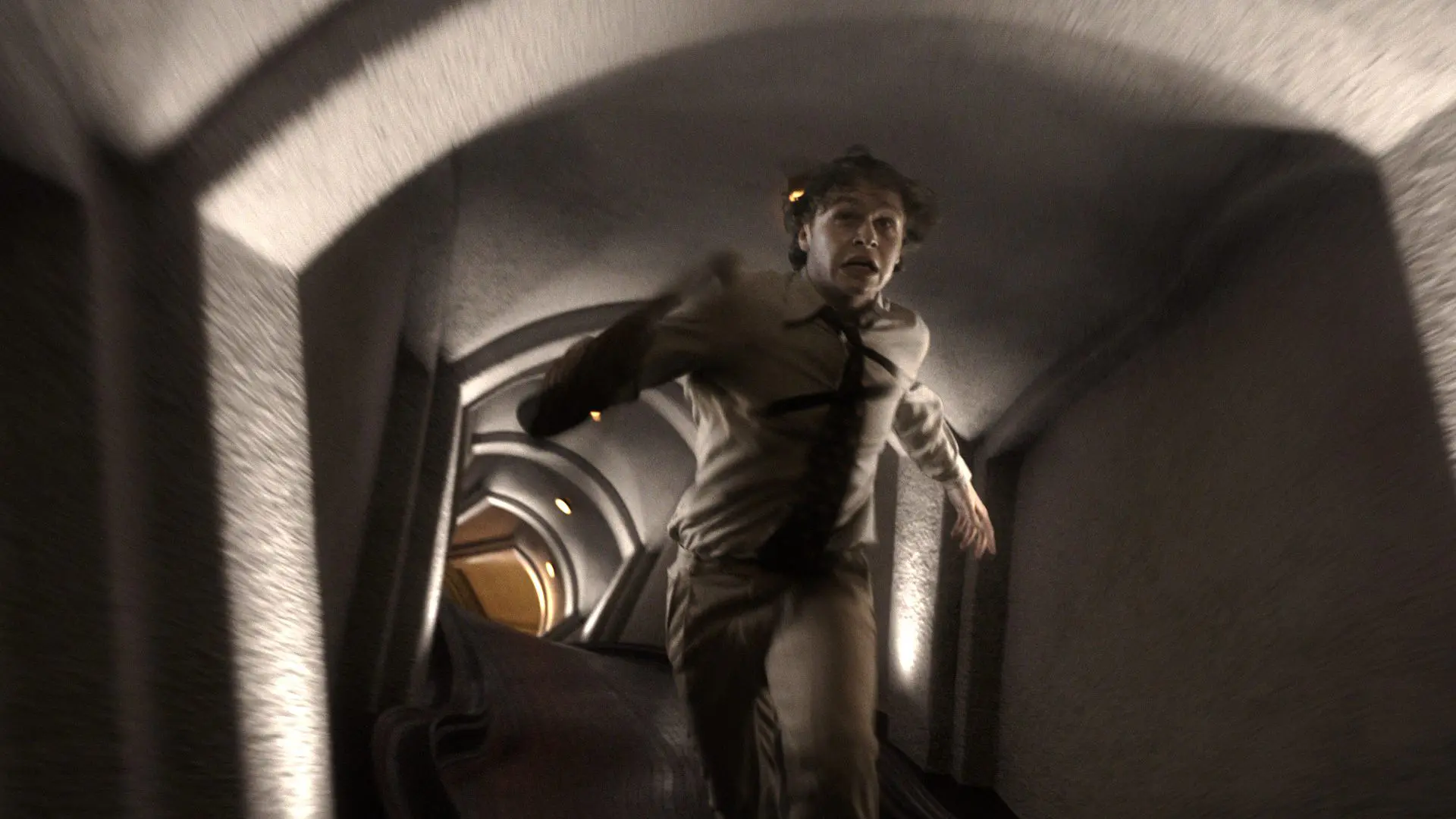
Simulating an infinite corridor directly would overwhelm most computers, so Jim devised a trick by scaling the corridor into depth. Viewed through Blender’s camera, the corridor appears endless. He developed a setup allowing control over both roll axis and depth movement. This resulted in a 50-metre corridor segment that, when scaled, created the illusion of infinity. Within this segment, movement allowed the corridor to emerge and disappear into depth.

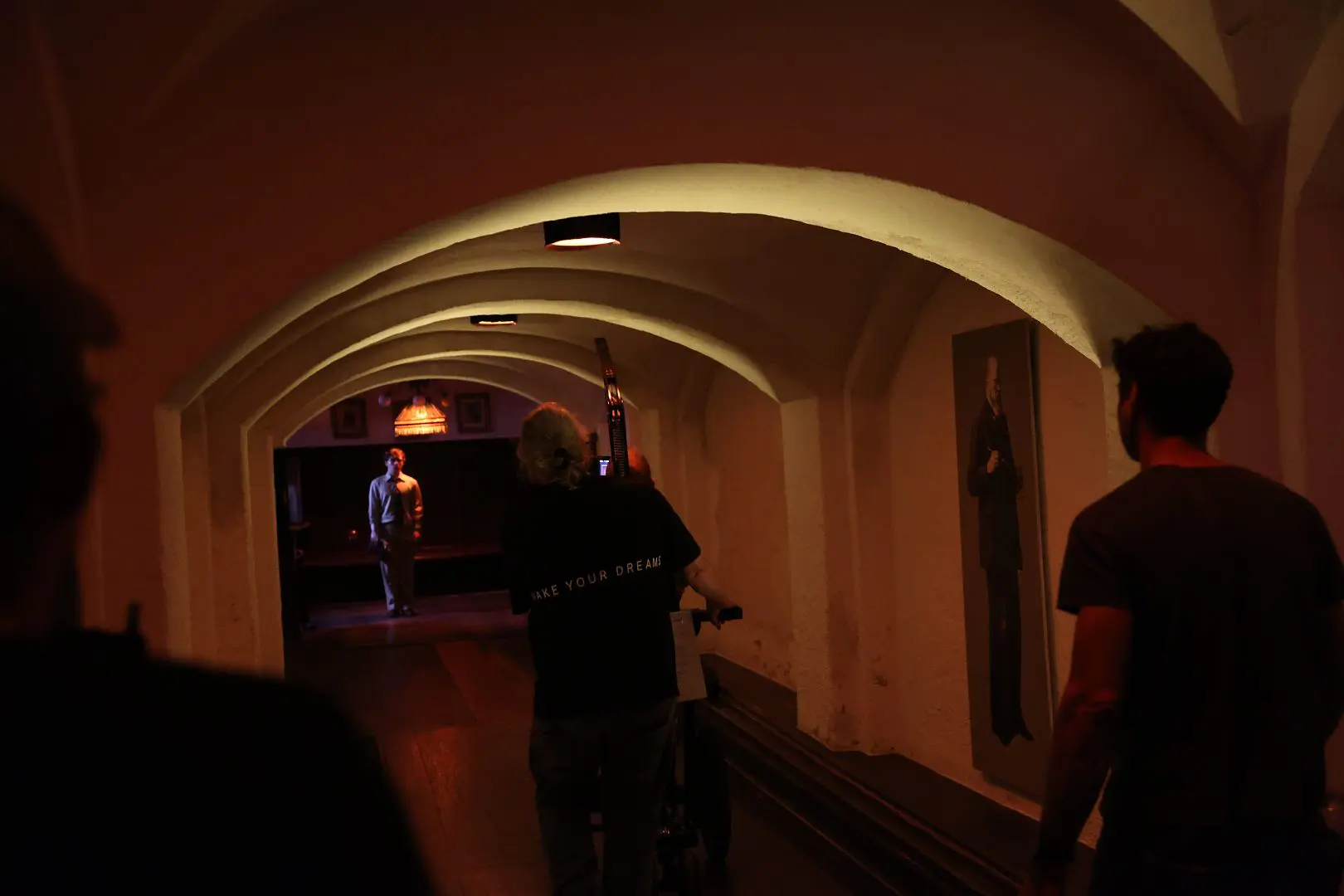
Each light element within the segment could be controlled individually, enabling transitions from white light to threatening red flames that visually pursued Clarence. It was essential to integrate these light sources with the original plate.
Lighting movement on set had to be transferred to the 3D world and synchronised with the treadmill speed on which the protagonist ran. Once physical conditions were translated into Blender, the composite could function correctly. Jim also handled greenscreen keying and camera tracking, removing the original background and inserting Clarence into the rendered 3D corridor.
The Snail and why it should be feared
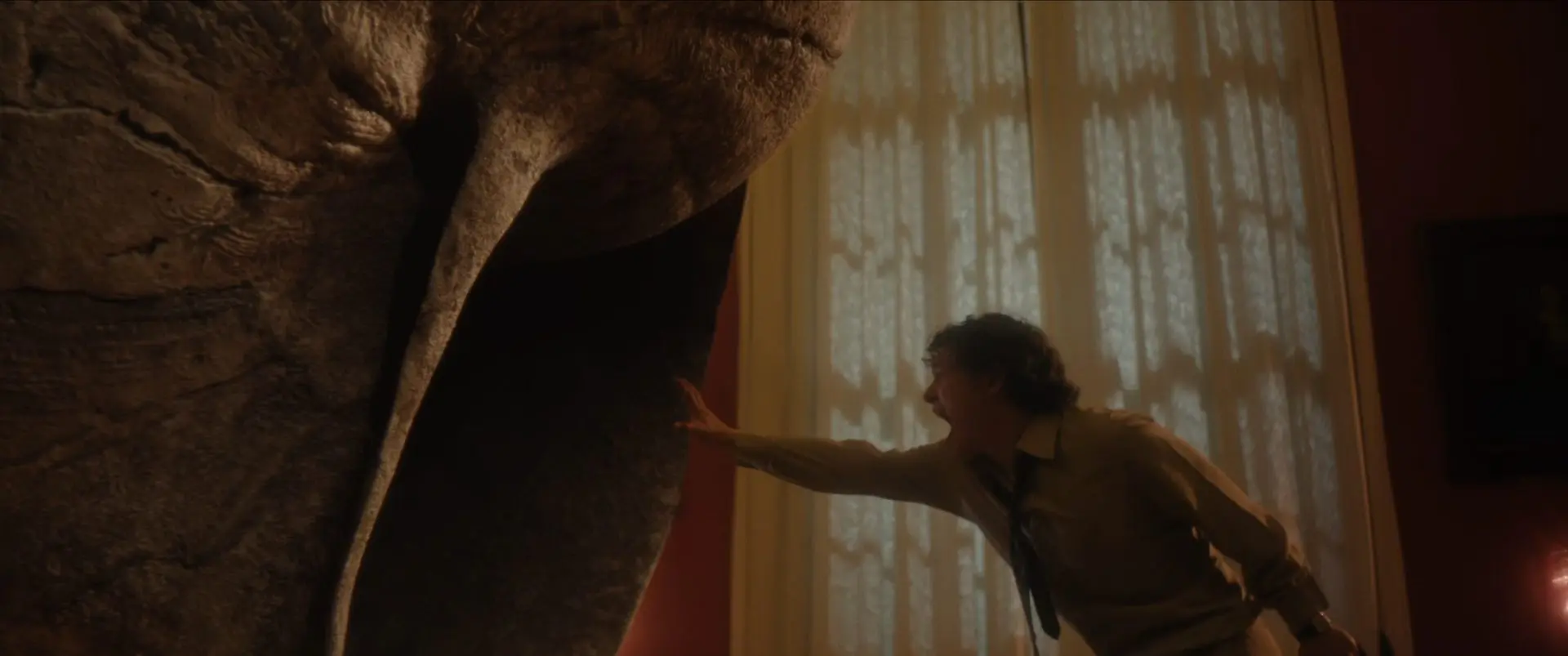
The gigantic snail shell threatening to pull Clarence into his dark past was a central element of the film. Elena Rid began sketching snail concepts before the story was fully defined. Inspired by horror films such as I Saw the TV Glow, the snail was designed to feel out of place, like a relic from another world. It represented a mutated version of Clarence’s childhood plush snail, distorted by grief.
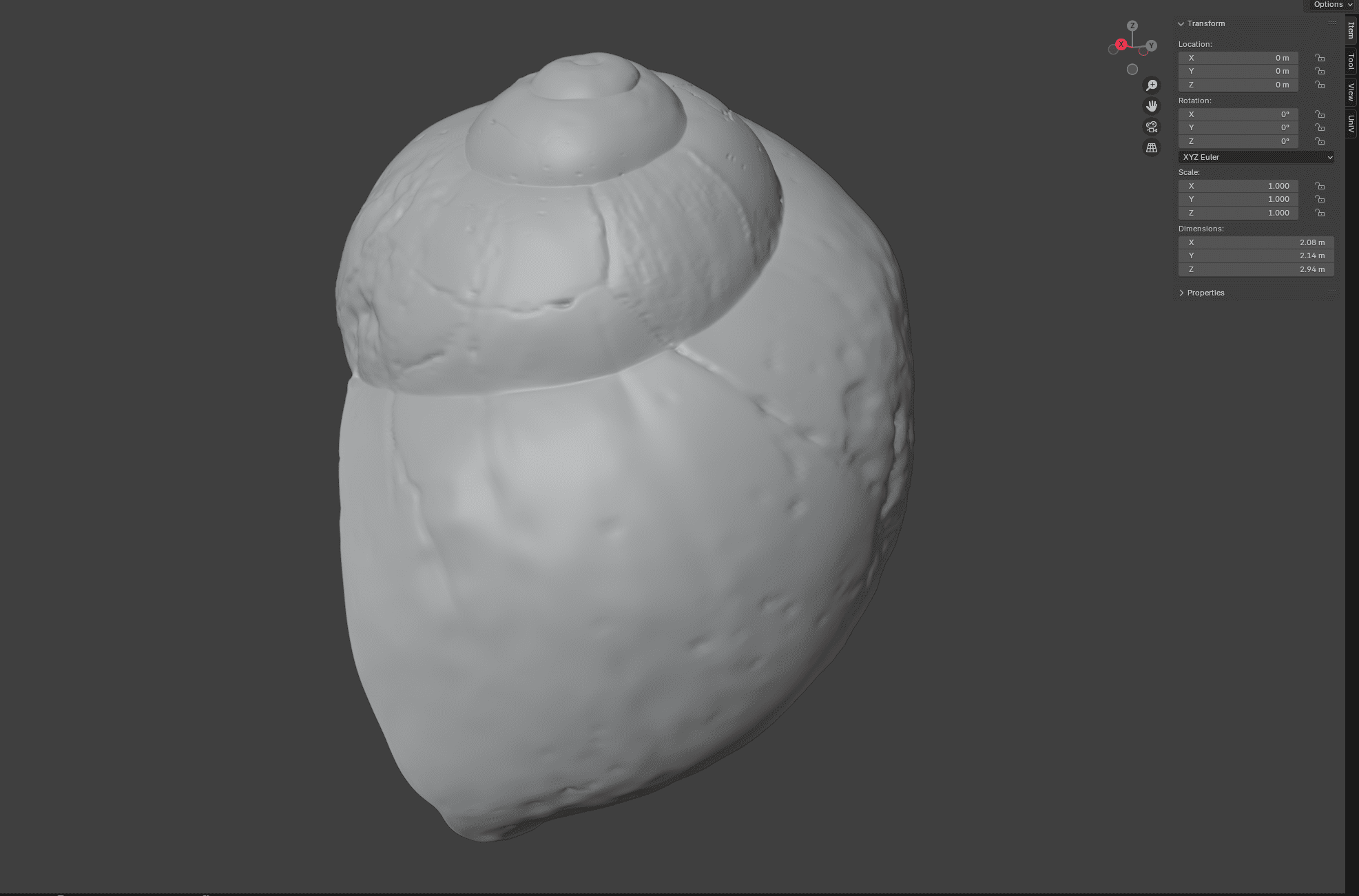
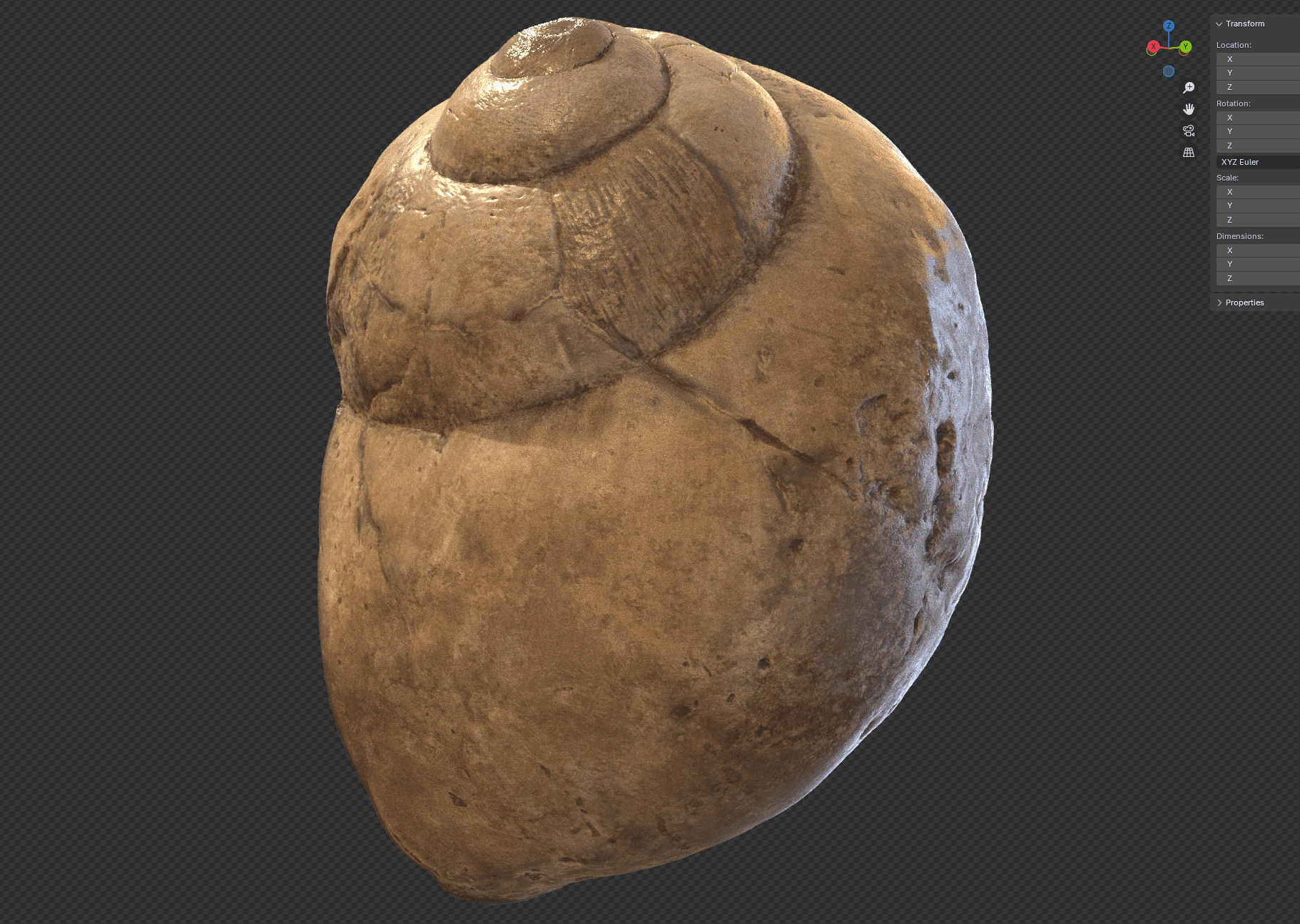
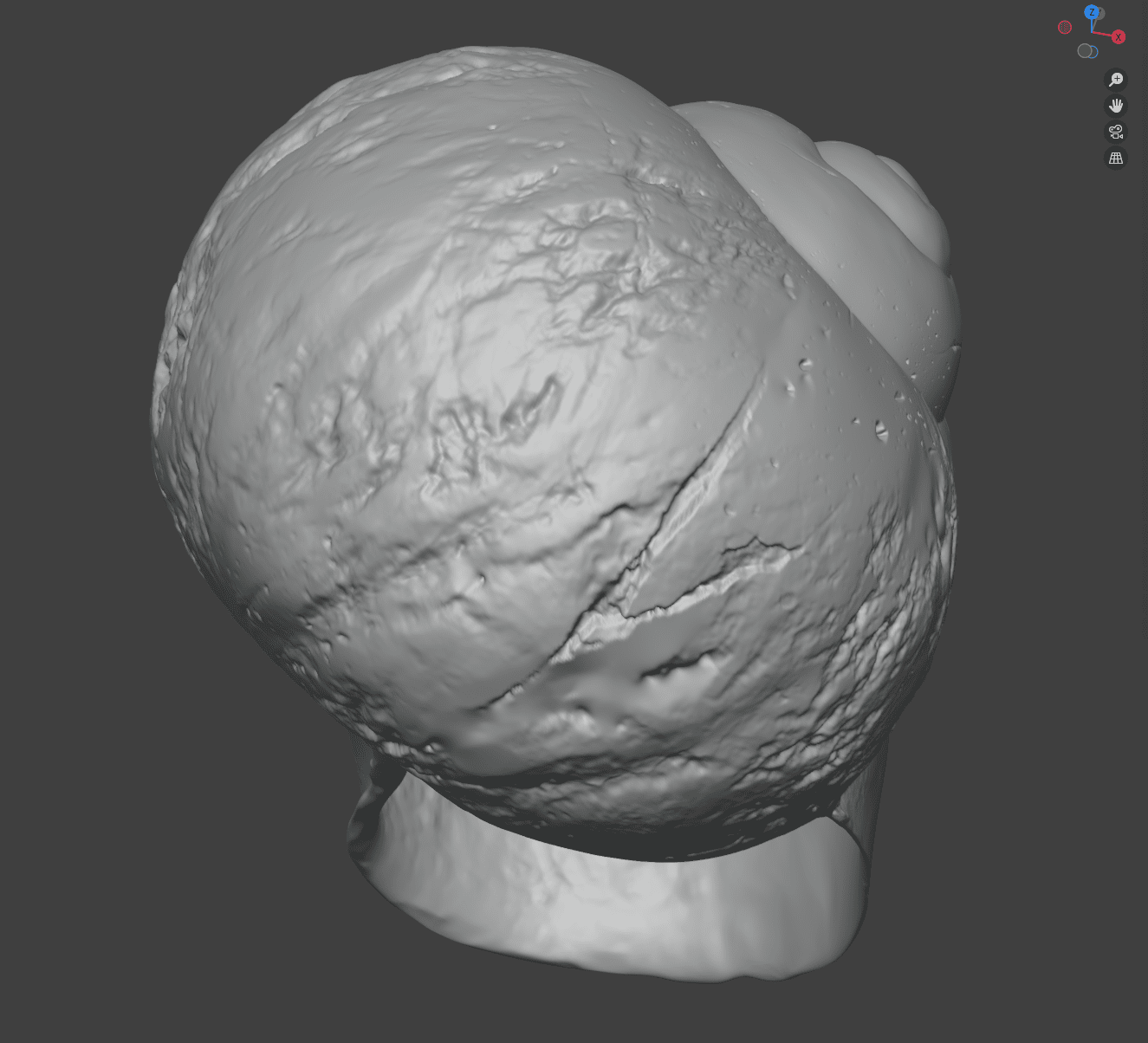
At the beginning, a more classic texture was planned for the snail. As the planning progressed, however, the idea emerged to give it a subtle resemblance to a skull. Elena Rid then stretched the 3D model of the snail so that the spiral at its center would recall the hairstyle of Clarence’s mother. During sculpting, the student worked in fine cracks. Elena mainly used the cloth brush to add further small, swirling details and folds to the surface. Small indentations and a pore-covered structure were also incorporated into the sculpt. Elena primarily based this work on the previously created concept art and additional reference photos of old bones.
To achieve the prehistoric, fossil-like look, Elena engaged intensively with the main character. The snail thus served as a symbol for a very old, deeply buried trauma of Clarence. As references, the student mainly used an ammonite fossil from a museum.

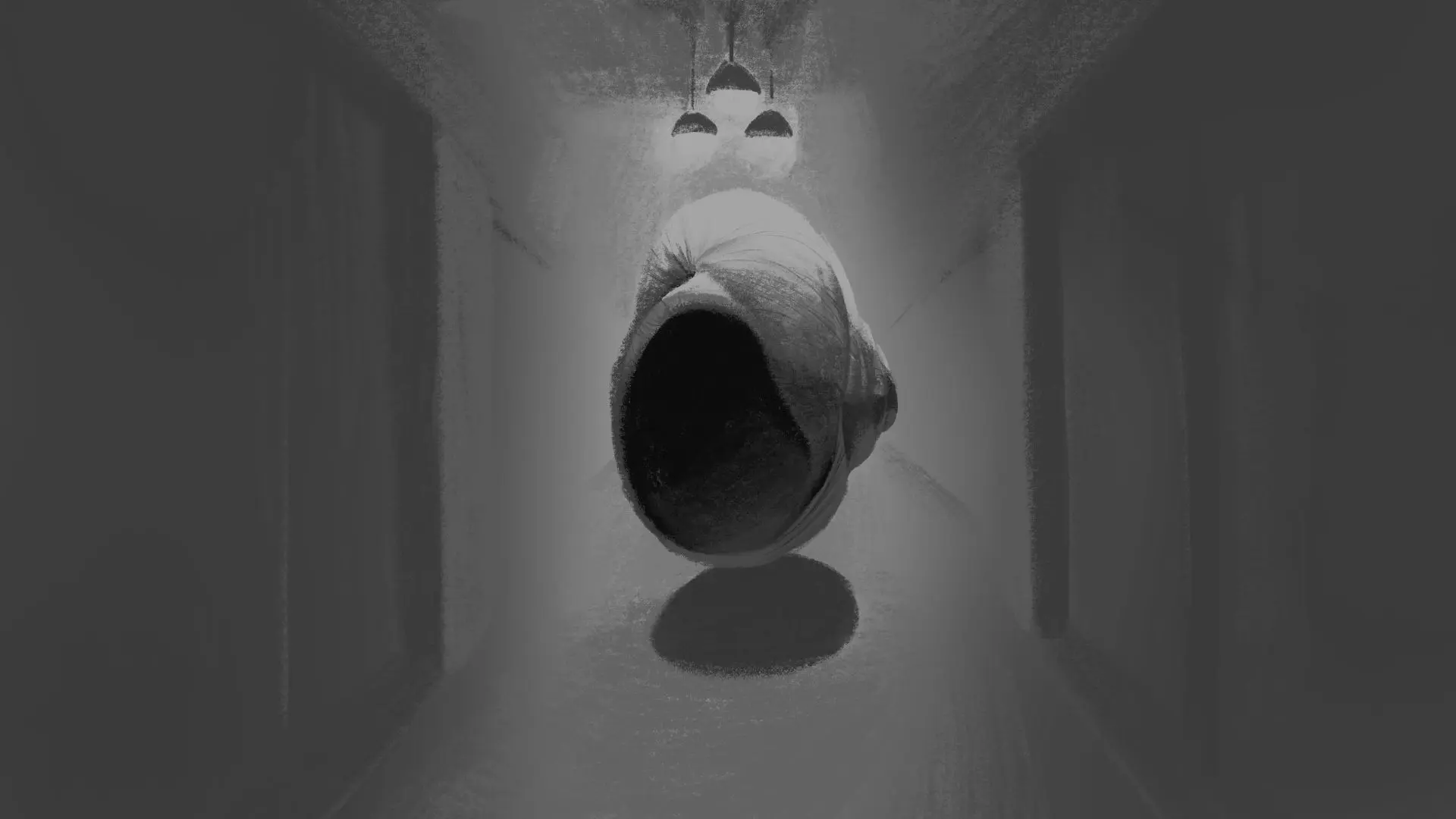
Elena later modelled and textured the snail during the VFX phase. It was not intended as a static prop, but as a manifestation of Clarence’s fears and inner conflict, visually referencing the stuffed snail in his hand. Elena sculpted the primary snail in Blender. Additional snails with varied surfaces and shapes were created with Vanessa Chu. Texturing in Substance Painter, supported by lecturer Birgit Hämmerle, resulted in a photorealistic surface with a fossilised yet “moist” quality.
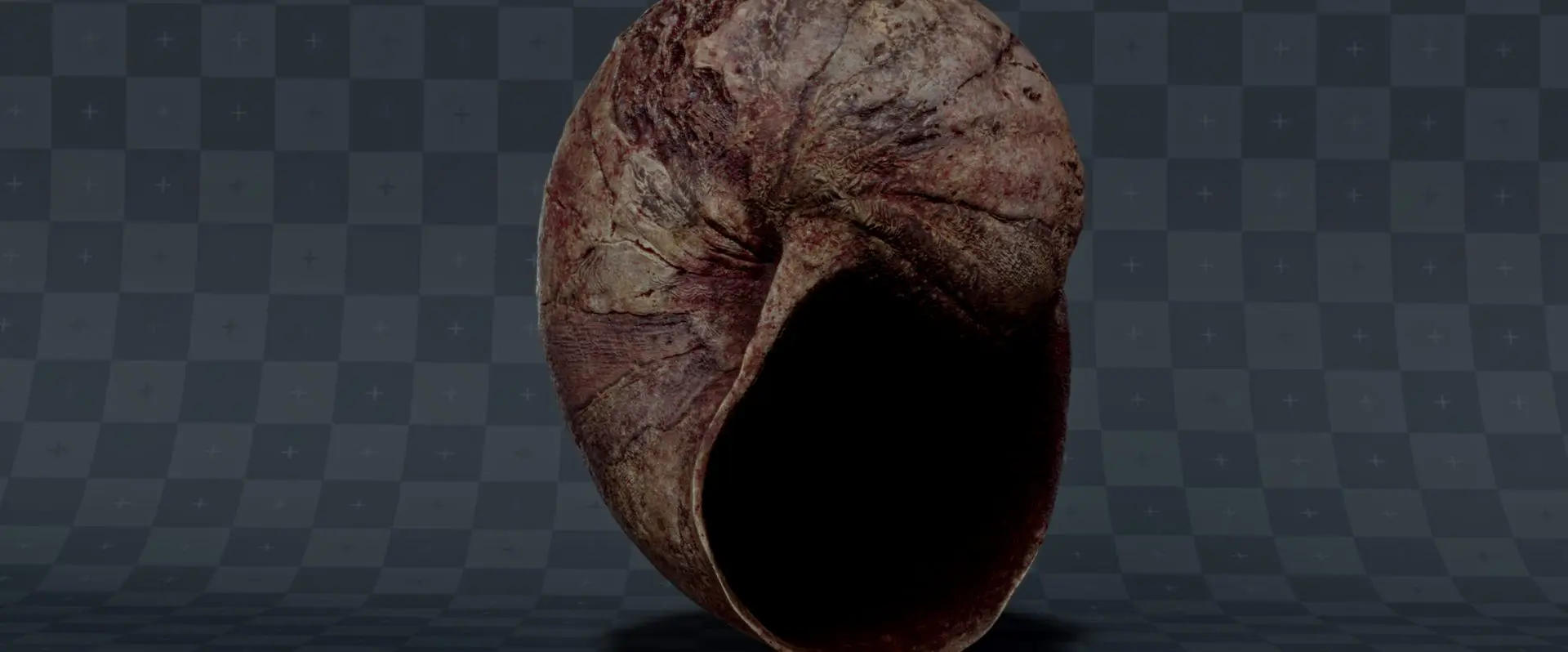
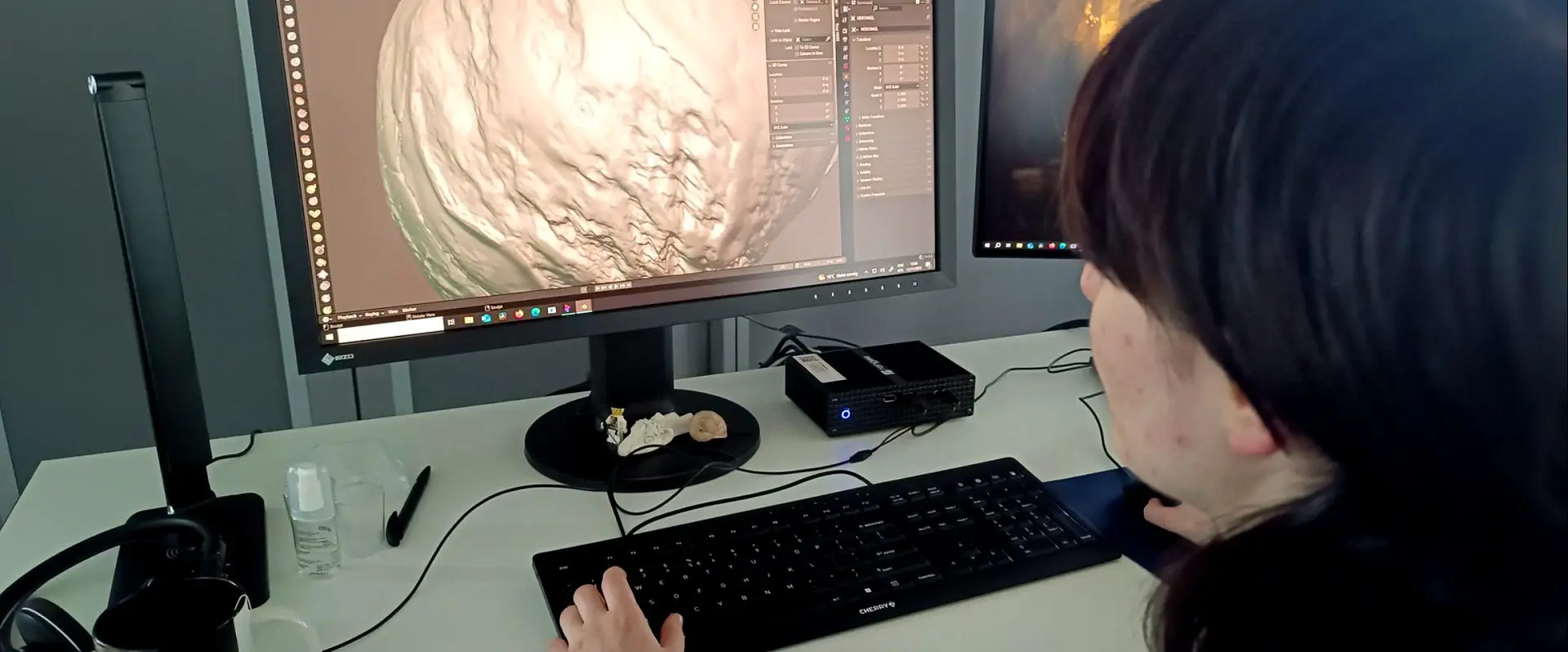
Elena adjusted lighting intensity and temperature, rendered the snail shell, tracked scenes with Ando Avila in 3D Equalizer, and refined them in a complex Nuke setup.
In several iterations, the exact shape of the “eye” was defined: how strongly it should protrude, in which direction the folds should run, and how the desired effect could best be achieved. In addition to a fold that functioned like the snail’s eye, the inner hole of the snail was also intended to resemble a screaming mouth in a face. In this area, Elena Rid and Jim Obmann worked together on the interior of the snail. Jim created a soft mask in Blender that fades toward the edge of the hole. External light sources were not supposed to influence the interior. In the end, it was meant to appear like a black hole that almost sucks Clarence in.

Texturing in Substance Painter was Elena Rid’s first experience with the software, which initially made it a challenge. We wanted to achieve a moldy look, which the student built up using many layers of moss brushes in different whitish and greenish tones on the base texture. Most of the fine grooves in the snail texture were therefore created in Substance Painter, as the details would otherwise have become too small during modeling. The focus was placed more strongly on a bony, fossilized surface.

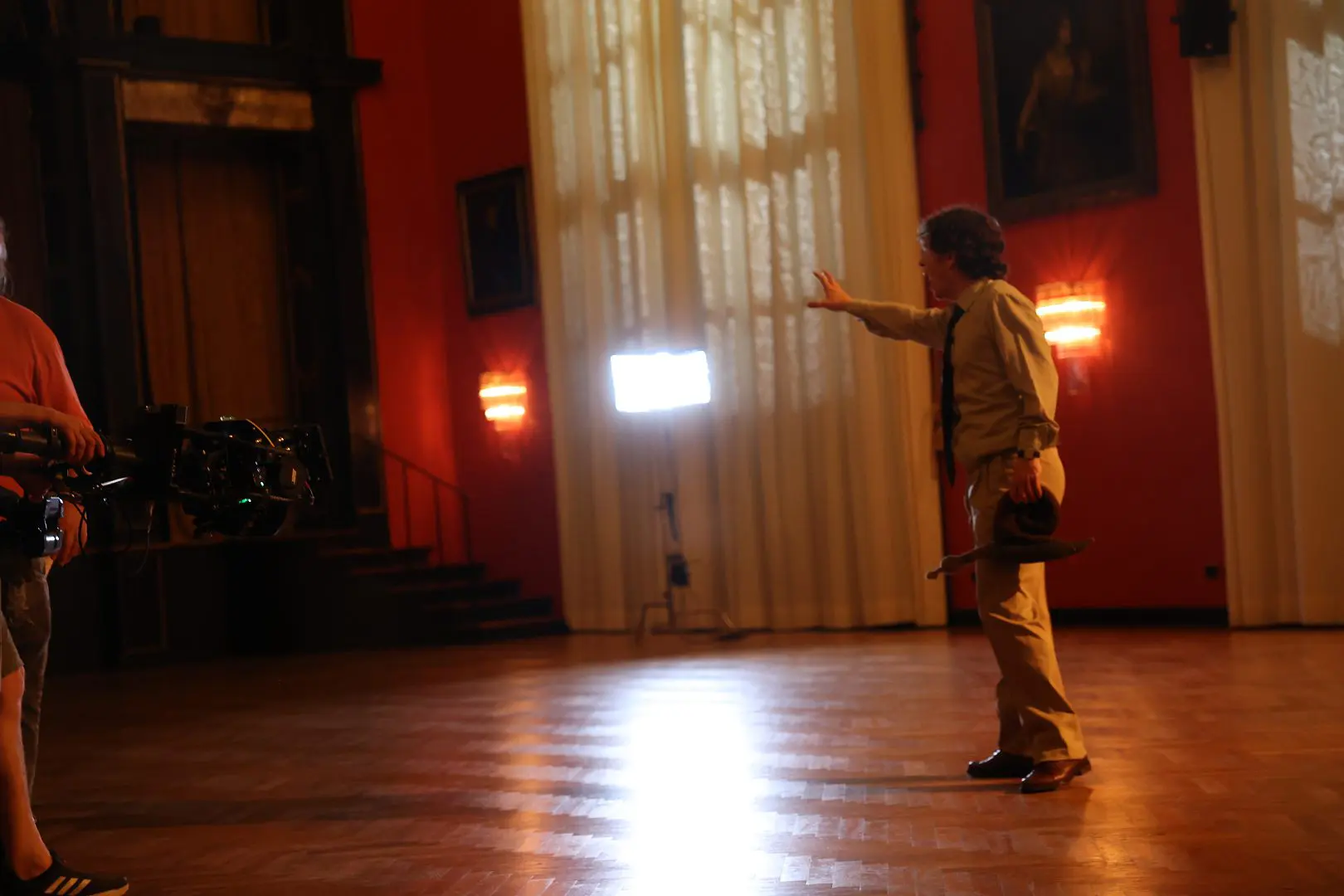
Since no greenscreen was used, Martin Tallosy assisted with rotoscoping. Colours, contrasts, and brightness were adjusted to integrate the snail seamlessly into live-action footage. Vanessa Chu, Vanessa Ramovic, and Sonja Latussek assisted with camera tracking. Accurate match moves were essential for positioning the digital camera correctly within the large hall.

Learnigns from Set Supervision
After working on animated films in the first year, we eagerly anticipated shooting on a real film set. Preparation involved understanding the responsibilities of VFX supervision on set, ensuring VFX shots were filmed and documented correctly to avoid post-production issues. Asynchronous supervision courses at CAVE Academy helped us learn LiDAR scanning, photogrammetry, and reference photography.
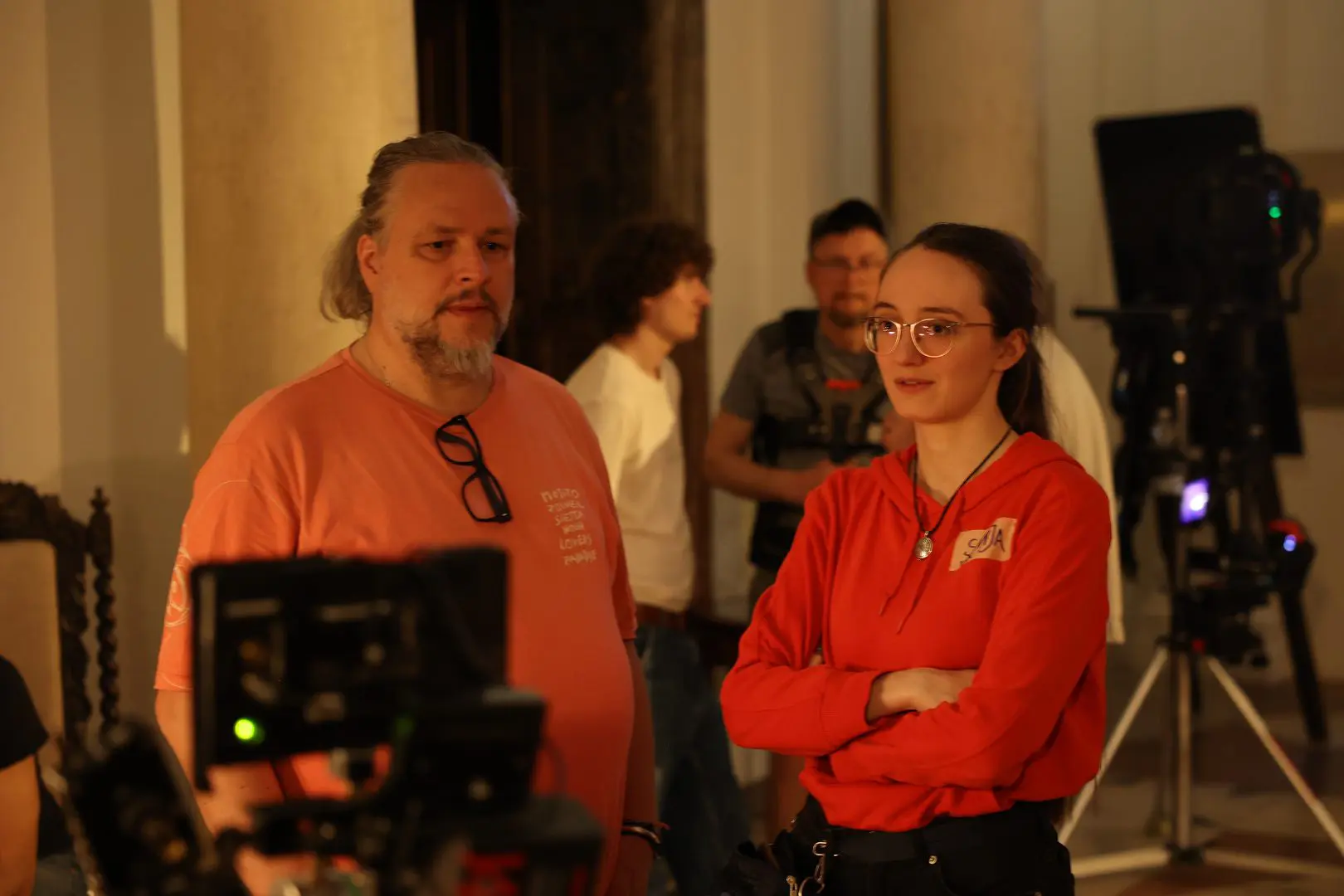

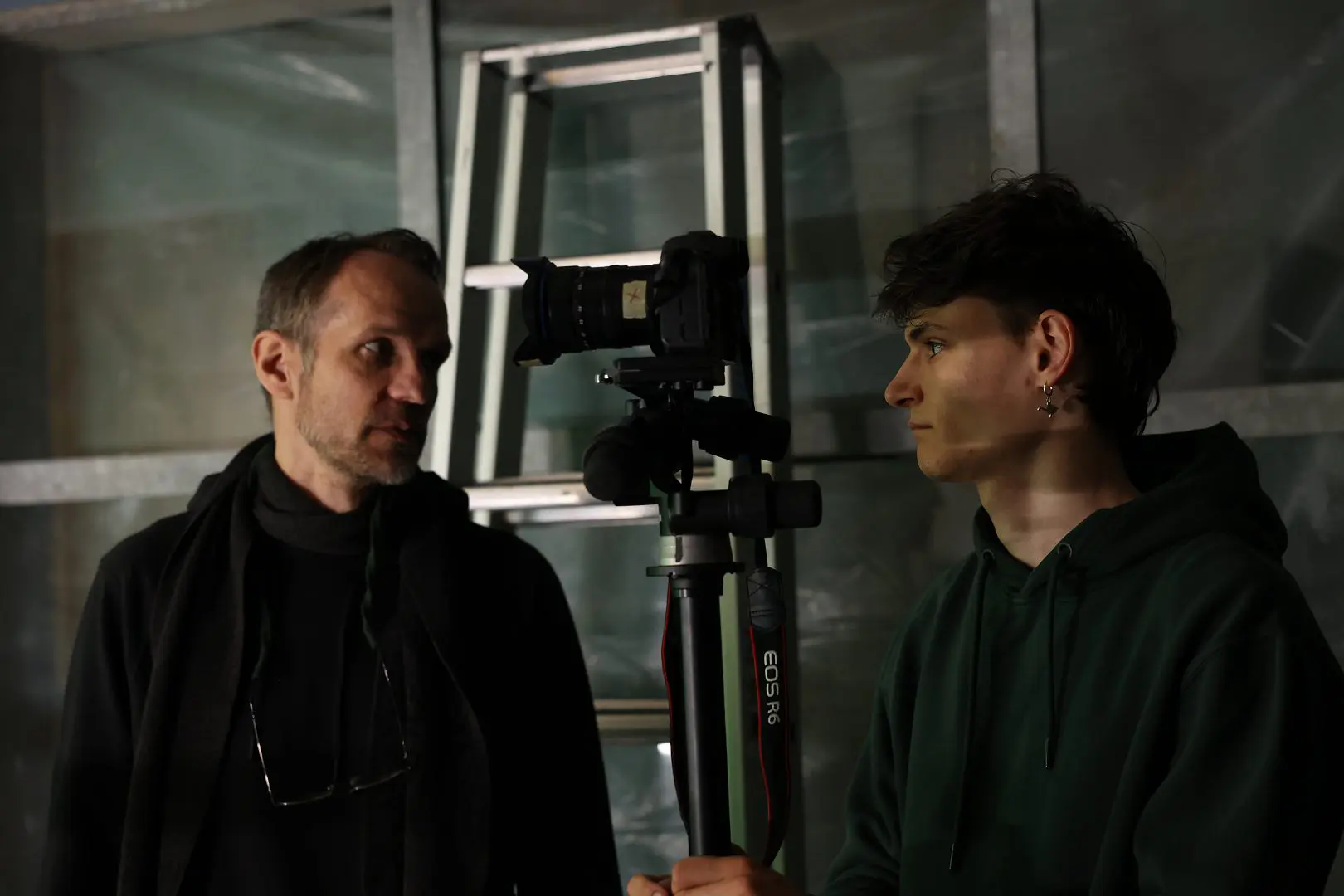
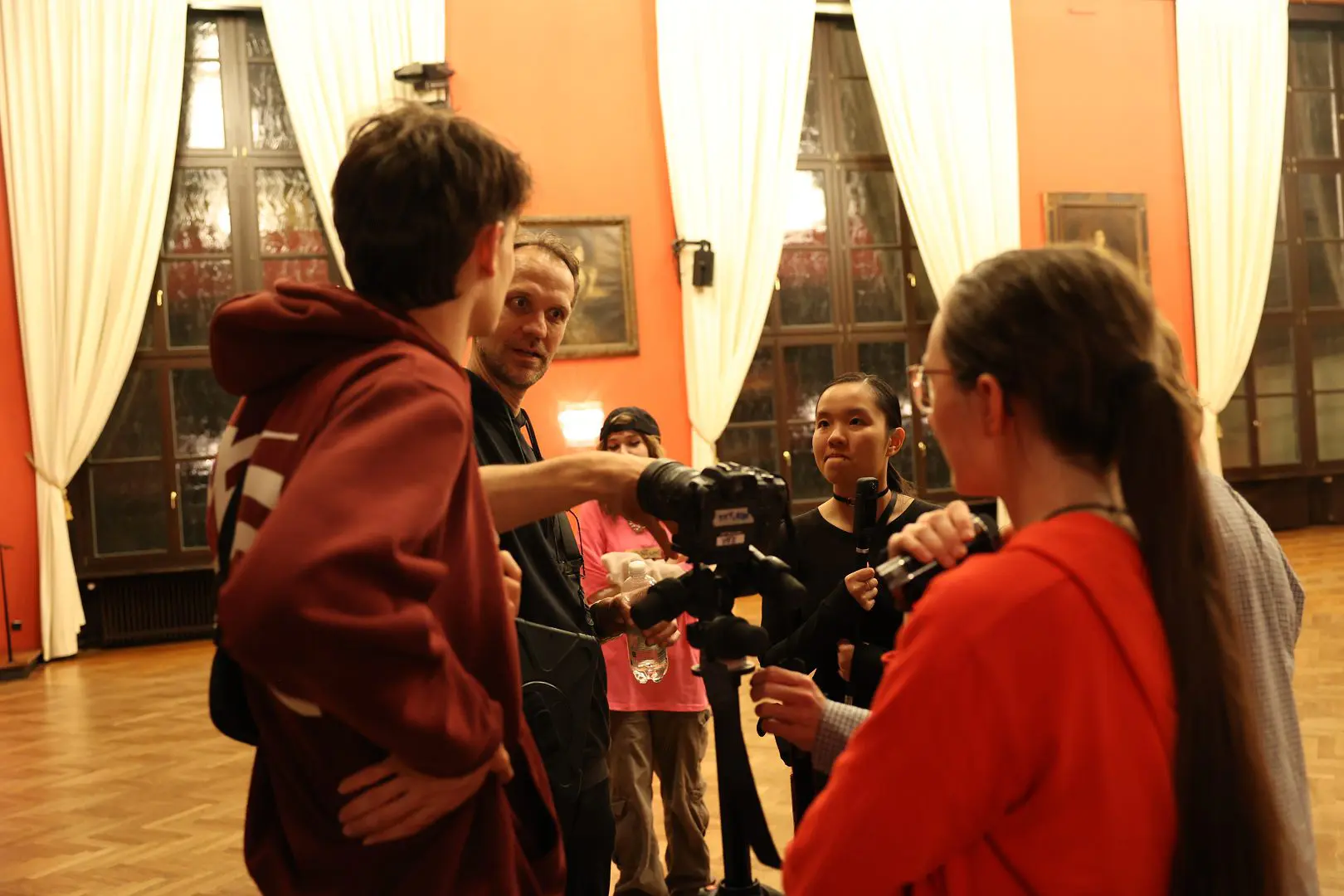

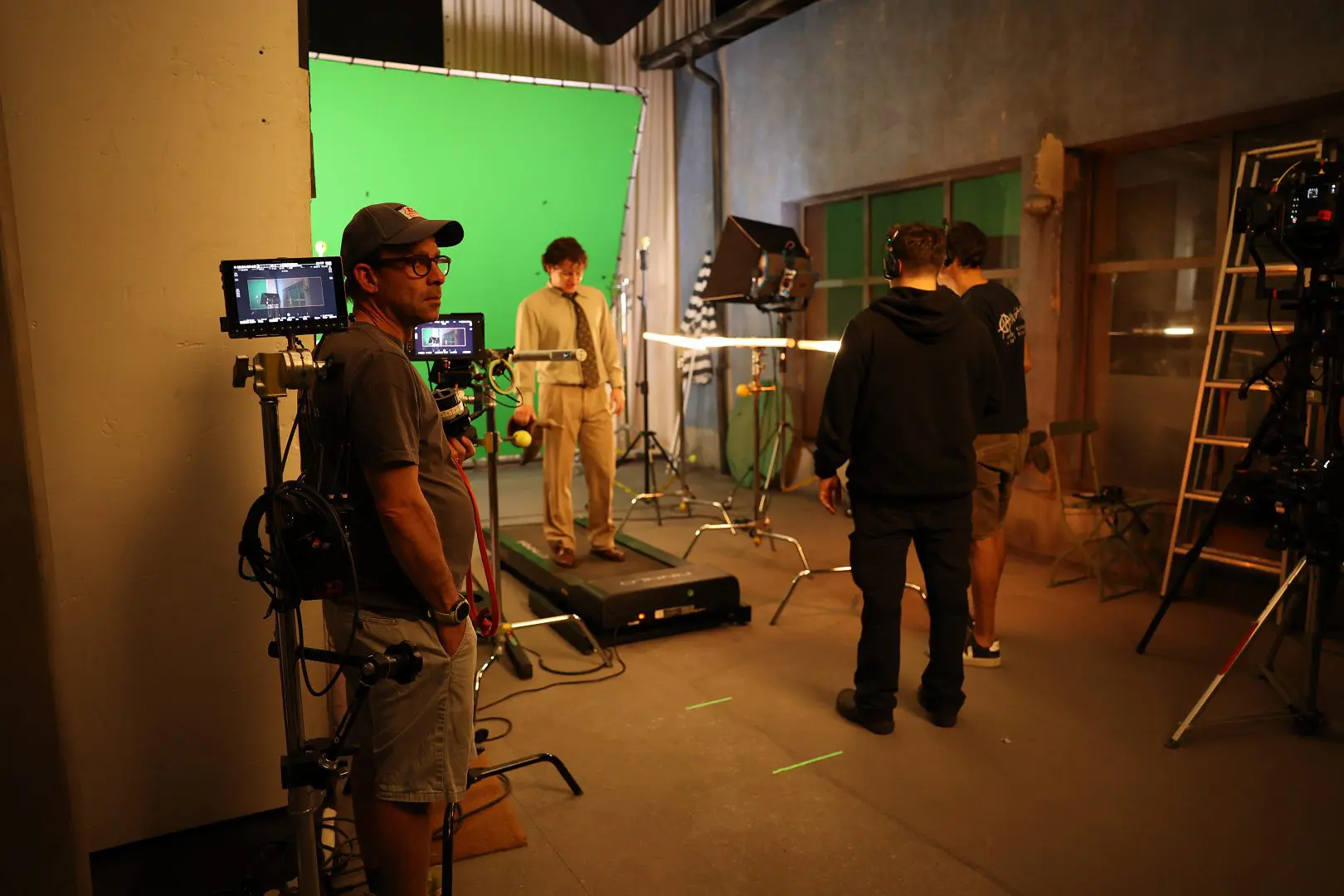
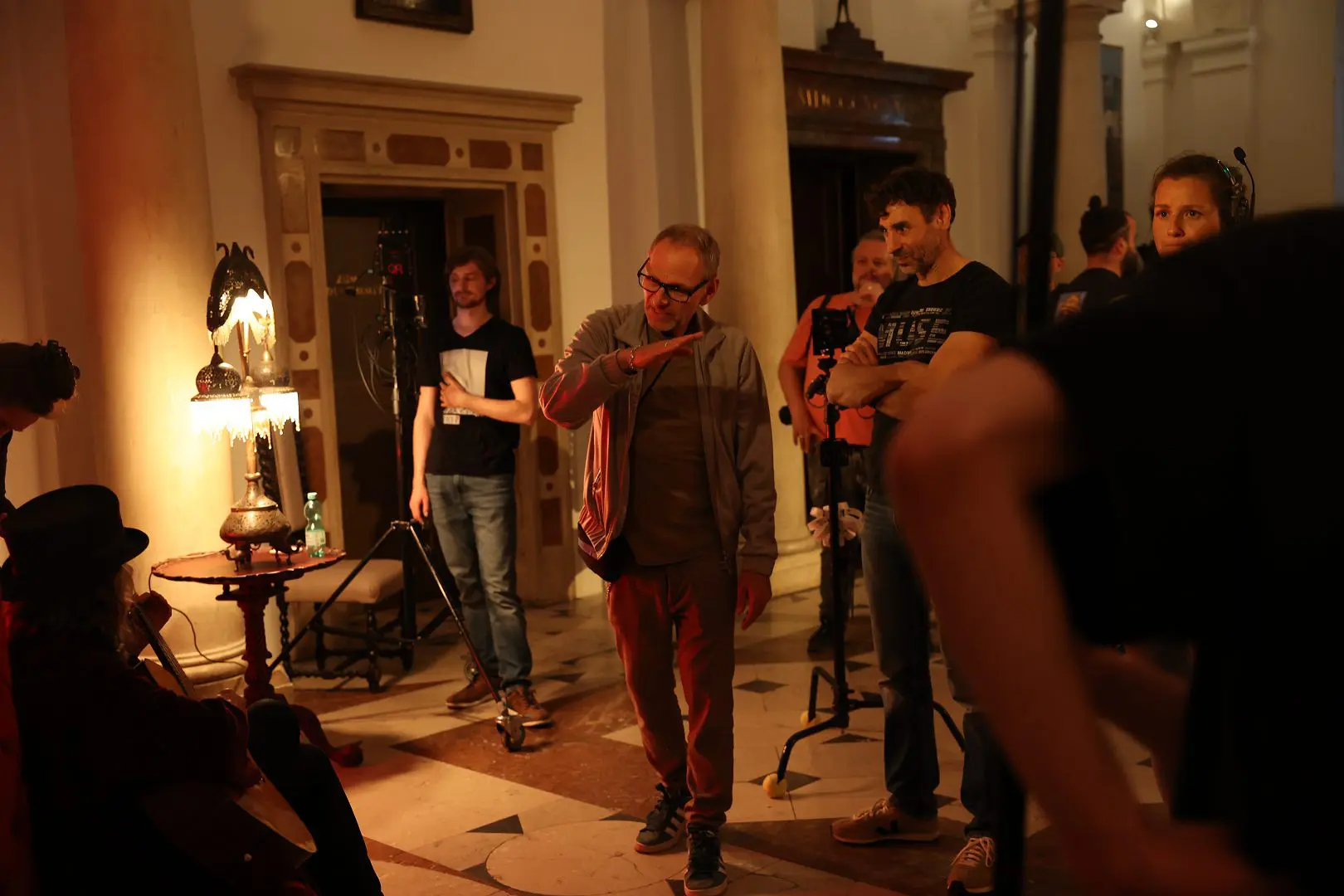
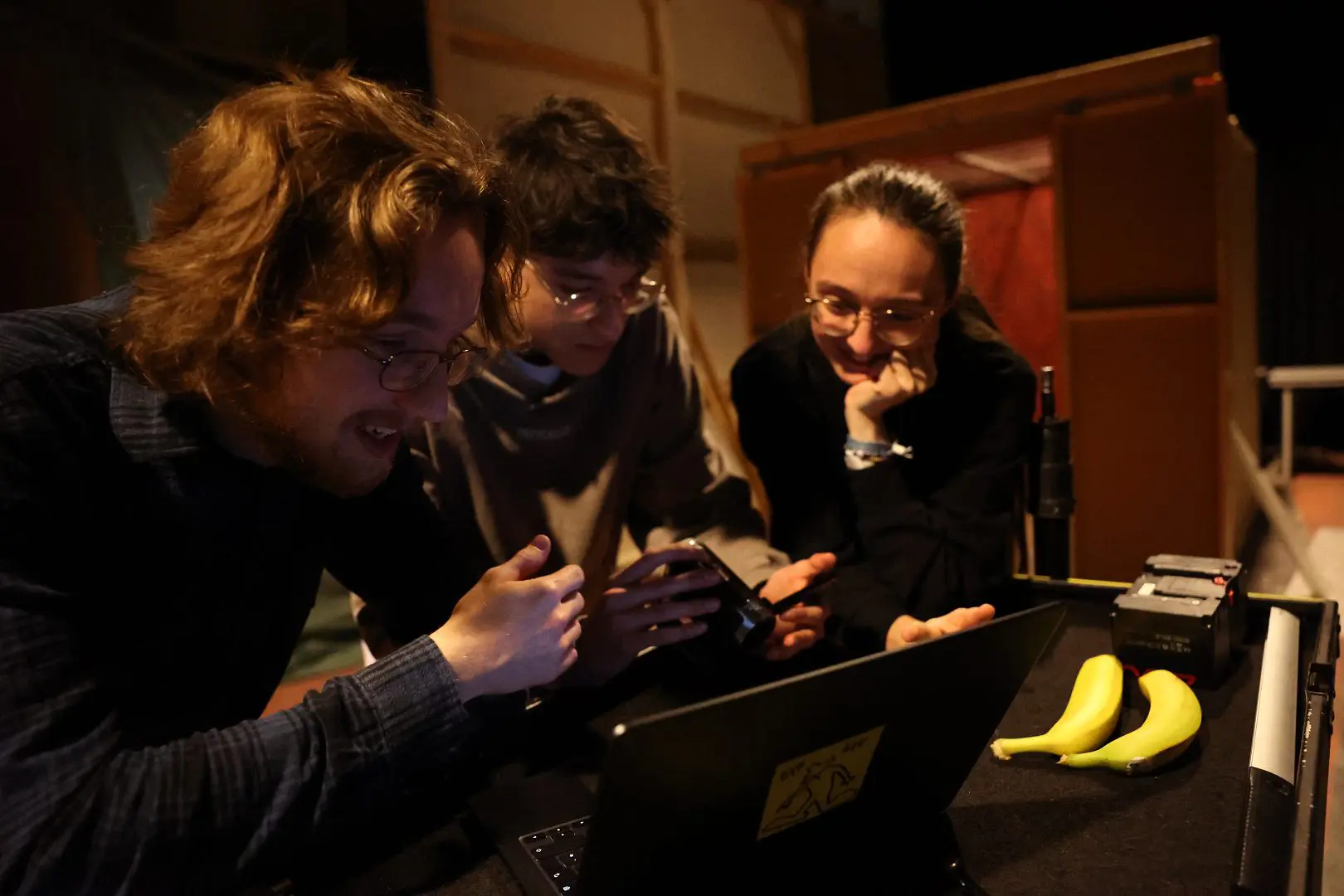

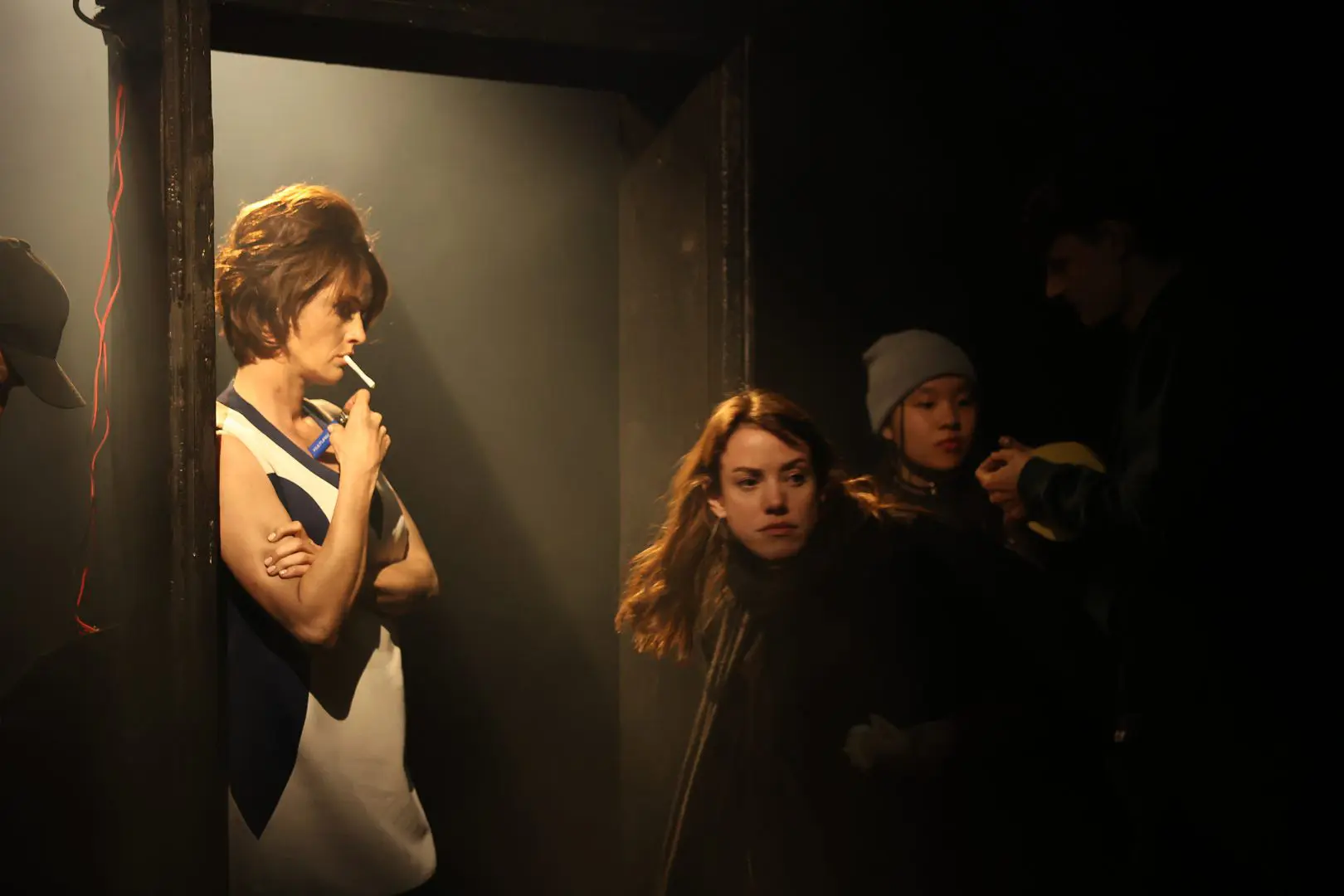
Once preparations and pre-produced props were complete, the four-day shoot began. Supervisory duties rotated among the team, giving everyone insight into all aspects of the role. Tasks included logging VFX shots, recording focal lengths and camera data, capturing shadows using grey balls, and placing tracking points on greenscreens. Colour checkers ensured colour accuracy and white balance. Two shoot days took place at the Munich location for corridors and reception scenes. The remaining days were spent at the HFF film studio for elevator and living room scenes.
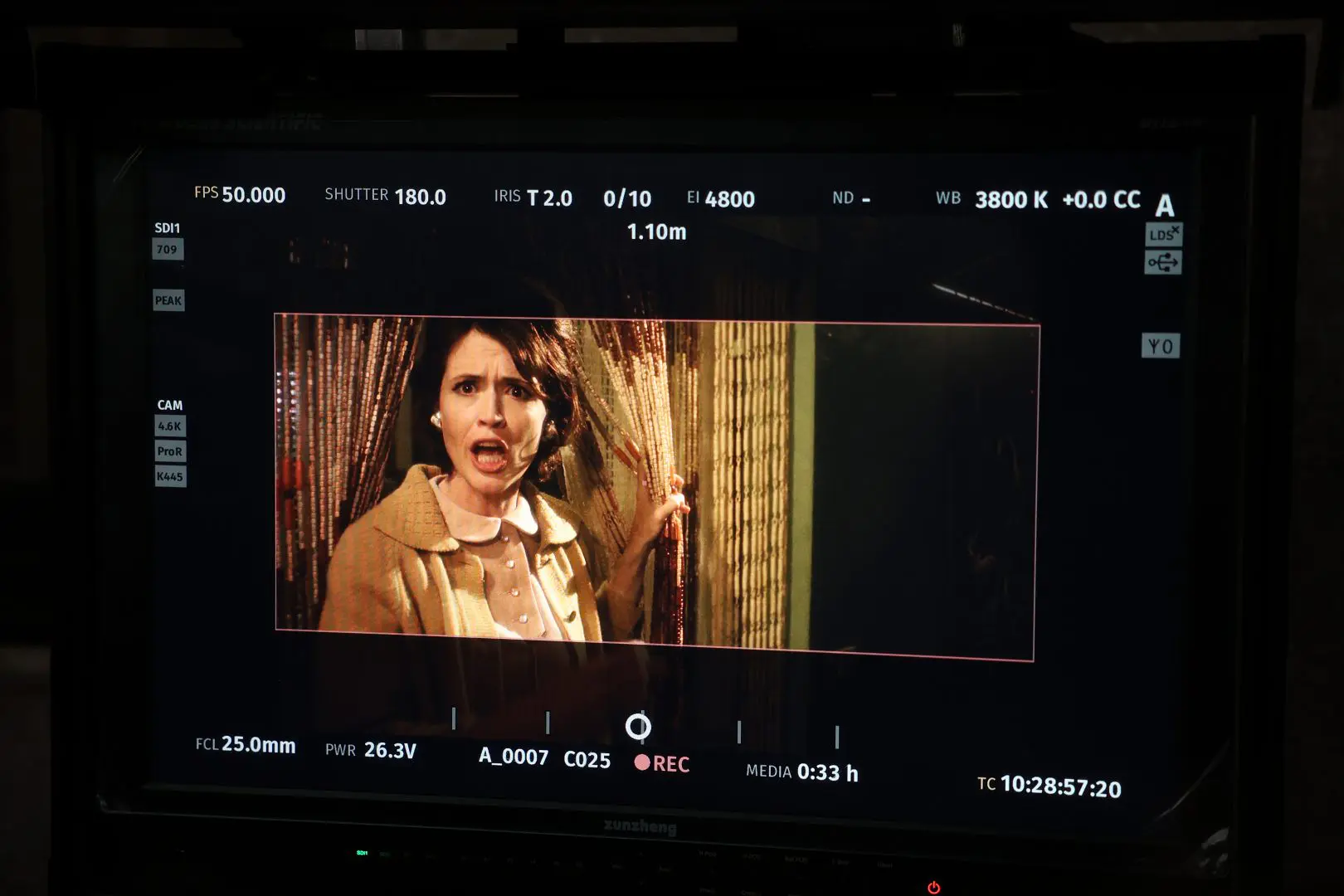
Mentor Jan Stolz provided invaluable support as set supervisor. Cinematographer Torsten Lippstock shot the film on an ARRI Alexa 35. Simon Burger introduced us to the role of the Digital Imaging Technician. Mihail Dervenski guided data management and later edited the film, aligning technical expertise with the director’s vision.
Sound Mixing and Grading
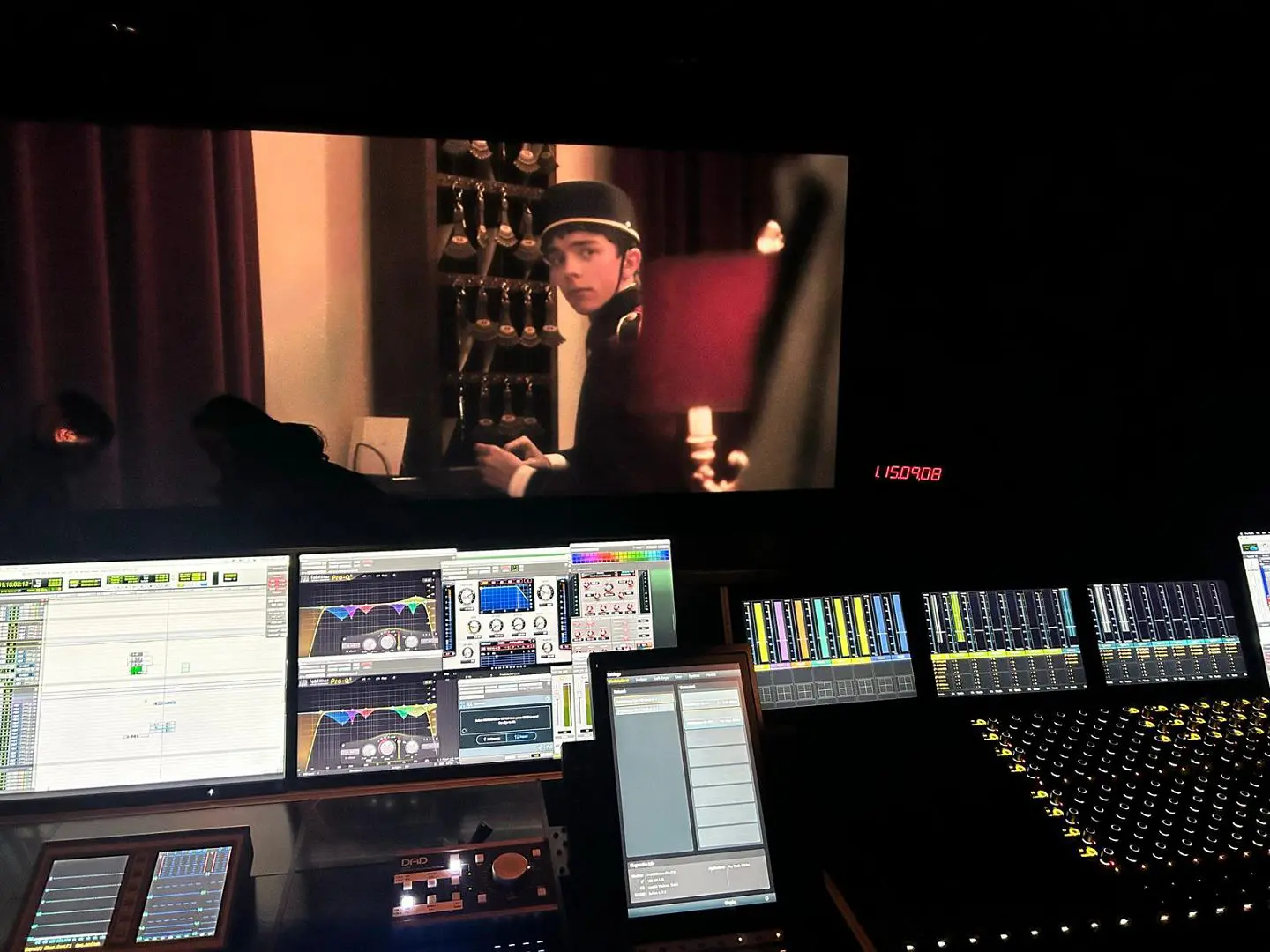
Creating a dark atmosphere was essential. Composer Lukas Stipar, previously involved in WOODLAND, delivered a soundtrack that added weight and intensified tension. Dr. Rodolfo Anes Silveira supervised post-production sound, enhancing clarity and authenticity. A Dolby Atmos mix was created at PHAROS Studio 1, where Tschangis Charokh demonstrated object-based audio placement. Andreas Lautil handled colour grading, giving the film a consistent dark-warm palette.
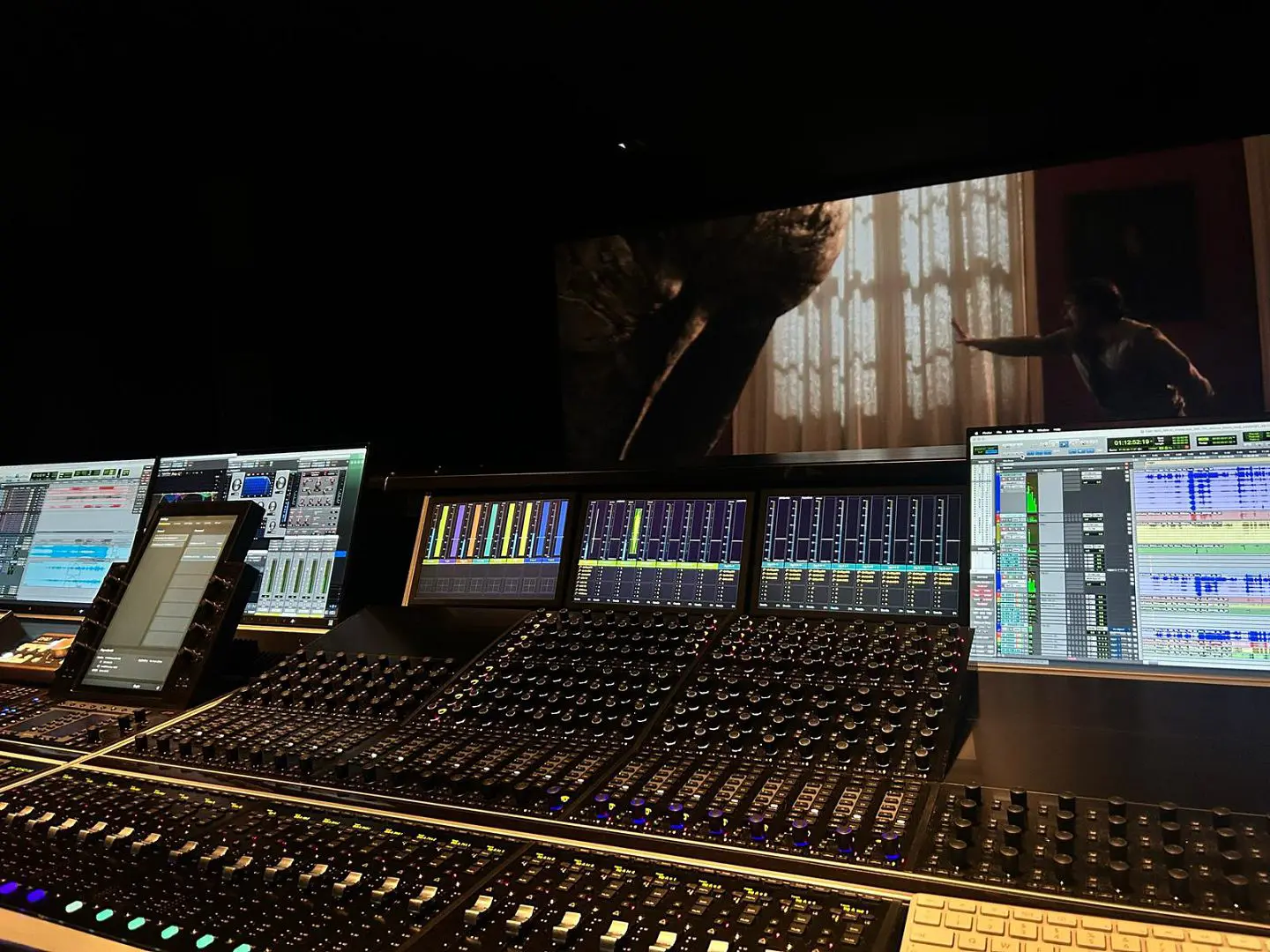
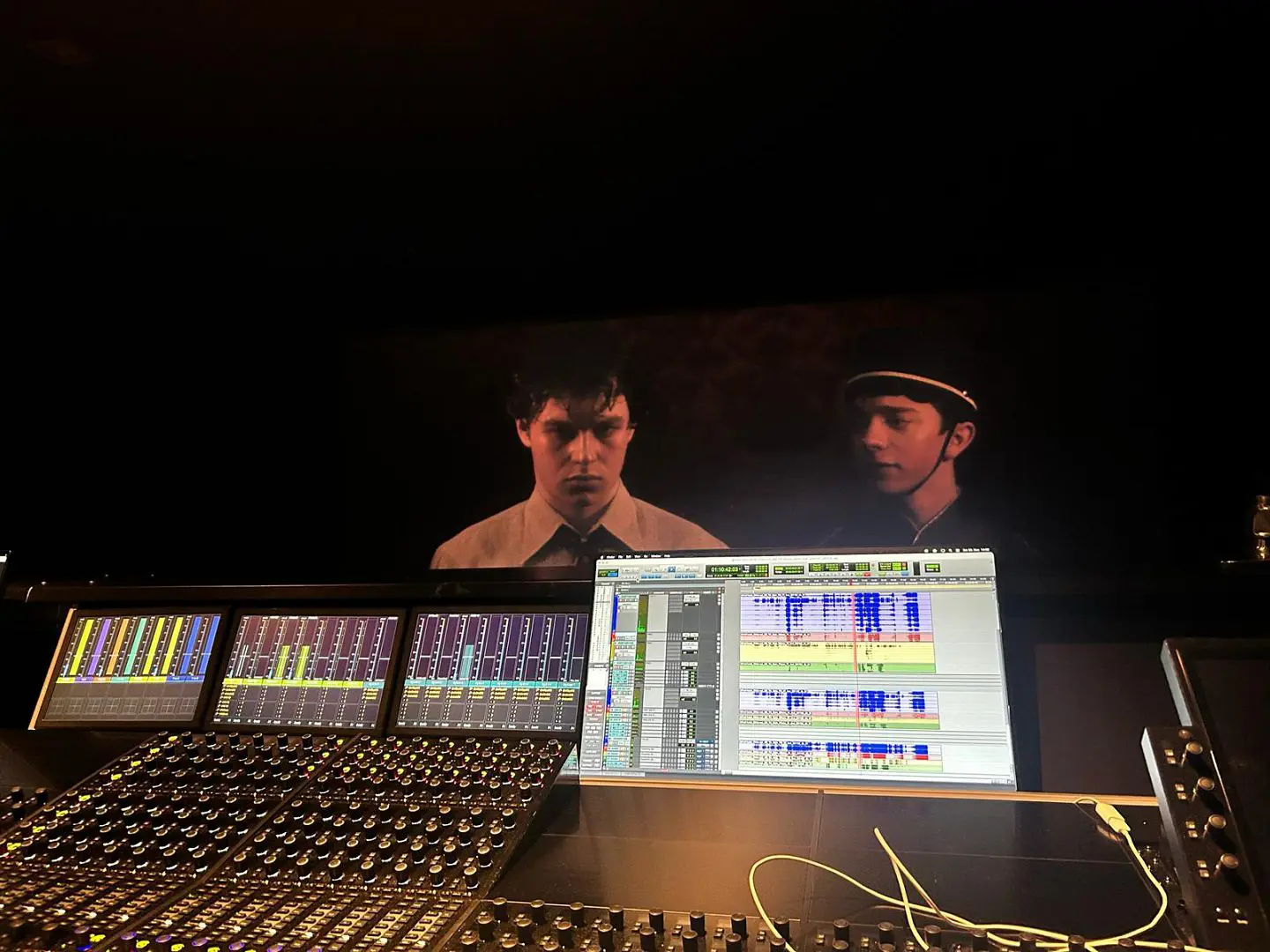
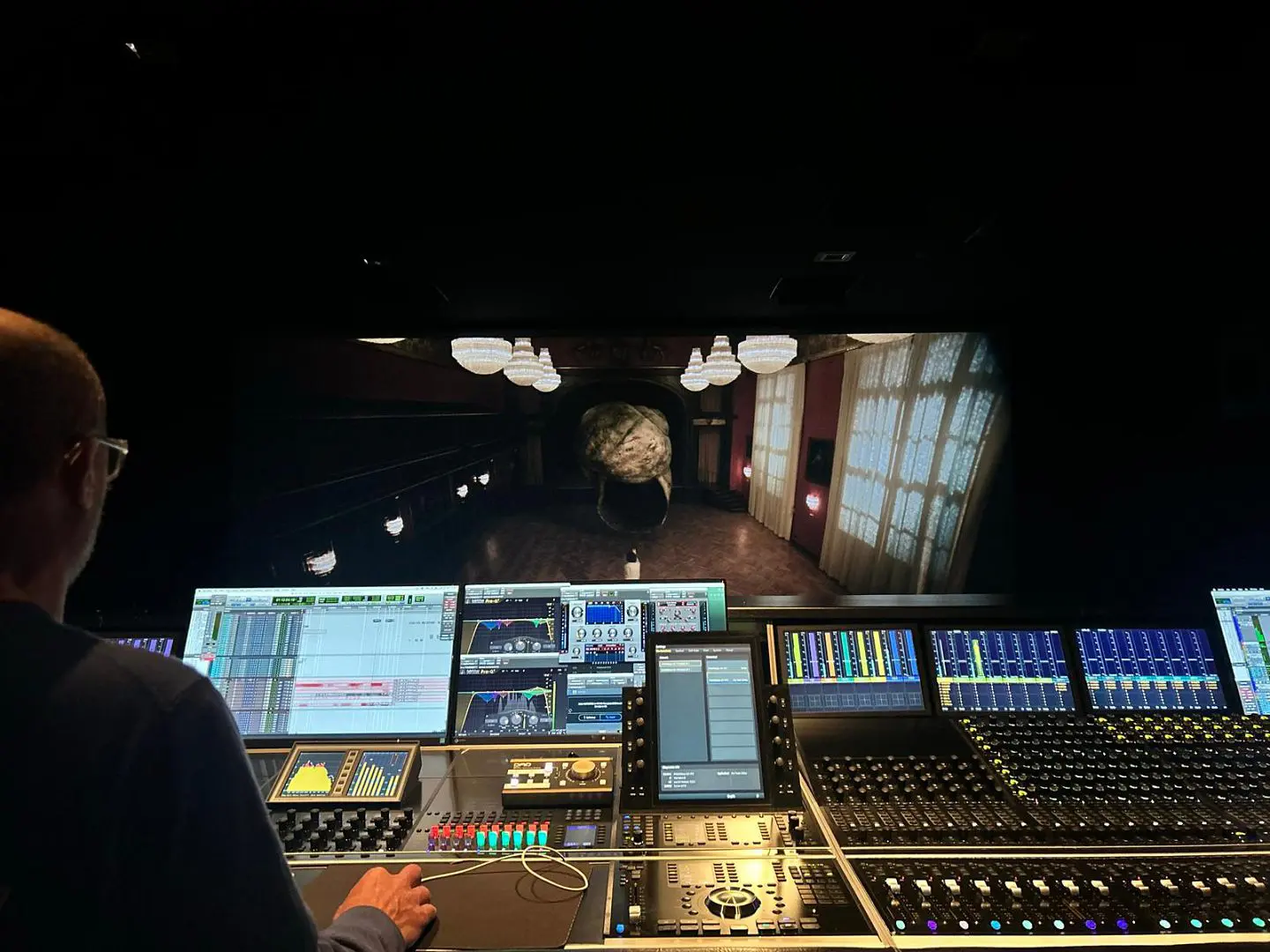
Conclusion
In retrospect, INFINITY HOTEL was an exciting project for us, from which we drew important personal and professional insights.
For Sonja Latussek, it became clear above all that it is important to define clear areas of responsibility at an early stage. In hindsight, she feels she should have paid closer attention from the outset to the fixed tasks that remained under her responsibility and were primarily related to the film’s visual look, such as the textures of the snail or the elevator. An unexpected challenge for her was greenscreen compositing in Nuke, which proved significantly more complex in some scenes than initially anticipated. Camera tracking, on the other hand, went very well. Sonja learned how tracking works in principle, which points in space are suitable for tracking, when they do not work, and at what point a track becomes truly precise. Although she found all areas of on-set production particularly exciting, she would like to focus more strongly on 2D work in the future. She found the 2D animation of COSMIC KNIGHT very pleasant, as it integrated coherently with the CRT television.
Vanessa Chu mainly emphasises the importance of critically questioning technical statements and not blindly relying on hypothetical possibilities. It became apparent that an ISO setting that was too high on the Alexa camera led to heavy image noise, which meant that tracking points in 3D Equalizer had to be painstakingly corrected by hand. She therefore advocates handling technical parameters such as ISO more sensitively in the future. She also emphasizes the importance of collecting as much data as possible on set and communicating early to the production that time must be scheduled between VFX shots to gather data such as references, measurements, and scans.
Emil Pogolski summarizes his conclusion with a simple but fitting guiding principle: “Make it good, kid.” From his perspective, the production of INFINITY HOTEL proceeded overall without major complications. Planned ideas could be implemented, and post-production was structured, even if it took longer than originally planned.
For Elena Rid, it became particularly clear in retrospect how valuable an even longer and freer concept phase would have been. Elena would have liked to work with more concepts and, above all, to experiment more with the snail. Due to time constraints, this was only possible to a limited extent within the project scope. For future work, the student wants to consciously allow more room for experimentation. At the same time, Elena looks back very positively on the rest of the production process. The team made it through the intensive phase well, and in her view, the scheduling in particular proved to be a major strength of the project.
Vanessa Ramovic believes that most aspects of the production worked very well. Towards the end, she and Emil invested a great deal of time in post-production because the elevator compositing iterations required significant effort. She would also like to develop more concepts in the future and test different lighting moods more intensively. Her personal conclusion is less about technology and more about personal attitude: not losing the joy of the work. For her, making films means expressing something and perhaps even putting a smile on someone’s face. This inner light should not be allowed to fade.
Acknowledgements
What was special about our second year of studies at the University of Television and Film Munich was that our entire cohort worked together on a single project. Without question, this was a true team effort in which all six students contributed their existing knowledge to the film while continuing to develop their skills.
Our special thanks go to our professor Jürgen Schopper, who provided us with strong support in VFX supervision. His vision and creative input helped us, during the weekly classes known as “weeklies”, to push the VFX shots to their final form. Prof. Sinje Gebauer, Dr. Rodolfo Anes Silveira, Berter Orpak, Jonas Kluger, Martin Tallosy and Petra Hereth, who together with Professor Schopper form the chair of the VFX degree programme, supported us throughout the entire year with their expertise across various areas of the VFX pipeline.
Together with Prof. Sinje Gebauer, we ensured that all assets and shots were realised and integrated into the overall flow. INFINITY HOTEL introduced us to working with new VFX tools and to closer collaboration with the screenwriting and production departments at the university. Our screenwriters Michael Schwärzler and Jakob Smolinski inspired us early on with precise story ideas, which we were already able to incorporate creatively into our concept drawings in November 2024. Nevertheless, the further development of the material was a collective exchange, in which we, along with our director and professor Matthias Zentner, contributed ideas and gained insight into the authors’ working processes.
Our producers Sonja Hopf and Konstantin Holzner supported us from the very beginning and guided the production with their extensive expertise. While we, as VFX students, largely operated like a small VFX studio during post-production, we were involved in the film from the outset and gained deep insights into various departments, such as production design and casting.
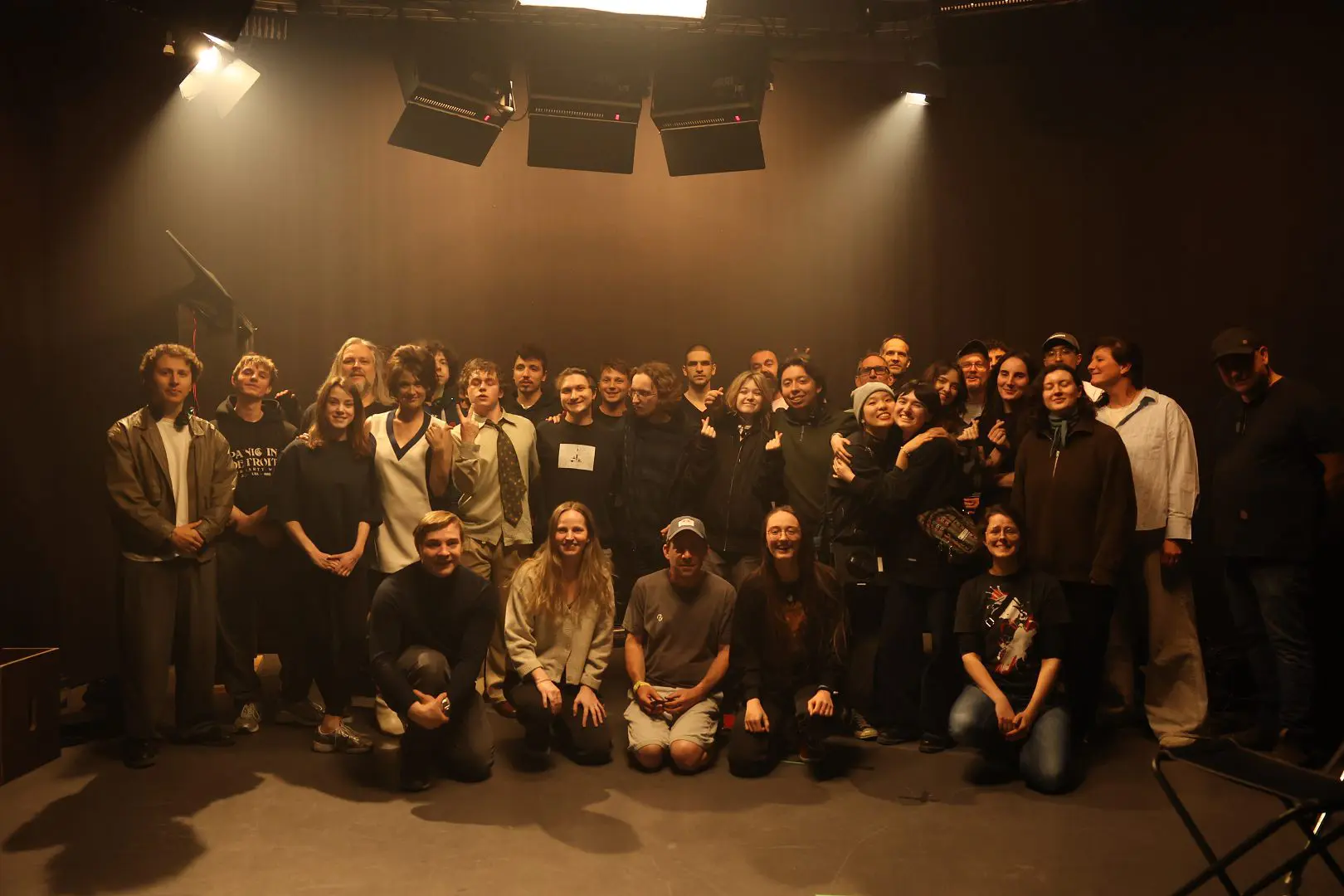
We would also like to thank our actors Till Raskopf, Jonathan Tittel, Nick Woodland, and Sophie Melbinger, as well as the entire film team, for bringing the fictional characters to life and for creating a strong short film together. After the successful completion of the hotel, we were finally able to present the film to a broad audience and guests from the VFX industry at our premiere as part of the VFX Reels 2025 on 27 November 2025 at the HFF. The film premiered at the VFX-Reels 2025 on 27 November 2025 at HFF Munich.

The Producers’ view
WRITTEN BY SONJA HOPF AND KONSTANTIN HOLZNER
As student producers, our task was to realise a live-action narrative film with a high proportion of visual effects, from development through to festival distribution. Working closely with the VFX and screenwriting students, we entered an entirely new production terrain. One of our key learnings was the necessity of considering VFX shots and technical requirements from the very beginning.
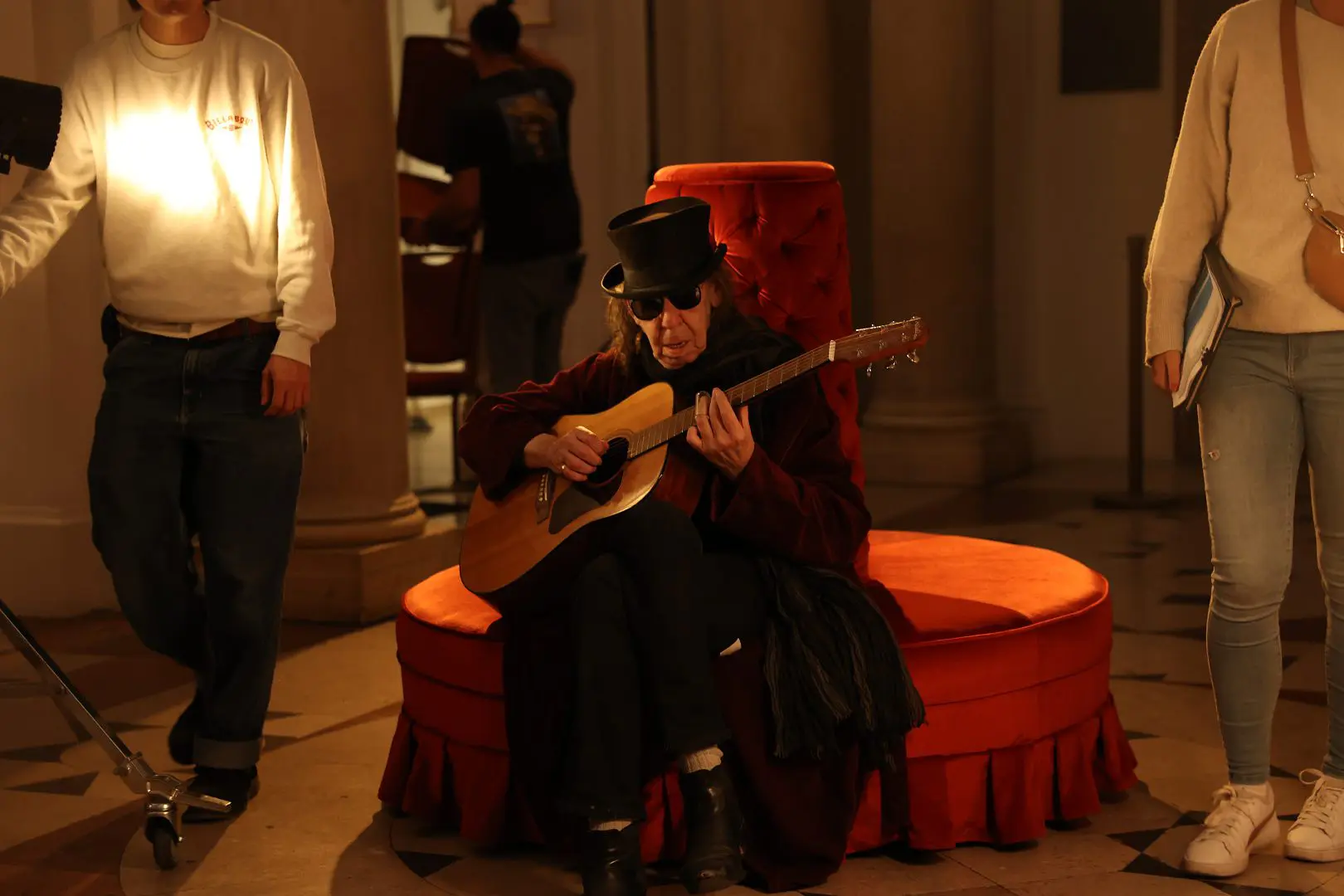
We developed a solid understanding of how previs is created and how it functions, as well as what is required on the production side to make a set truly “VFX-ready”. This included scheduling time buffers for tracking markers and scans and actively coordinating between creative departments and the VFX supervisor. It became clear early on that every shot requires detailed, early planning. Learning to realistically assess how many shots can be achieved in a shooting day, and how VFX-heavy shoot days must be calculated and structured, proved to be a particularly valuable challenge.
The project could only succeed as a collective effort. Coming together early in development allowed us to contribute as creative producers and gain a deeper understanding of both the material and the production challenges. Continuous communication across departments was essential, especially as locations changed, the set expanded, and creative ambitions had to be balanced against available resources. Working with professional heads of department set a high bar and challenged us to meet professional standards, a goal we ultimately achieved, resulting in work we are proud of.