



DP: Professor Schopper, how did you join the “Ruby Red” production team?
Jürgen Schopper:DP: Mr Warlimont, what was the exact workflow like and how did you adapt the “standard” to “Ruby Red”?
Mortimer Warlimont (Supervisor Visual Effects):
DP: Mr Schopper, in your opinion, what was the most complex VFX shot and how long did you work on it?
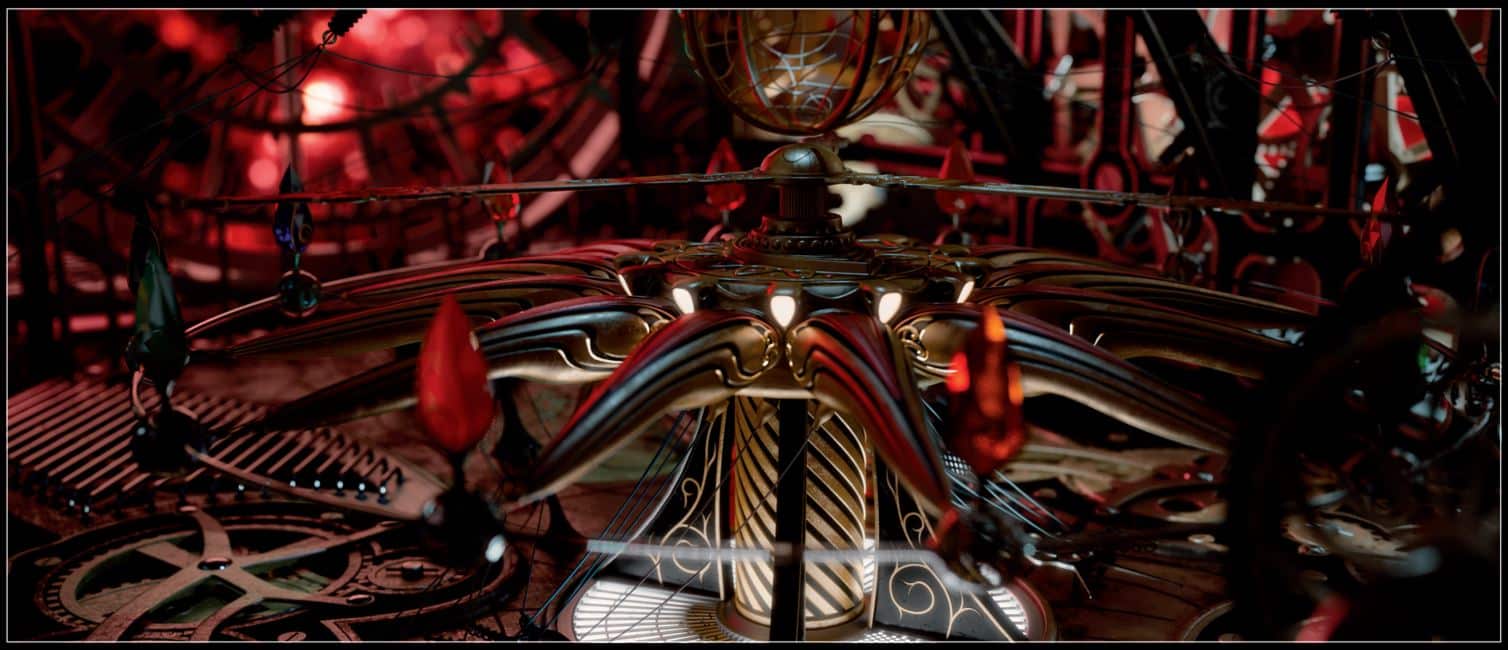
Jürgen Schopper: The highlight of the film from a VFX point of view is the chronograph. A real prop on the outside, digitally enhanced afterwards, the crucial question was how to adequately realise the complicated inner workings that are so important for the plot.
We really did a lot of testing until the aesthetics were right and presented a wide variety of layouts and designs for the director to choose from. The starting point for our deliberations was a pencil sketch by Katharina Schöde.
In the end, we agreed on a crossover of art nouveau with a dash of steampunk aesthetics. Arri’s Head of 3D, Michael Koch, oversaw the months of precision work by the Cologne 3D team, who worked out the complex moving inner workings of the chronograph’s mechanics, including fog and particle clouds, in full CG.

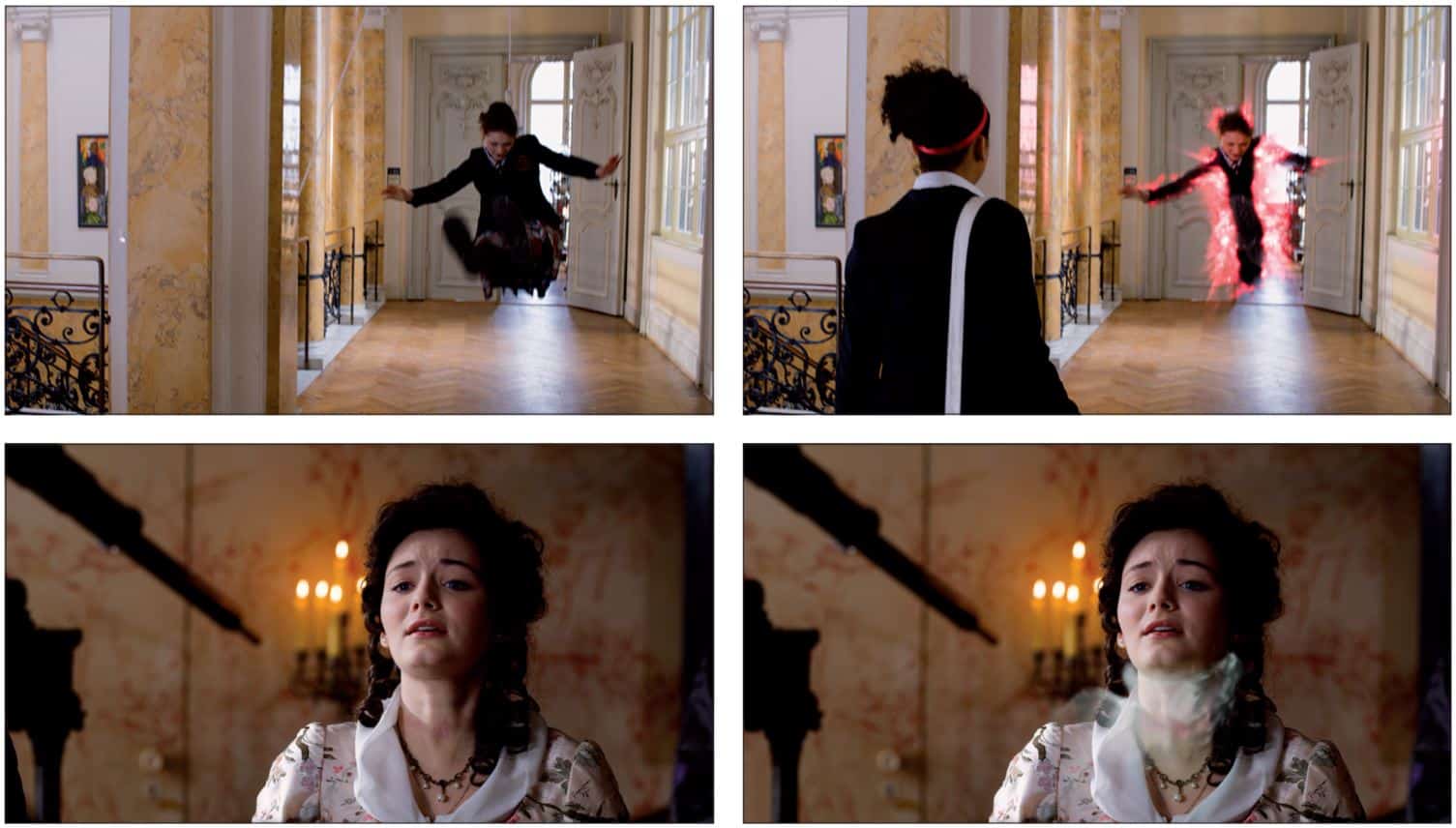
DP: The “smoke hand” at the end was composed of particles. Mr Koch, do you see a trend towards VFX made from emitting objects?
Michael Koch (Arri Head of 3D): The fact that the evil count’s “nebulous” hand strangles the heroine with smoky fingers was already in the script. Of course it’s true that 3D particle animation systems are getting better and better and are being used more and more, but I wouldn’t call it a trend.
DP: Mr Schopper, to what extent were you and your team involved in the design? How did you develop the effects from the original book?
Jürgen Schopper: All the visual effects were developed in consultation with the director and production team. That’s the fun of it! It starts with pencil sketches that eventually become digital layouts. We then check whether the design approach is suitable for all the shot sizes in the film. The design then flows into the VFX workflow as a reference and finally becomes part of the film.

DP: Ms Müller, as a German youth film, “Ruby Red” can’t keep up with Hollywood blockbusters in terms of budget. What advice can you give young filmmakers on how to stay within budget when it comes to VFXs?
Katja Müller (VFX Producer): Of course, the budget ultimately determines the amount and complexity of VFX work. Digital image design is not a business with endless room for negotiation. Nevertheless, the most important thing for a production is to seek advice at an early stage, i.e. long before shooting.
Precise storyboards and a precise shot-based cost calculation are essential. Of course, we then offer set supervision during filming and only then do we actually enter the post-production phase.
However, if the preparations have been taken into account accordingly, there will certainly be no cost explosion when creating the VFX for the production.
DP: Mr Warlimont, do you see a difference to European or international productions?
Mortimer Warlimont (Supervisor Visual Effects): No, based on my experience with international productions, I don’t see any difference here. You pull together to make a good film.
DP: The film was shot on historical locations in places. What problems does this create for the visual effects?
Mortimer Warlimont: With historical locations, you always have a big responsibility on the filming side. For “Ruby Red”, a special lighting setup was actually necessary, which protruded into the motif and was digitally replaced afterwards. In the Wartburg in Thuringia, a huge cushion of light covered almost the entire ceiling, which was then shot in an extra plate.
DP: Mrs Müller, the set extensions for the time jumps were quite extensive.
Katja Müller (VFX Producer): Yes, that’s right. Basically, historical photographs, paintings or engravings are a good reference for historical buildings.
DP: Thanks to your work on the films “The Pope” and “The Countess”, do you already have a library at hand that is conveniently filled with buildings from different eras?
Katja Müller: Yes, but unfortunately you can only use an existing library of 3D buildings to a very limited extent. Every new film is a new challenge and has different requirements to the previous project. The parameters of era, location or even the level of detail required within a VFX shot are never the same.


