



60.000 photos, dozens of nights in the forest to record the right sounds, a dense network of locations in north-west America – this is what the research for Remedy Entertainment’s latest hit “Alan Wake” looked like. The Finnish development studio, which demonstrated what atmosphere can look like in a game with Max Payne II in 2001, has now trialled a new concept with “Alan Wake”.
At the very first presentation at E3 in 2005, the trade press was already enthusiastic about the first impressions in terms of controls and appearance.
The attempt to transfer the atmosphere of the gloomy concrete canyons of Max Payne to the organic environment seemed to have been successful. At the same time, Alan Wake should offer a completely new gaming experience. In an interview with Remedy Entertainment’s Managing Director Matias Myllyrinne, we talked about the development and structure of Alan Wake. The first step was a clear concept for the game to set the mood.
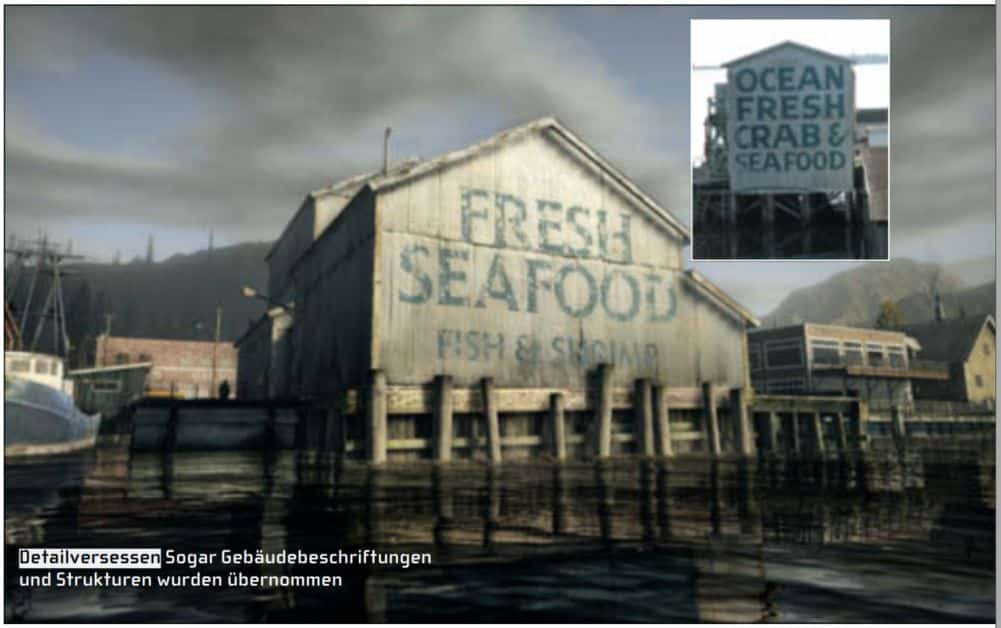
“When you’re developing a thriller like Alan Wake, the first thing you need is a good, realistic foundation,” says Myllyrinne and continues: “It has to feel authentic, real. This game was all about the landscape of the American Northwest. We distilled it until it became unmistakable. We explored locations from Oregon to Washington and even Canada.” Remedy looked around in several cities that are already known as film locations, including Astoria in the state of Oregon. Films such as “The Ring” and “The Goonies” have already been shot here. When visiting these and other cities, scenes were constantly found that fit into the game. For example, ghost towns, sawmills and the general vegetation with its special features, such as denser bush growth than inland. All areas were chosen because they affect people in some way. “Alan Wake is a psychological action thriller. We’ve woven intrigue around the player to make them wonder if this is really happening, creating a tense action game with plenty of challenges.”
Remedy’s desired atmosphere consisted of sadness and hopelessness. “We wanted to create our own feeling, a look back at the world. And make it more like a cinema screen than reality TV. This meant that we were careful with the lighting and carefully considered the camera and setting – as opposed to the hand-held camera, which just runs at it.”

Design and development
Alan Wake is a long way from photorealism. Even though many objects are realistic, the game is bursting with supernatural phenomena. “The foundation is realistic,” says Myllyrinne, “but we’ve built on that. Alan’s enemies have been infected by darkness and are therefore vulnerable to light.”
That’s why you destroy them with light. Throughout the game, Alan Wake is equipped with an assortment of light sources – from torches to magnesium torches and flash grenades. Enemies must first be weakened and slowed down by the light before they even succumb to a shotgun.

Light and shadow
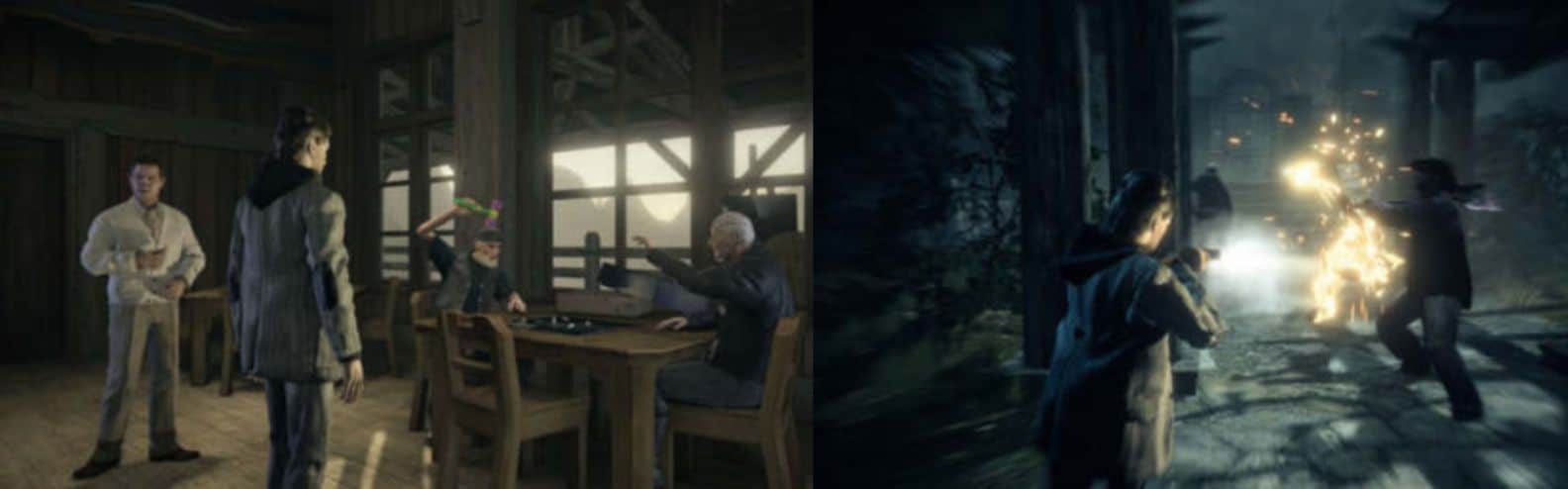
The living shadows were too important, so Remedy wasn’t satisfied with just any smoke effect. Innovative concepts were developed for the realisation. For example, inspiration was drawn from the movement of ink in water. Huge amounts of blue and black ink were poured into the water and filmed. “If you remember the film ‘Insomnia’, those blue-black shadows,” says Myllyrinne.
This means that light was the biggest development hurdle, because in Alan Wake, light not only helps to recognise enemies, but is also a weapon. The amount of light in the situation alone should influence the player – whether they feel safe or vulnerable. The lighting engine was built from the ground up to be able to precisely control the important elements of light and shadow. “Soon after the start of development, we realised that no existing solution offered the level of control we needed. As a result, we often achieved an unprecedented level of detail and depth of field,” explains Myllyrinne.
To make the lighting look realistic, for example, small objects in the vicinity have to be sharp and precise, while anything further away can only be an abstract shape to keep the mood. However, the rendering artists have been working on this right up to the end – and continue to do so, as there is additional content for Alan Wake that will be available after the official release. An unusual game naturally requires unusual tools for its realisation. As many of these are not available on the market, Remedy had to programme many of the tools themselves. “We did some of the geometry with an old tool from our company. MaxED was already used for Max Payne. We used ZBrush for the normal mapping. We also worked with Autodesk 3ds Max, MotionBuilder and Mudbox for the design of environments, characters and game animations,” explains Managing Director Myllyrinne.

Landscape
Myllyrinne continues: “We have also developed our own editor for the landscape. For example, our world was too big – the map is 8 by 8 kilometres. With 64 square kilometres, you don’t want to adjust everything yourself, which is why the editor should react by reducing the number of trees when there is a mountain. Or that the editor builds architecture around the road – a ditch and gravel, and no big trees. The environment is also a key element for the atmosphere in the game. For example, the lighting mood should change when there is danger – the forests are then darker and livelier.”
There are dynamic environments with branches and leaves that react to the player and the wind. The complex shaders and simulations were carefully and painstakingly honed. Due to the enormous size of the game world, you might think you’re playing an open-world game, but that’s only almost the case. Myllyrinne: “We had started developing on the sandbox principle, but that didn’t really work for us. Our self-developed tools are designed for an open-world game, but the richness of detail and frame rates of a linear game were more important to us. Because if the game stutters and the gaming experience falls by the wayside as a result, even the best graphics won’t help.”
Characters
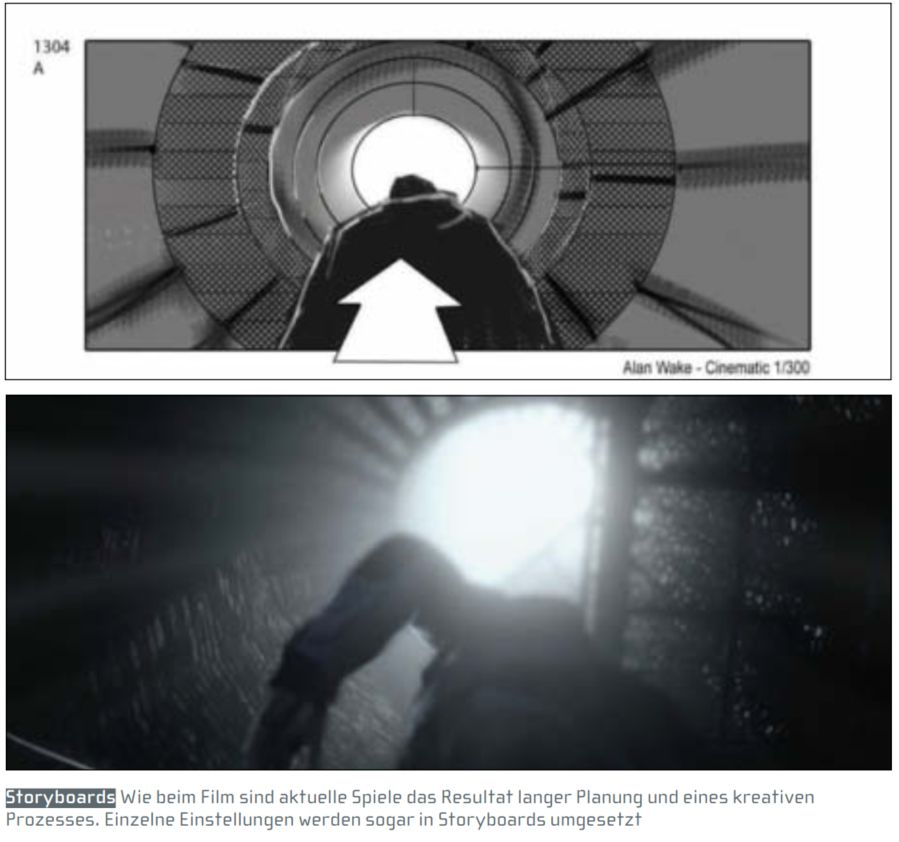
Alan Wake has also taken a different route than usual in the development of the characters. Concept art was completely dispensed with and atmospheric concept photography was used instead.
Remedy wanted to achieve an “exhausted but determined” look for Alan as the central character. This was to look as if Alan was always on the verge of freaking out and hungover at the same time. “For the other characters, we orientated ourselves on photographs rather than drawings. We worked with real actors and lit them very dramatically,” explains Myllyrinne.
“For the enemies infected by darkness, we achieved good results with distortions. We also changed the sound of the enemies. They should still be realistic, but strange. The main character Alan Wake is even a likeness of the Finnish actor Ilkka Villi,” explains Myllyrinne. Matthew Porretta was engaged as the voice. He is best known as Will Scarlet O’Hara from “Robin Hood: Heroes in Tights”.
Matias Myllyrinne also wanted a different type of enemy. No zombies and crab monsters. The enemies should not be monstrous, but appear as locals. The player shouldn’t have to face a mutant monster, but a woodcutter or the trader from the fish shop. The kind of people you meet in a small town – with their own personality. Just a little eccentric, obsessed and slightly twisted in the context of the story.
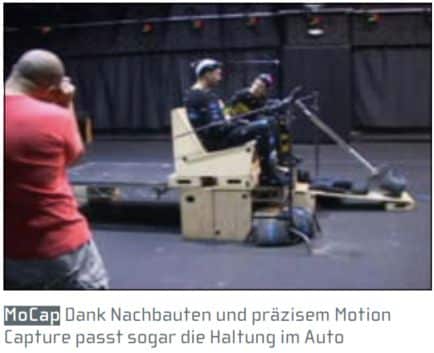
In the first draft, all the possessed characters from “Bright Falls” were supposed to wear robes with hoods, but by the end Remedy had got to the point where all the people were walking around in normal clothes – at least for this region. So the player feels that any of the people around them can become possessed. The animation is a combination of motion capture and handcrafted key animation. “For the animation, we have our own MoCap studio in the building, as we often need many attempts. The environmental animation, such as the characters’ conversations, was animated using motion capture, while fight scenes were entered directly by hand. For some scenes, you simply have to go back to the keyframes. It simply looks better when the opponents move extremely fast. In other scenes – for example the interaction with his wife – you want it to be as realistic as possible,” says Myllyrinne.
This is where Autodesk MotionBuilder came in, says Henrik Enqvist, animation programmer at Remedy Entertainment. “Creating complicated skeletons for the game characters takes a lot of time and resources for our animation team, but MotionBuilder allows us to get a working IC standard skeleton that our artists love to work with.” The game characters were initially modelled in 3ds Max, with Mudbox being used for the details.
“If we had just modelled these characters in a more traditional polygon modelling package, it would have looked more like a technical workflow. With Mudbox, our workflows are more interactive and creative,” adds Sami Vanhatalo, Lead Technical Artist. For the motion capture, R emedy Entertainment was supported by Perspective Studios in New York and metricminds from Frankfurt. But other studios also helped – for example CaptiveMotion for the facial movements and Soundelux DMG for the sound effects.
Remedy is still delivering additional content. “The Signal” will extend Alan Wake’s adventure by around 90 minutes, and a further chapter entitled “The Writer” is coming, although no date has yet been set for this.

