



by Tobias Lohf
We took on this challenge with the feature film TRUNK – LOCKED IN. Shooting a film in such a small space presented us with enormous challenges, both logistically and creatively.
The idea was born during the lockdown. With Outside the Club, we produce our own feature films and series. Marc Schießer, director and author, wrote the screenplay for TRUNK. Our approach was to create a feature film that could also work under the strictest lockdown conditions. And what is smaller and more reduced than a feature film with a leading actress in a car boot?
A script quickly emerged from this basic idea. We pitched it to Amazon Studios and there was serious interest in the material. After some trepidation and trepidation as to whether they would actually make the script into a film, the official greenlight followed in January 2023. On one condition: will you manage to deliver the film by the end of August?
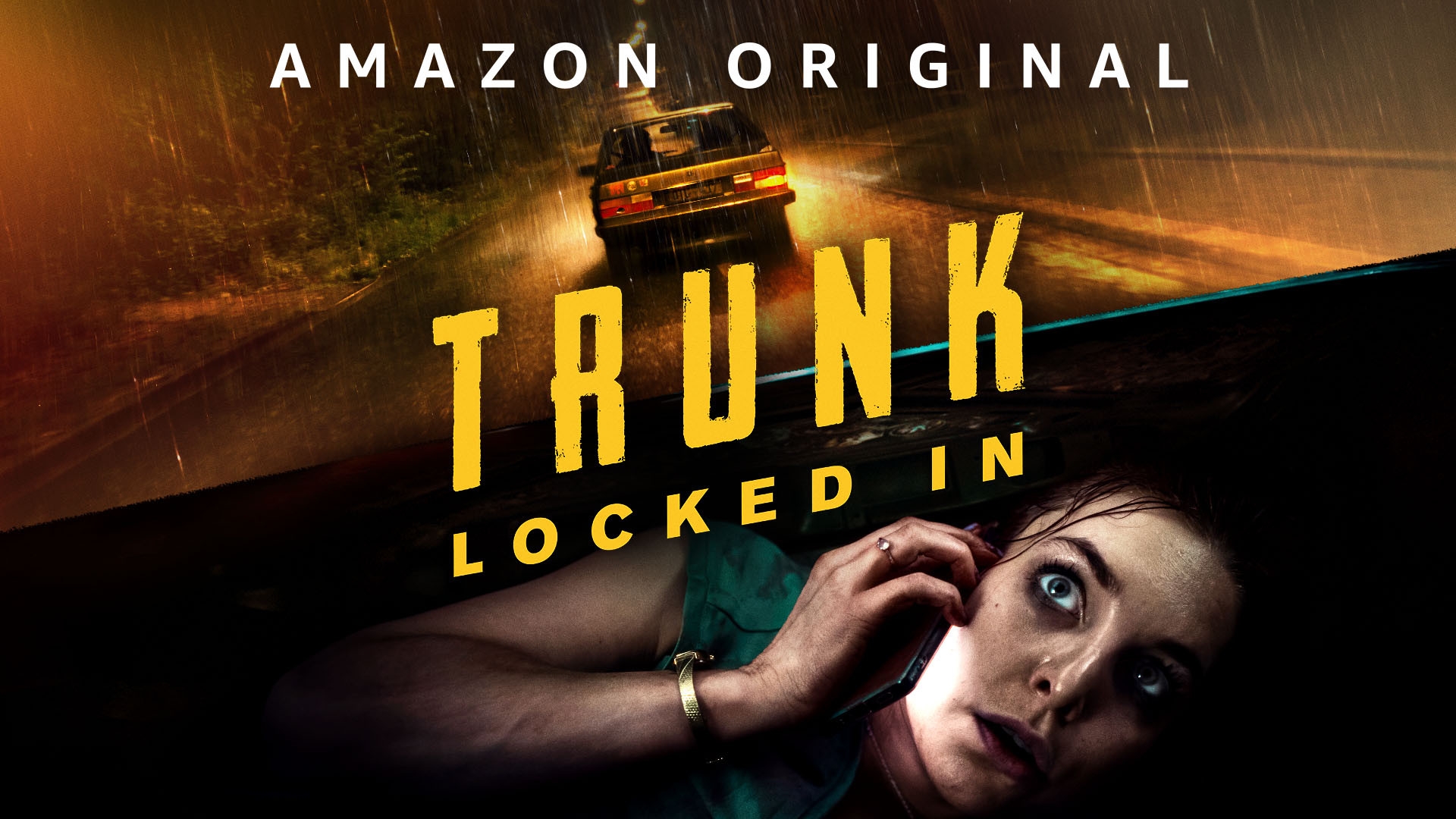
Whew. That’s going to be tough. Should we take the deal? We were so keen on the project that we said to ourselves: yes, roll up your sleeves and attack. We had to completely ramp up production in a very short space of time.
In addition to the pre-production for the filming, we also began preparations for post-production at the same time. With such a tight schedule, it was absolutely essential to run the processes in parallel and basically start with the first shots before the actual filming took place. But first things first:
The visual concept
Our aim was to make the single-location thriller an intense film experience for genre lovers. The story takes place almost in real time and our approach was to create a tactile, authentic and immediate experience through the images. We wanted it to feel as if we were in the car boot as viewers.
So the camera lens is always physically in the room, placed from a distance as if it were really there. There are no distant telephoto shots that would create a completely different image impression, even if the framing would be similar in a close-up, for example. It was important to us not to give away the premise of the film, a “film in the boot”. Be it through flashbacks or parallel plots.
The real-time abduction story should feel real and so all the flashbacks that the main character can reconstruct using an action cam are actually physically filmed from the screen. No frame-filling, grading-shifted flashbacks, which we would have considered cheating.
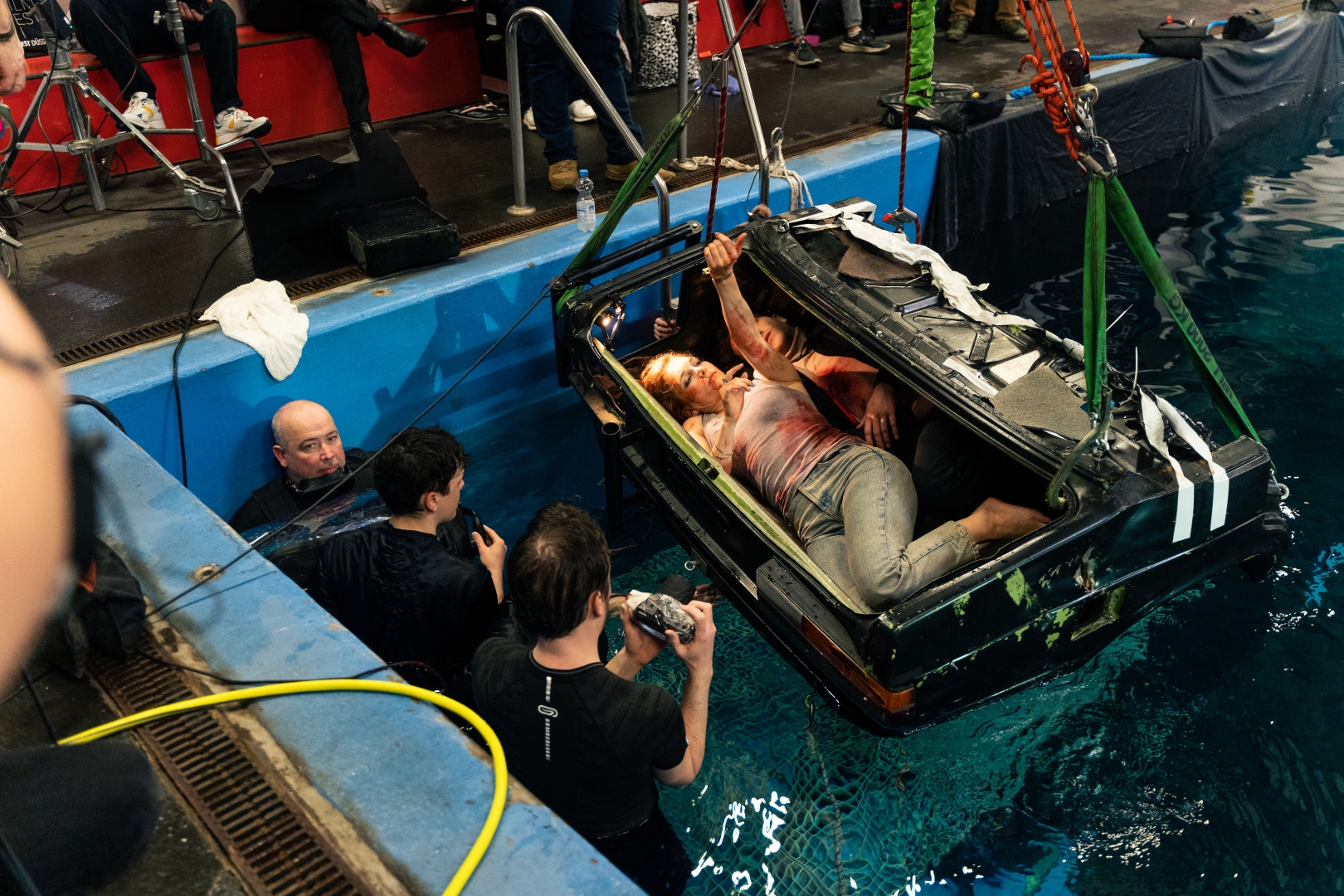
In addition, we saw a great danger in being revealed as a studio shoot and thus losing the illusion of the abduction and the real journey. So we had to pay particular attention to the authenticity of the ride. So the studio box was really kept in motion throughout the set by vibrations, cornering, braking and accelerating in order to transfer the vibrations to the camera and the actress.
There are a few moments when we visually leave the boot, namely when it opens. It was important for us to shoot these shots in real life. This enabled us to increase the authenticity, i.e. whenever the boot opens, we were really shooting on location.
We also applied this principle to the visual effects. The effects had to emphasise the story in the best possible way and enable moments that we would otherwise not have been able to shoot in real life for safety reasons. For example, there is a crash that was edited using a mix of real footage and full CG shots to combine the two worlds and make them barely distinguishable.
The technical setup
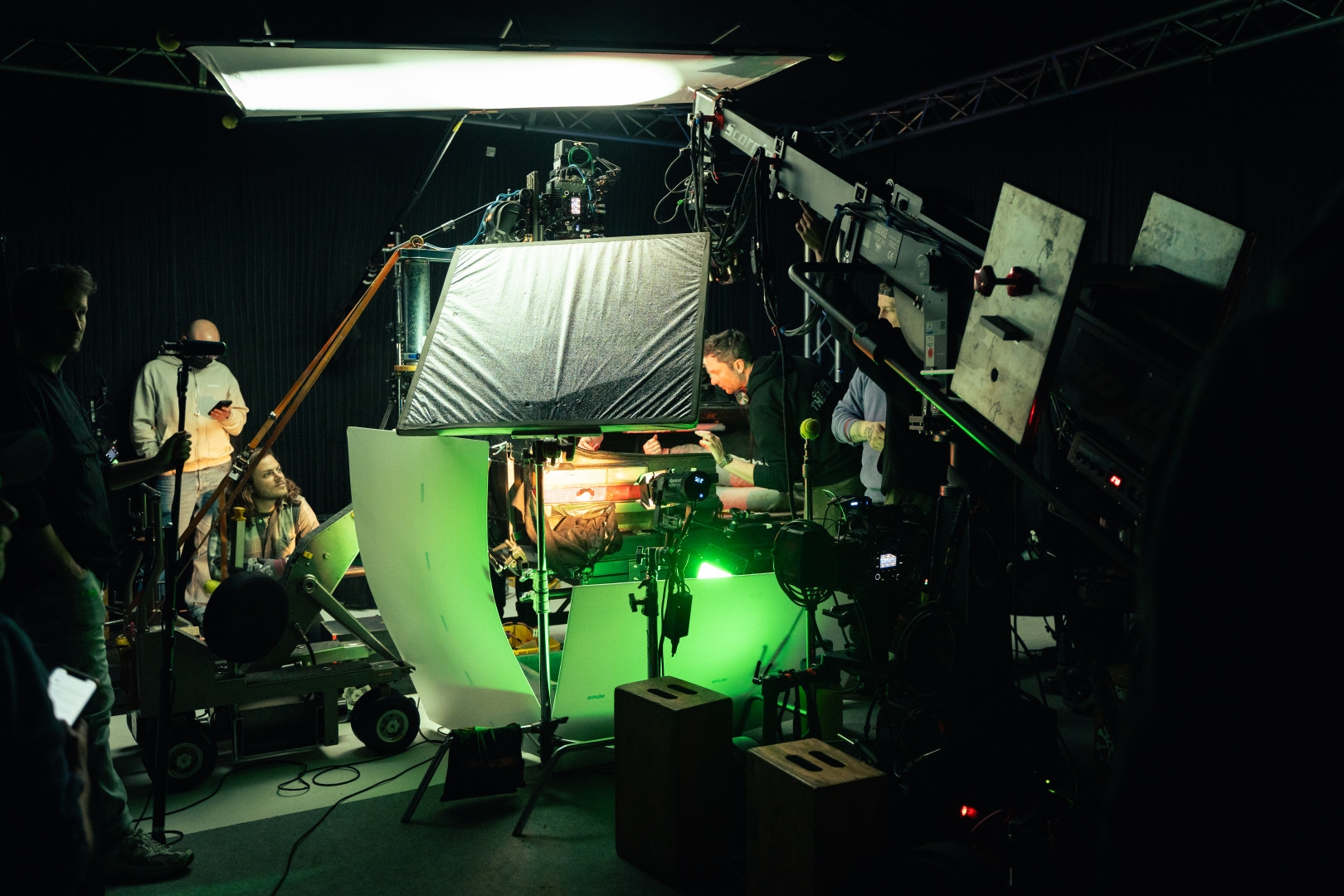
- Cameras: Sony Venice 2 (main camera) with Rialto extension, Sony Venice 1 (B-Cam), Sony FX3 (C-Cam for particularly small rooms)
- Lenses: Cooke S7i, Angenieux EZ-2 FF, DZOFILM Vespid Primes
- Camera stage: Scorpio 10′ telescopic crane, Varizoom remote head, Fisher dolly, GFM mini-jib
- Lighting: Astera Titan Tubes, Astera Helios Tubes, Astera AX2, Creamsource Vortex 9, DMG Rosco DASH, Aputure LS 600X Pro incl. various spots and lenses, LiteMat, Astera Hydra Panel
Start of shooting
As the shoot took place in the studio in a confined space, but also during driving shots and in numerous stunts and special shots, it was important to put together a flexible technical setup. The basis for this was the Sony Venice 2, which, thanks to the Rialto extension, also made it possible to travel in confined spaces without the camera body and also to be used handheld in some cases. The Venice was often attached to the Scorpio telescopic crane, which was set up around the studio’s body, to enable the camera to change position quickly and at the same time realise complex tracking shots.
The telescopic crane allowed the camera to be positioned freely in the room, which drastically reduced conversion times and at the same time made it possible to move the camera in all axes. Whether semi-circular movements with subsequent ascent into a top shot, 360-degree rotations or other demanding camera movements: The Scorpio represented the right choice for us to have maximum flexibility on set in co-operation with the camera stage.
In addition to the Sony Venice, the Sony FX 30 was also used. Thanks to its extremely compact design, this camera could also be used at very tight angles to shoot special shots and quick inserts. The lighting setup was chosen so that a large bounce surface above the boot could be used to create a “base light”, our “no-light”.
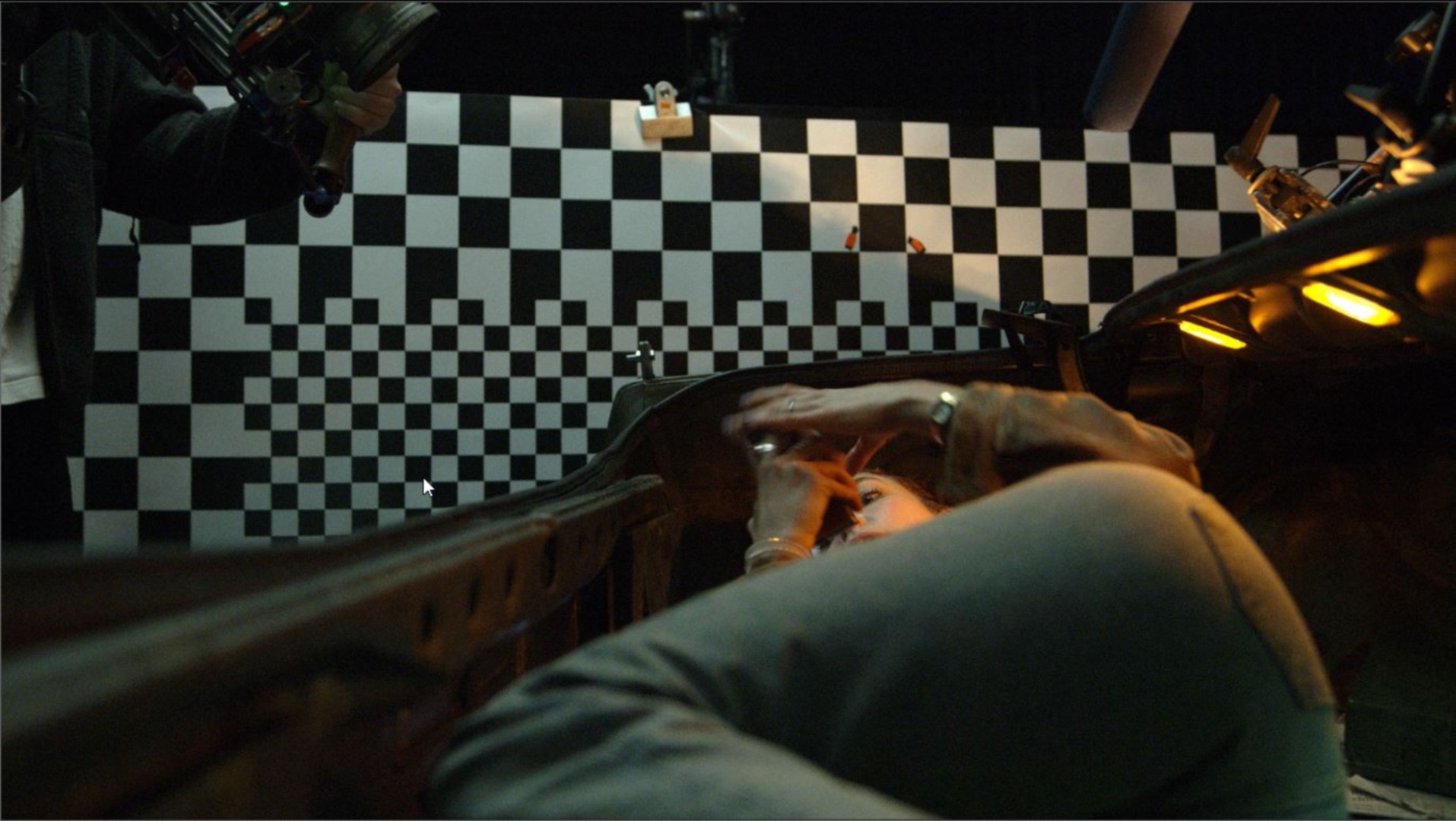
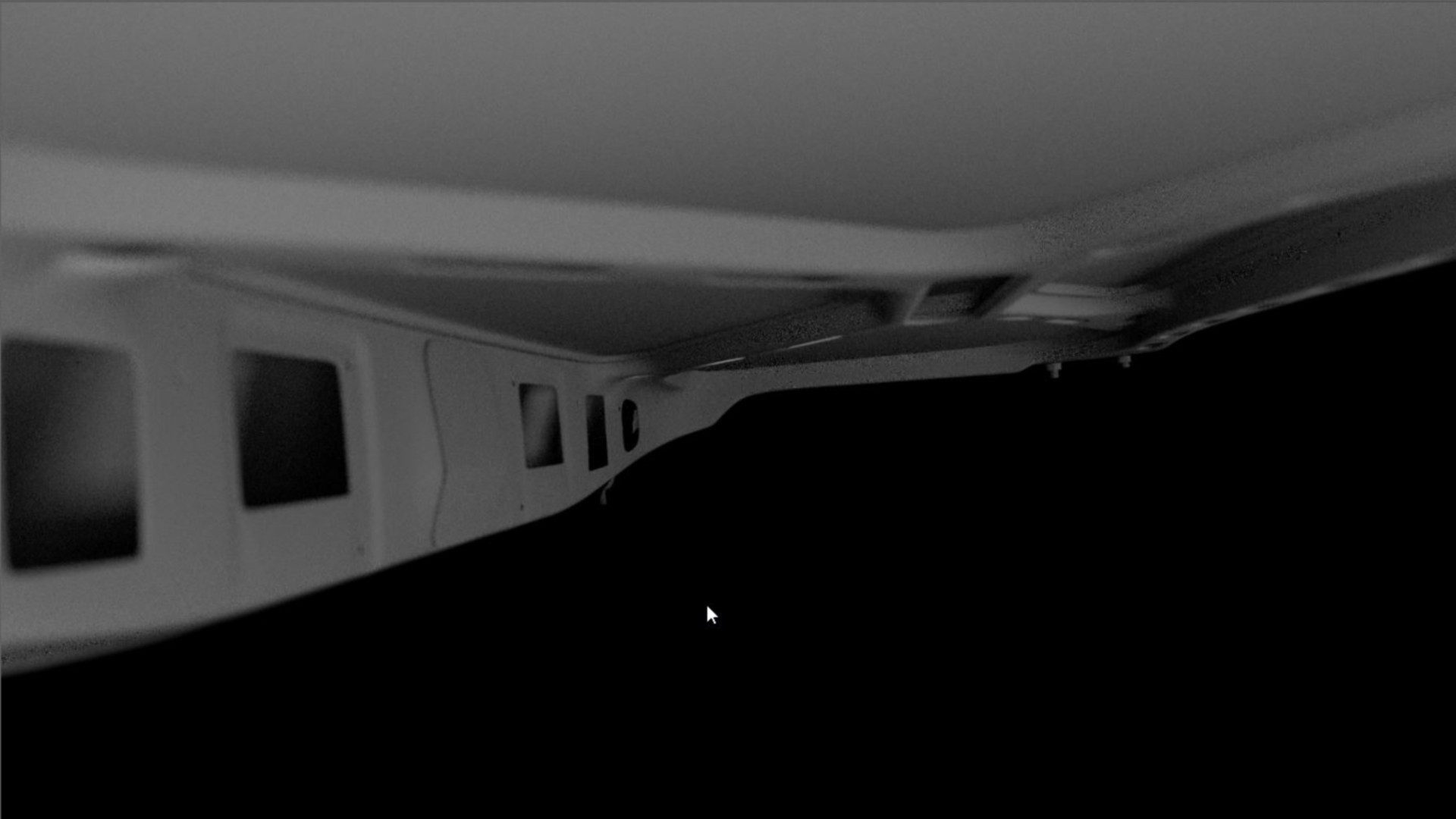
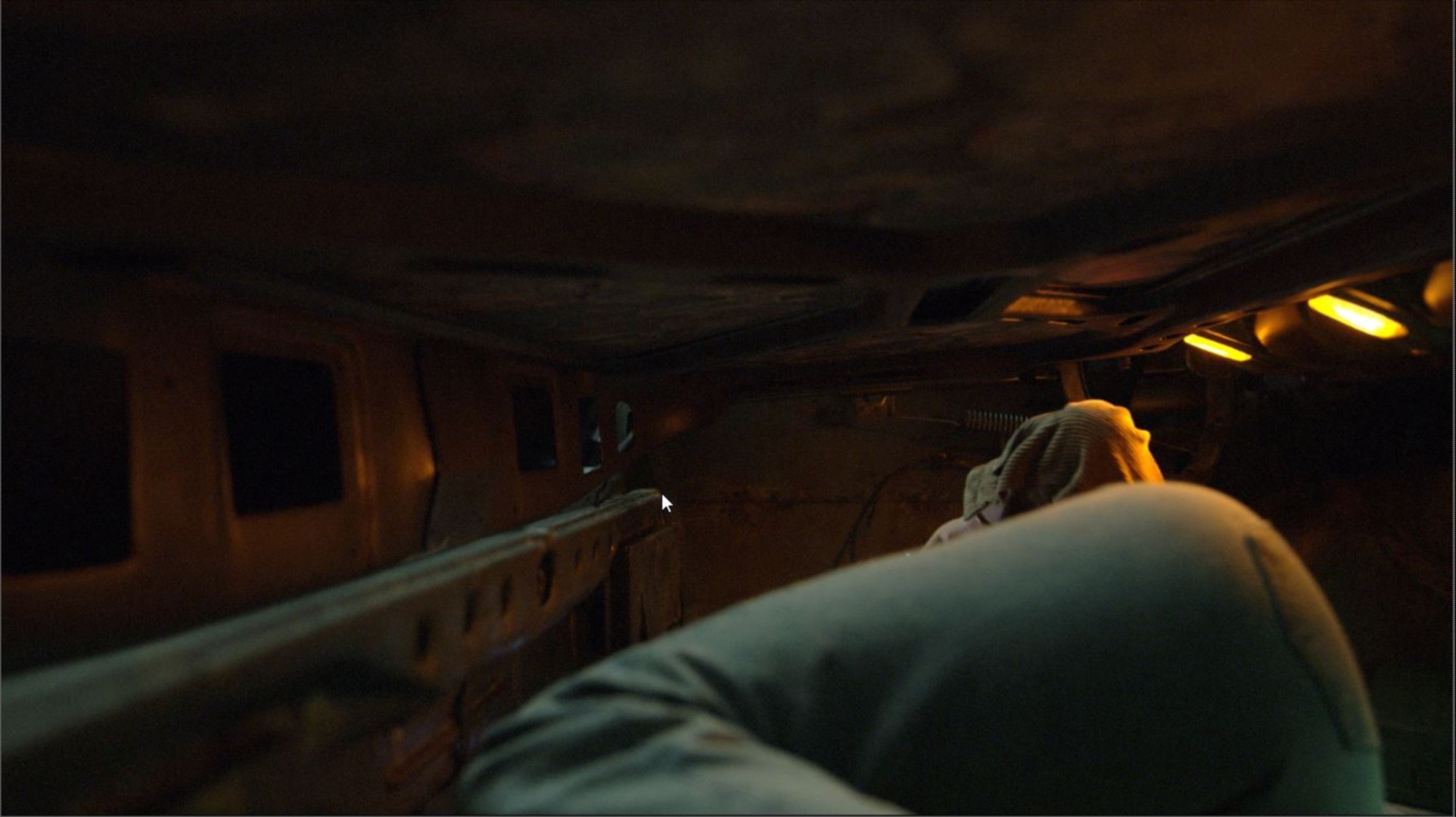
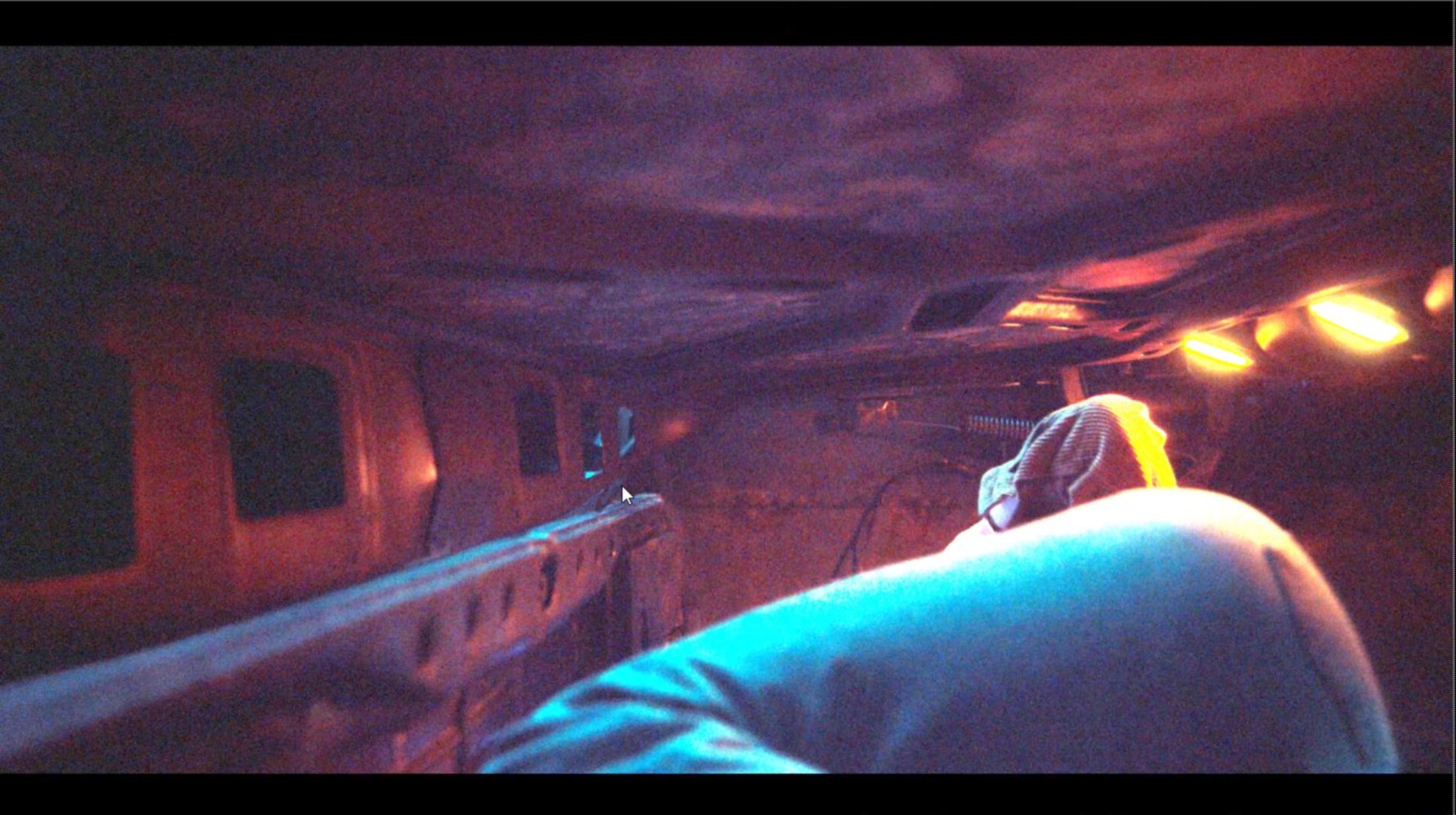
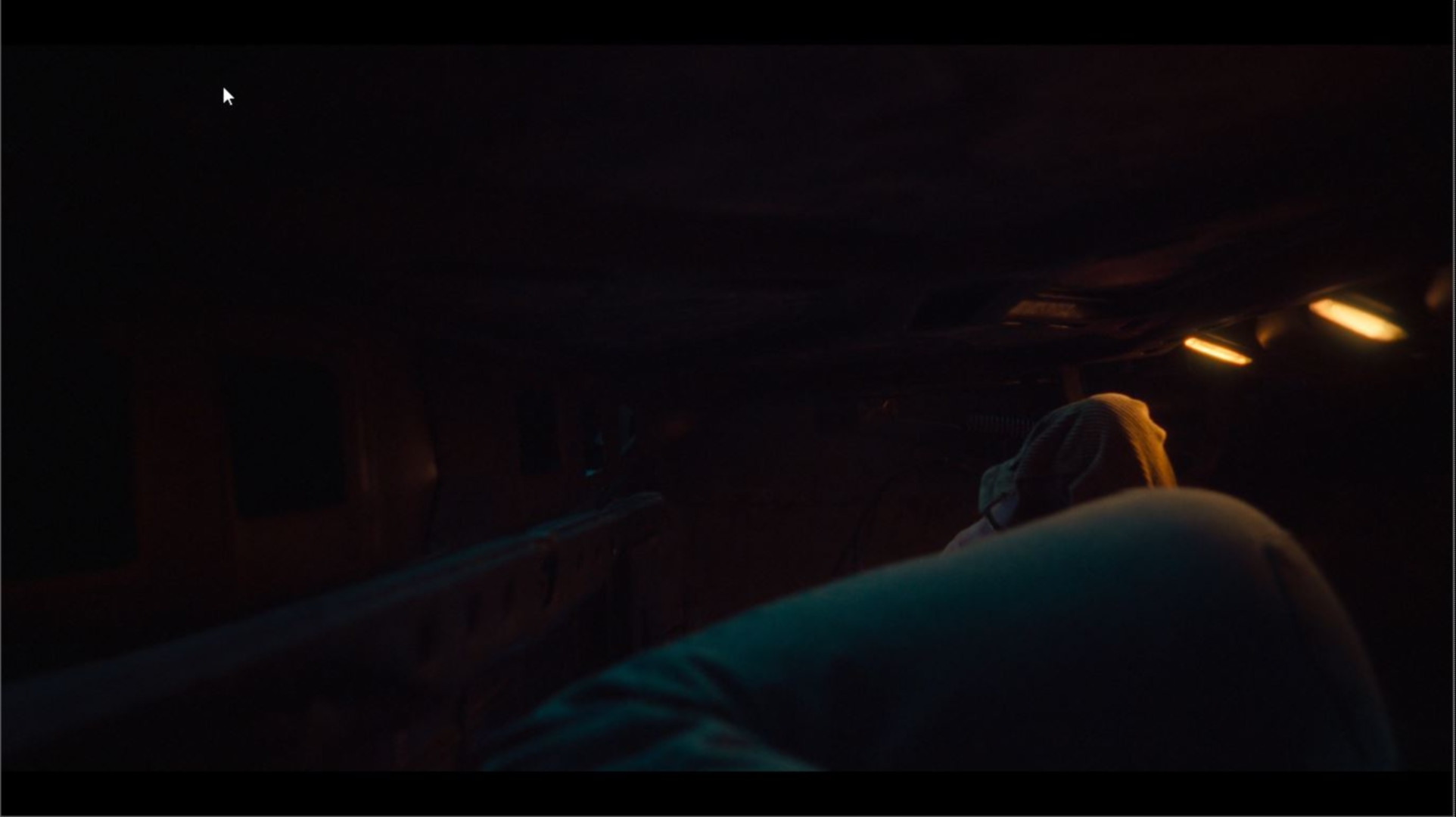
A car boot is usually very dark and it was a huge challenge to offer a wide variation in light and at the same time authentically tell the story of all the light sources. To achieve this, the camera work in terms of light already begins in the script phase. We regularly checked the script for light sources during the writing phase and already provided important impulses here to credibly introduce light sources into the story and thus support the scenes dramaturgically without appearing forced.
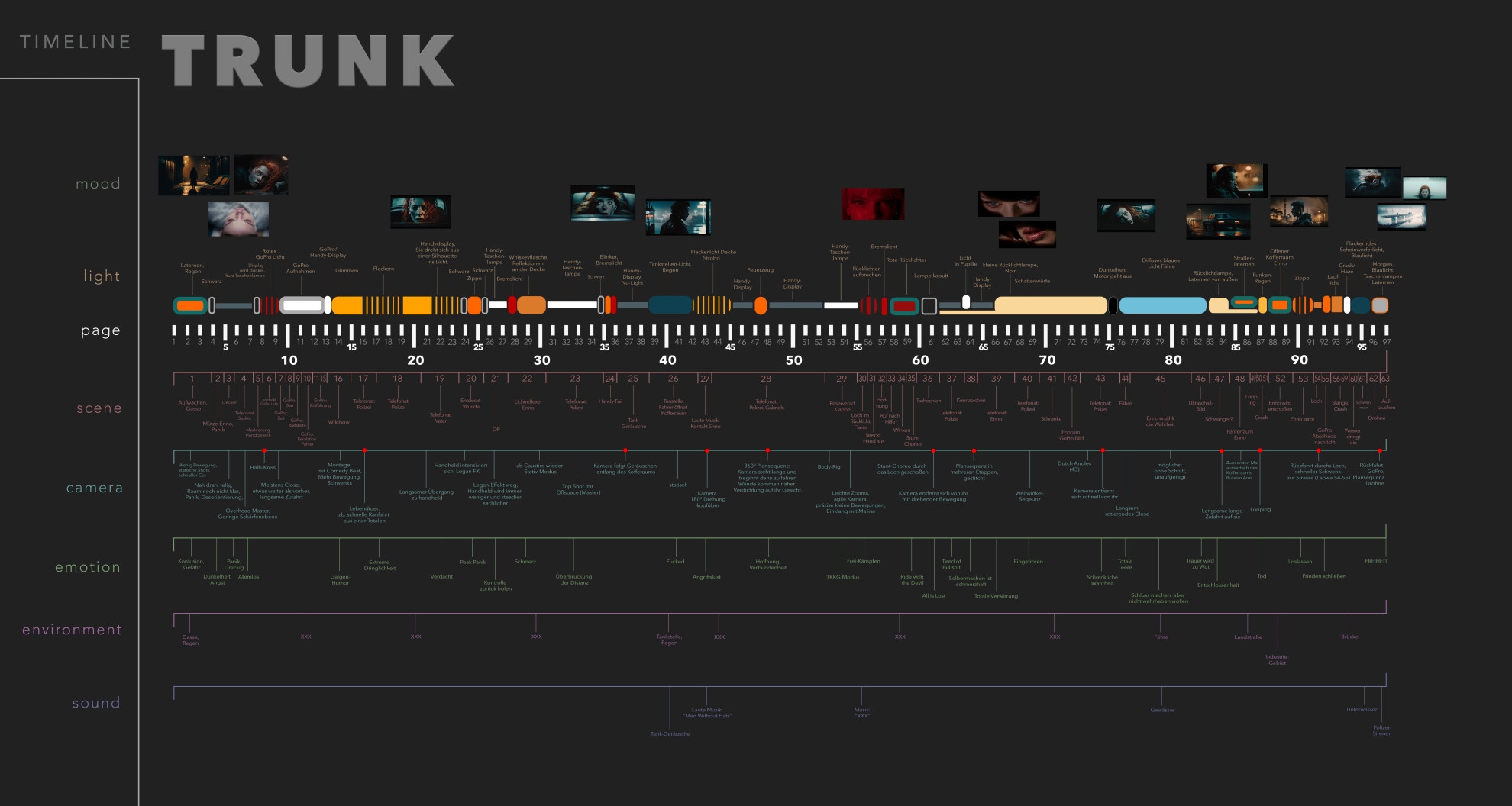
Visual concept as a timeline
Our “bible” for the shoot is a complete timeline of the film. The scenes and page numbers serve as the basis. This includes special features such as the foreground emotion of the scene, the light source and light quality, camera features and notes on the driving behaviour of the car. In this way, we were always able to check the respective mood during filming and at the same time visually assess in pre-production whether we were offering enough variation, where we might need to establish new light sources or where we were in danger of repeating ourselves.
We used this tool for the first time and utilised it specifically for TRUNK. Because in this single-location thriller, we have no variations through changing motifs and gigantic outdoor sets; on the contrary: all variations had to be artificially created by us, everything takes place in one place and we only create variation through the things that we specifically create. There is little to no room for “lucky accidents”, which we were often able to experience in previous projects with changing outdoor motifs.
Camera tests and post-production hand-in-hand
We carried out our first camera tests as soon as we started preparing the set design. We placed the final car boot textures, the most common lighting moods and the most important light sources in the image and carried out numerous camera and lens tests together with a double.
We used the material to develop a LUT that accompanied us throughout the entire shoot. This enabled us to maintain a realistic image throughout the entire shoot and get very close to our final look. Later in the grading process, we only had to refine the look, but were able to work “with” and not “against” the material.
The visual effects
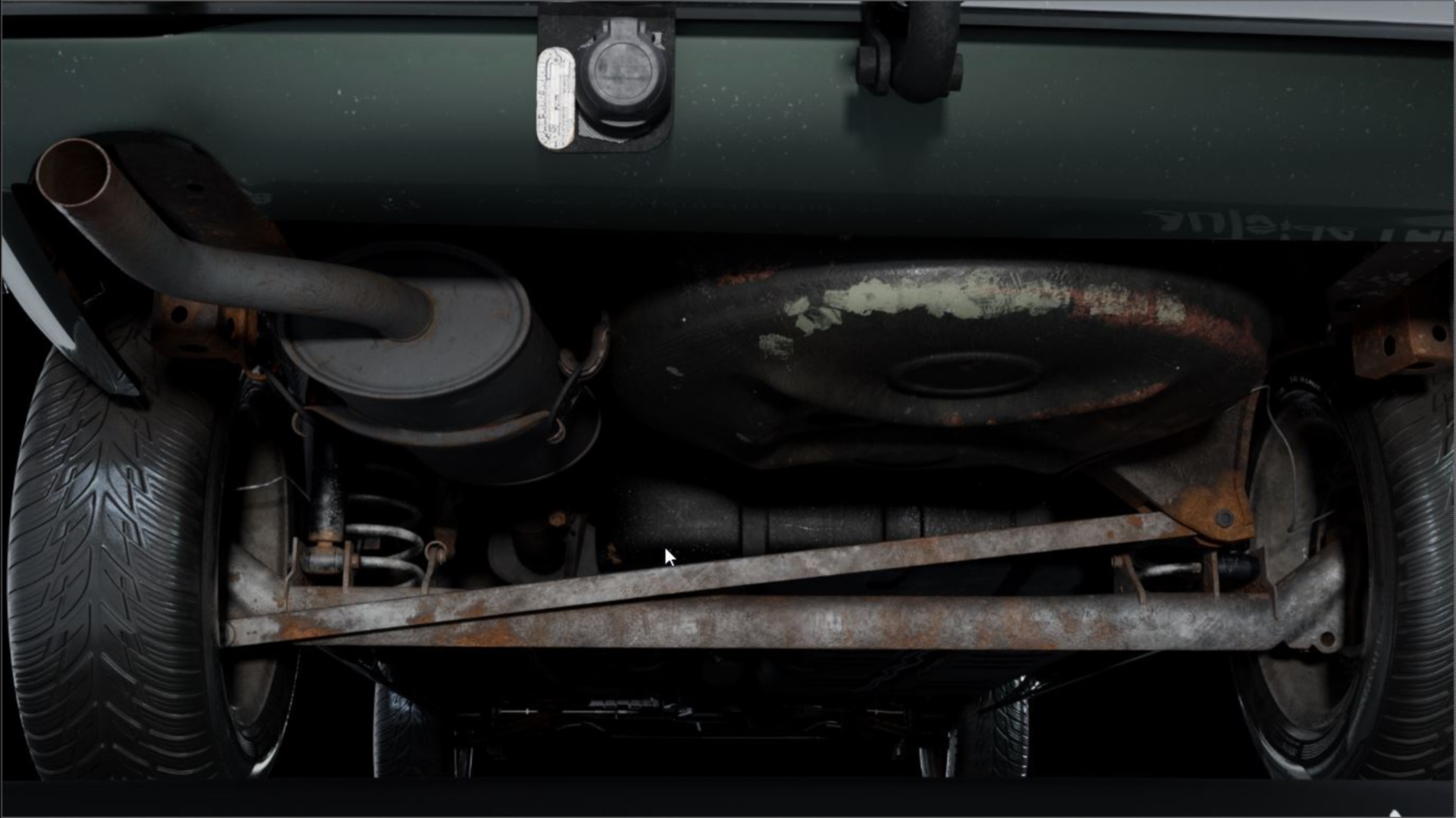
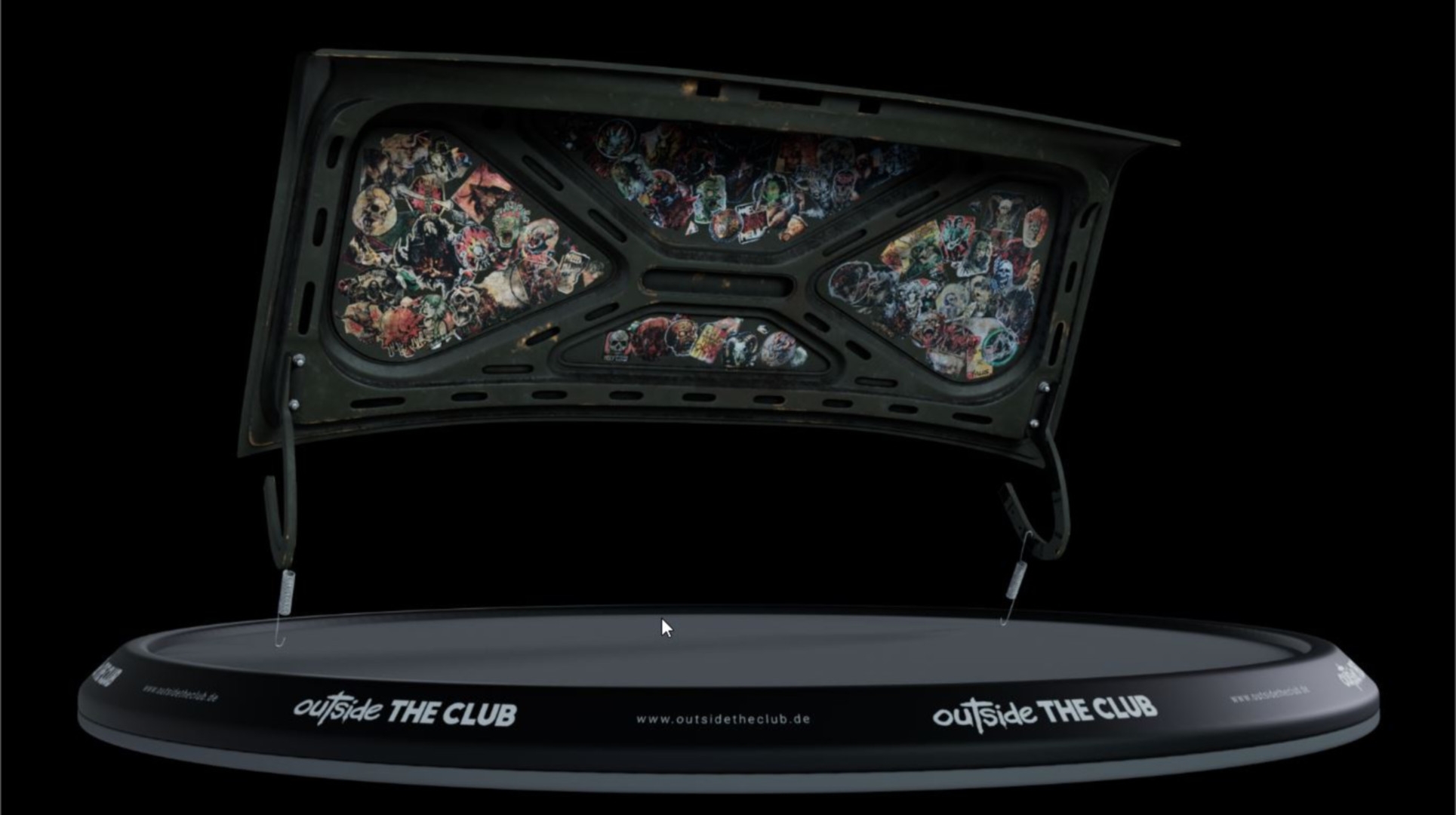
The VFX can be divided into different categories. On the one hand, there were some digital walls that we inserted. Some of our camera movements were so complex and changed so many axes that it was physically impossible to have all the walls in the frame at all times. The camera crane needed space to manoeuvre and so individual walls had to be inserted digitally to create the illusion of a completely enclosed space.
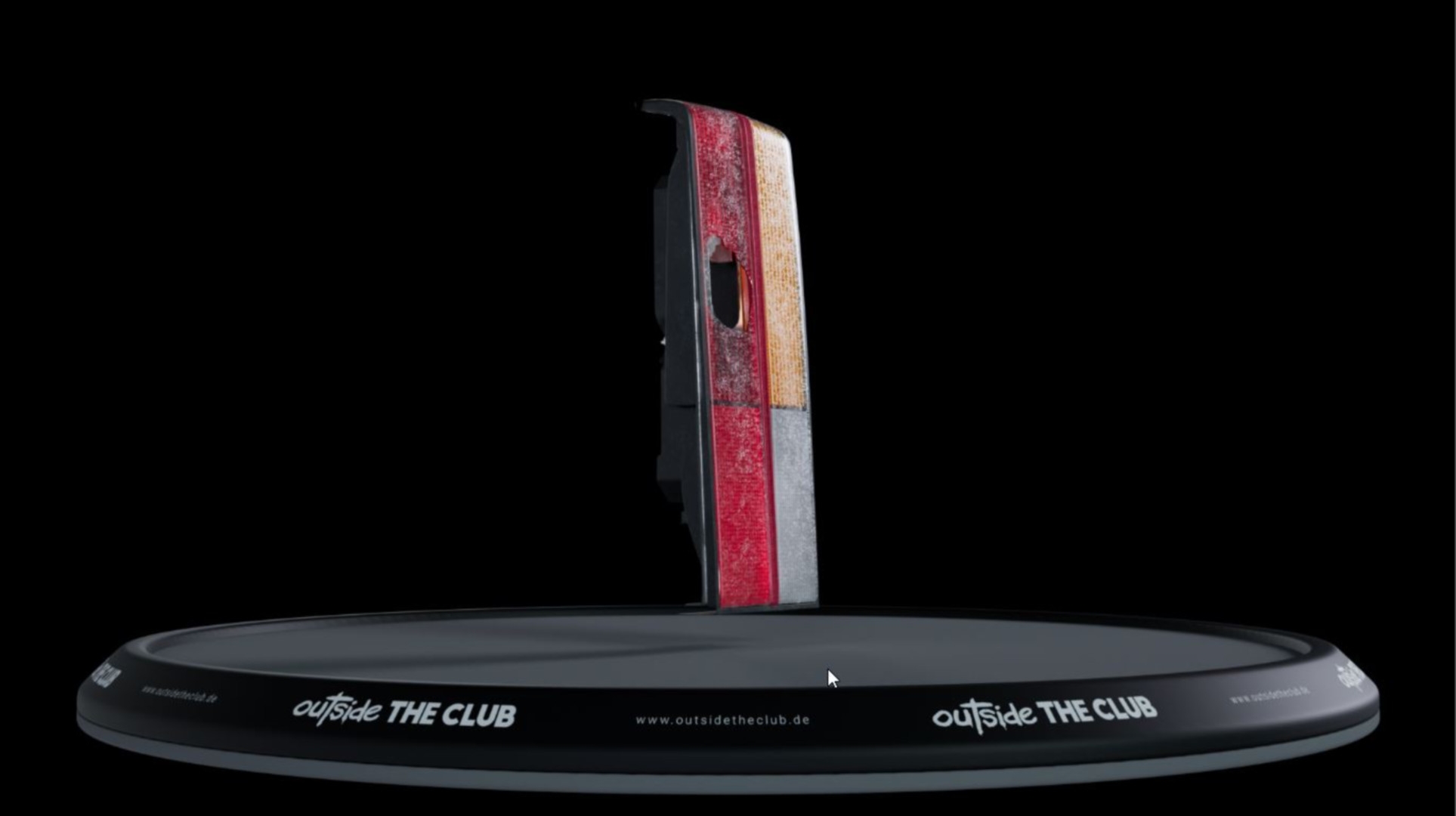
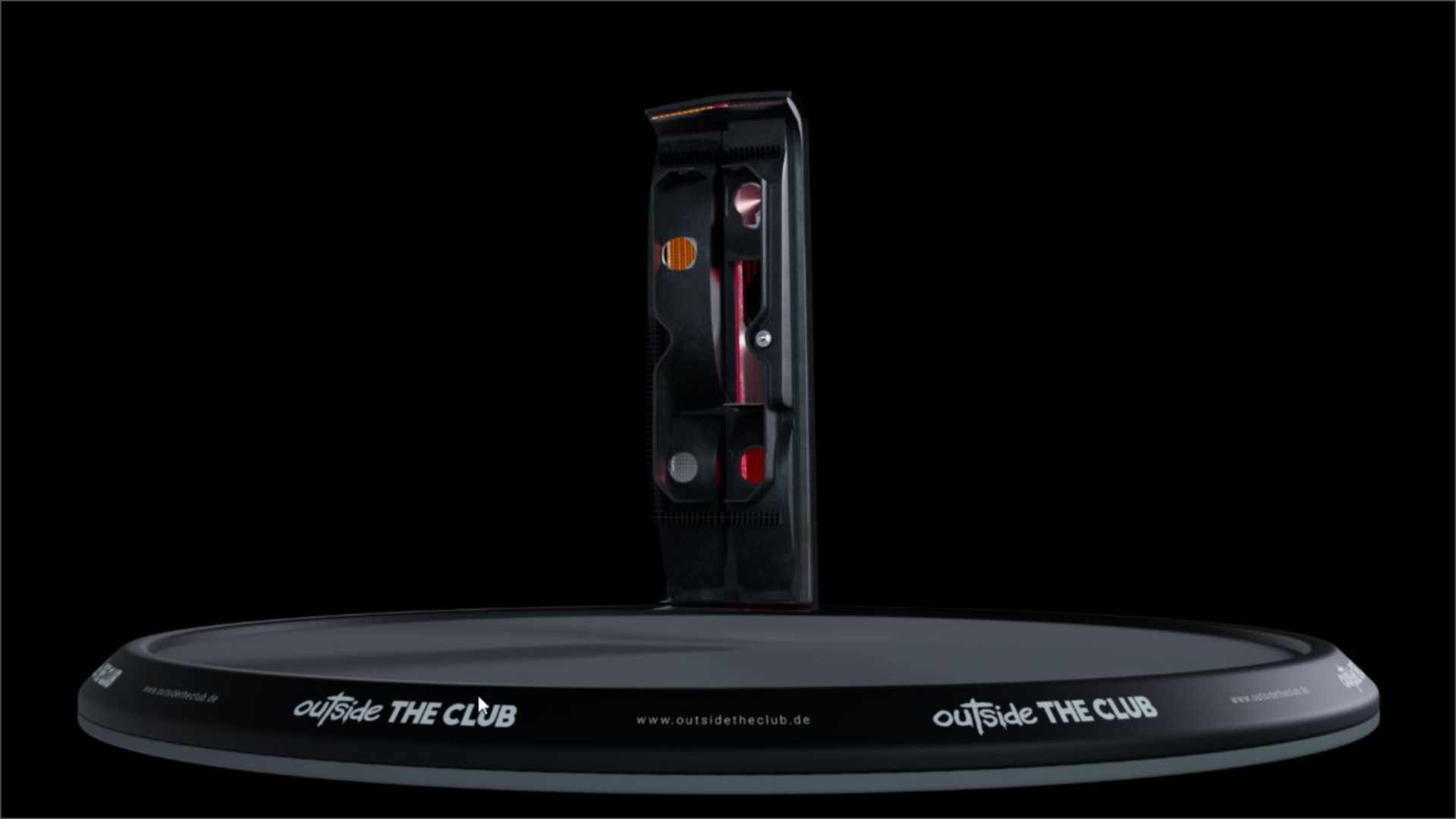
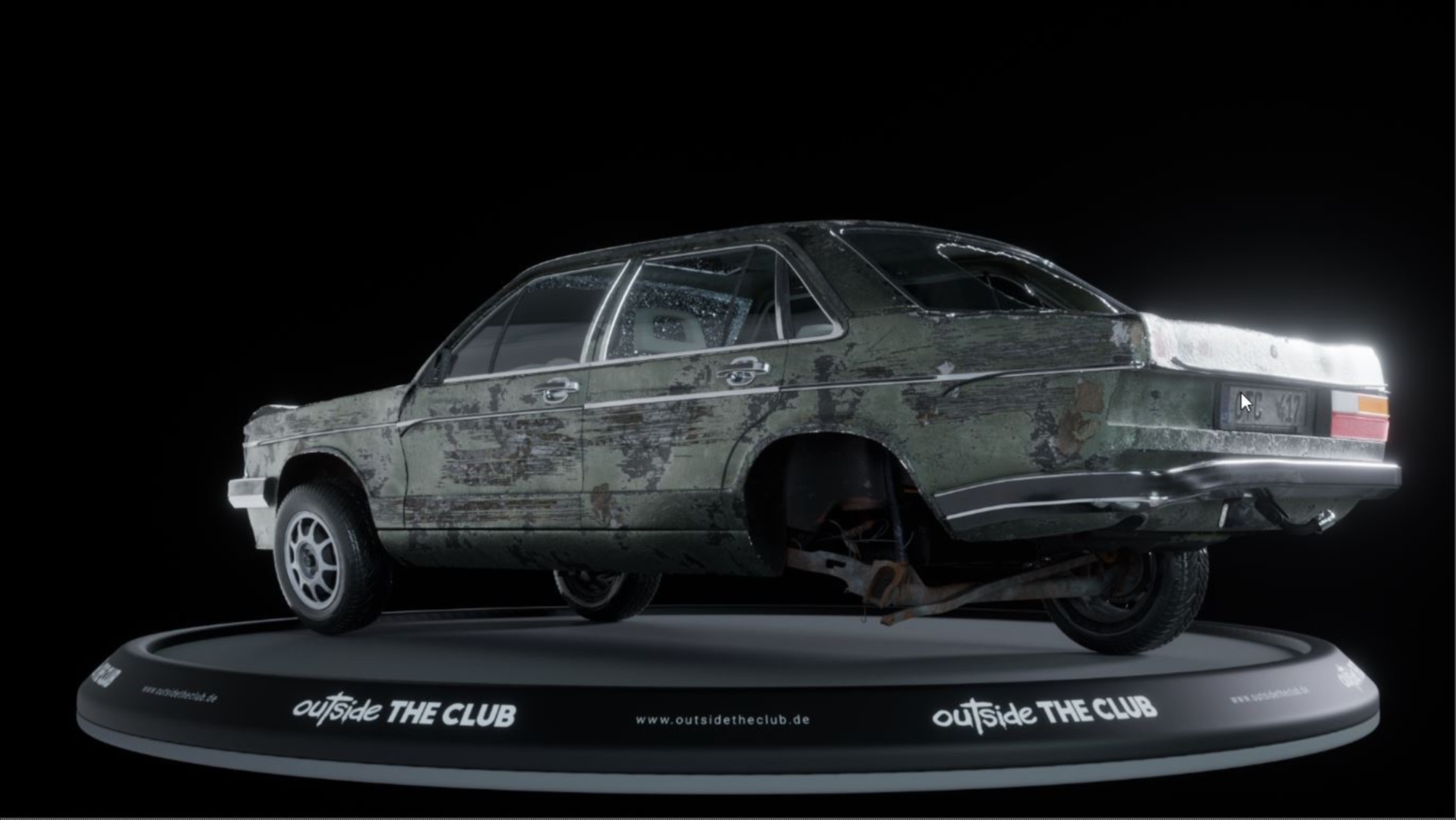
We proceeded as follows: Firstly, the car boot walls were already created from the set design. After filming, the entire boot was broken down into its individual parts and each wall was scanned individually as a 3D lidar scan with an iPhone. The apps used were “Polycam” and “Scaniverse”. The digital model was then used as a reference to remodel the boot walls according to this model. One difficulty here was the metallic surface texture of the boot, which meant that the scan could mainly be used as a reference.
High-resolution RAW photos of the original parts were used for the texturing. It was only during the editing process that it became clear which walls needed to be used. We hardly ever set tracking markers, as the boot itself already offers enough tracking points and a clear geometry. In addition, we occasionally moved the camera lens grid into the background to make life easier for the matchmovers.
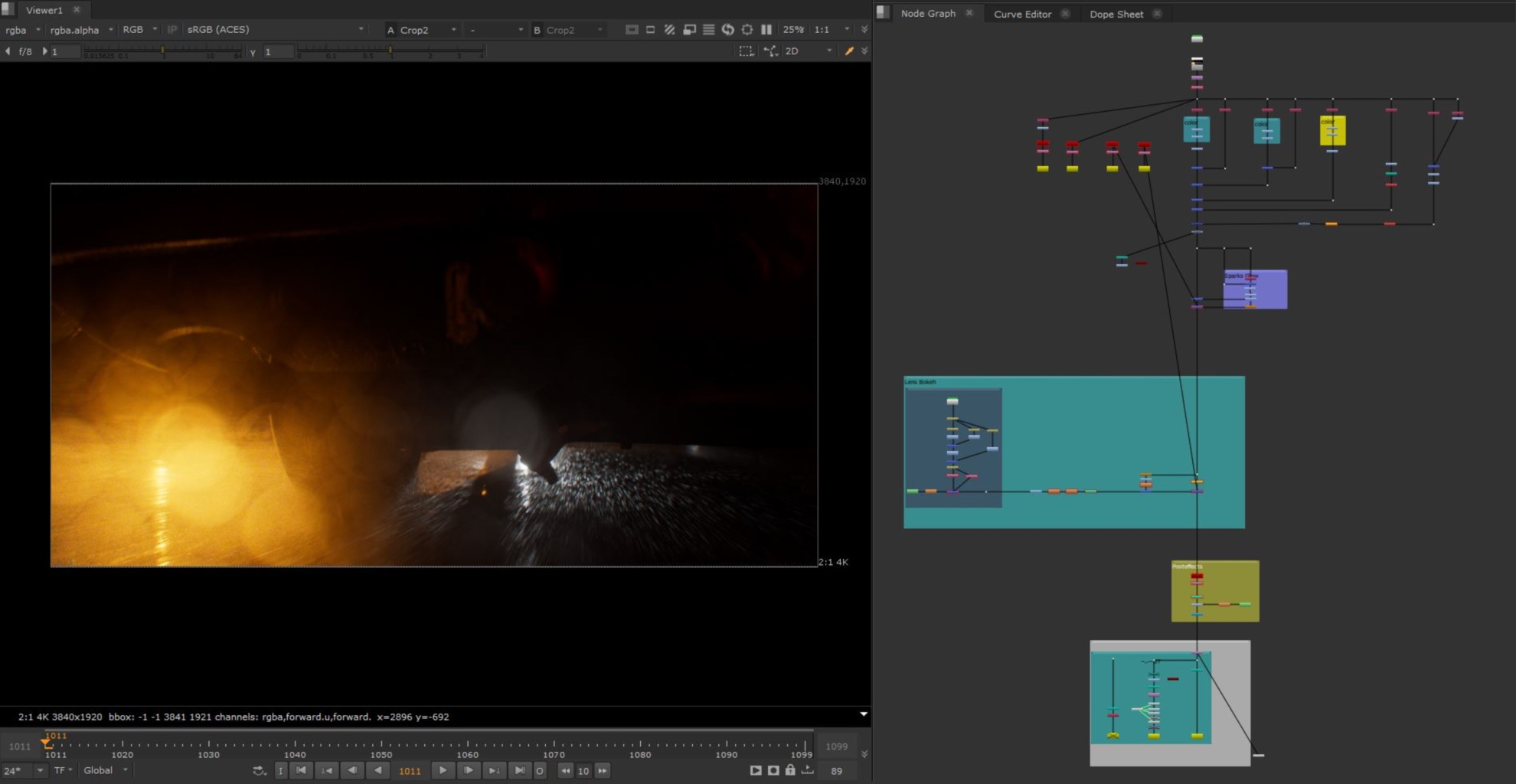
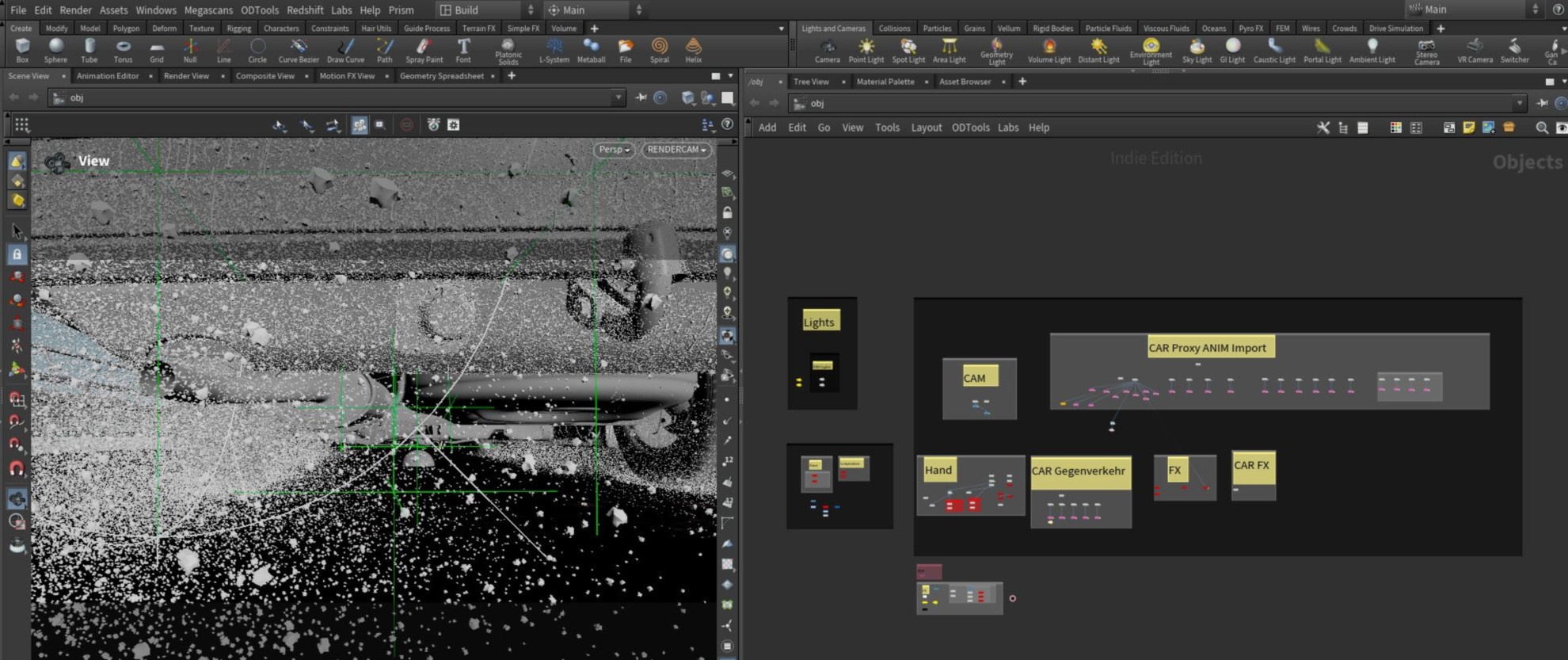
The 3D walls were then shaded in Redshift and comped in Nuke. With the help of our live integration setup, we were able to integrate the walls seamlessly and also create indirect light without HDRis. There were also several elaborate sequences that we enhanced with effects.
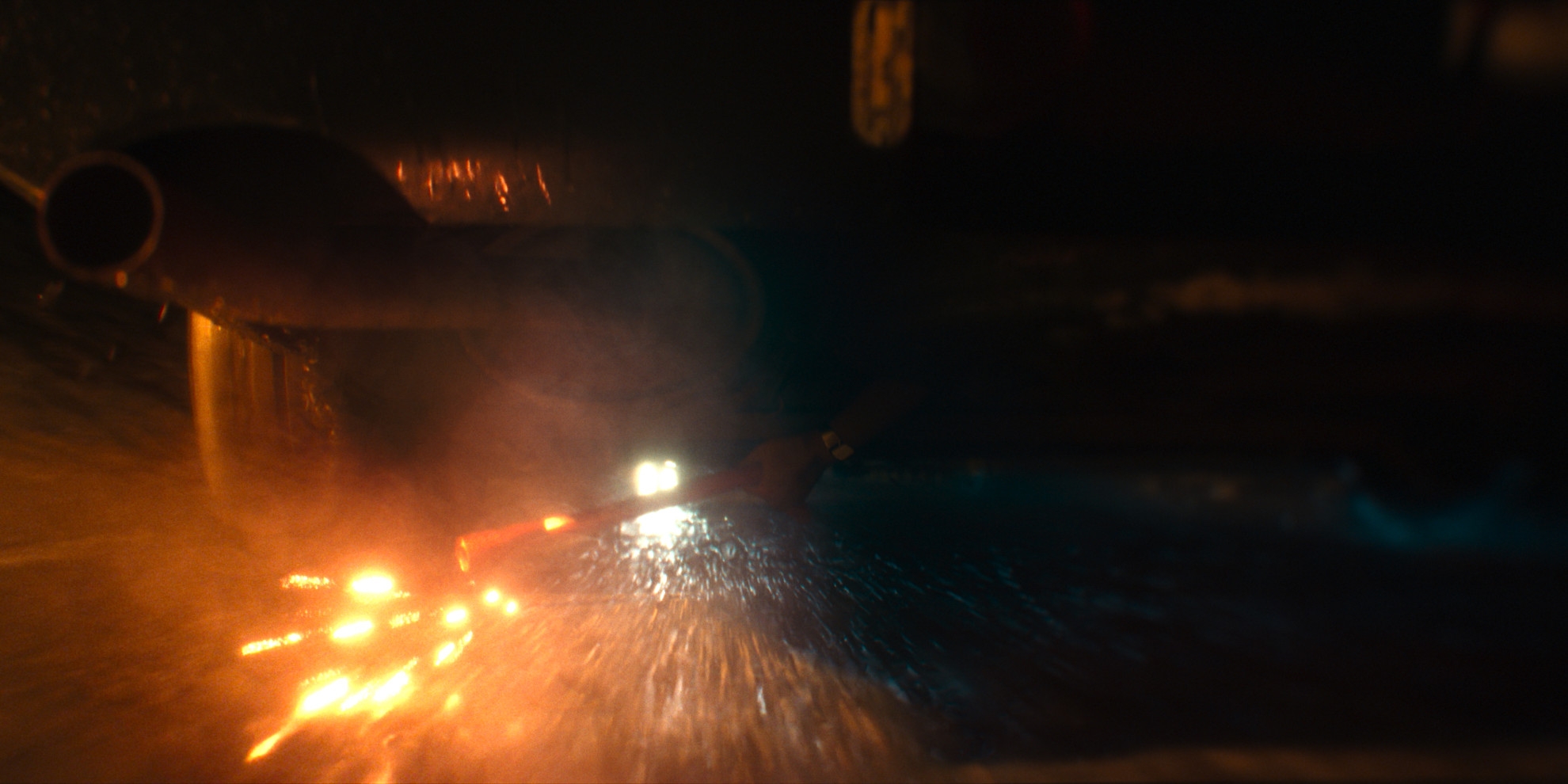
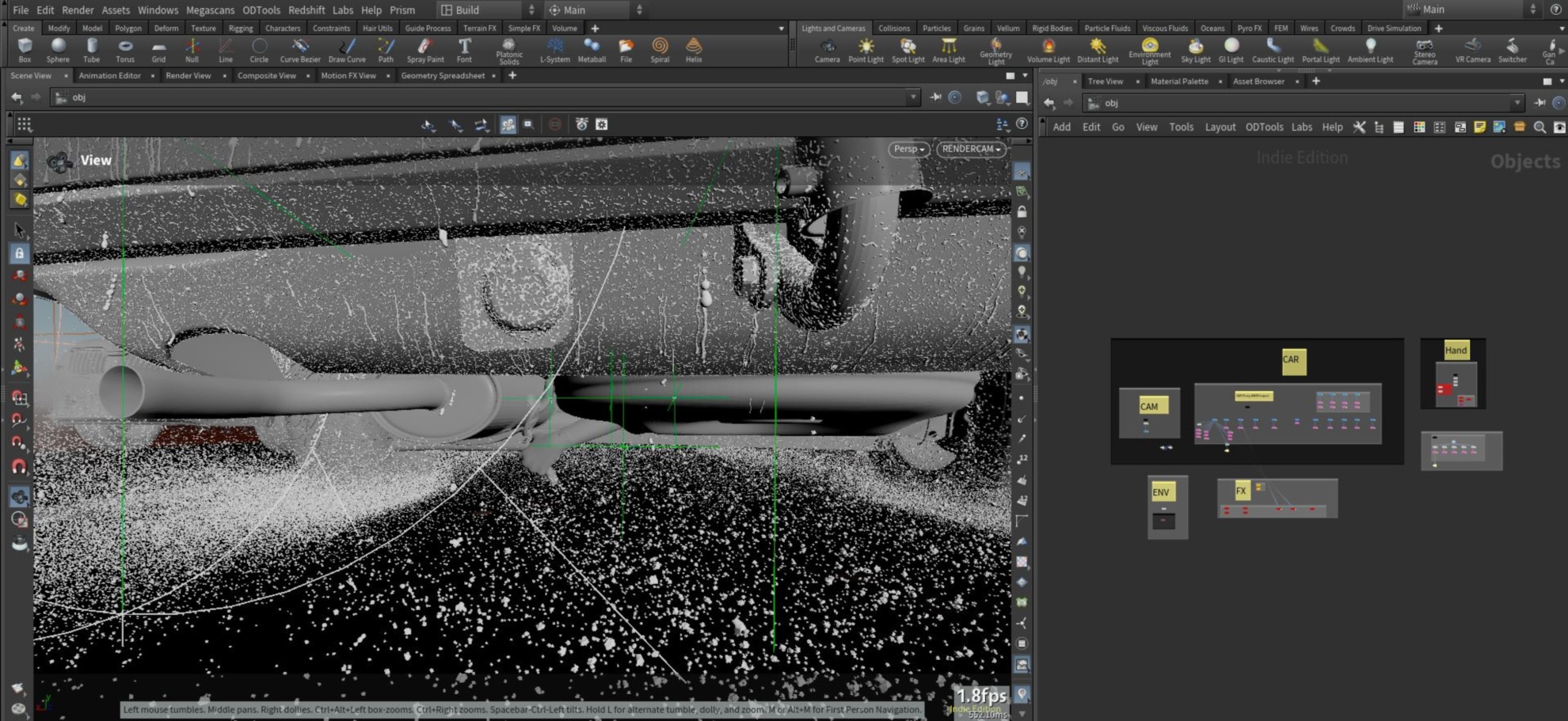
First and foremost, there is a crash that is narrated from the underbody of the vehicle from below. For safety reasons, it was not possible for our main protagonist and her outstretched arm to stab the tyre of a vehicle at full speed with an iron bar and trigger a rollover. Understandable!
That’s why we used a mixture of real plates and full CG shots. The entire build-up of the scene is shot in real life, allowing the viewer’s eye to get used to the visual impression. The material was also an excellent reference for knowing what the CG shots should look like.
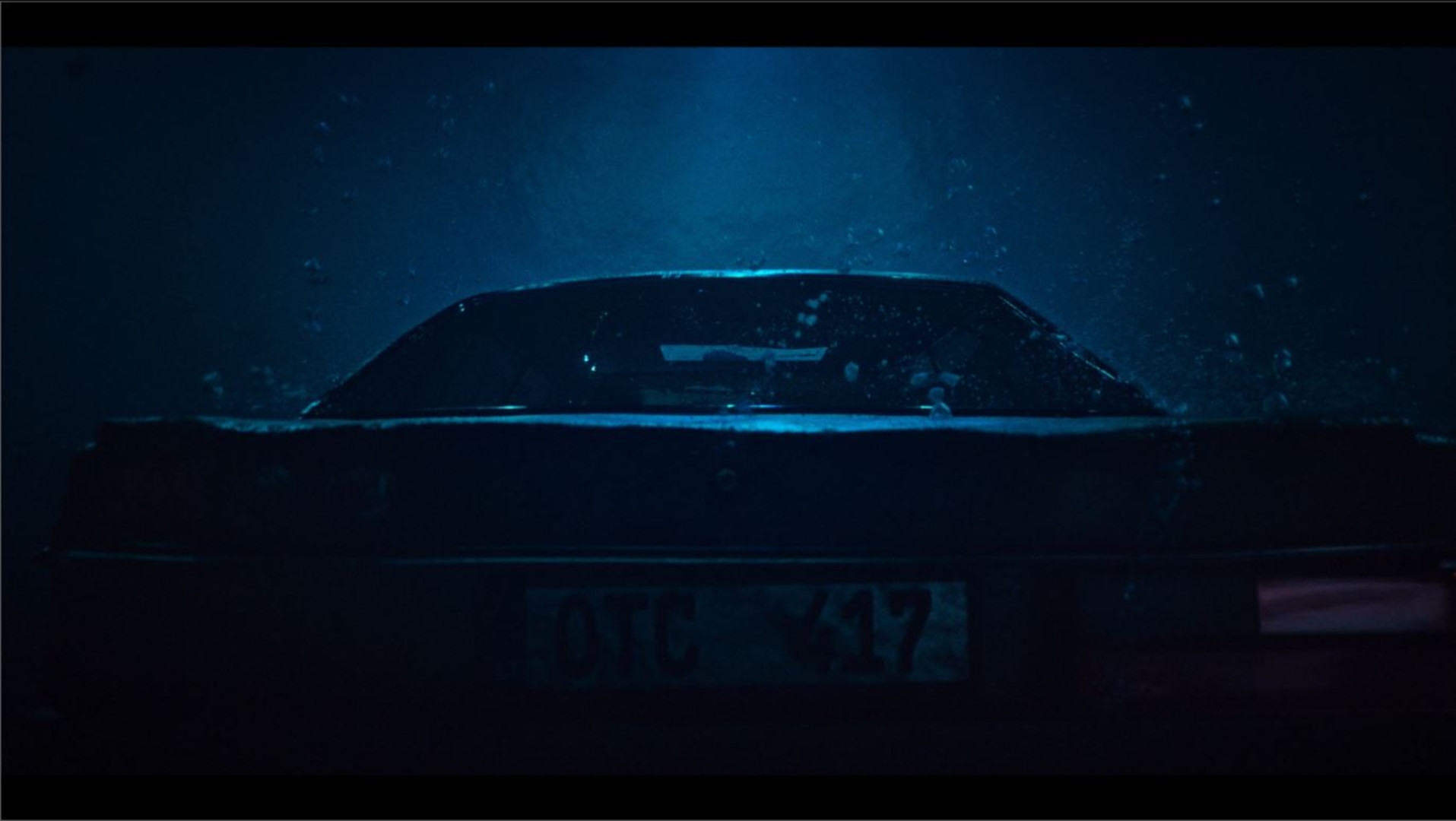
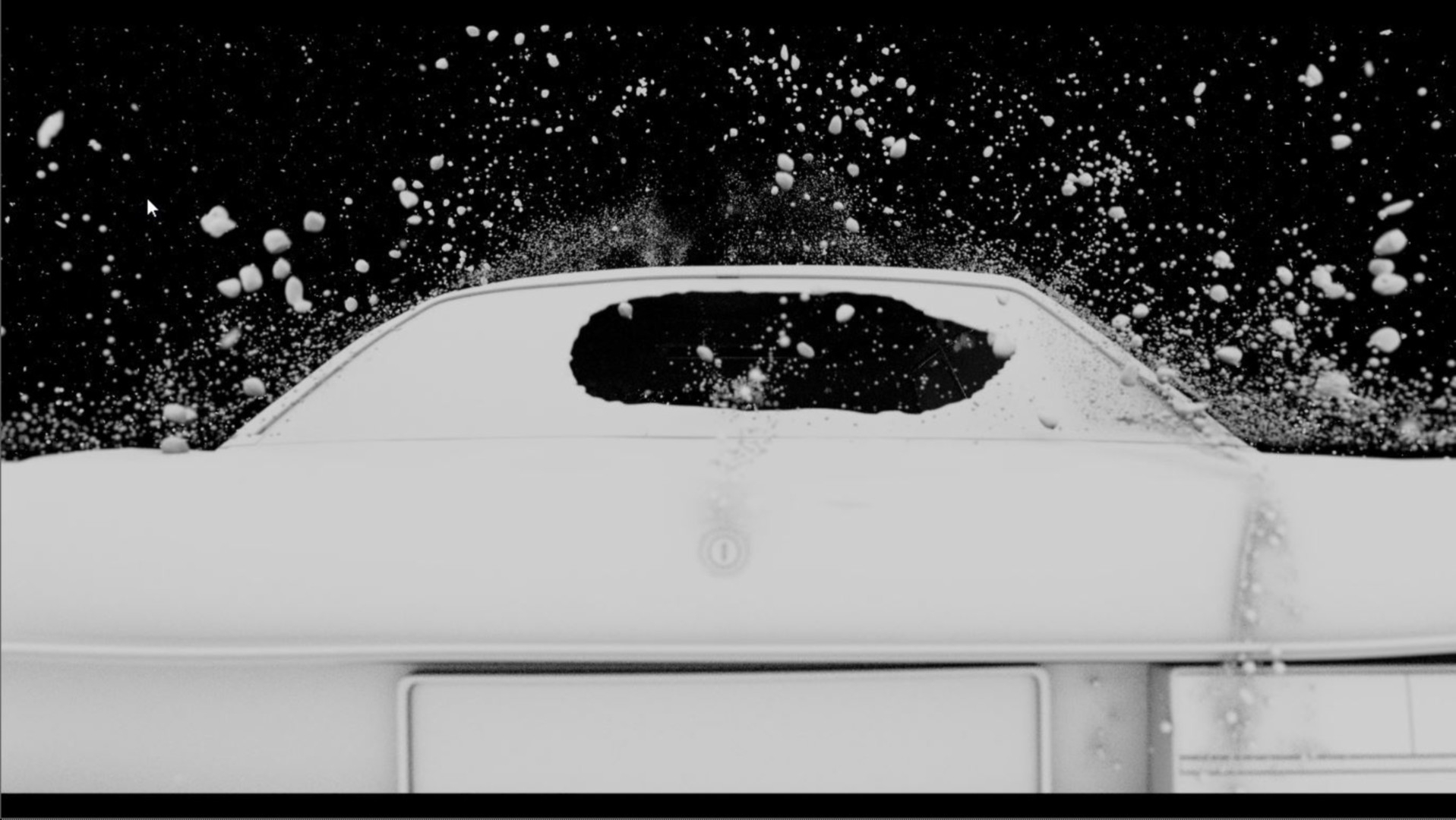
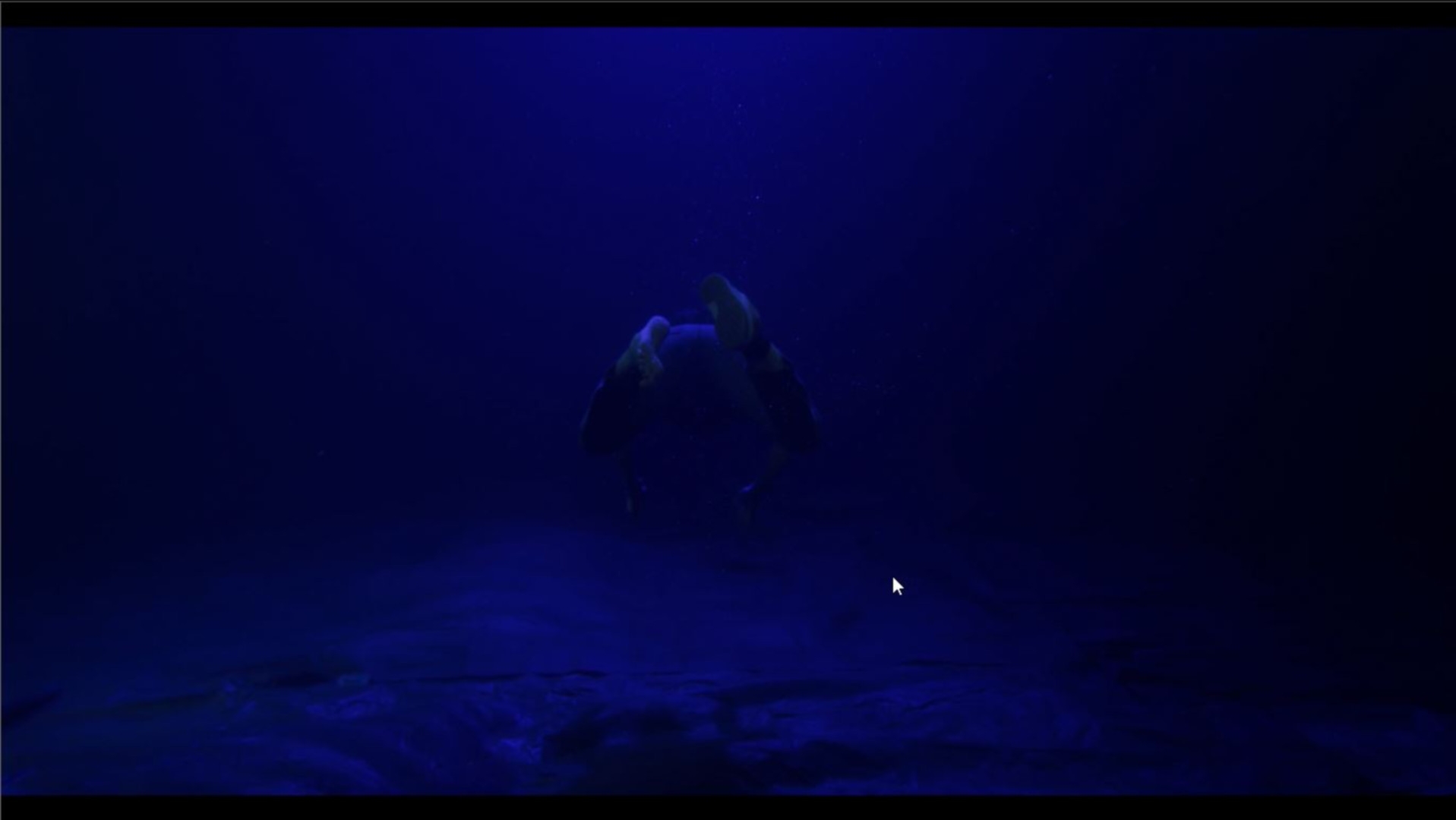
When the impact occurs and sparks fly, we opted for a full CG version. But due to the dark lighting, the sparks and the fast cuts, even we could hardly tell which of the shots were real and which were animated. The crash is immediately followed by an underwater scene. Here, too, we used a mixture of real and CG shots.
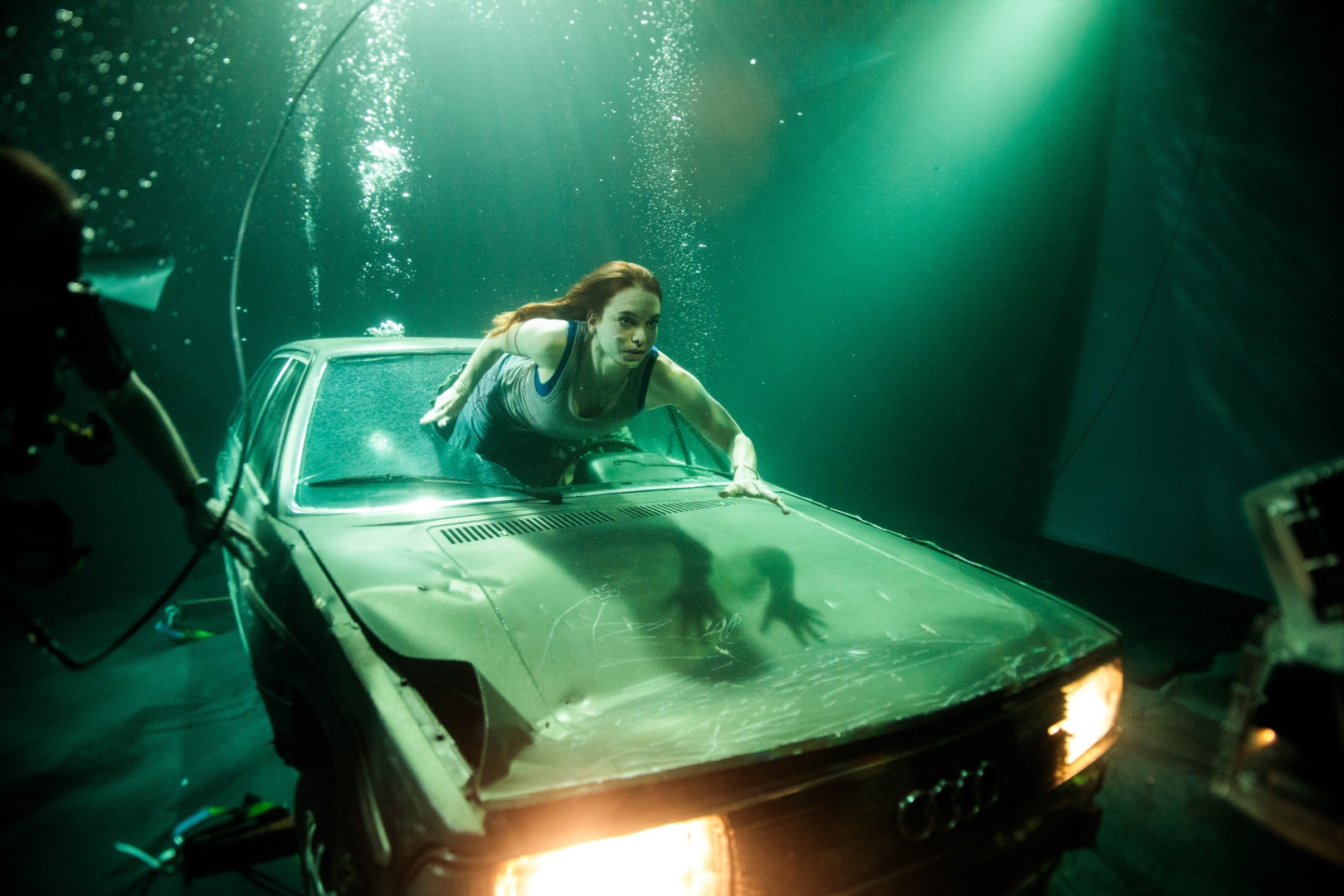
We actually sank our game vehicle in a diving pool and Sina Martens, our main actress, actually dived completely out of the boot through the interior of the vehicle from the front of the vehicle. We all admire her for this achievement and the film also benefits from the fact that we were able to shoot here without a stunt double.
The diving pool was about 3 metres deep, which means that their diving sequence was shot completely for real. We then used VFX to enhance the effect. We added more air bubbles and shifted the water level to make the dive look much deeper. A “long shot” under water was then created almost full CG, as our diving pool was really too small for this. Only a small plate of Sina was inserted, but the vehicle and the entire surroundings were then created digitally.
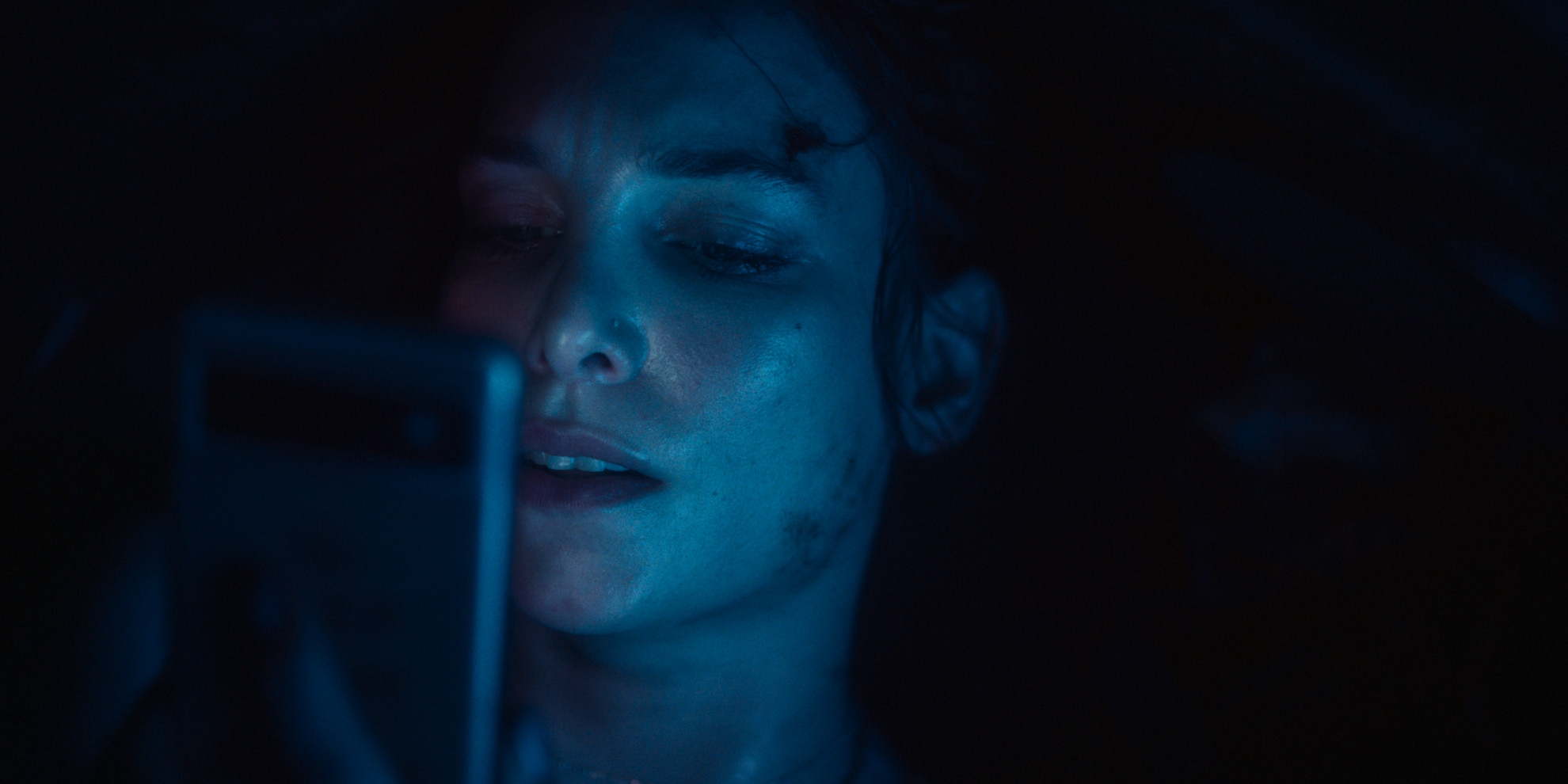
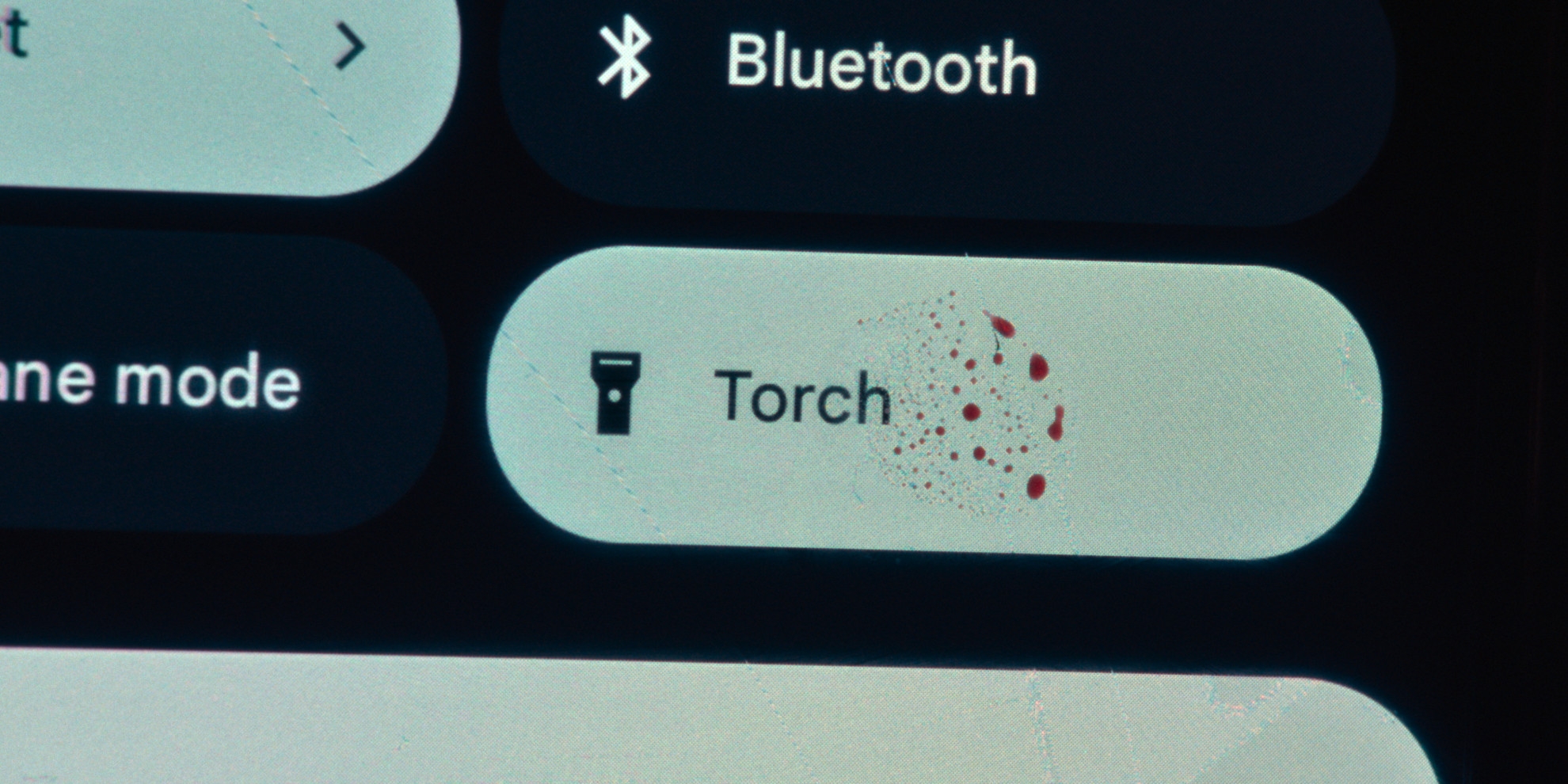
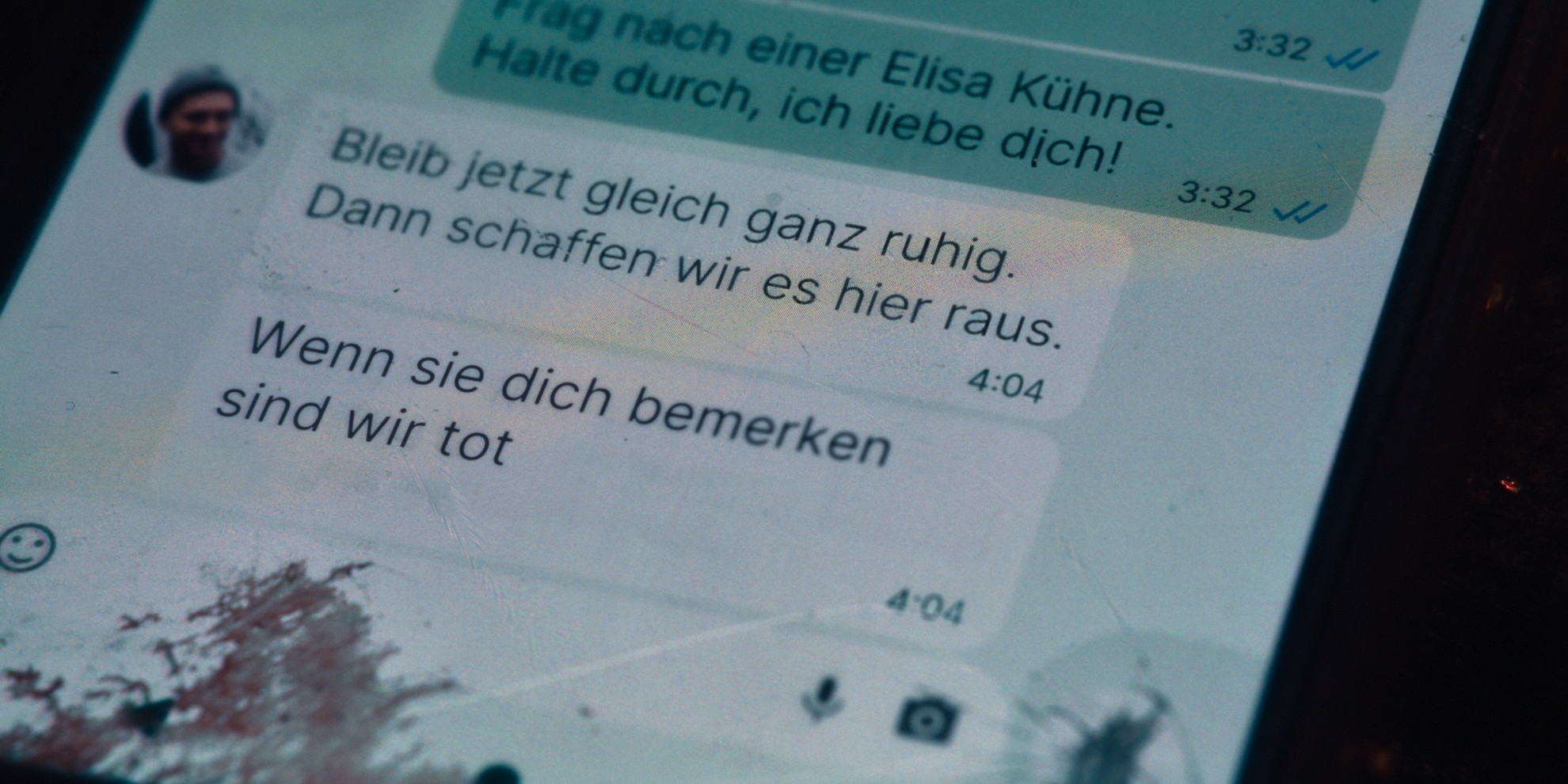
Mobile phone screens through screen replacements? Not at all!
When you think of screens, the most obvious thing is of course a screen replacement. Especially if you want to circumvent the rights of the apps used, or if the screen content doesn’t even exist yet.
With TRUNK, however, we have chosen a different approach. Due to the high number of mobile phone shots, this approach was too risky for us, as it has a really significant disadvantage: the actress cannot see what she is doing on the screen! This can lead to difficulties if she taps on the screen wildly and randomly, only to realise later in post-production that the app interface doesn’t match the position of her fingers at all.To get round this and in particular to achieve a level of accuracy that is also suitable for interactions with the screen in the macro range, we developed our own fake operating system.
Using “Protopie”, an app for developing apps, we built a complete interface with all the important functions that we had to use in the script. We created a list of 120 functions and assets, which we then pre-produced in detail.
In this way, Google Maps maps could only be half loaded, battery levels, reception bars and times could be set manually at any moment, keystrokes could be made to the exact letter, videos could be shown and so on. The app could even be controlled remotely, so we had our own mobile phone operator on set who was solely responsible for this activity.
This meant that calls could be made, screens switched off, photos sent, etc. at the command of the director. This ultimately meant that we were able to depict a much greater degree of authenticity and that our leading actress could actually interact with the mobile phone.
VFX timing
Despite the limited set-up, including all the retouching, minor fixes, retiming etc., we ended up with a VFX shot count of around 250, with 1,200 cuts in the film. That’s a considerable amount, at least when you consider the amount of time involved. As a reminder: the shoot was in April, there was a small reshoot in May, the picture lock was at the end of June and the final delivery of the film to Amazon was at the end of August, including all corrections and deliveries. This left only 7 weeks for the VFX. This was only possible because the full CG sequences could already be started parallel to the shoot and many things were already planned and prepared, so that after Picturelock we were able to finalise shot by shot in a very concentrated manner.
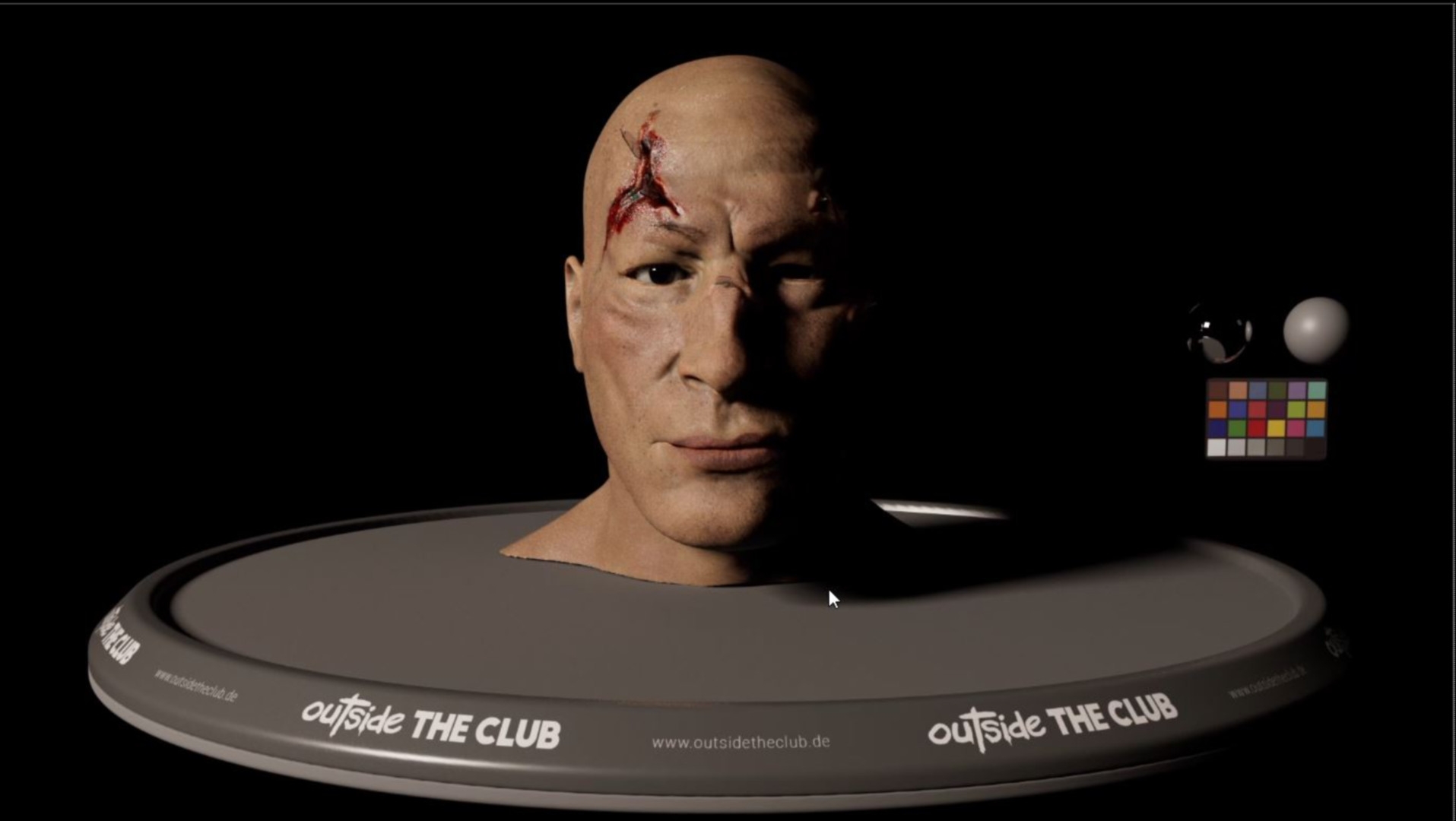
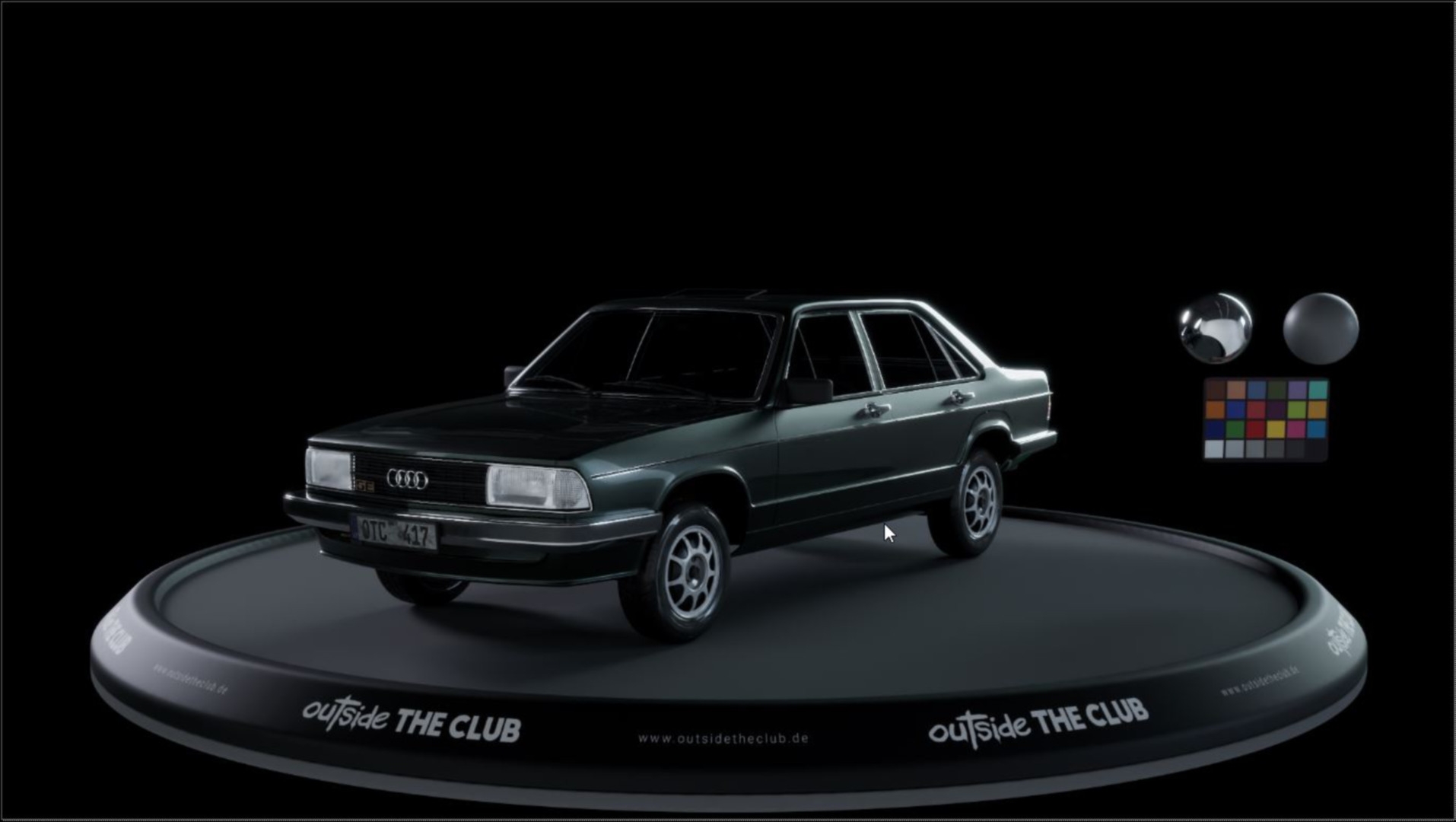
Our VFX pipeline is quite simple and streamlined. The main tools are as follows:
- Compositing: Nuke
- Motion graphics, screen content pre-production: After Effects
- 3D/SIM: Houdini
- Modelling: Maya and Blender
- Rendering: Redshift (via Deadline as render manager)
- Renderfarm: In-house The production was implemented in the ACES colour space and we had a consistent EXR workflow for the file transfers.
Colour grading
Our post-production facility was WeFadeToGrey in Cologne, who did an excellent job. We have often worked together on previous productions, so it was an obvious choice for us to use them for our own feature film. The lead colourist was Felix Hüsken, who is also known for grading productions such as How To Sell Drugs Online (Fast), Bad Banks, Sterben, Die Therapie, Blood Red Sky and many more. The additional colourist was Jonas Damm.
We worked in the ACES colour space and delivered an HDR grading at the end. The Sony Venice, the Sony Venice 2 and the Sony FX30 were perfectly matched and the VFX shots also integrate perfectly with each other, so we are extremely satisfied.
Delivery
We delivered both a classic DCP (for festivals and screenings) and an HDR master. The archival deliveries in particular were very extensive, but WeFadeToGrey did a good and structured job here, so fortunately we weren’t too involved in the details. In short, these were versions such as: HDR master, HDR textless, SDR master, SDR textless, HDR and SDR split track master, a 7.1 Dolby Atmos mix, 5.1 mix, nearfield, M&E tracks, DME, accessible version, etc.
Lessons learnt
When we think back to the production, we did a lot of things pretty much right. The short amount of time was both a blessing and a curse. On the one hand, we were able to finance, shoot and release a feature film in a very short space of time. On the other hand, the entire project was so tightly planned that we couldn’t afford any missteps.
This full concentration spurred us on to top performance and in the end we delivered successfully. But we have to say: we won’t realise another project in this short space of time. The risk is too great, the stress enormous, there is hardly any room for experimentation. It has to work, right away. And we want this freedom back for our next project.
Conclusion
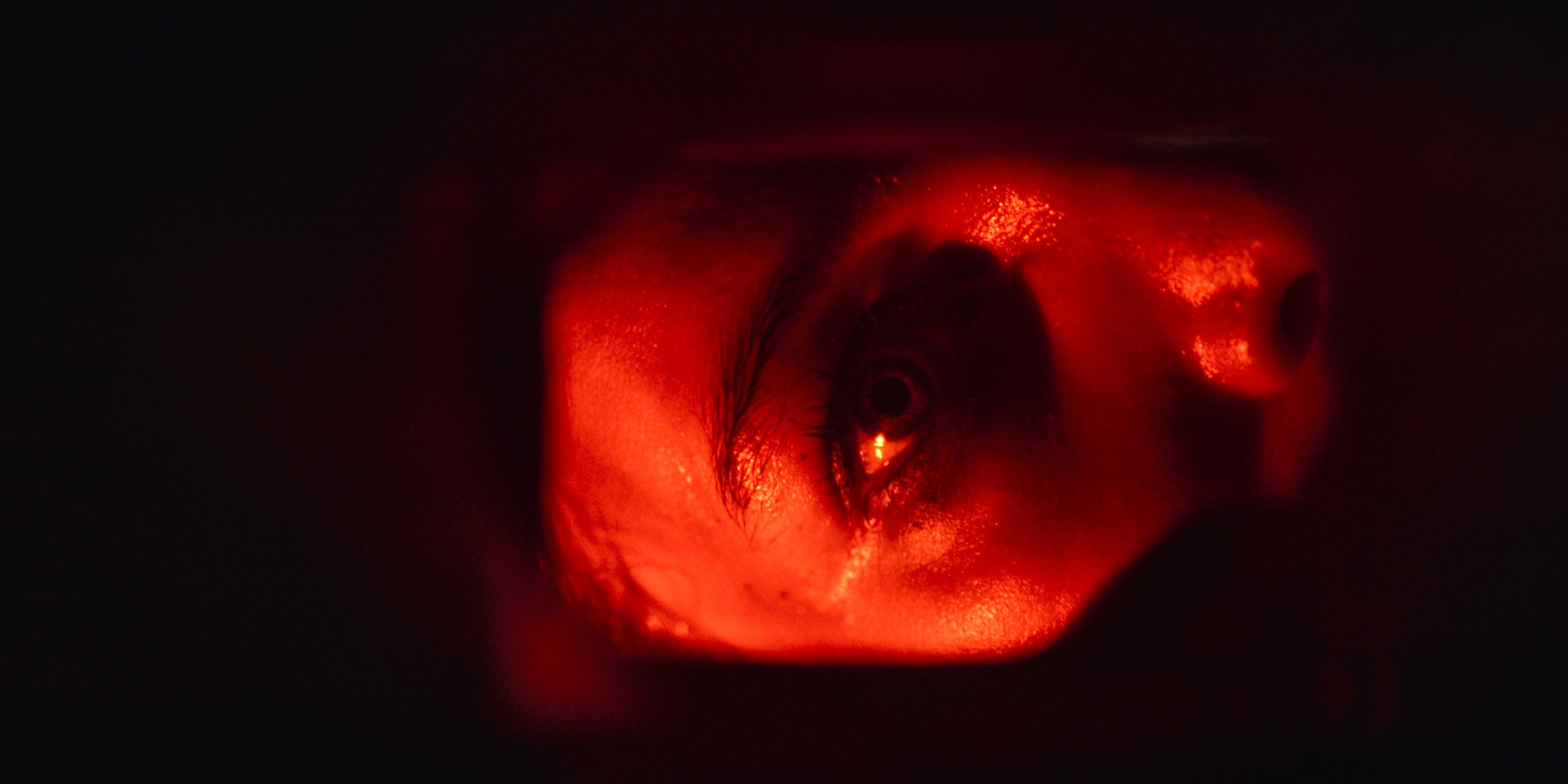
Trunk – Locked In was one of the biggest creative challenges we have faced so far. There are no “lucky accidents”: with full control, all the image content was deliberately and consciously conceived and created by us. Nothing happens “by chance”, as we often experience.
Nothing “displaces” itself, no production value or variety is created by changing motifs; all variation, all content, all ideas were specifically planned and realised by us. We can’t hide behind great motifs. What counts here is the pure acting, the creative camera work, the targeted use of VFX, an authentic set design and generally the many interfaces with the other departments.
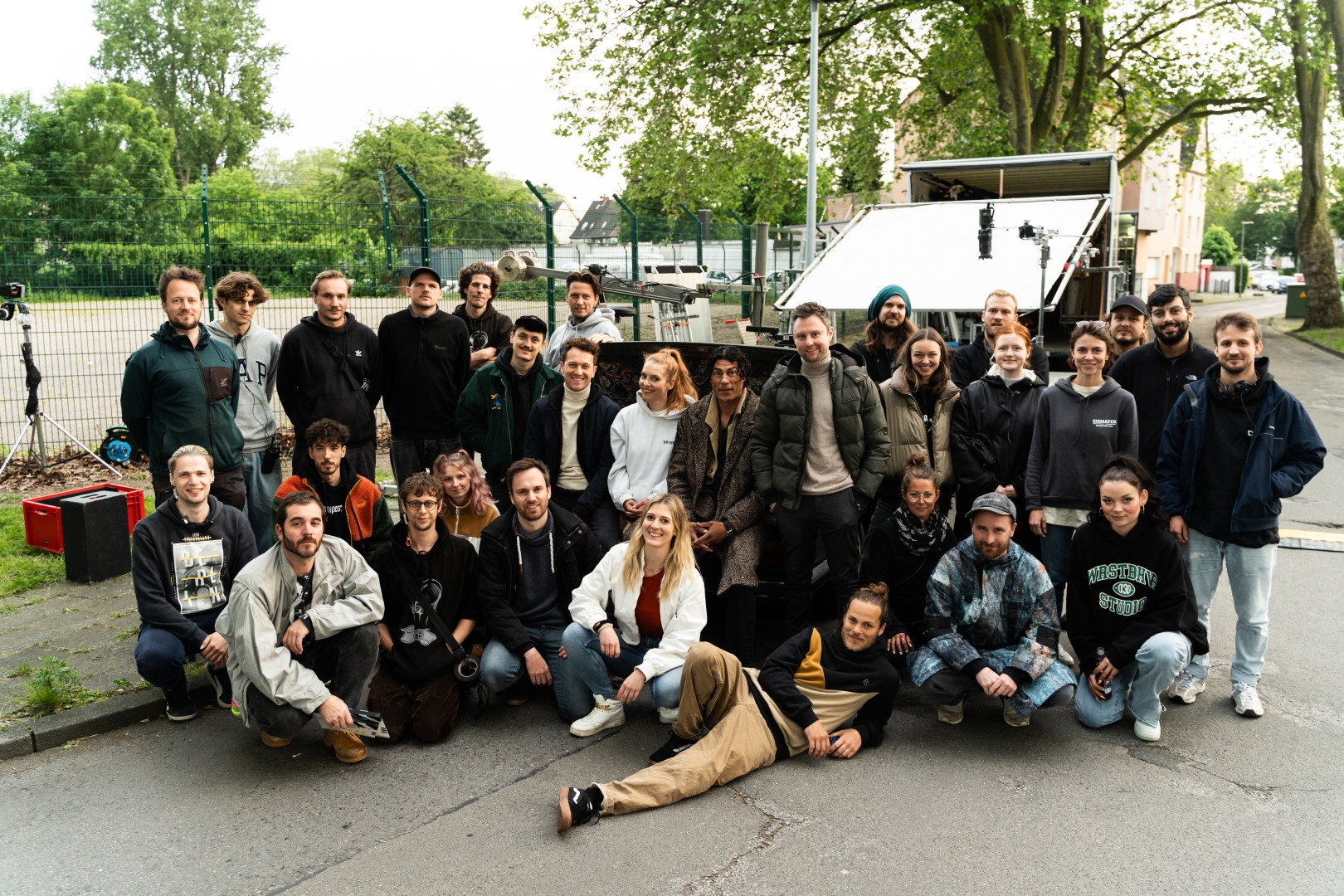
So a huge thank you goes to the entire TRUNK team. Because we must not forget that film-making is teamwork and in the end every single person counts. We would especially like to highlight our VFX supervisor Yannik Heß with his VFX team Jonas Ahlrichs, Robin Odasso, Nick Pantring, Tobias Preuss, producer Melina Pelc, director, writer and editor Marc Schießer, cinematographer Daniel Ernst, colourist Felix Hüsken, but also the team at Amazon Studios, who believed in this crazy and bold idea from the very beginning and actively supported us in making this film possible.
We hope that we were able to make a good contribution to German genre film with our work and are now looking forward to our next projects. For us, we are continuing in the direction of genre feature films. We are always on the lookout for creative challenges and for people who want to join us and become part of the team.
Trunk: The project
Synopsis: 28-year-old medical student Malina wakes up disorientated in a locked car boot and is horrified to discover that she has more than just a memory. With her phone as her only connection to the outside world, the intelligent young woman wages a desperate battle for survival as the vehicle hurtles inexorably towards a terrible secret. Even if she makes it – she will never be the same again.
Amazon Original Feature Film Release: 26.01.2024 on Prime Video Shooting days: 23 days (15 days studio, 8 field shooting days incl. plates) Running time: 95 minutes Format: 2:1, 24 fps, HDR Production company: Outside the Club VFX: Outside the Club Director, writer: Marc Schießer Cinematographer: Tobias Lohf, Daniel Ernst Colourist: Felix Hüsken/WeFadeToGrey VFX Supervisor: Yannik Heß
