



Clone troopers, not stormtroopers. That’s the first thing producer Maurine Fauvert clears up when talking about Star Wars: The 212, a fan film by Hoplite VFX that swaps Imperial inaccuracy for prequel-era precision. Born from the combined skills of two friends: one animating, one rendering, and the project snowballed into a full indie studio operation. With a lean, open-source-heavy pipeline, the team used Blender, Maya, and Houdini to craft a high-energy tribute to the 212th Clone Trooper Legion, led by Commander Cody. The result? A GPU-powered, blaster-filled short that proves you don’t need a galaxy-sized budget to make something worthy of the Star Wars legacy.
DP: What is The 212 and why a Star Wars fan film?
Maurine Fauvert: Like many people in our industry, Star Wars is what inspired countless artists to get into VFX. We wanted to pay tribute to this franchise that we particularly love and that has shaped the history of our craft.
As for the 212th, it’s a fairly well-known legion in the Star Wars universe, especially from The Clone Wars. We decided to put this legion in the spotlight because it has only ever been portrayed in a feature animation style and it’s a fan favorite.
DP: Let’s talk teams: A little Mynock told me this all started with just two friends noodling around—zero studio, zero big boss. How did this grow from “Hey, want to make a fan film?” to a real crew?
Maurine Fauvert: Exactly, the whole project started with two artists creating Star Wars images and renders on their own: Arnaud, a modeler / rigger / animator, and Vincent, who handles texturing, lighting, and rendering. Their skill sets complemented each other so well that they decided to build a project together. Over time, friends joined in to complete the team. The synergy between the members worked so well, and production was running so smoothly, that we decided to create the studio. It happened quite naturally, the team and the pipeline took shape during the project itself.

Pascal Blais mentored us tremendously on the production and budgeting side during the studio’s development. The team is truly passionate about what they do, and without their dedication, none of this would have been possible. We were also lucky to be surrounded and supported by the right people.
DP: How did working with zero “clients” influence your workflow?
Maurine Fauvert: We didn’t have clients but we had fans. The main goal was simply to get the project out there. We worked on it for about a year and a half as a side job, so part of the challenge was to avoid spending years on a personal project. The aim was to create images we were happy with, without nitpicking over every tiny detail.


Once the teaser was released, we received a lot of messages from fans, which meant we didn’t really have the option of being too late. We had to find a balance between managing the renders and not exhausting the artists on a volunteer project. Of course, we went through iterations, mainly to explore the style, but as soon as something felt convincing and matched the Star Wars universe, it went straight to render.
DP: Why are the Stormtroopers suddenly competent?
Maurine Fauvert: The 212th is a legion of clone troopers, not to be confused with stormtroopers. Clone troopers have always been highly trained soldiers, loyal to the Republic and led by the Jedi. Stormtroopers, on the other hand, are indeed more numerous, but far less accurate in their shooting.

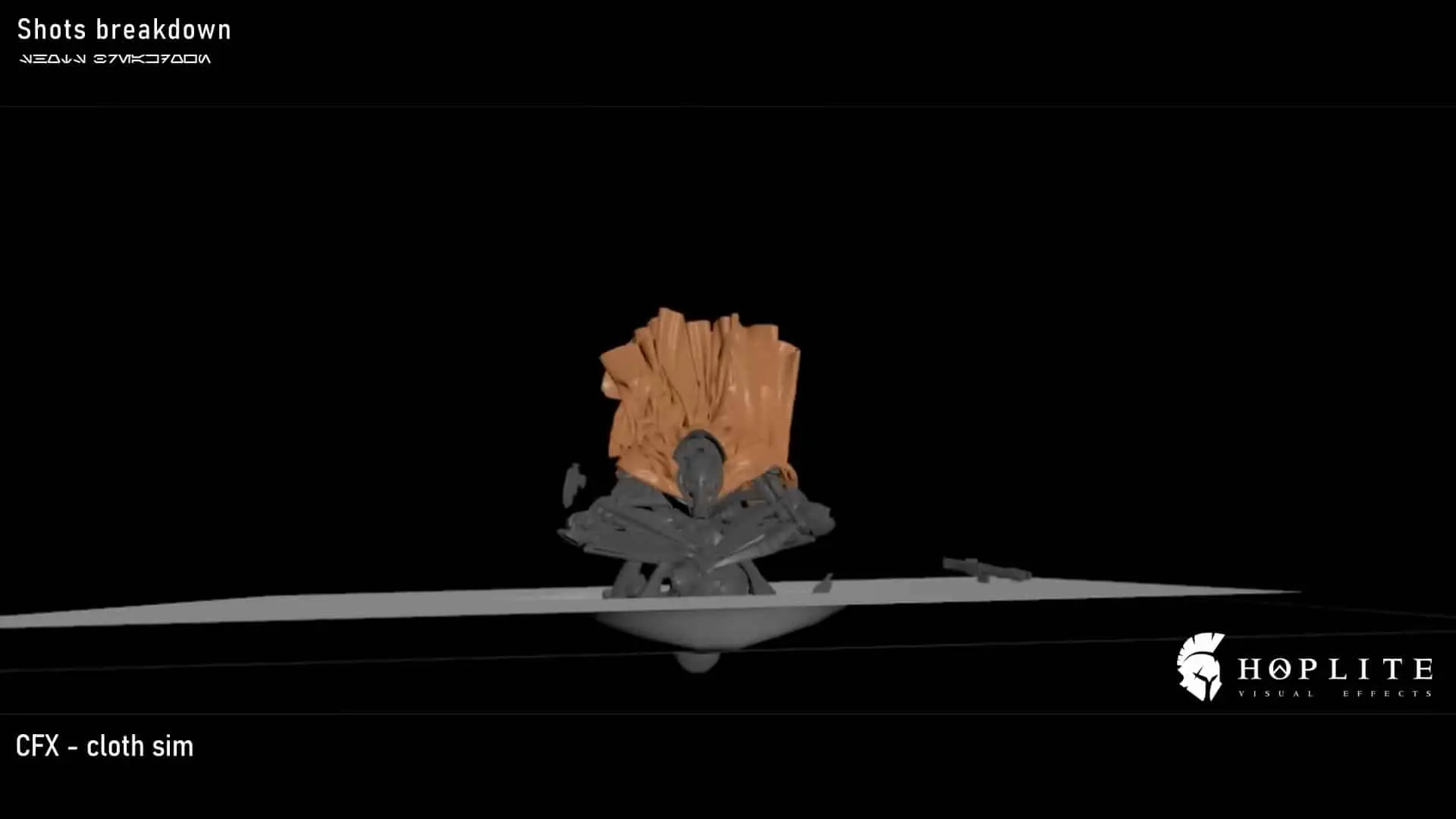
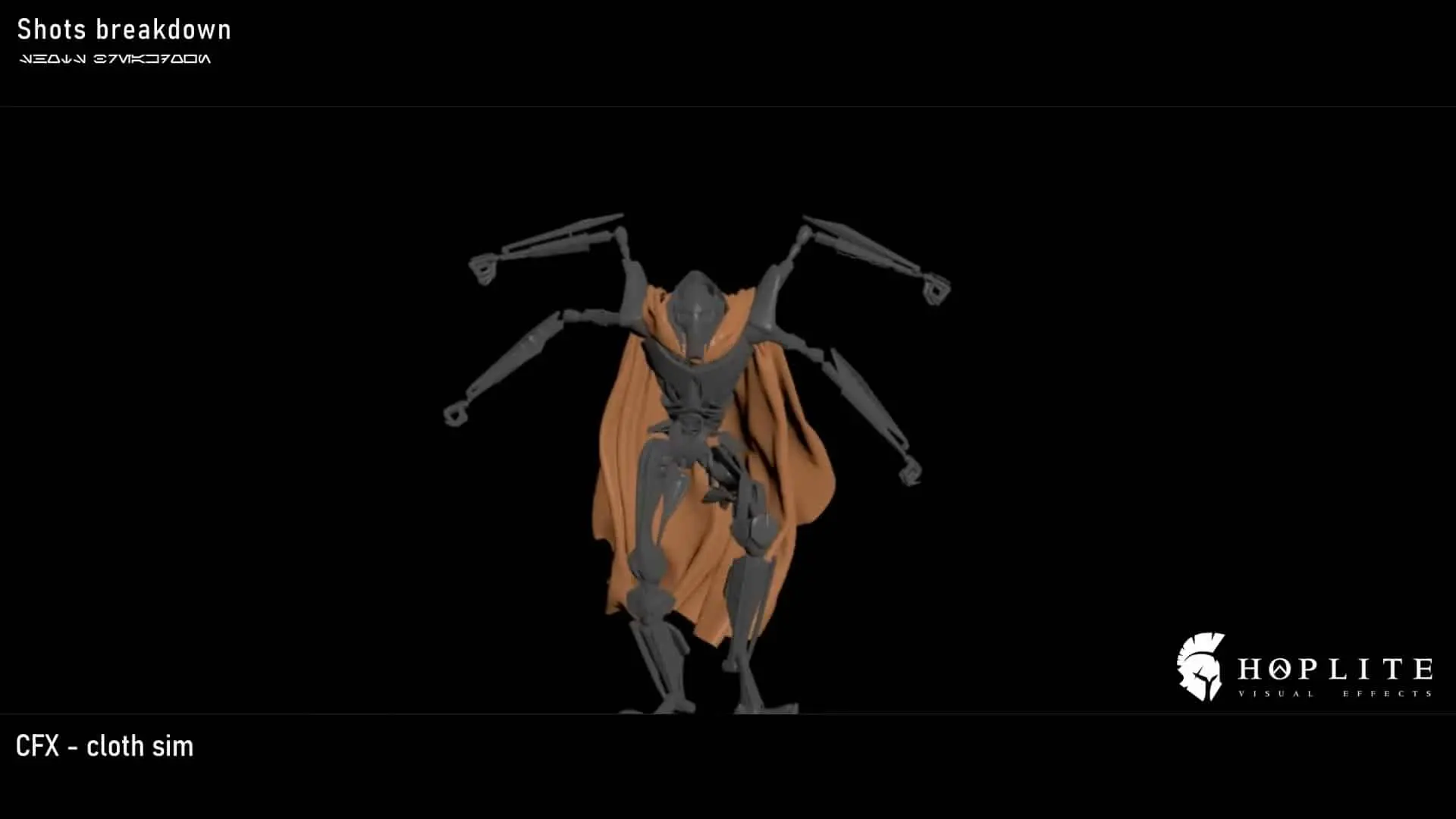
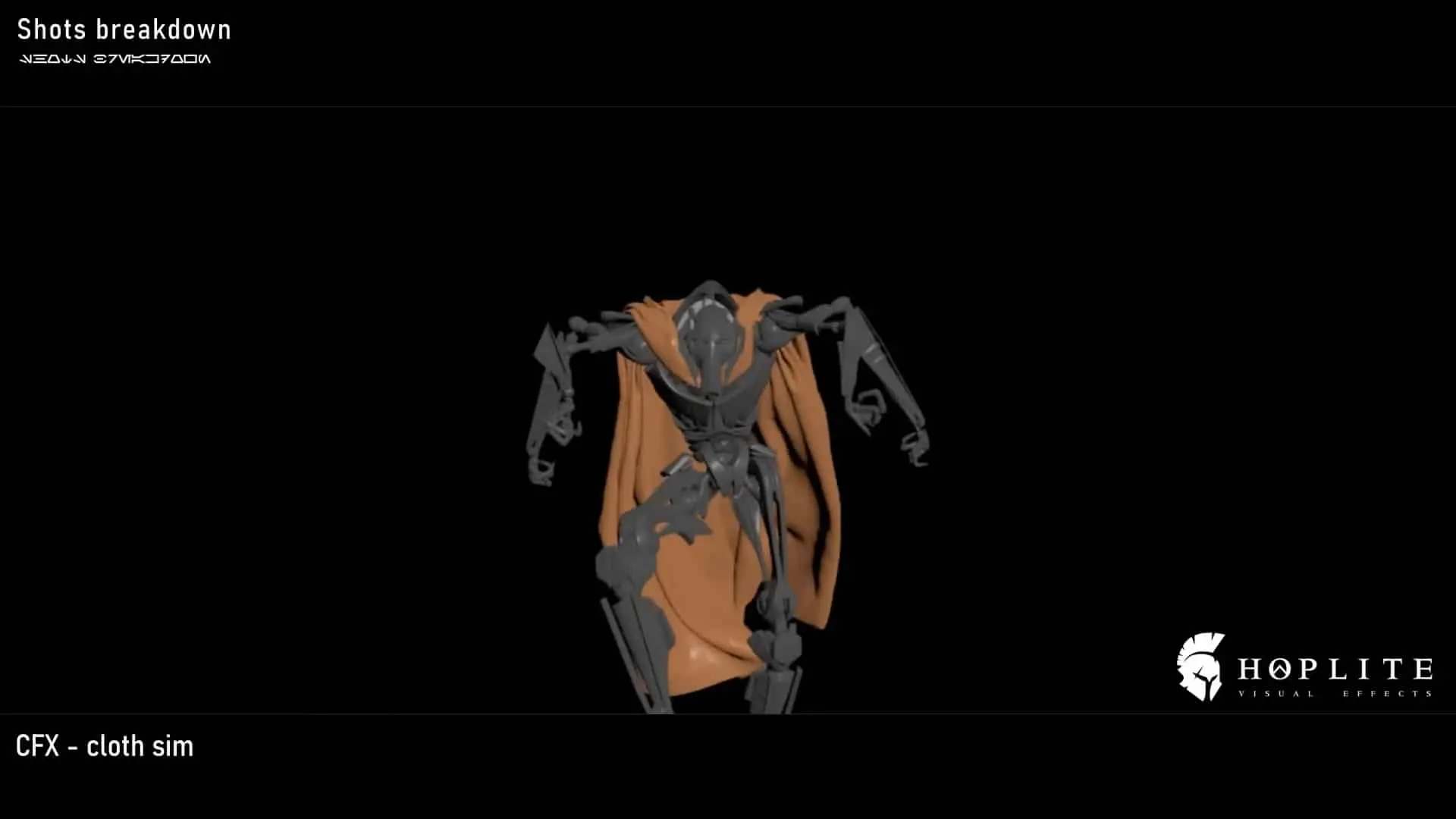
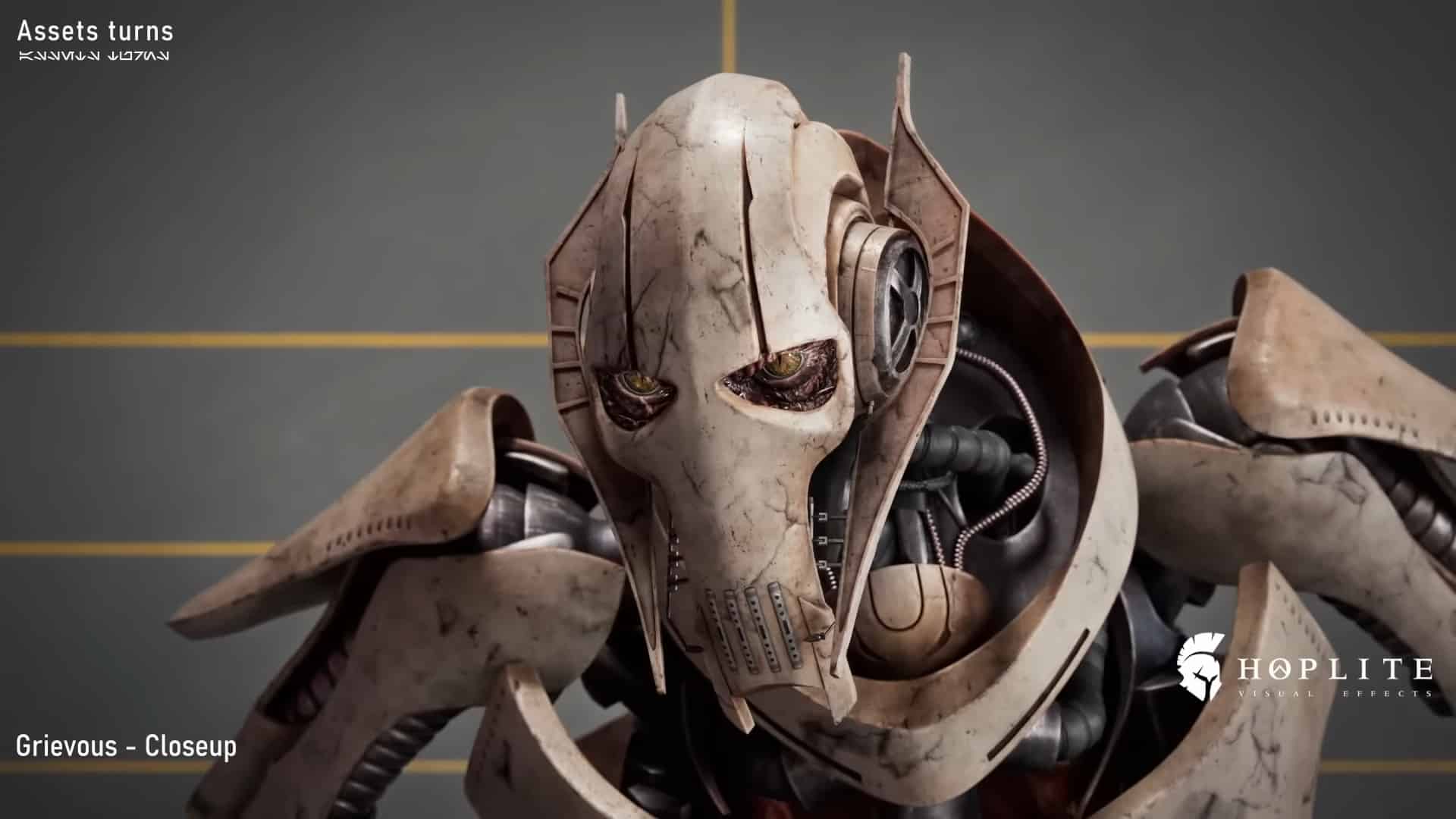
DP: Did the first guy in the hangar really get stomped by General Grevious?
Maurine Fauvert: Grievous weighs about 350 pounds, so it’s not actually that heavy. The trooper is still there, we didn’t cheat and he didn’t vanish; he’s just dead in the shadows.

DP: How did you choose what Star Wars references to use?
Maurine Fauvert: When it came to references, what really helped us narrow things down was the decision to feature one specific character: Cody and, by extension, his legion, the 212th. We also decided to focus on a single era: the prequels, and more specifically The Clone Wars. Within that framework, each artist picked the elements they personally wanted to bring in.
DP: You come from big studio backgrounds. So, how did working “small, scrappy, and open-source” compare? Did you find yourselves thinking, “Why didn’t we have this at [Insert Mega Studio Here]?” Or was there stuff you missed from the blockbuster pipelines?
Maurine Fauvert: One of the great things about being an indie studio is that we don’t have to go through a hundred approval steps to integrate a new tool into our pipeline. We test it, we approve it, and we use it — it’s as simple as that.
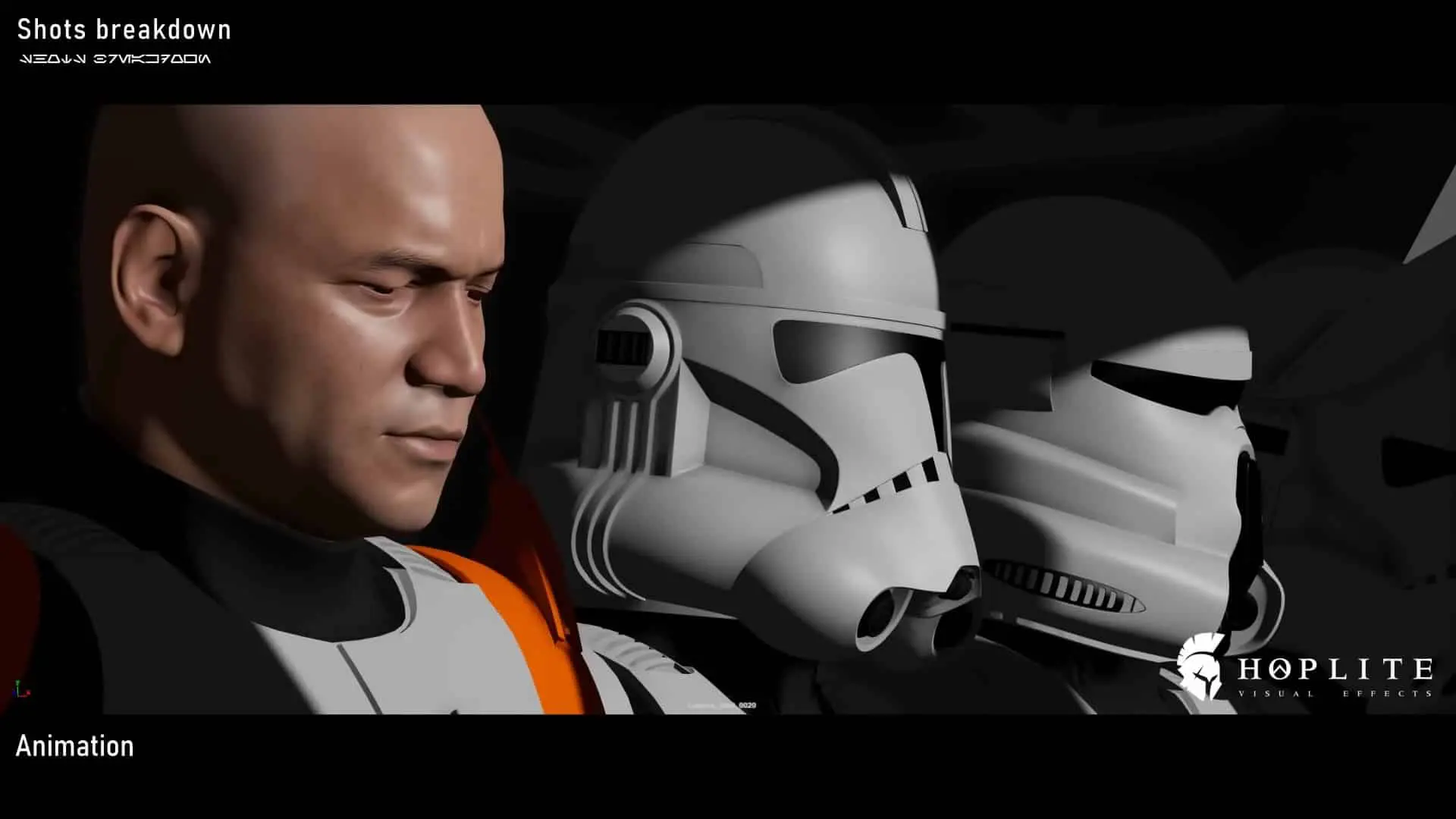
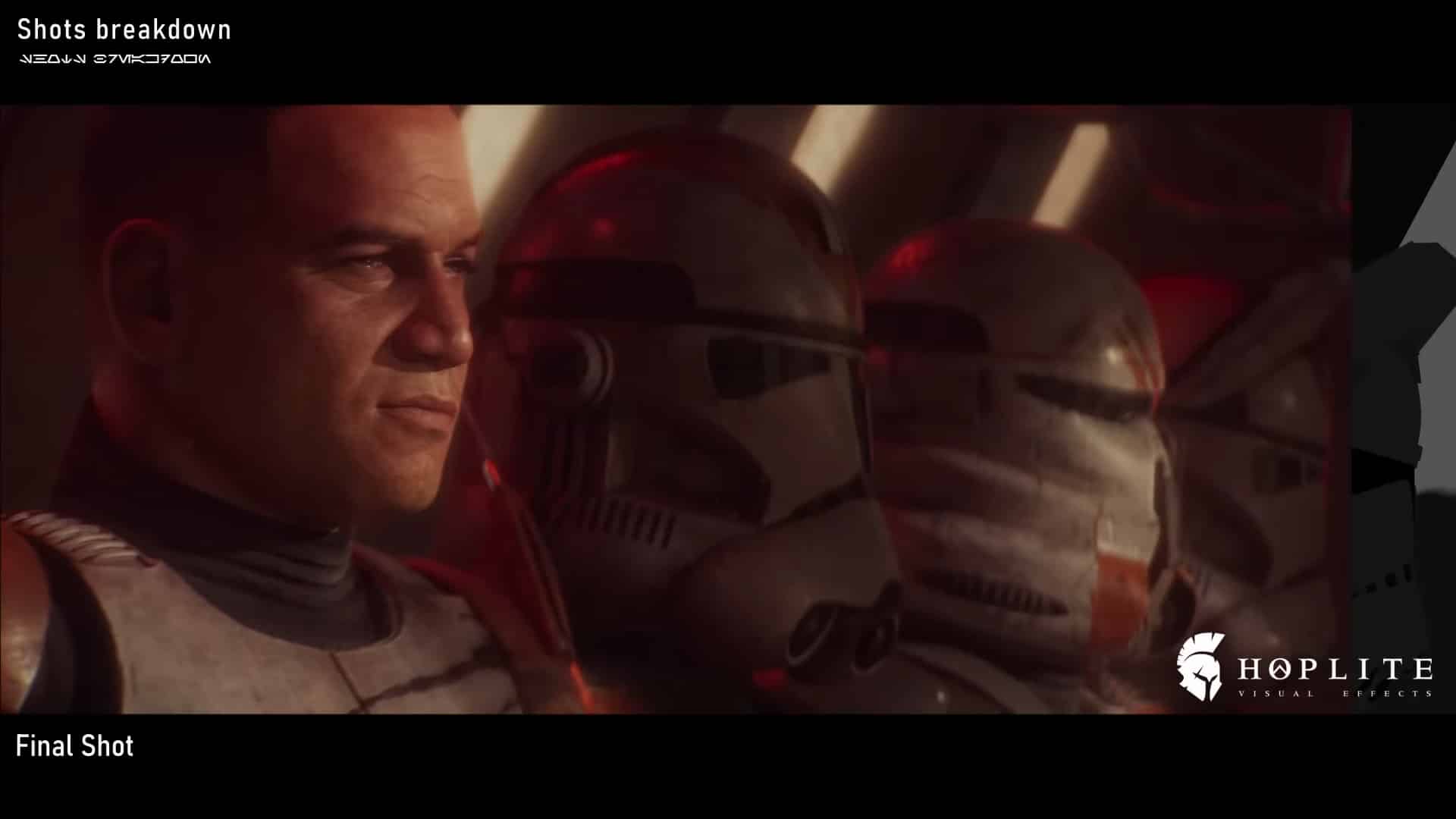
For example, we’ve used Move AI and Motorica. Back when we worked at a larger studio, we tried to integrate both tools, but the process required so many R&D approvals and authorizations that it never happened. Being a small team also means we can communicate fast. We’re close-knit, and everyone contributes their knowledge to problem-solving or finding new tools.
At our core, we’re 3D animators, so we do face certain challenges like working across multiple continents. This pushed us to set up cloud-based file management and external storage to secure our projects with proper backups.
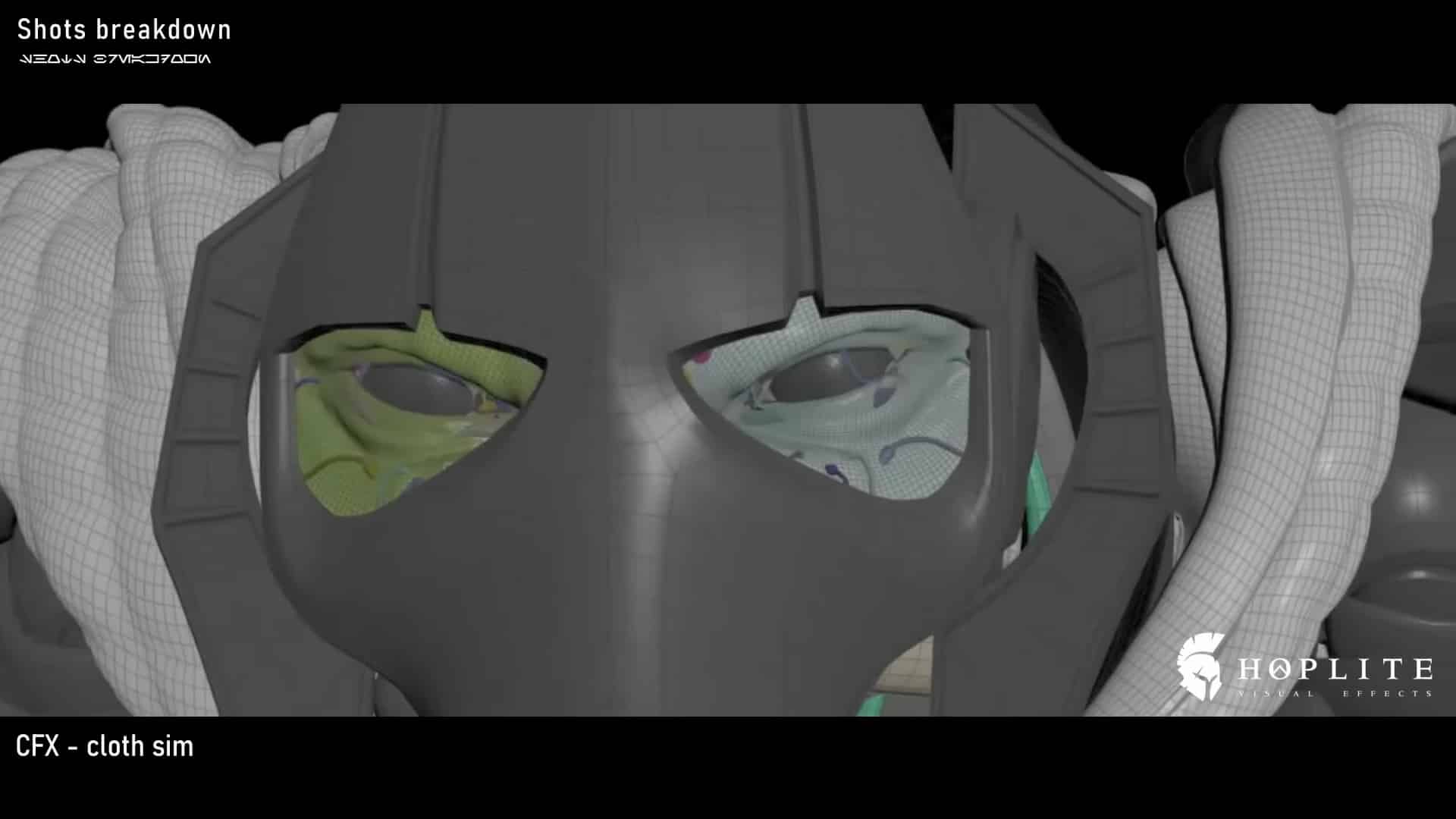
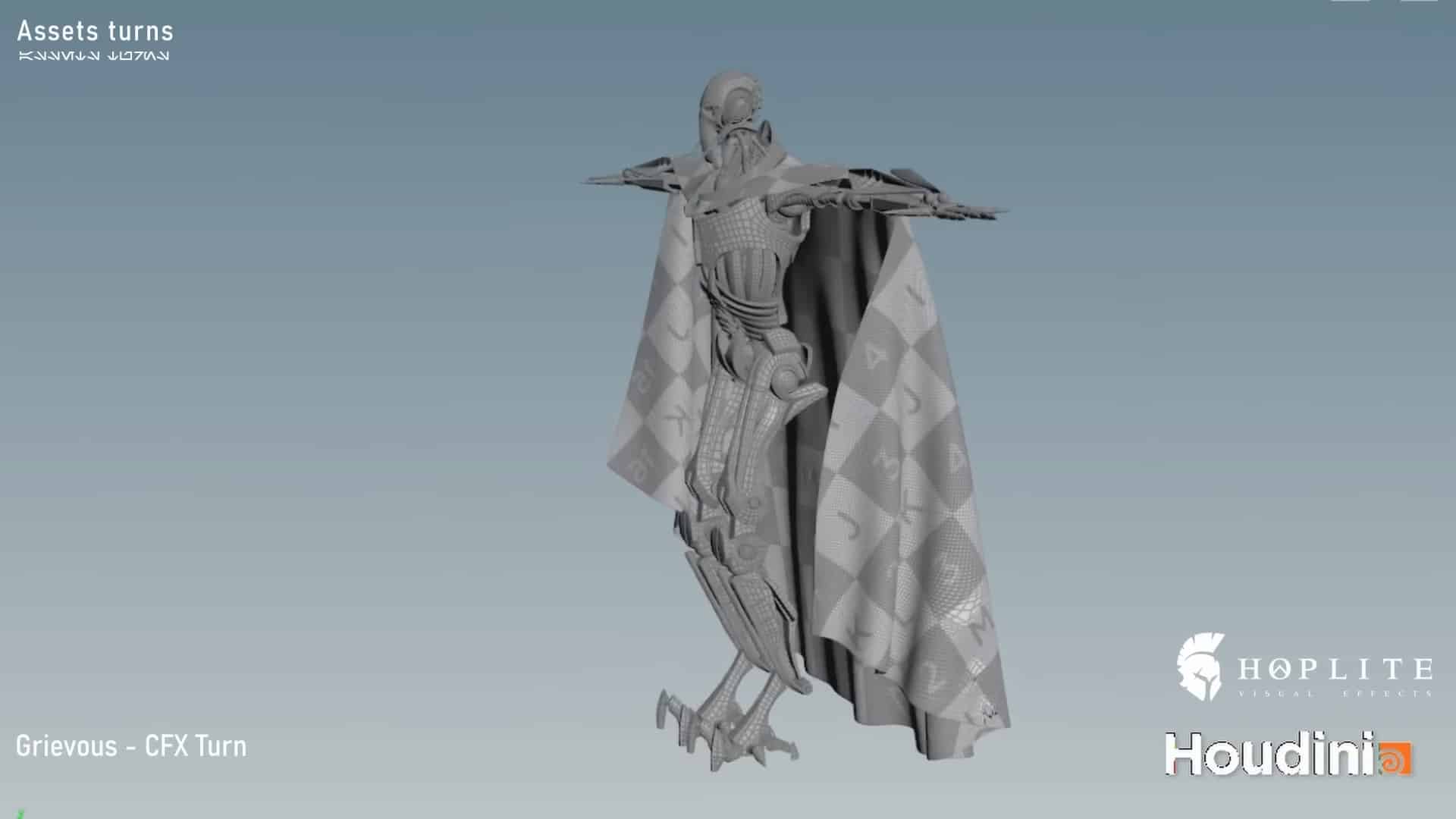
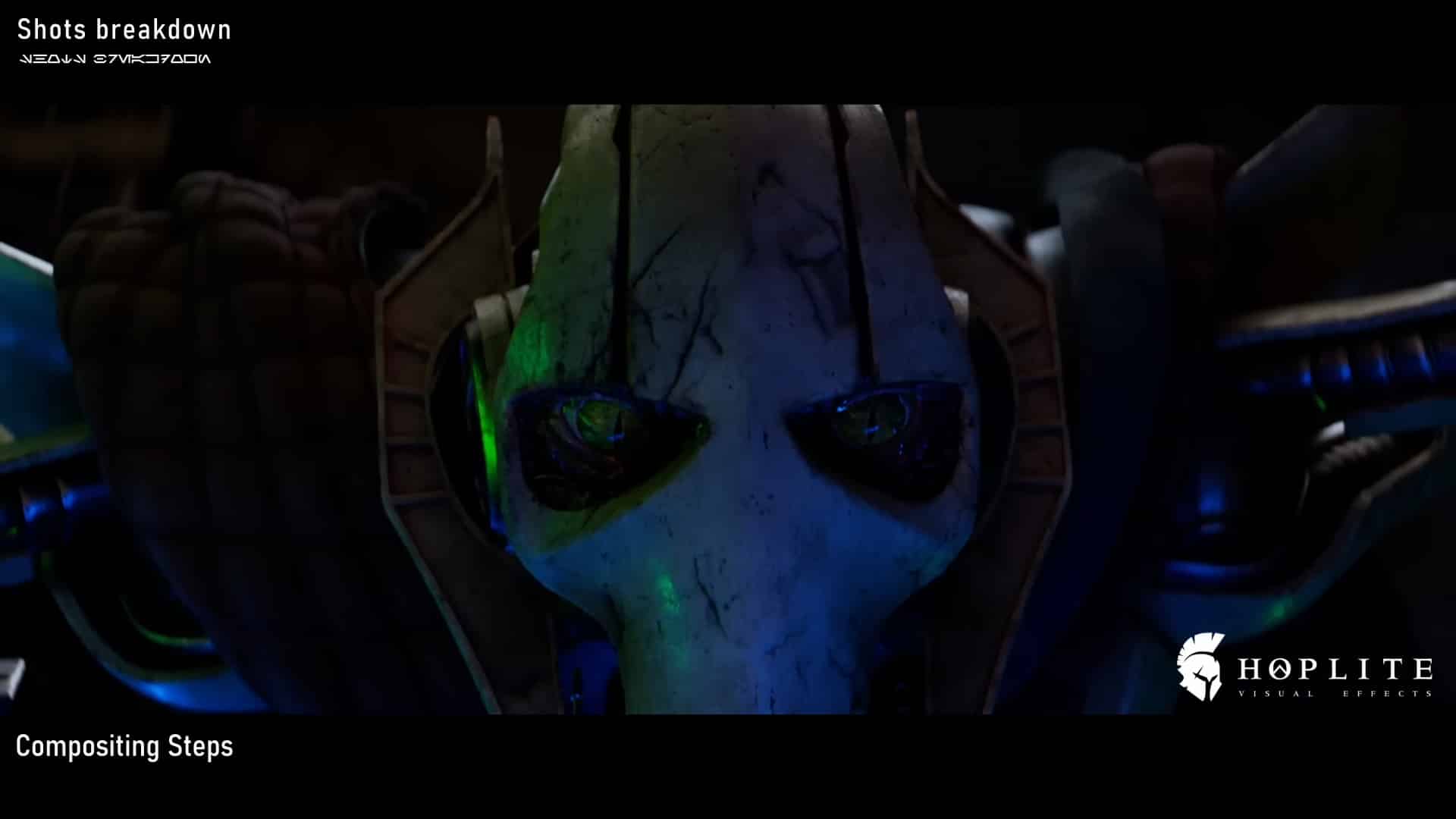
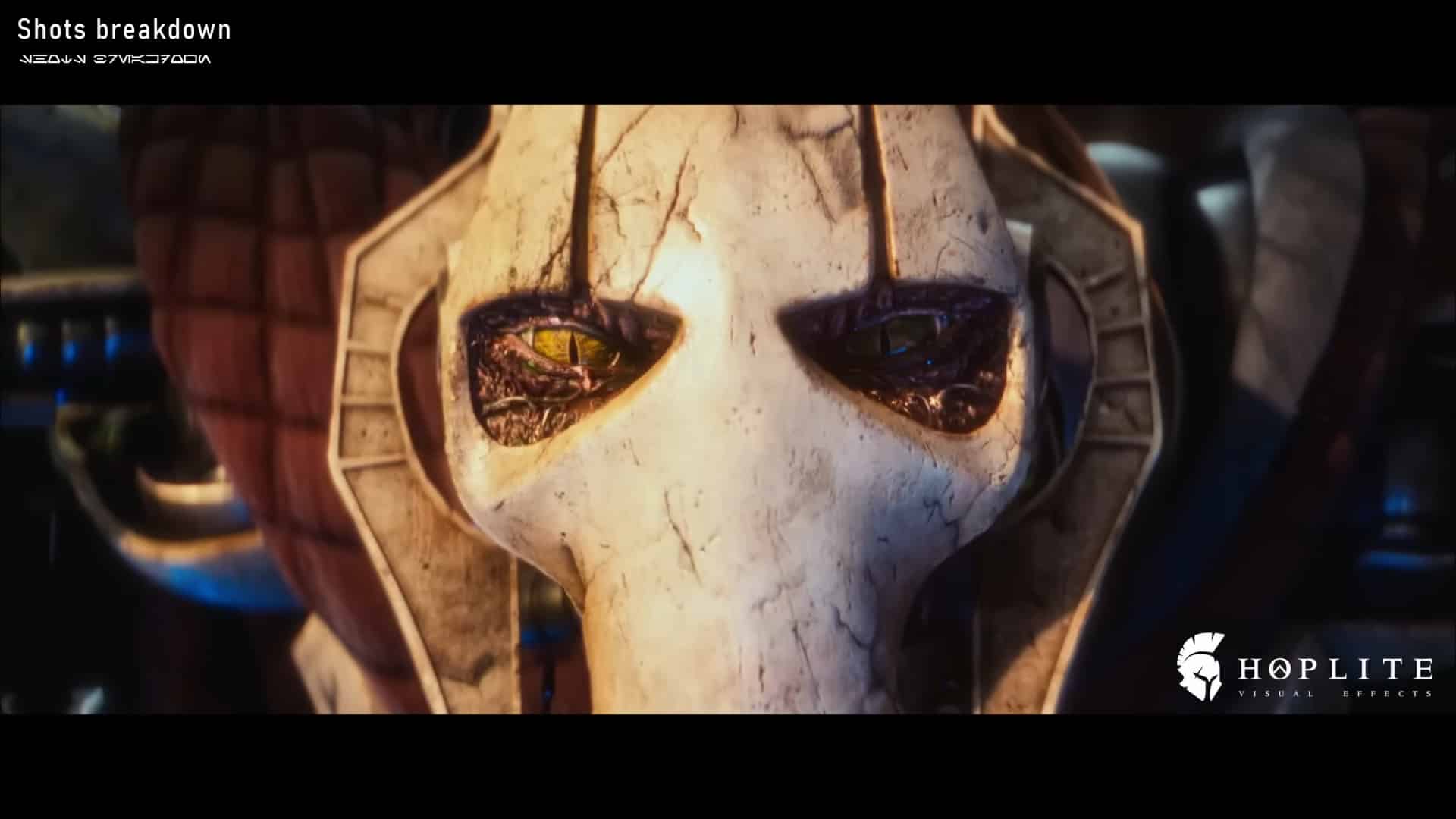
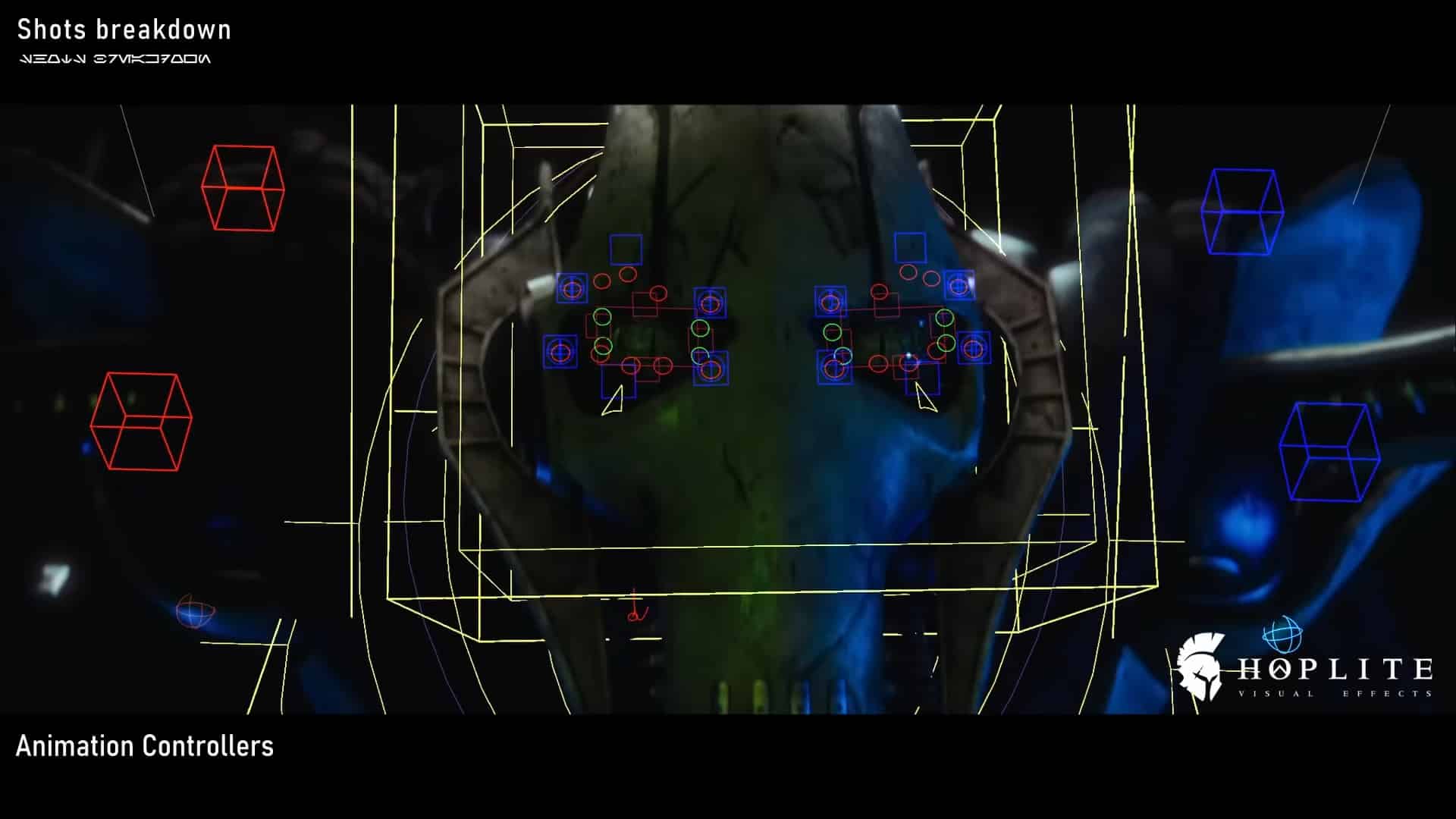
We’re agile, but we’re still building our expertise in infrastructure. Right now, we’re working on solutions to build powerful, scalable servers. It’s a lot of time and research, but it’s an incredibly valuable learning process.

DP: What was the most challenging shot or character?
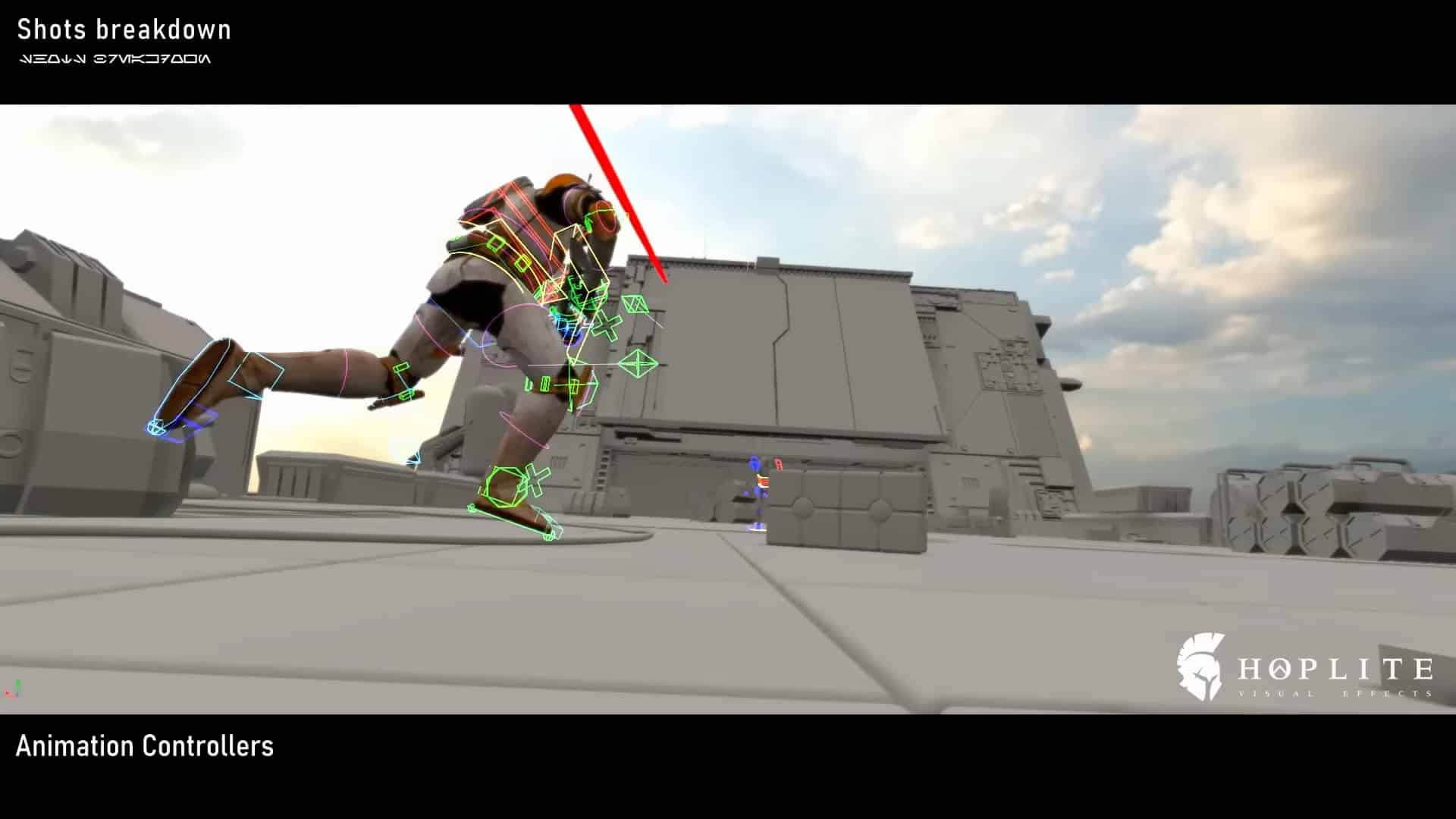
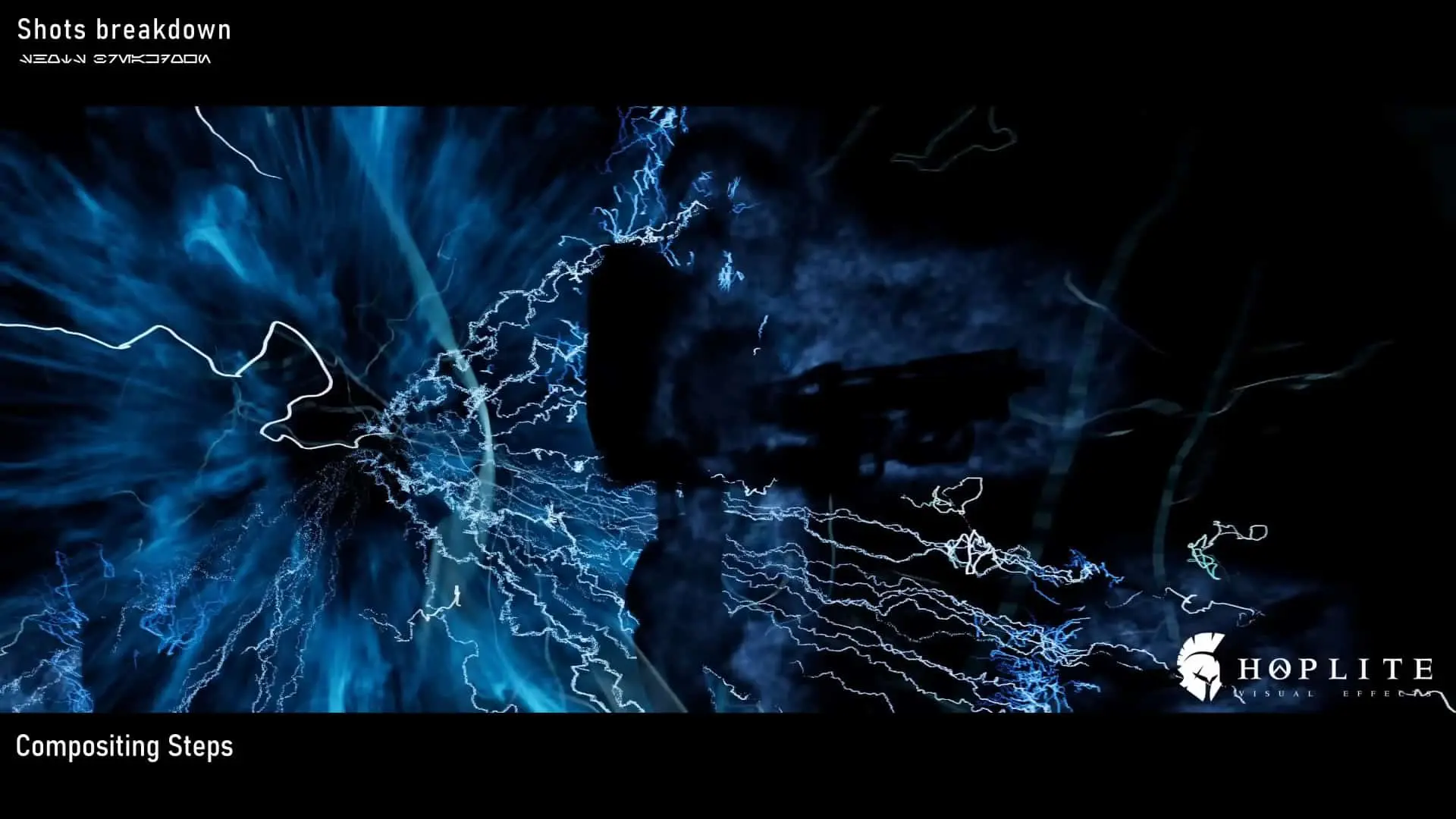
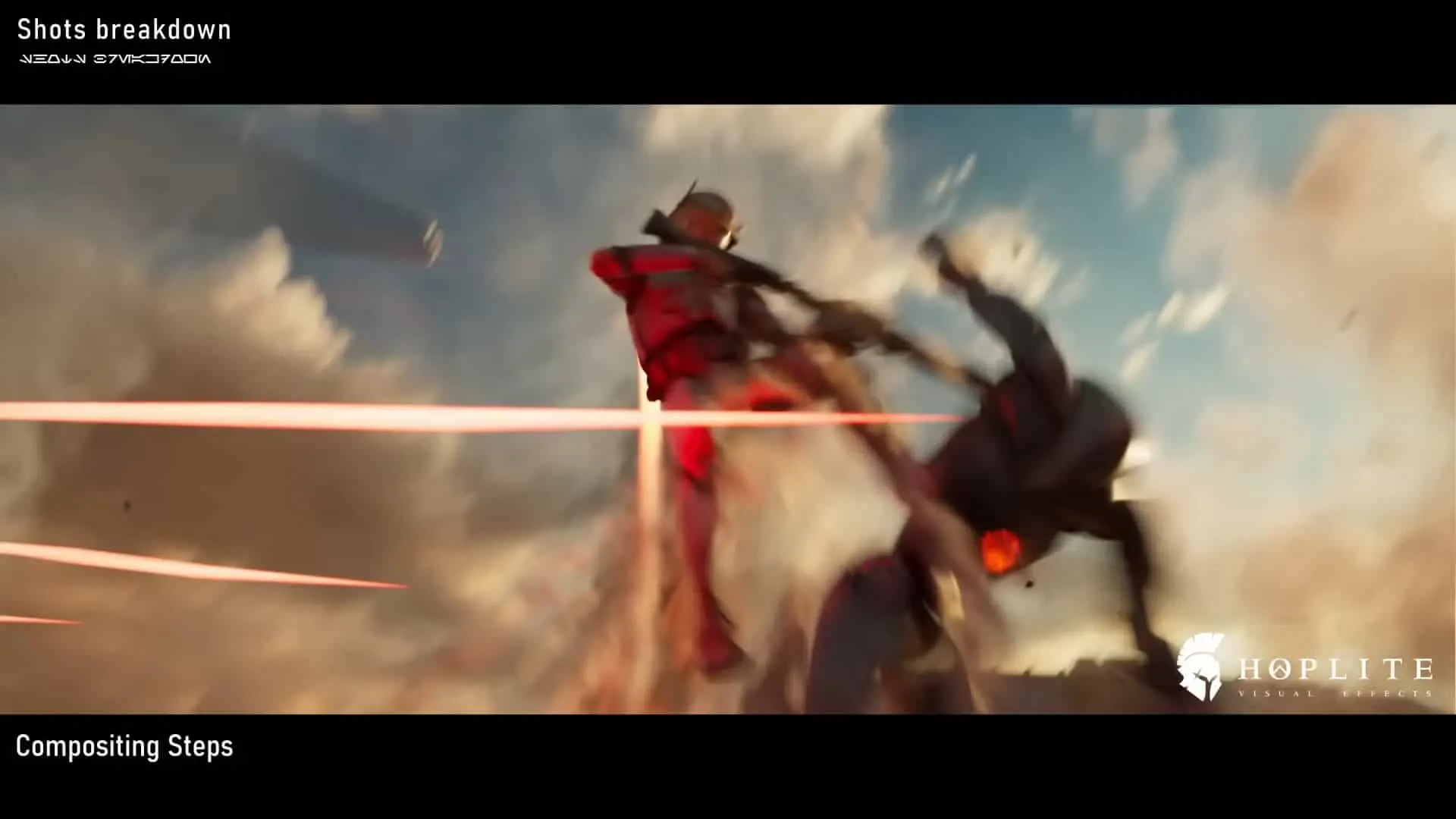
Maurine Fauvert: The most complex shot is the one where Cody uses his jetpack. The biggest challenge was the sheer richness of the visual effects: blaster shots, smoke, fire, jetpack effects, and more all of which led to very resource-intensive render times.


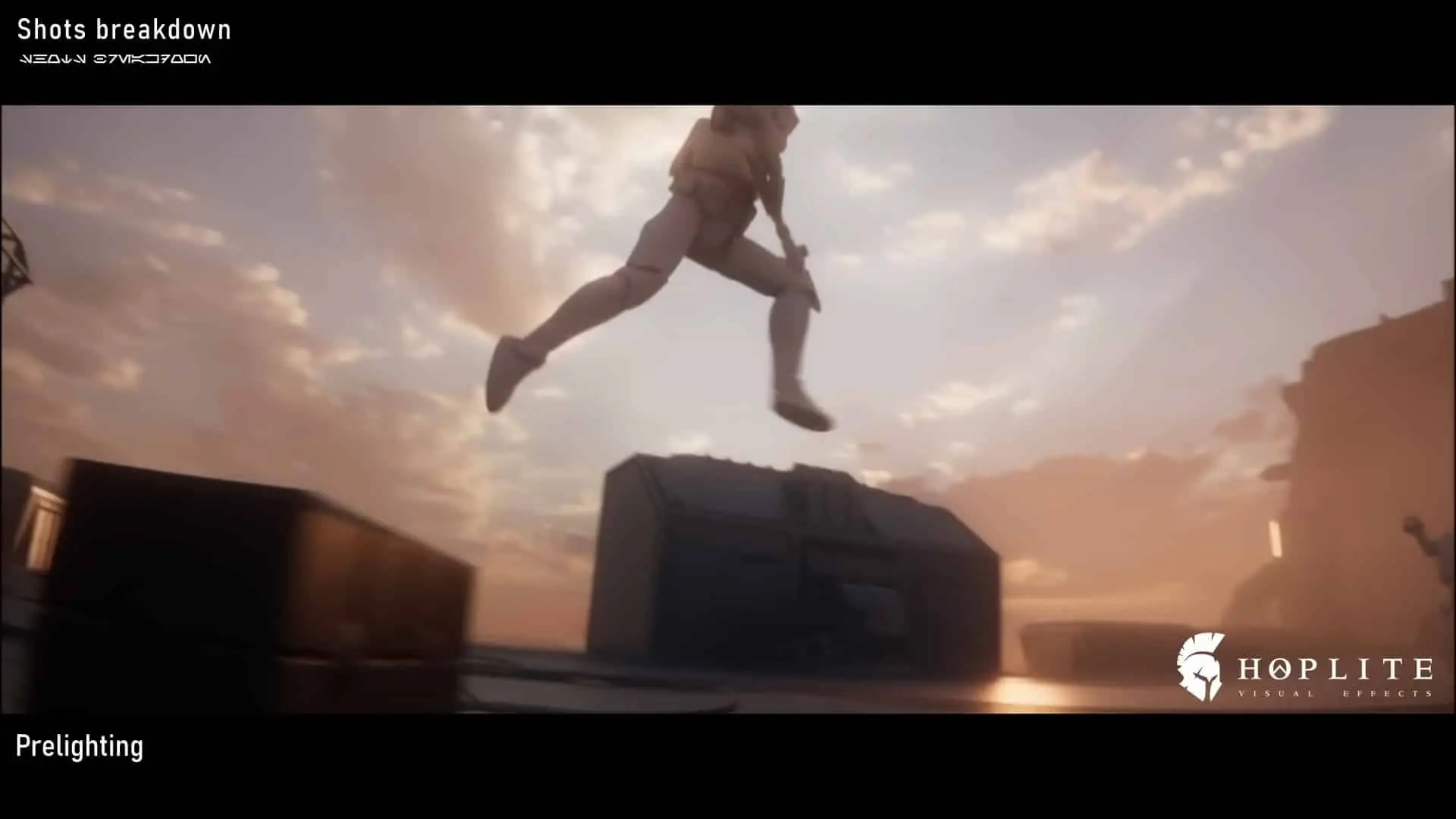

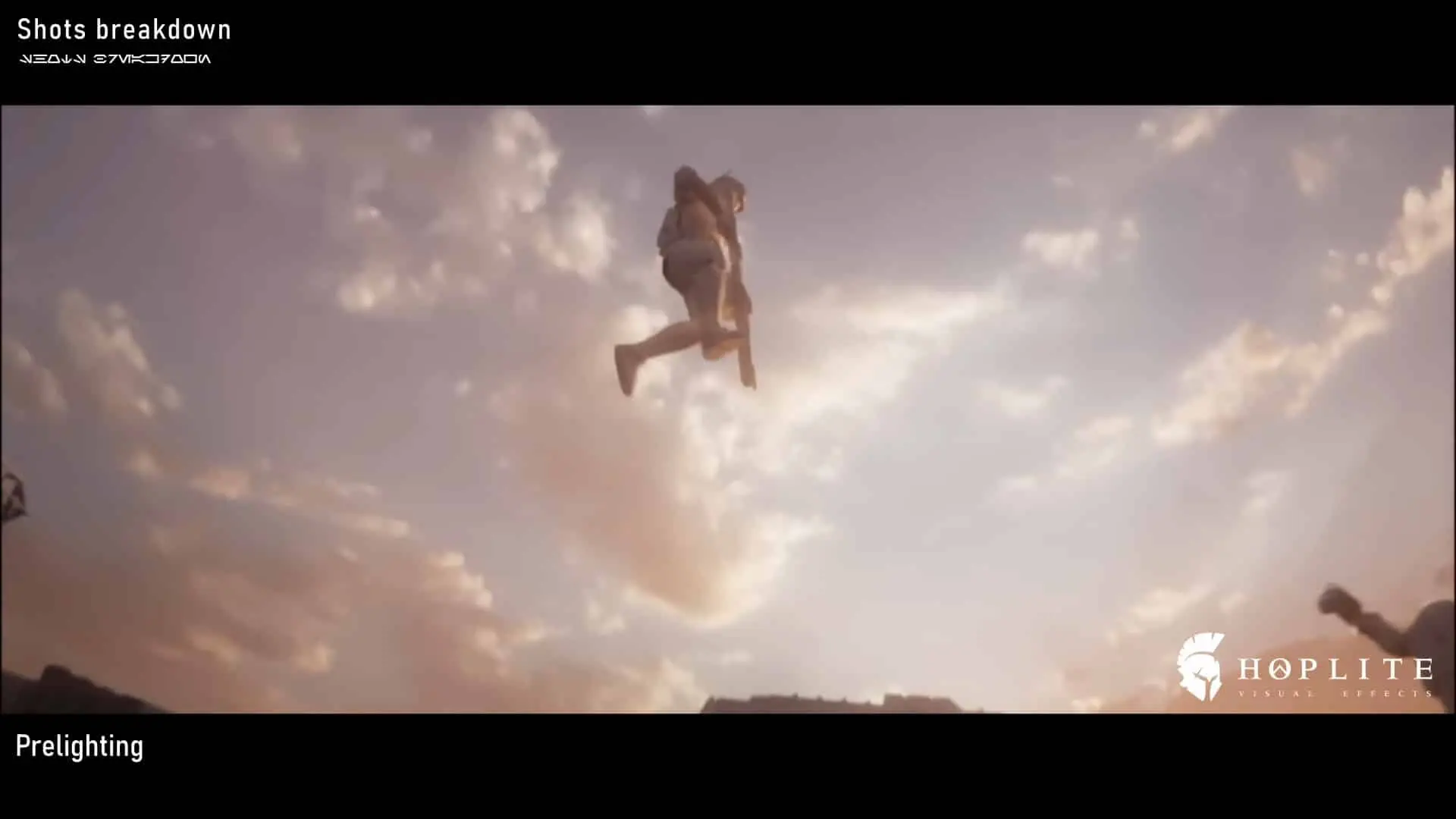

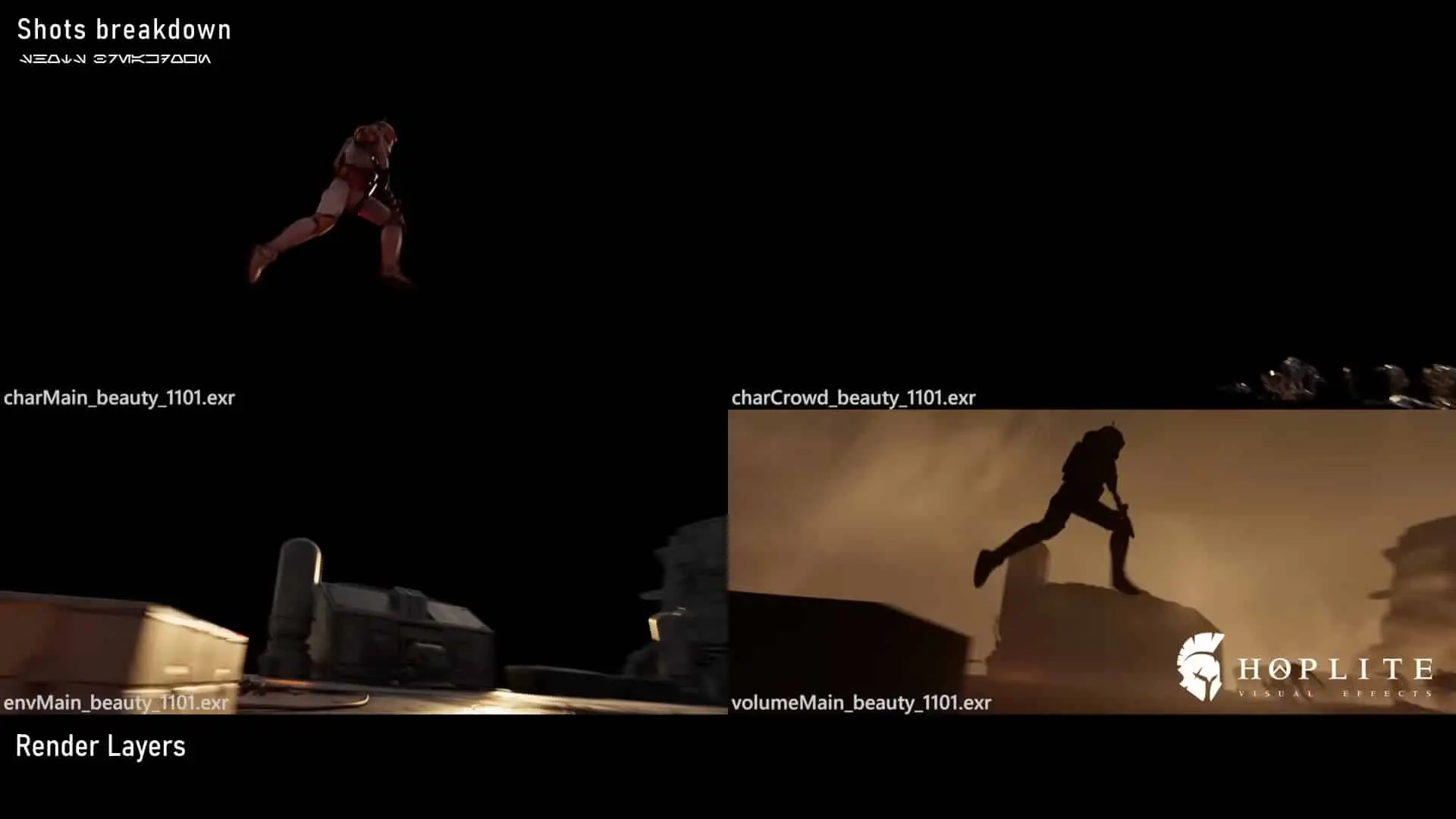

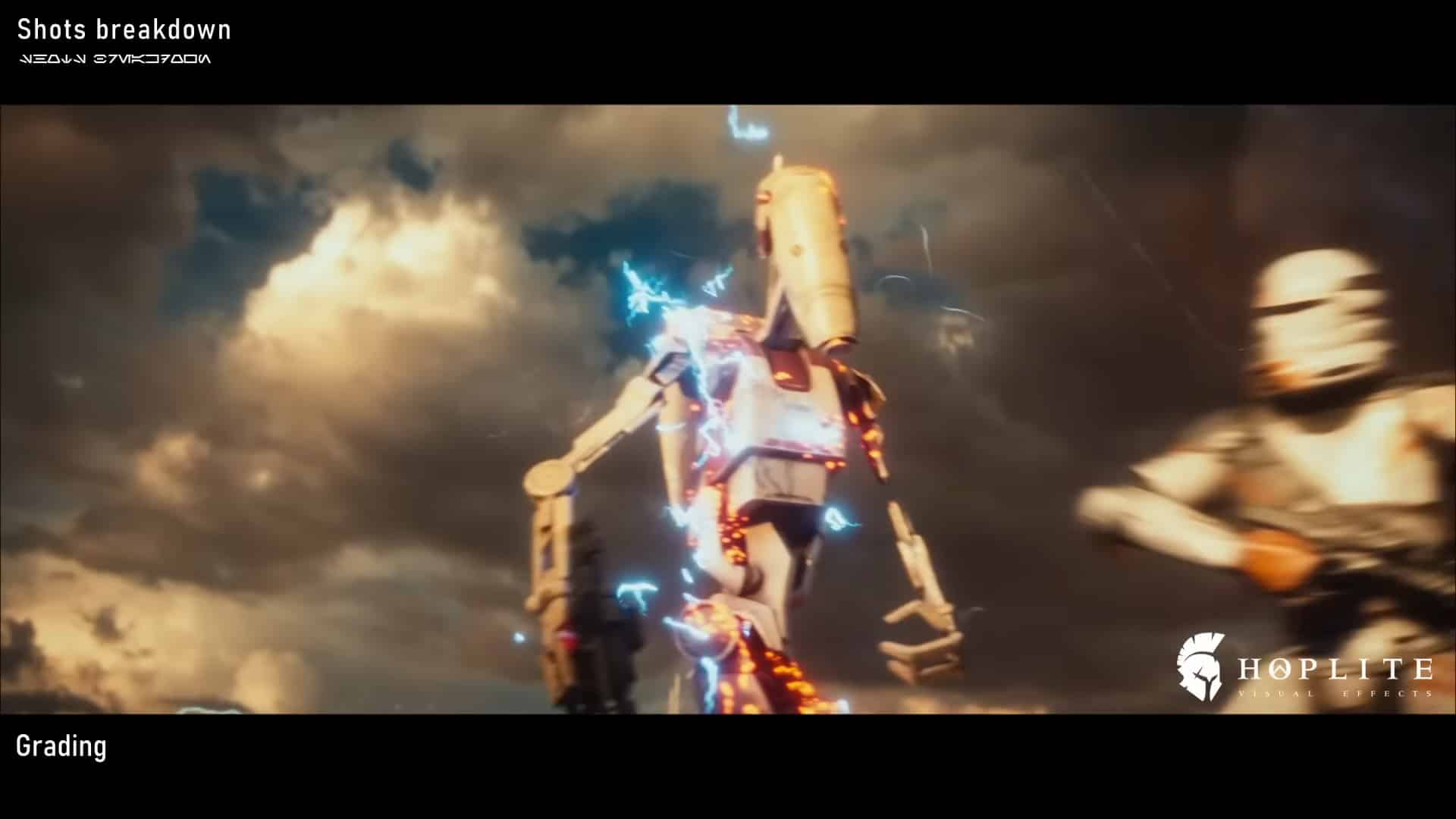
Another challenge, which applied to the entire project, was rendering across different layers. We used Blender, Maya, and Houdini to render the frames, and certain parameters — like motion blur — were tricky to manage because each render engine processes them differently. This sometimes caused slight differences between outputs, making compositing more complex.
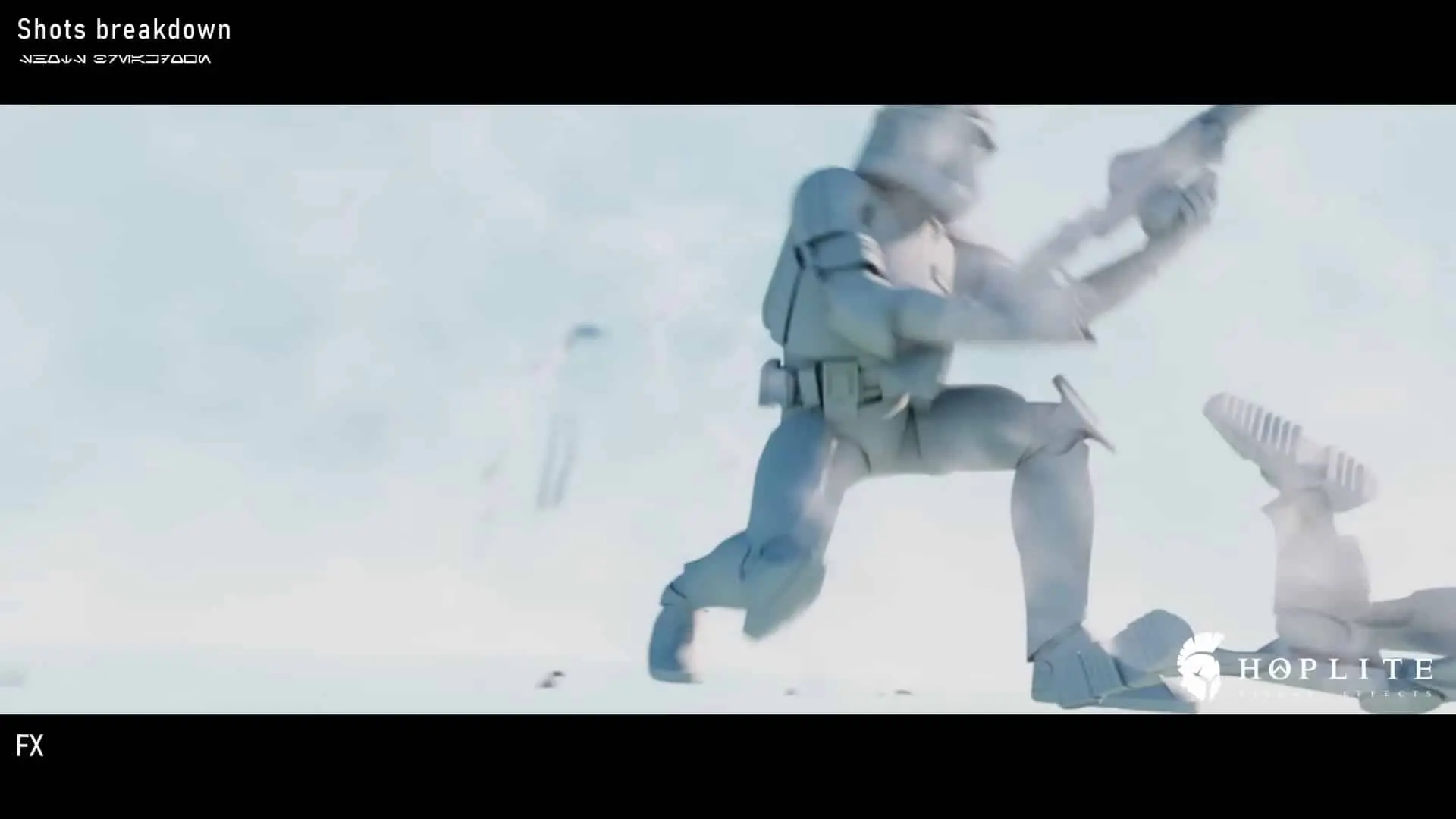
For this shot in particular, we had to handle a large number of layers for the characters, visual effects, and other elements, which made the rendering process especially meticulous.

What we’re most proud of is creating a pipeline capable of handling renders from different software. But if we had to pick our favorite shots, it would be the jetpack scene… and the exploding ships both of which are pretty badass!
DP: Why Maya, Nuke, Houdini, and Blender?
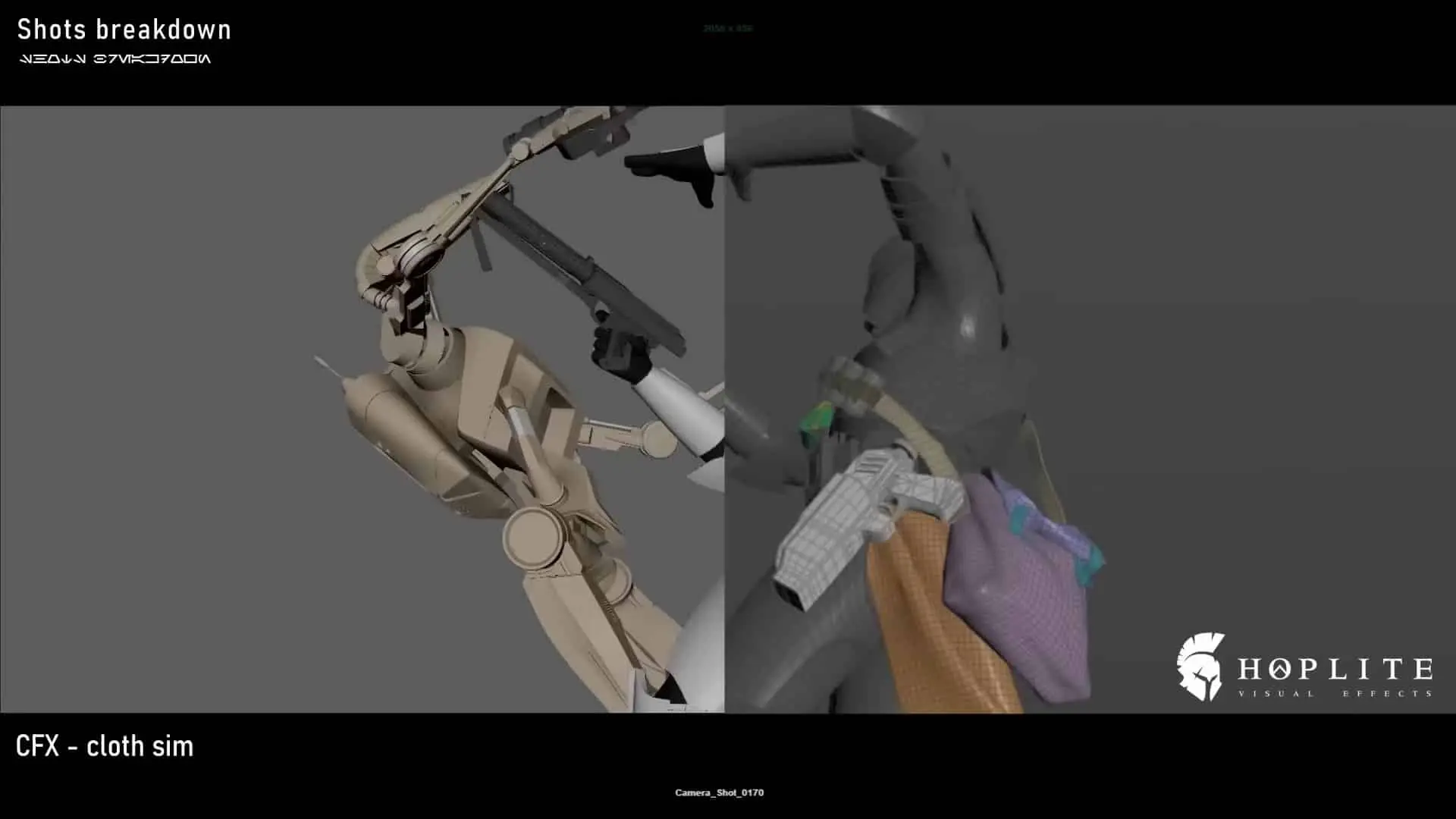
Maurine Fauvert: The goal was for everyone to work with the software they know best. We rendered most of the shots in Blender, as it’s free software that delivers renders about five times faster than Maya. We kept Houdini for complex VFX renders, since transferring VDB files from certain simulations isn’t optimal in Blender. The face was the only element rendered in Maya, simply because it made texture management easier.

In the end, there wasn’t really a “superhero” software, it was more about optimizing each tool for what it does best.
DP: How long did a frame take to render in Cycles, in real-world artist terms?
Maurine Fauvert: The advantage of Cycles is that it runs on the GPU and is very fast, on average, Cycles is 2 to 5 times faster than Arnold depending on the shot. That said, automation in Blender is not yet optimal, so we understand that this workflow might not be suitable for larger studios. We didn’t consider Eevee because it’s a real-time engine, and at the time, we had no plans to train for real-time production on this project.

DP: What advice or resources helped you most?
Maurine Fauvert: We don’t spend much time on forums instead, most of our exchanges happen on the studio’s internal Discord. As I mentioned earlier, tools like Move AI and Motorica saved us a lot of time on animation. I believe our real “secret weapon” isn’t a tangible resource, but rather passion and motivation for our craft. Without that, we would never have been able to complete this project.

DP: Why “Hoplite VFX”?
Maurine Fauvert: Hoplites were Greek citizen-soldiers. We like the idea of being a tight-knit army, ready to take on any challenge. Some English speakers think our name is pronounced hopelight, which also carries a nice meaning.
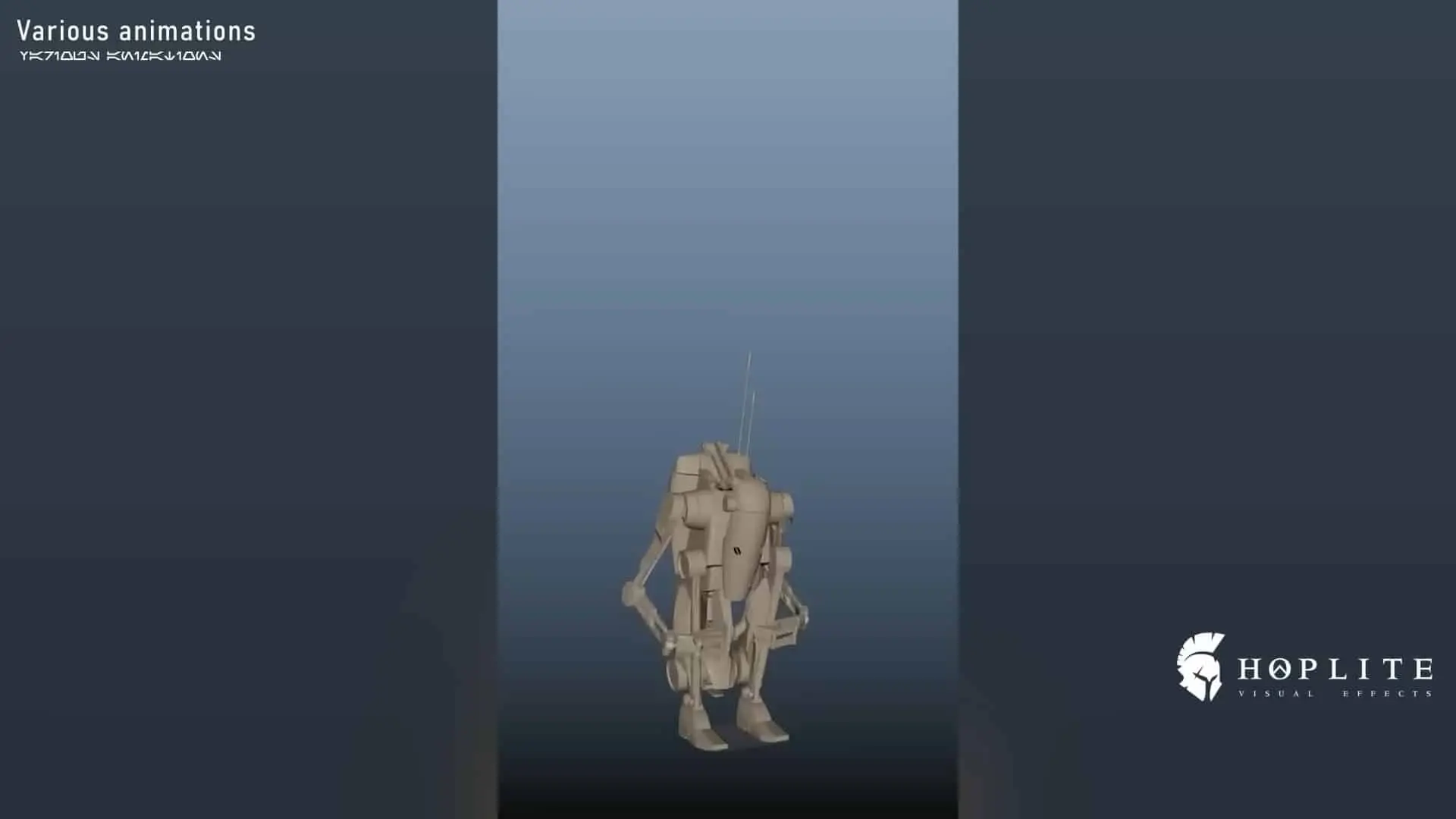
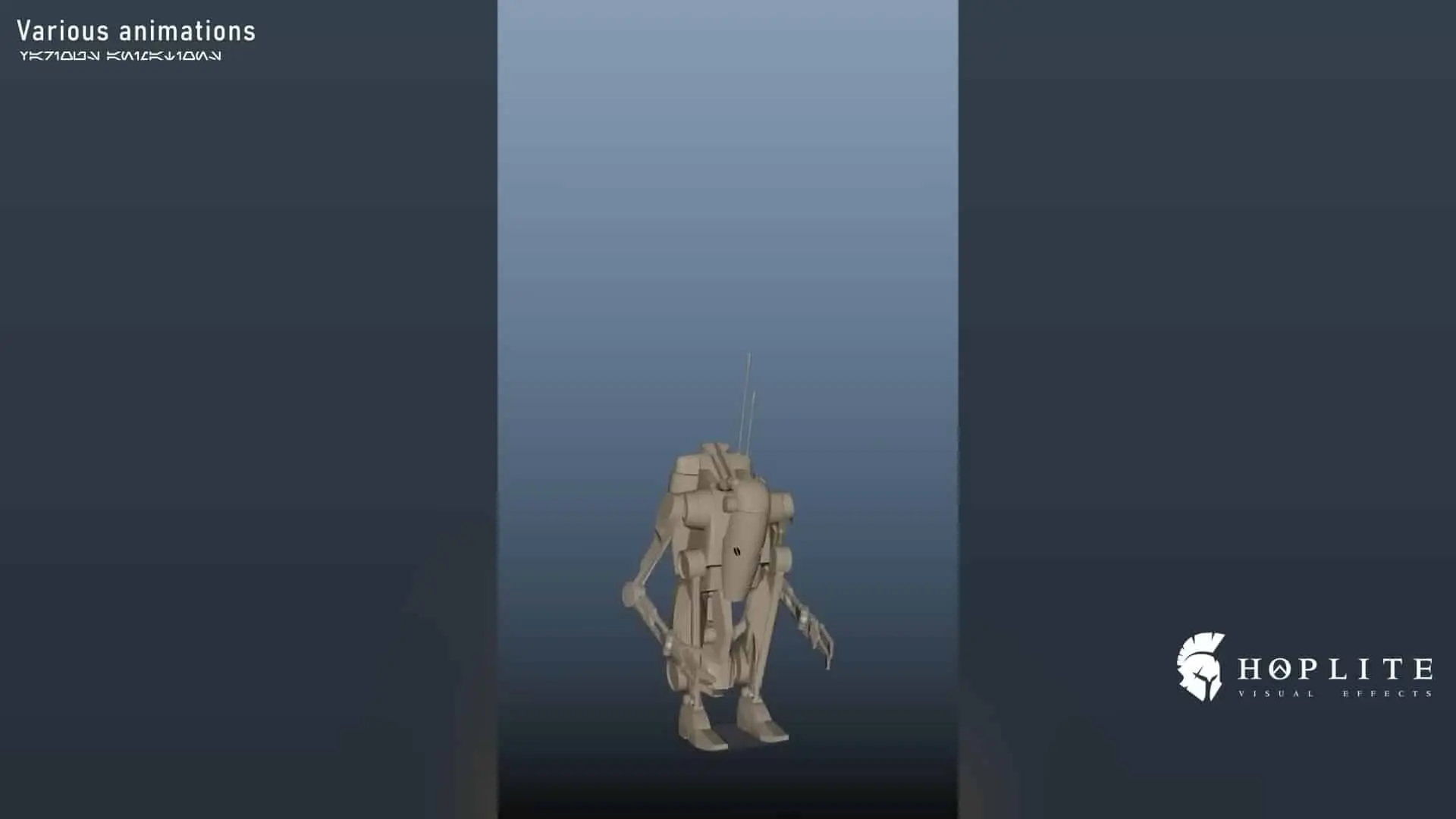
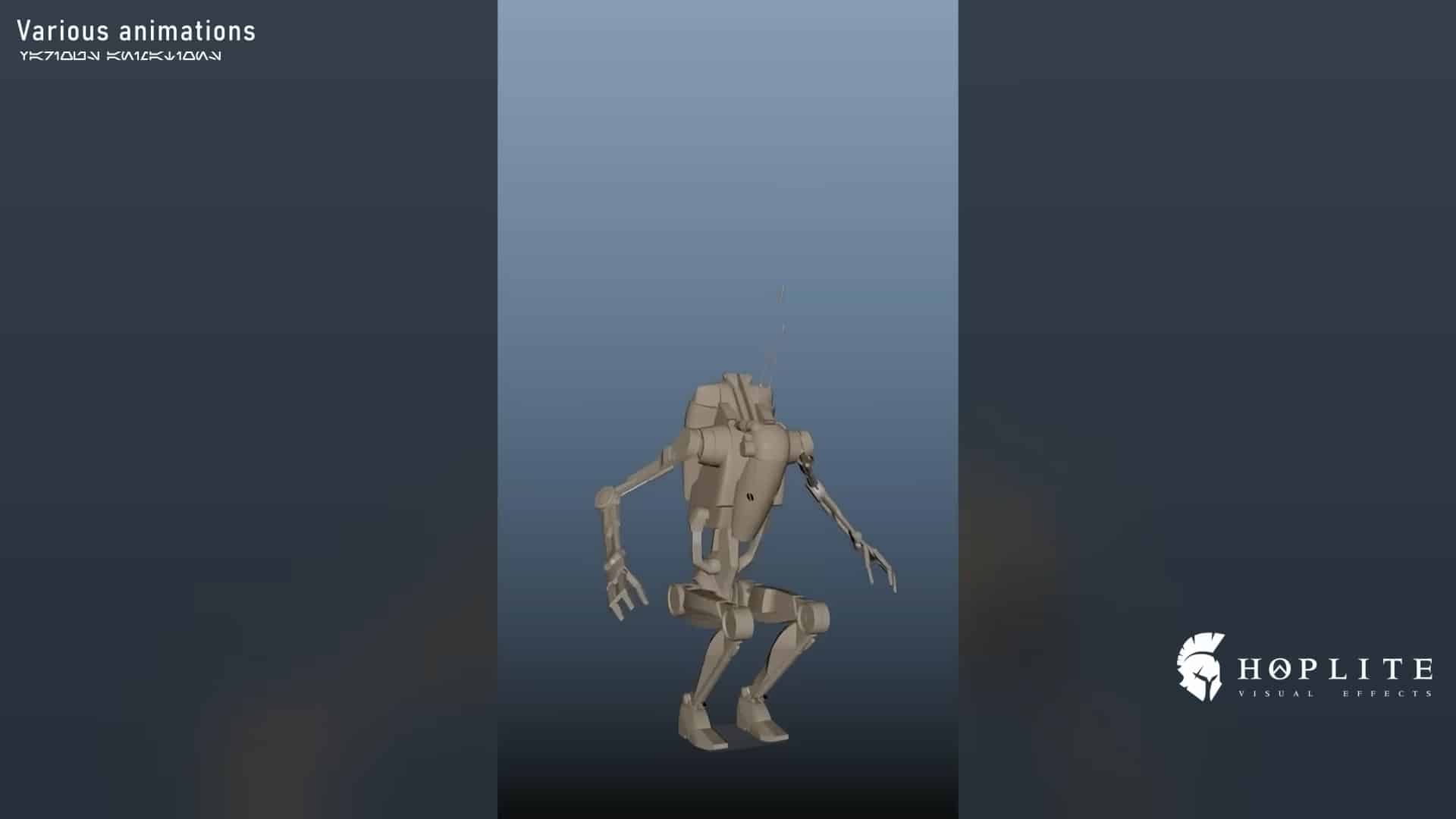

DP: Will there be a 213, or what’s next?
Maurine Fauvert: Right now, we’re working on a video game cinematic, a format we truly enjoy. We hope to continue collaborating with game studios and also plan to develop our own IPs in the future. In the meantime, our first cinematic will be released at the end of September, so make sure to follow us on social media! :)
Instagram: https://www.instagram.com/hoplitevfx/
LinkedIn: https://ca.linkedin.com/company/hoplite-vfx-studio
The Team
Maurine Fauvert / Co founder & producer
Arnaud Layé / Modeling, rigging & animation
Sylvain Vermesse / Animation
Elisa Drique / lighting texturing & compositing (IMDB)
Vincent Levrero / lighting texturing & compositing:
Kenny Serane / Sound & music
Studio
Hoplite studio
https://hoplitevfx.com/
Mail : hoplitevfx@gmail.com
