


![A group of people in various poses, with a focus on a woman in white attire, overlayed with the text 'SWITCHX' and the tagline 'SWITCH [ANYTHING]. KEEP WHAT MATTERS.' The scene is set against a beach background at dusk.](https://i0.wp.com/digitalproduction.com/wp-content/uploads/2026/02/beeble-switchx-hero.png?resize=110%2C110&quality=72&ssl=1 "a group of people in various poses with a focus on a woman in white attire overlayed with the text switchx and the tagline switch anything keep what matters the scene is set against a beach background at dusk digital production")


Epic Games has officially released Unreal Engine 5.7. The update expands major systems across rendering, procedural content, materials, animation, and virtual production. It also introduces an in-Editor AI Assistant. Several features, including the Nanite Foliage rendering system, remain Experimental, while others, most notably the PCG framework and Substrate materials, are now designated production-ready. If you think “Didn’t you tell me all of this already?”: We had a Preview-News for the Preview and Teasers.
Procedural Content Generation (PCG) ready for production
Epic now considers the PCG framework suitable for use in final projects. The system allows artists to populate large environments procedurally, introduce variety, and automate level construction. Unreal Engine 5.7 adds a dedicated PCG Editor Mode, performance optimisations for GPU compute tasks, and a Procedural Vegetation Editor (PVE) for foliage placement. While PCG itself is stable, the PVE remains Experimental. Epic recommends verifying runtime performance and scalability before adoption in production environments.

Nanite Foliage enters testing
Nanite Foliage introduces a new geometry rendering pipeline for dense, animated vegetation in open-world environments. It combines Nanite Assemblies, Nanite Skinning, and Nanite Voxels to balance geometric detail with runtime efficiency. Epic lists the entire system as Experimental. Studios considering it for production should expect incomplete support for physics, collisions, and wind animation, and should validate performance on target hardware.

Substrate materials: modular and physically accurate
The Substrate framework for modular material authoring and rendering has graduated to production-ready status. It enables layering of physically accurate material types such as clear coat, metal, cloth, and skin, producing more realistic composite surfaces.
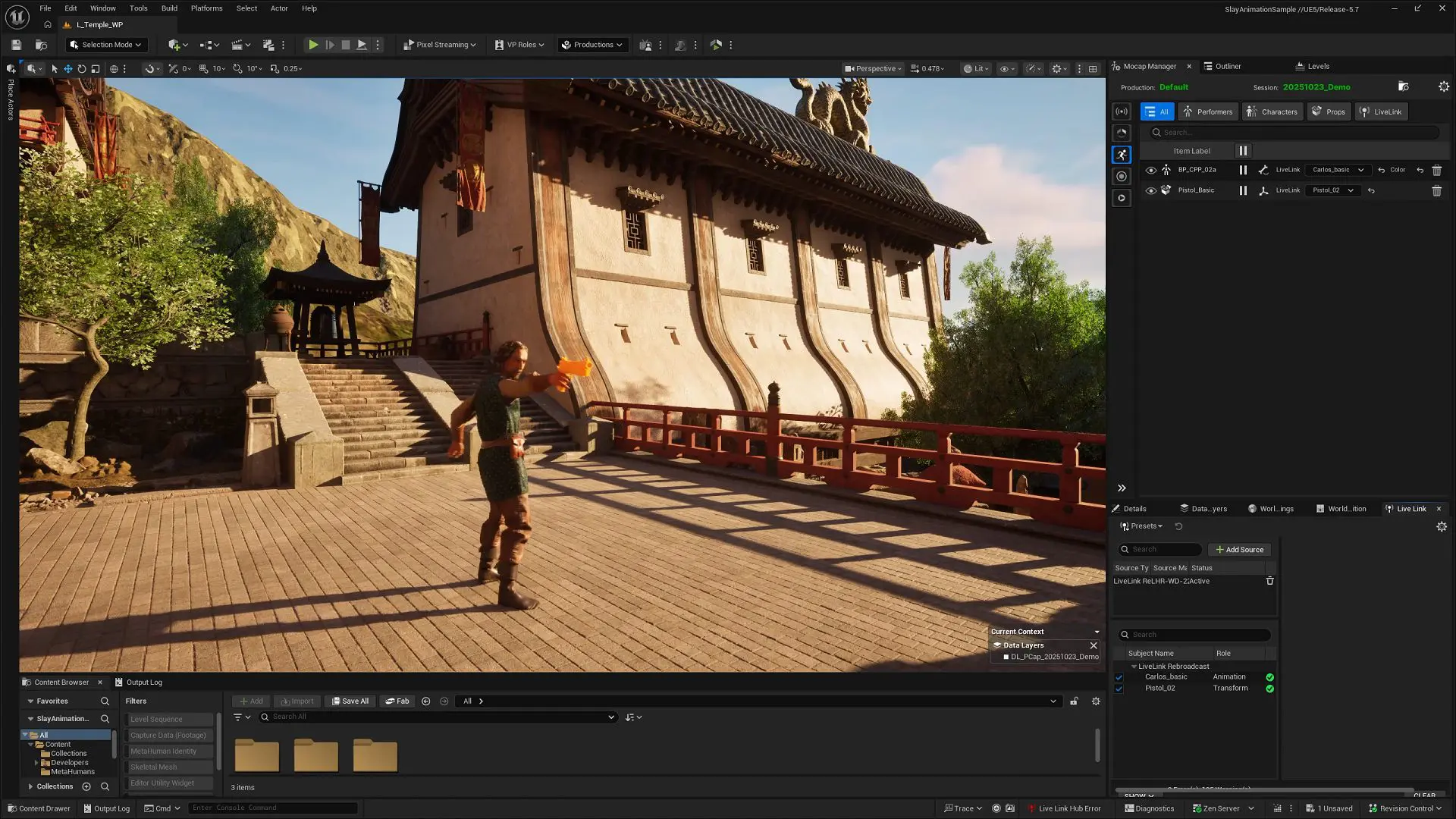
For material and look-dev teams, Substrate now replaces earlier shading models in complex asset pipelines. Epic recommends migrating projects incrementally and benchmarking shaders to ensure compatibility and consistency across devices.

Animation and virtual-production improvements
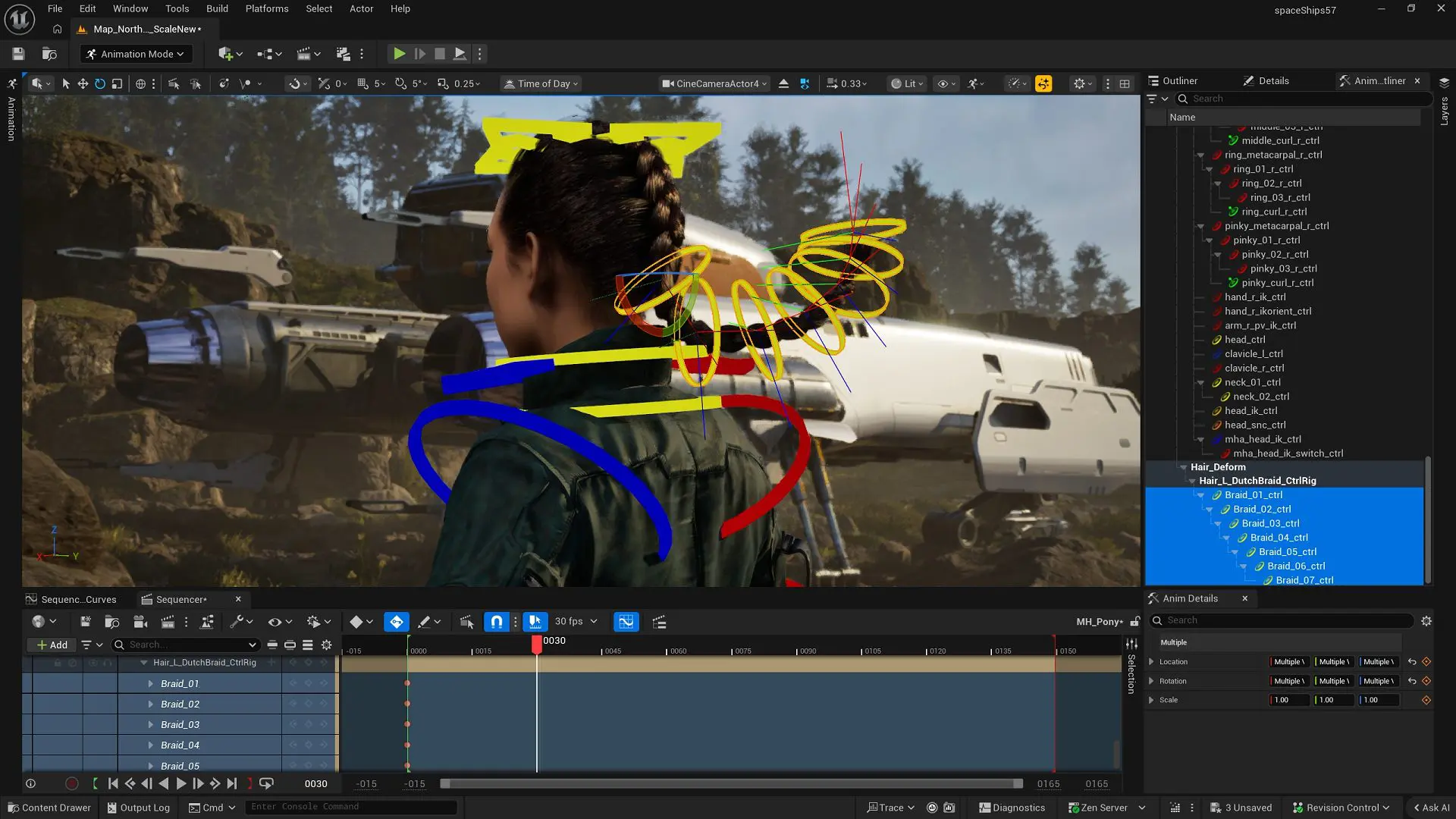
Unreal Engine 5.7 extends its animation toolkit with an overhauled Animation Mode, improved IK Retargeter and Skeletal Editor, and a new Dependency View for visualising control hierarchies.
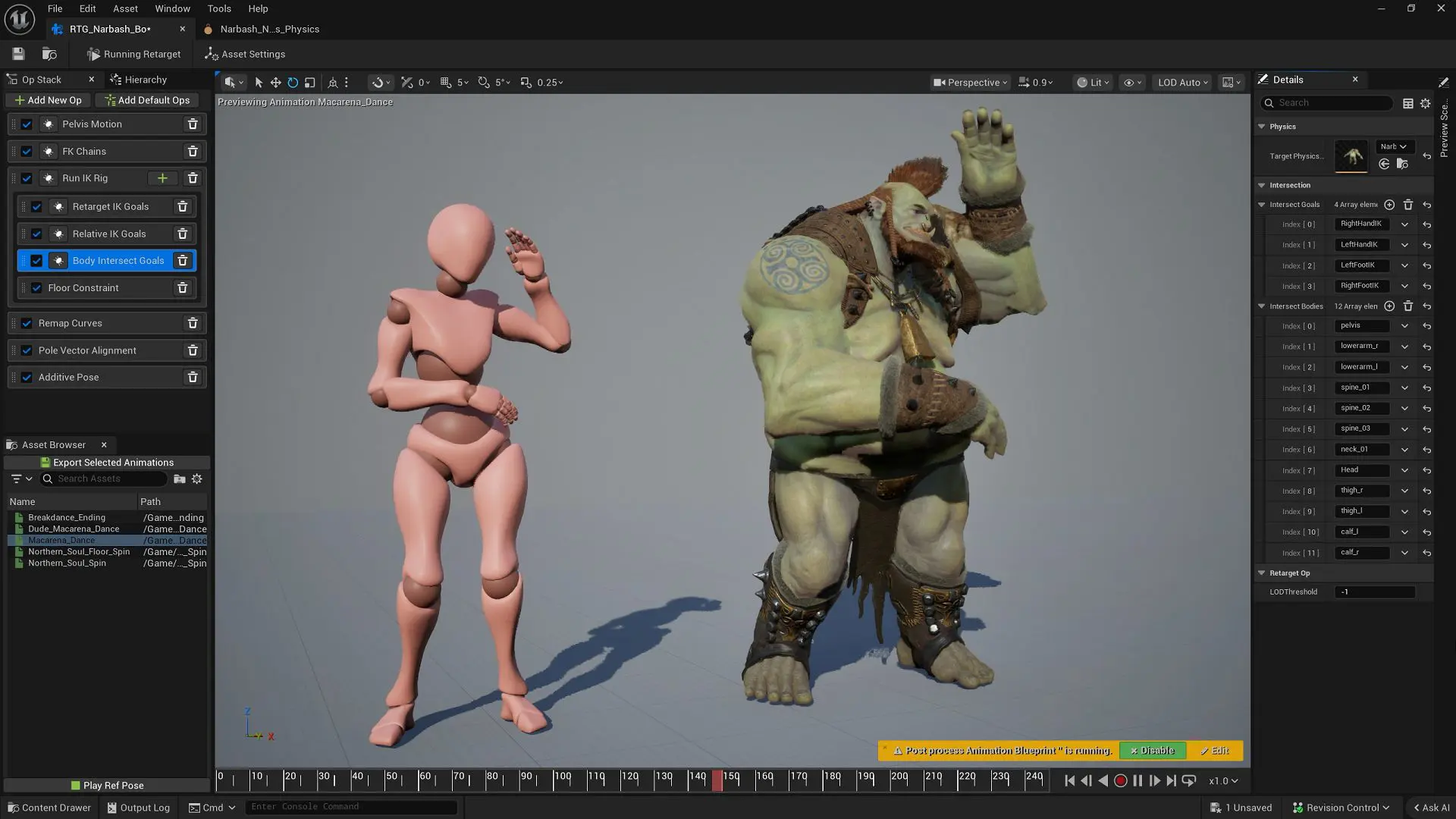
For virtual-production users, the engine adds a Live Link Broadcast Component, allowing Unreal itself to act as a live animation source on-set. Composure, Unreal’s integrated real-time compositor, has been upgraded for improved handling of shadows, reflections, and colour accuracy during LED volume shoots. Incremental Cooking enters Beta, promising faster asset iteration for large virtual-production projects, though Epic cautions against immediate production use.
AI Assistant built into the Editor
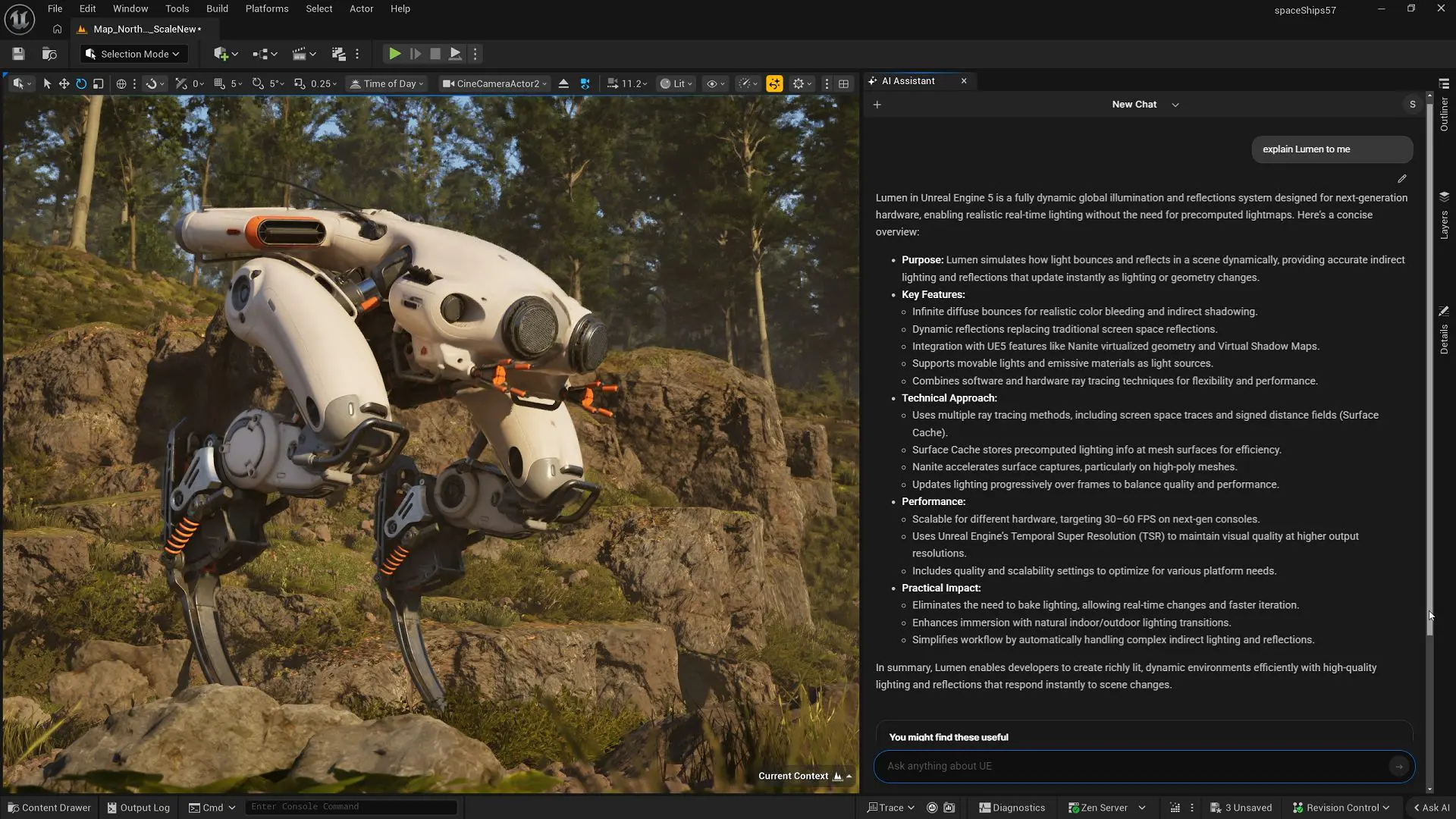
A new AI Assistant now lives directly within the Unreal Editor. Users can ask technical questions, request code snippets in C++, or receive step-by-step instructions without leaving the viewport. The tool is designed to reduce context switching but is not intended to replace documentation or verified workflows. Its long-term reliability in multi-user pipelines remains untested, and Epic has not disclosed details about data handling or privacy.
Extended MetaHuman and cross-platform updates
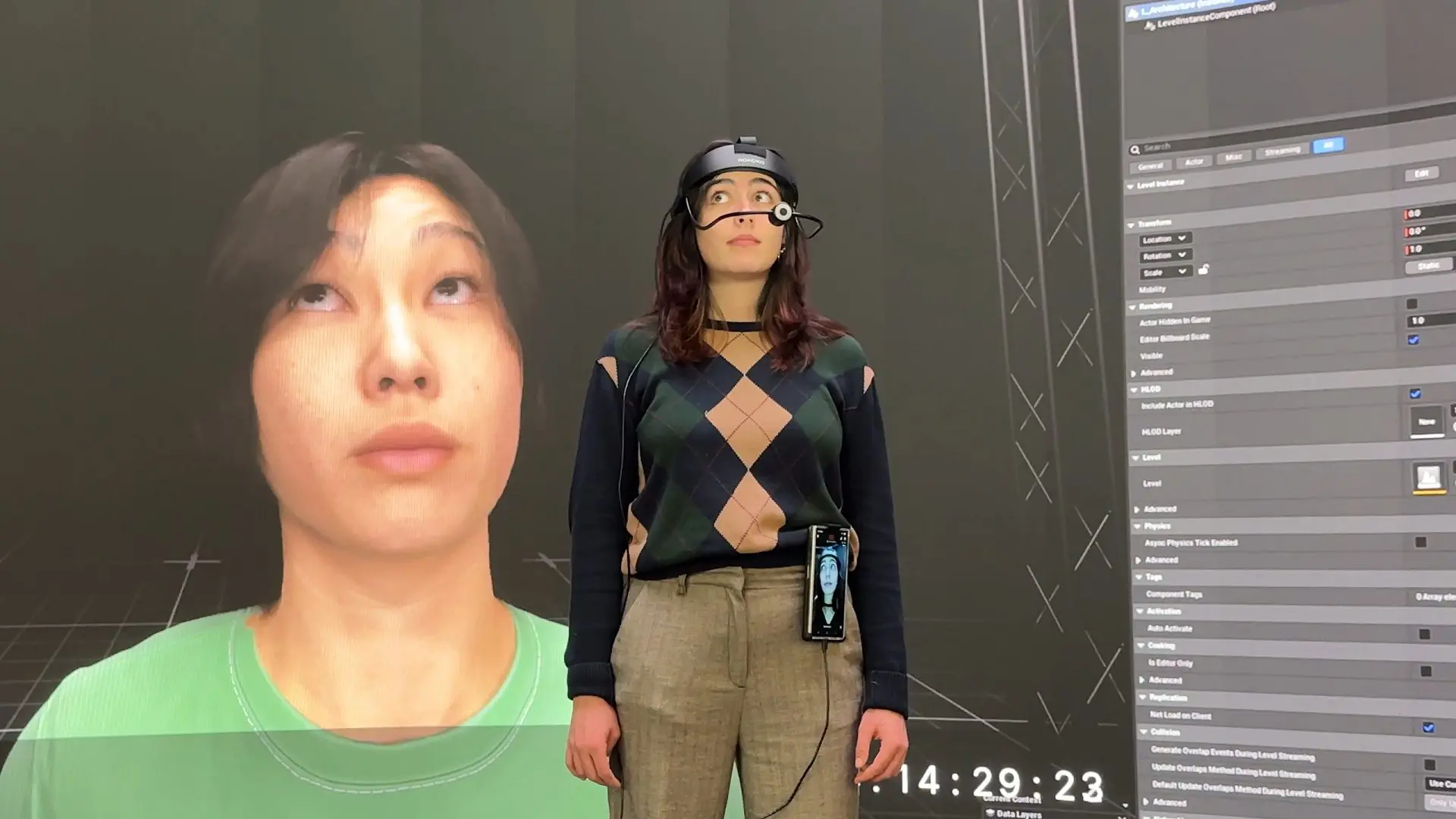
The MetaHuman Creator plugin now runs on Linux and macOS, expanding platform support beyond Windows. Additional scripting APIs enhance automation and integration for character pipelines.

Here’s more about the Hairstyle generator.
Rendering, audio, and mobile improvements
Rendering updates include support for Android 15, new “Geometry Inspection” viewport modes for surface analysis, and expanded anti-aliasing and shadowing options. Nanite continues to gain broader coverage across rendering passes. Audio workflows benefit from “Audio Insights” (Beta), enhanced subtitle support, and updates to the waveform editor. These features target real-time review and iteration efficiency rather than final mixdown.
Caveats and production considerations
Despite multiple “production-ready” designations, Epic’s documentation lists numerous features as Beta or Experimental. Nanite Foliage, the Procedural Vegetation Editor, and MegaLights are explicitly unfinished. Documentation for several systems remains incomplete, and large projects upgrading from earlier versions will require shader recompilation and plugin verification. Studios are advised to test workflows in parallel, evaluate GPU and CPU loads, and confirm asset compatibility before upgrading live projects.
