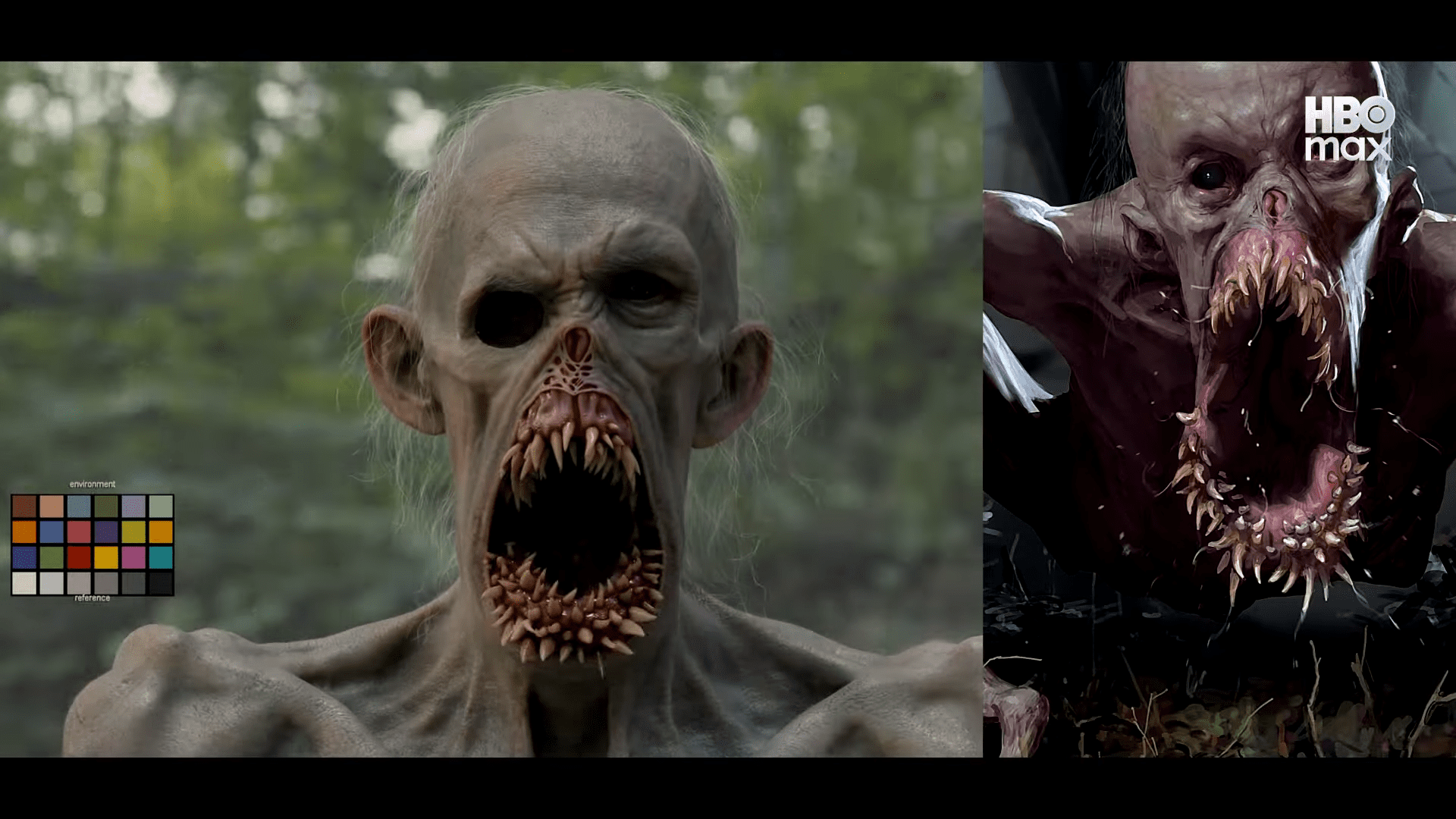
With It: Welcome to Derry, HBO expands the Stephen King universe back into deeply uncomfortable territory. One of the most disturbing additions is the “Skeleton Man”, a creature that balances recognisable human movement with something fundamentally wrong beneath the surface. Bringing that to the screen fell to Digital Domain, whose team was tasked with translating nightmarish concept art into a believable CG character that could survive close-ups, firelight, and extended transformation shots.
In this interview, Digital Domain VFX Supervisors Mitch Drain and Nikos Kalaitzidis, Assets Supervisor Nelson Sousa, and Animation Supervisor Ellen Hoffmann take us for a run through the woods with the Skeleton Man.

Nikos Kalaitzidis (LinkedIn | IMDB), whom we’ve seen last about his work on “Black Adam” has spent the time since 2022 (Yes, Black Adam is that long ago) working on Thunderbolts, Creation of the Gods, Dark Matter, Ashoka and The Mandalorian.
DP: How did Digital Domain end up inside the Stephen King multiverse for this project?
Nikos Kalaitzidis: Early on, during pre-production, the client-side VFX supervisor Daryl Sawchuk reached out to one of our Digital Domain VFX supervisors, Jan Philip Cramer, to find out if Digital Domain could help create the Skeleton Man. The artwork we received was some of the most terrifying images we had seen in a long time, and we knew right away… we have to be part of this! From there, it only got more and more horrifying. From scary babies to maggots coming out of eyes, the sheer imagination behind this project was spellbinding. We are grateful to HBO and Daryl for being part of this ride.


Concept to Final Design
DP: What material did you receive from set to begin building the Skeleton Man?

Mitch Drain (LinkedIn| IMDB) served as VFX Supervisor on “It: Welcome to Derry“, but before that he also did nice shows, like A Minecraft Movie, Westworld, John Wick 2, Jessica Jones, True Detective, and many, many more.
Mitch Drain: Actually, all of the data! Full-body scans of the actor, lidar scans of the environments, “mood” imagery, sketches, HDRs, etc. It was also invaluable to have regular reviews with VFX Supervisor Daryl Sawchuk, where we could annotate images, draw on plates or even act out aspects of the performance!
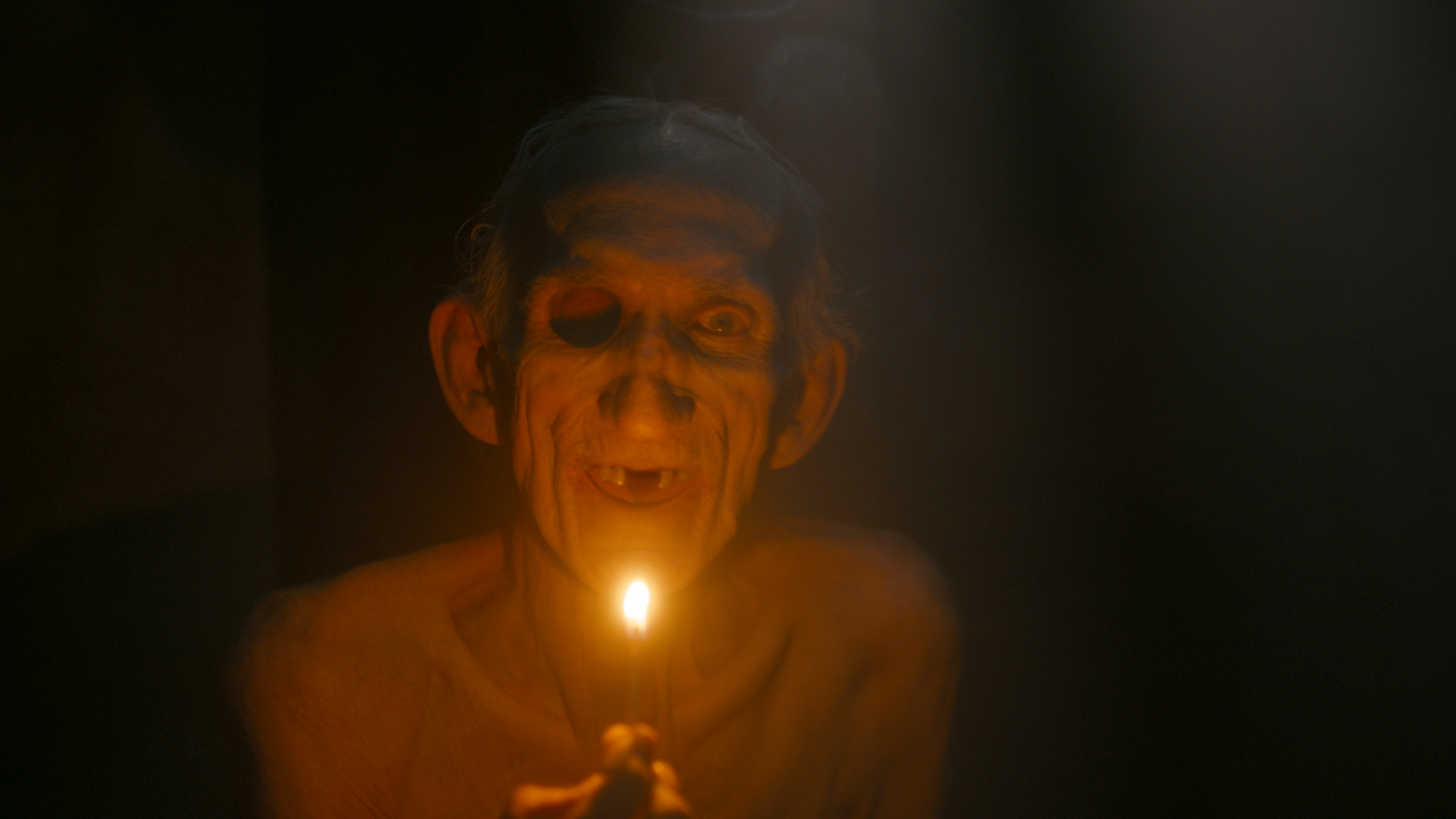
DP: The match-light reveal of the empty eye socket and missing teeth relies on a practical light moving inside the plate. How did you do that?
Mitch Drain: The plate was our bible on those shots. The lighting was very specific and the HDR’s got us part of the way there. To match the flame light from the match the actor Peter Schoelier strikes, our lighters needed to animate our CG light frame by frame to mimic the plate successfully. The compositing team then created frame-by-frame light-density changes to blend seamlessly with the plate. I tend to look at the lighting for shots like these holistically, viewing it as a whole and looking for any moments that ring false. Fortunately, our team of artists earn the title “artist”, and have a sense of what works so we were able to keep the iterations to a minimum!
DP: During early Skeleton Man development, which iteration caused the biggest internal alarm bell?
Mitch Drain: From an animation standpoint, there is a shot of the Skeleton Man recoiling in pain from the rock that was slingshotted into his eye. We originally created a wildly flailing, contortionist-like reaction that, while disturbing, broke the sense of real motion too much. Getting the skin and muscle to move convincingly was breaking the overall believability. Even though the character was rigged for this type of movement, it drew too much attention to itself, almost too much animation. We backed off of the exaggerated movement and relied on a more natural movement that actually felt more horrific.
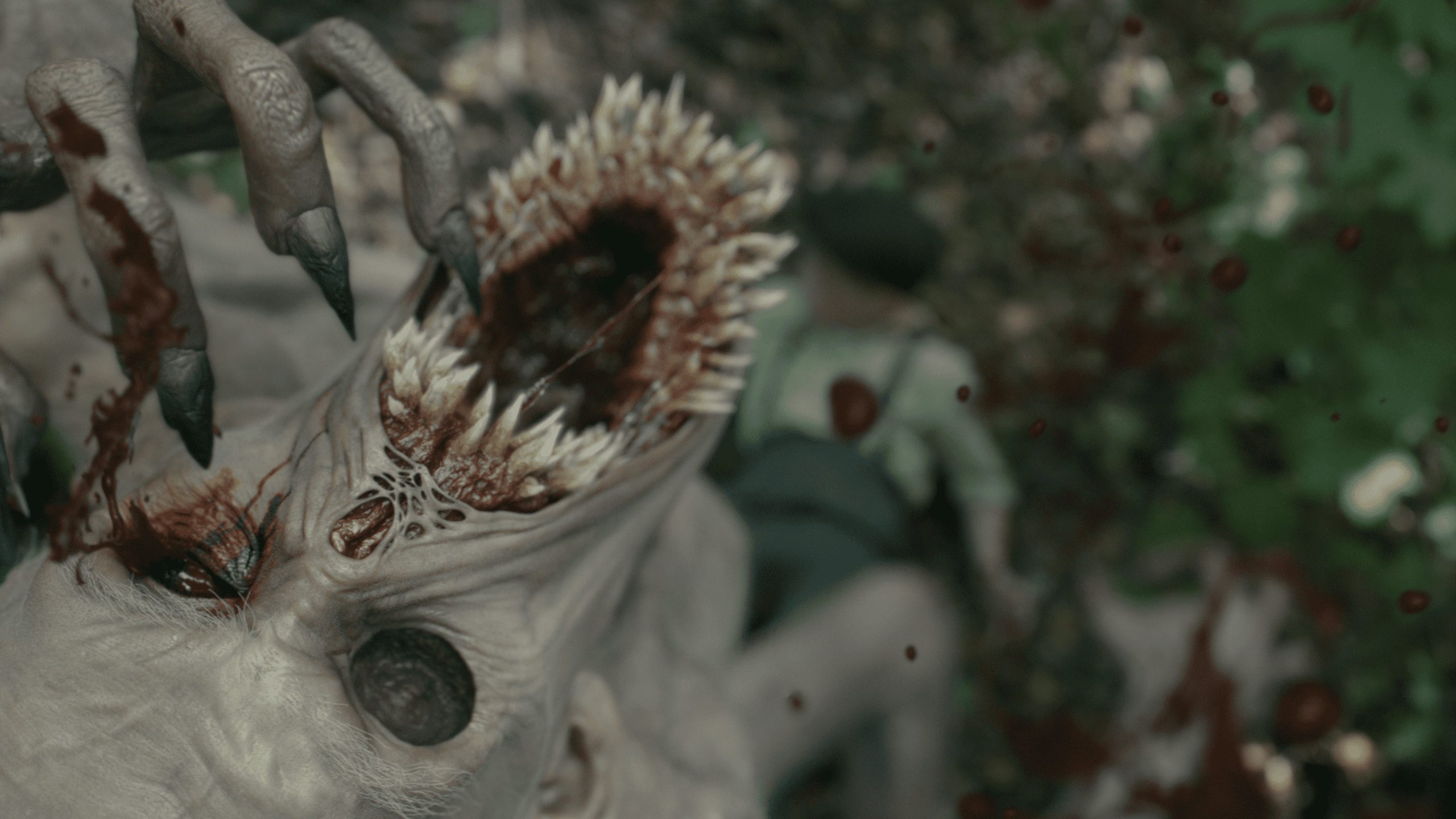
DP: How did you document and communicate iteration history internally so the team did not accidentally “fix” the wrong version back into existence?
Mitch Drain: We had a fantastic team of Production managers, DPA’s, and coordinators who maintained very comprehensive Shotgrid tracking, which kept us from falling into any traps like that. Client notes and annotations were meticulously kept for the artist’s reference, and the team was nimble enough to keep up with the sequence’s evolving nature.
DP: Were there iterations that technically worked but were creatively rejected because they felt too readable, too clean, or not disturbing enough?
Mitch Drain: I cannot point to any specific shot, or moment where our direction failed per se. The shots were constantly being improved, whether by client notes, rig and texture improvements, or even simply a better idea.
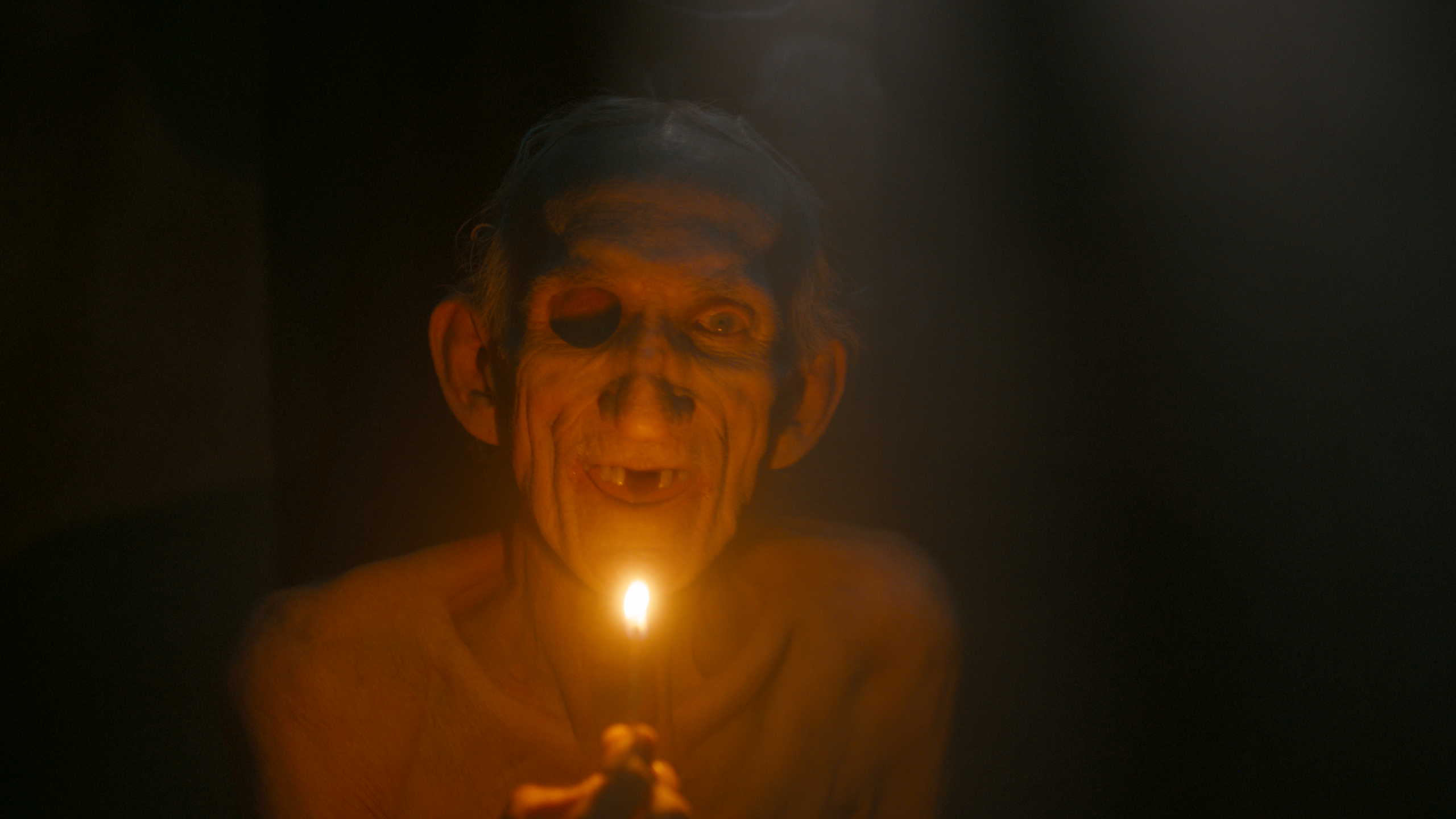
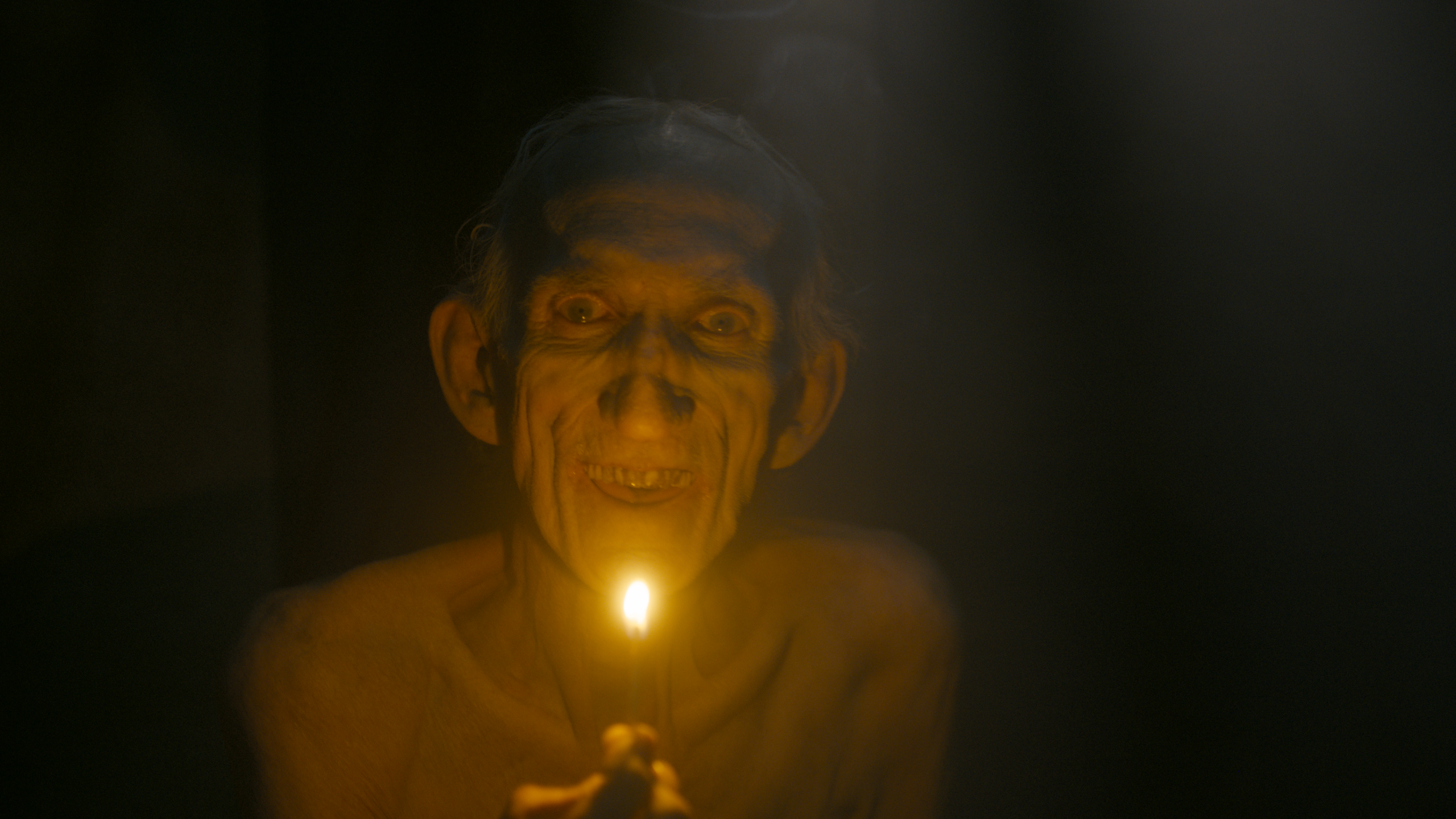
DP: What were the main lighting challenges in the early transformation shots, before the creature becomes fully digital?
Mitch Drain: The issues described are something we, as digital artists, contend with everyday! This is where the “art” of VFX comes in. I will often say that sometimes we just need to do it the hard way. Not every issue has a procedural solution. Sometimes we simply need to overcome hurdles with brute force. I will say, however, that on “It: Welcome to Derry”, there was very little of those kinds of issues that were unintended.
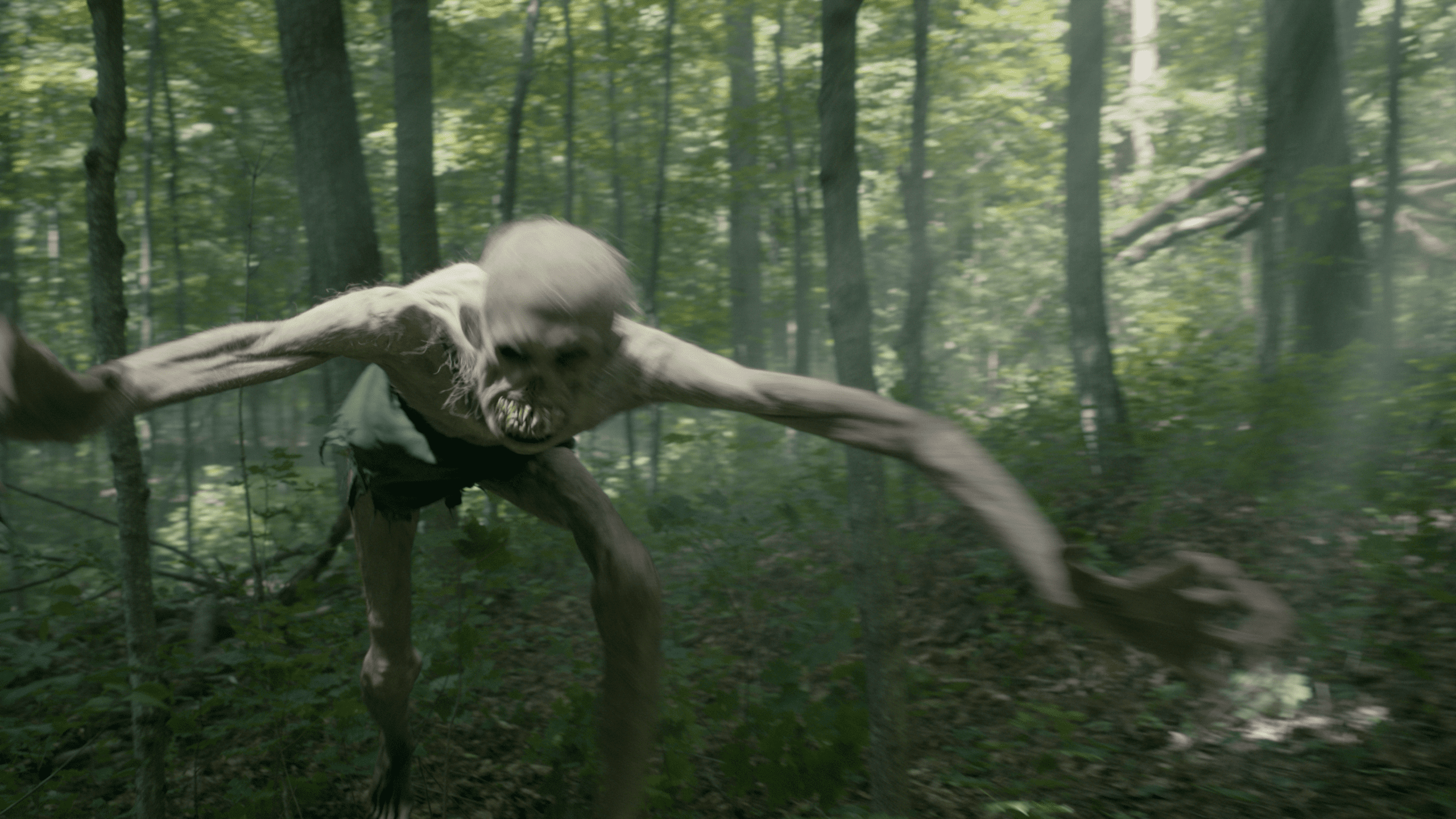
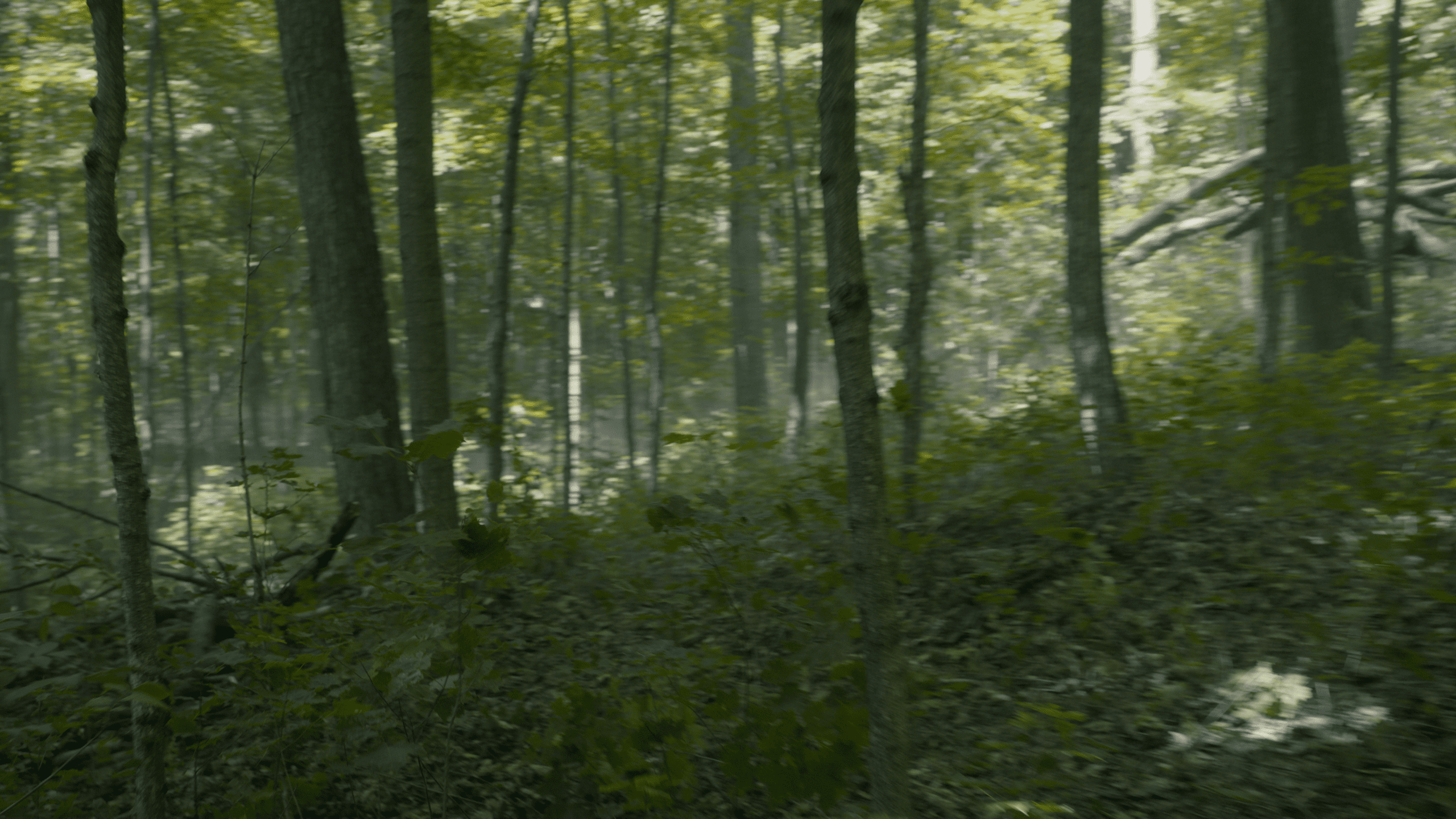
The flicker of the firelight in the sideshow sequence comes to mind. The nature of the light in the forest is another. The environment required dappled light playing across the Skeleton Man for some shots. He is seen running in and out of pools of light that required the lighters to create gobos, and light pools to match the plate in order for skeleton man to live believably within the shots.
DP: For artists attempting something similar, what core lessons would you pass on?
Mitch Drain: The human eye is very discerning. While the casual viewer may not know exactly what is (or is not) working, they will sense that something is off. No aspect of a character is too small or insignificant to deserve full attention to detail because it is in the smallest of details where the ‘special sauce’ of believability lies.
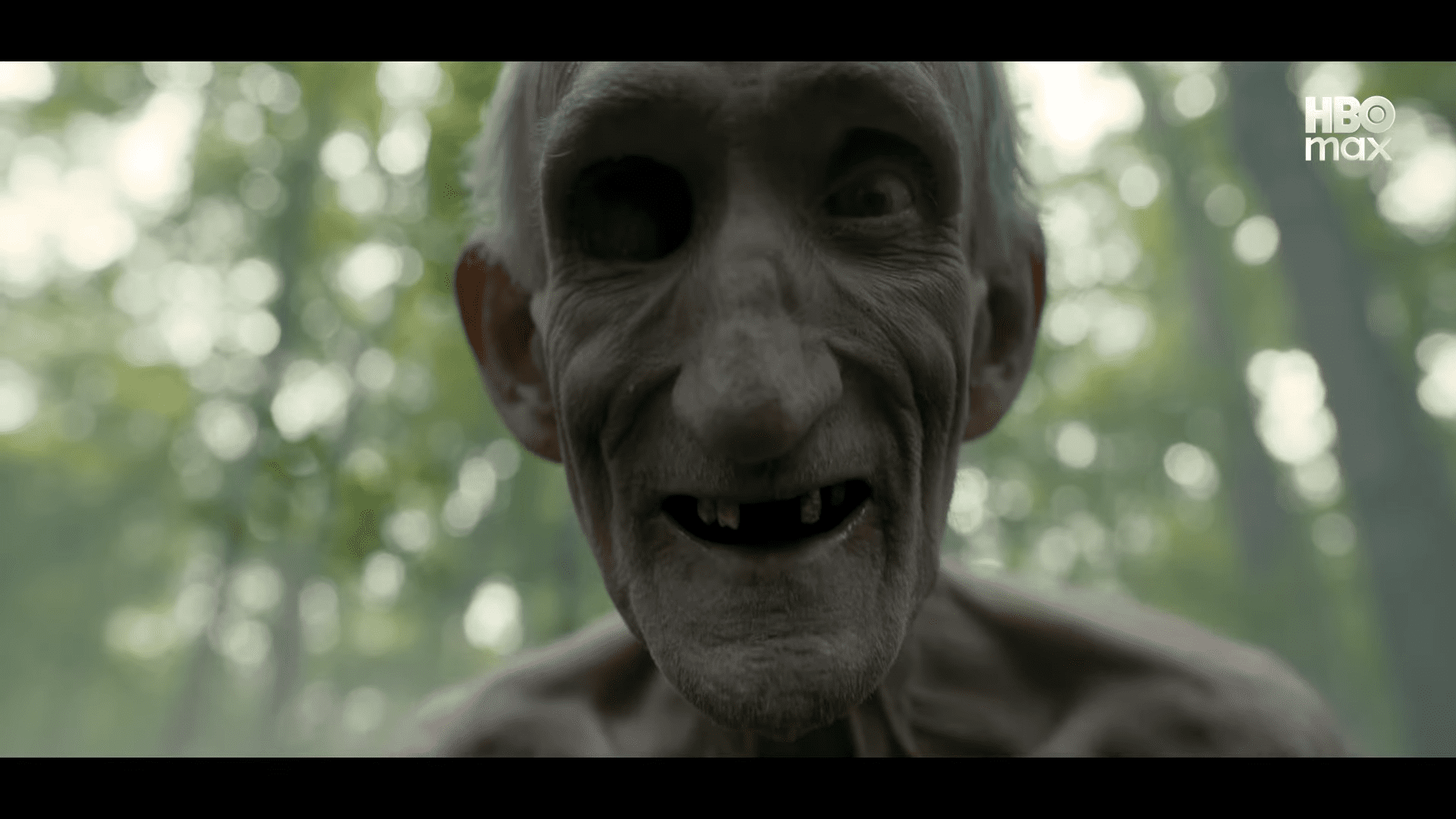
The Full CG Skeleton Man
DP: Once the creature transitions to being fully CG, how did you plan and execute the handoff from plate-driven performance to a digital character?
Mitch Drain: We were fortunate to have plates with the actor, also a stunt performer and clean plates to help guide us. The truth is however, that the plate was always the boss. The clients were very focused and knew what was needed and shot plates that communicated what they wanted. There was only one shot, the transition shot, where we needed to change the plate to provide for a better view of the action. Luckily, there was an alternative plate for that.
DP: How did you capture, reference, or design the Skeleton Man’s run and physical behavior?
Mitch Drain: We were provided reference footage of contortionists, “movement” actors, great apes and large cats. We experimented with all sorts of combinations. VFX Supervisor Daryl Sawchuk provided us with footage of himself performing some specific actions which helped inform the actual physics and some secondary animation to really help sell the real-world presence of the Skeleton Man.
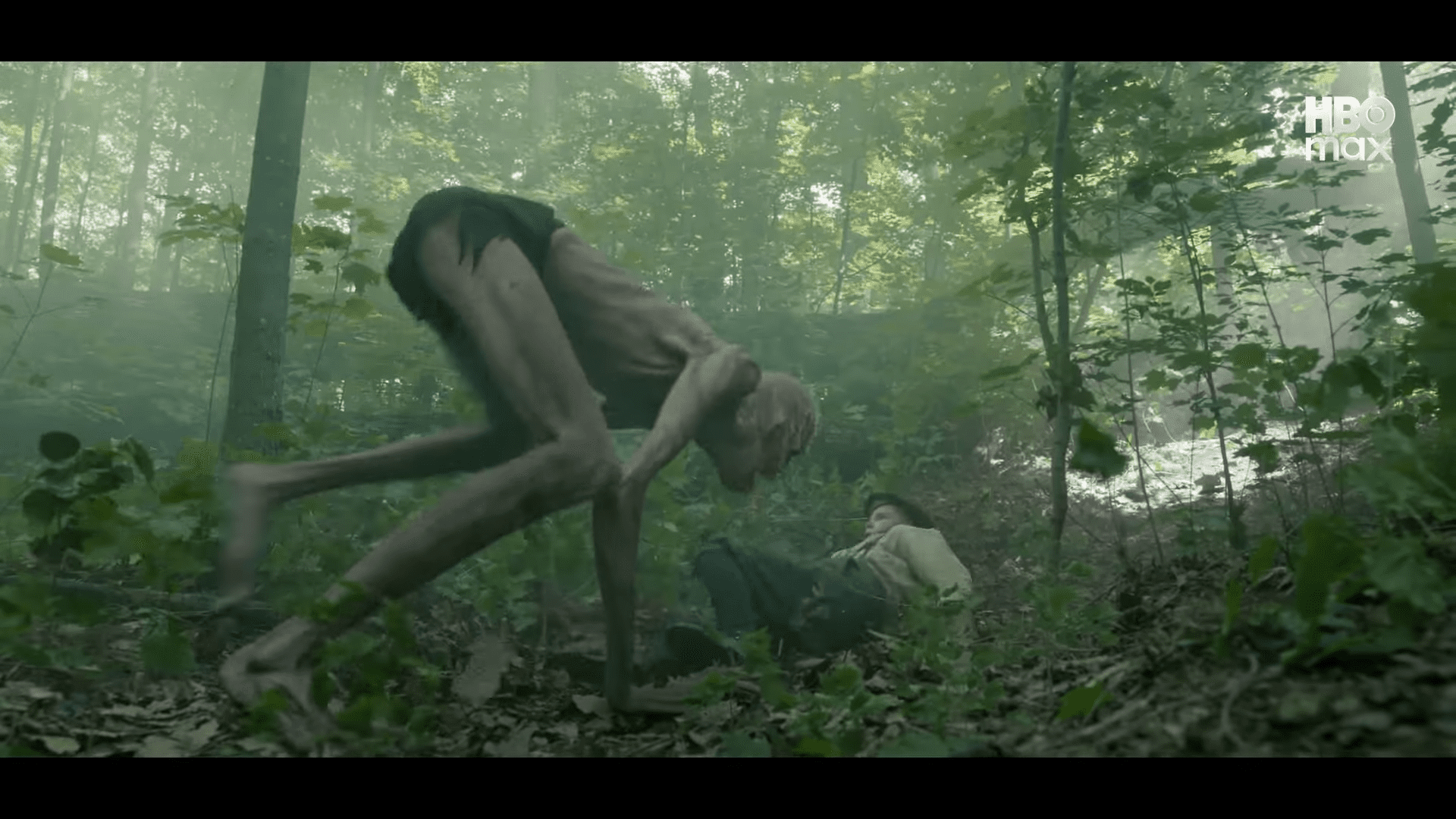
It was important to the clients that we help the audience remember that the Skeleton Man is an evolved version of Peter, the side show performer. To that end we worked to incorporate the actors stride and particular gait. It was challenging to migrate this to the Skeleton Man since the physical differences between the characters were so pronounced.
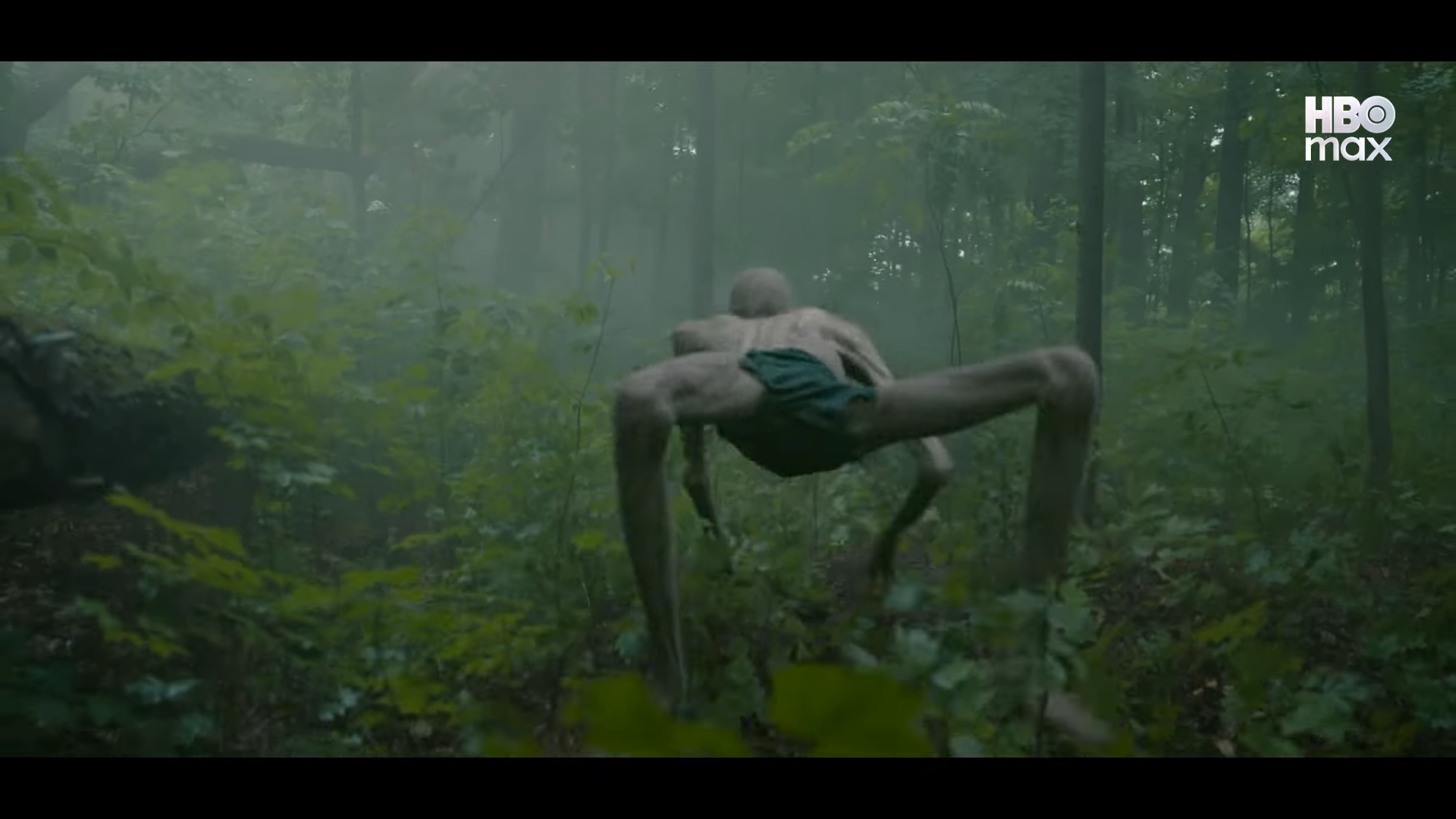
DP: How much cleanup, exaggeration, and stylisation was needed to keep the motion creepy but still believable?
Mitch Drain: That “line” was constantly moving based on the effect desired by the director. As a rule, we tried to maintain continuity between the old man and the Skeleton Man in terms of movement. We learned that exaggerated movements on this particular CG creature tended to look too broad and overly dramatic. We were more successful when the movement felt just ‘this close” to human while still being horrific and having a supernatural quality.
Rigging a Skeleton
DP: Can you walk us through the iterations that defined the creature’s movement language?
Mitch Drain: The movement of the Skeleton Man, as originally conceived, was to be very staccato and not grounded in the natural world. We had various references of contortionists and actors who specialise in awkward and uncomfortable movements. This look has been used in many horror scenarios and can be quite effective, but for our creature, it was decided to tone down the contortionist movement and focus on some animalistic movement. We had references of large apes and cats to draw from. We still managed to catch some otherworldly movements from the skeleton man’s twisting abdomen. There were perhaps hundreds of iterations needed to strike the right balance.
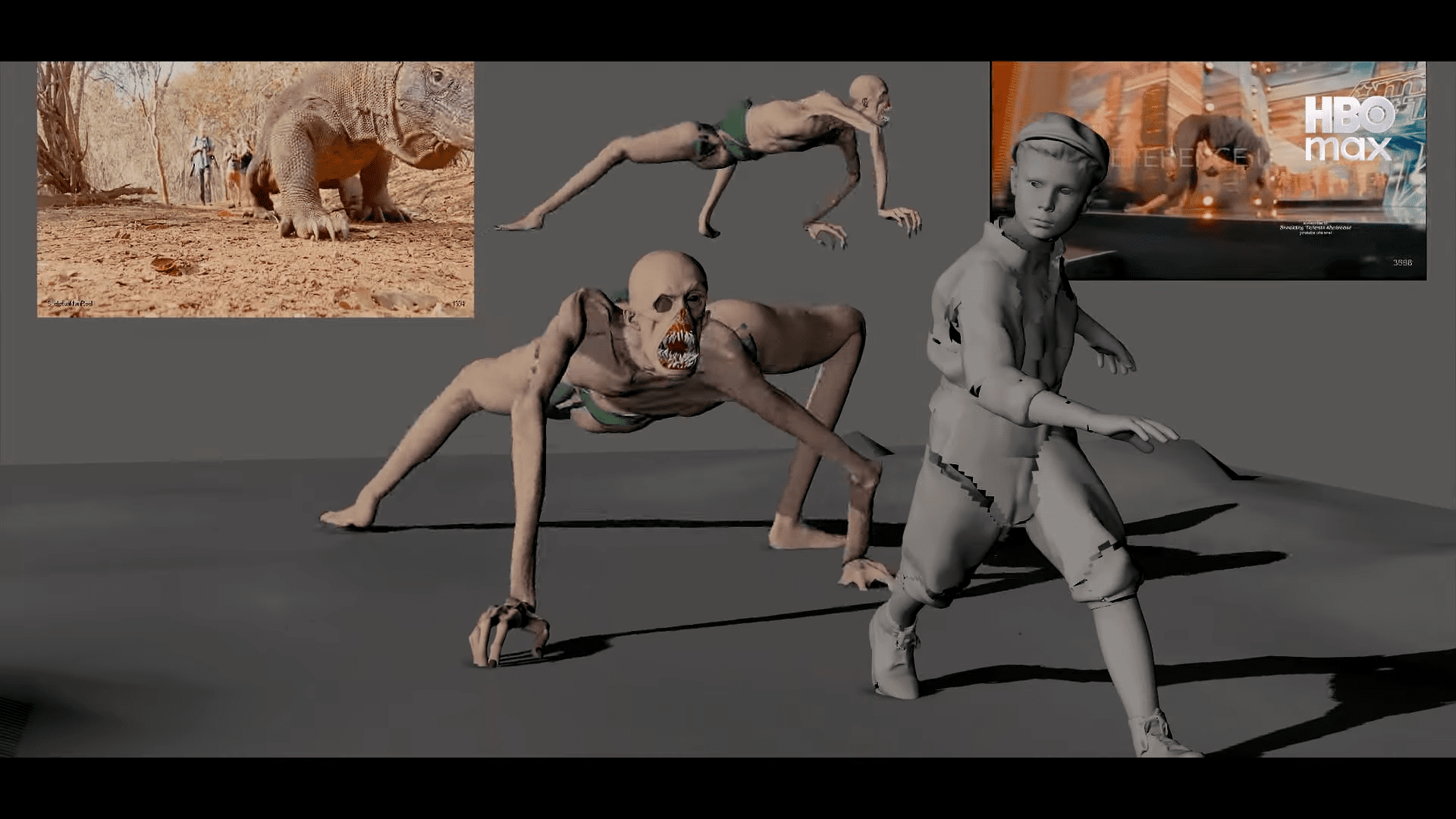
DP: The rig had to survive violent motion, distortion, and scale changes. How did you design and stress-test it?

Nelson Sousa (LinkedIn | IMDb) served as the Assets Supervisor for It, and before that on a plethora of shows, including most of the Marvel Shows from Avengers to Wasp, Carnival Row, Stranger Things, Men in Black 3 and Sin City, as a Modeller in one way or another.
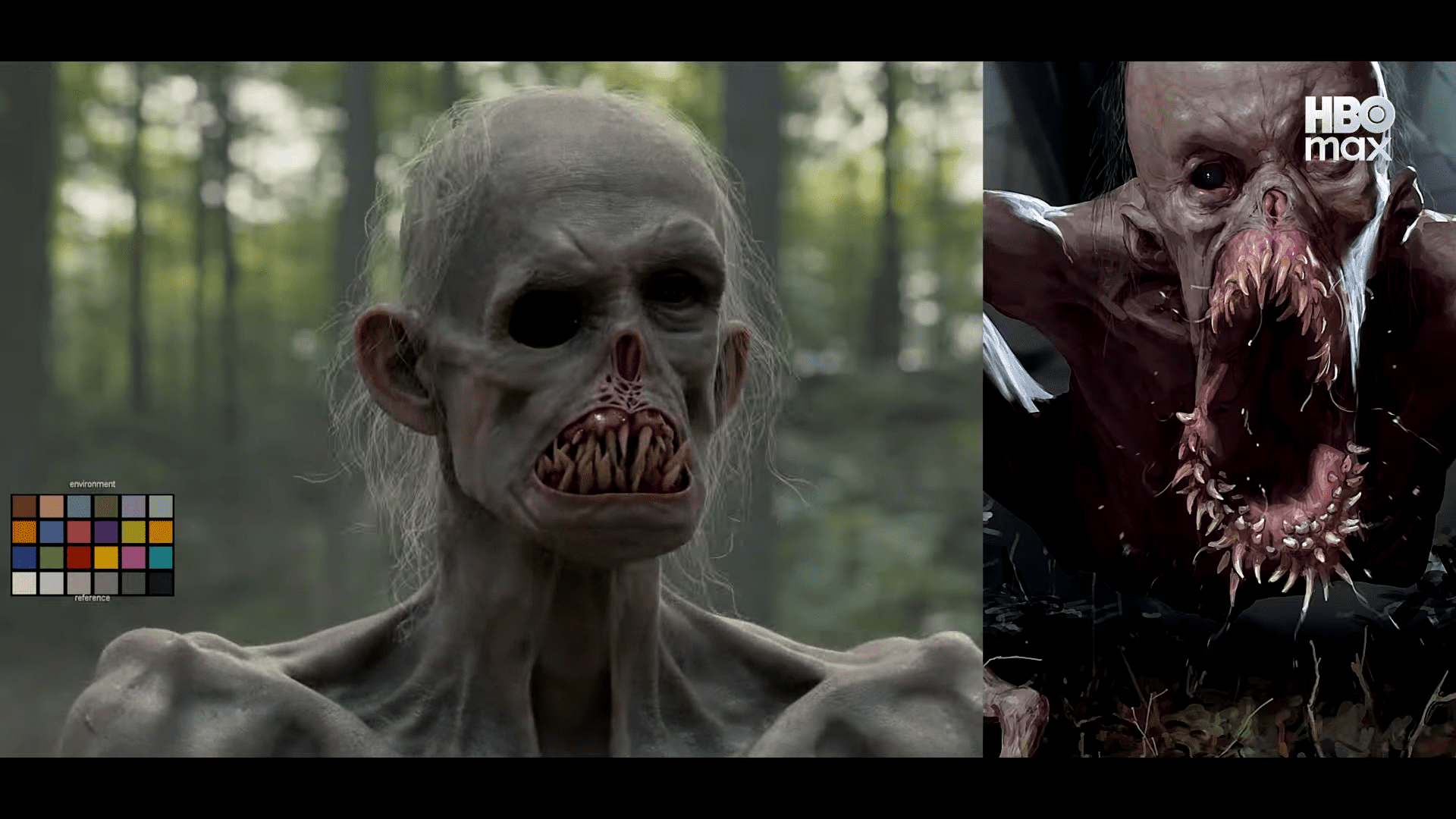
Nelson Sousa: During the chase sequence, the character’s waist contorts by flipping his hips 180 degrees as he crawls. To maintain stable deformations and volume, we added additional spine controls and skinning influences. Since the contortionist movements were intended to look extreme and “broken,” we were able to push these boundaries without adhering to anatomical plausibility. A final skin simulation pass was applied to reduce overstretching and create the effect of bones sliding underneath the skin.
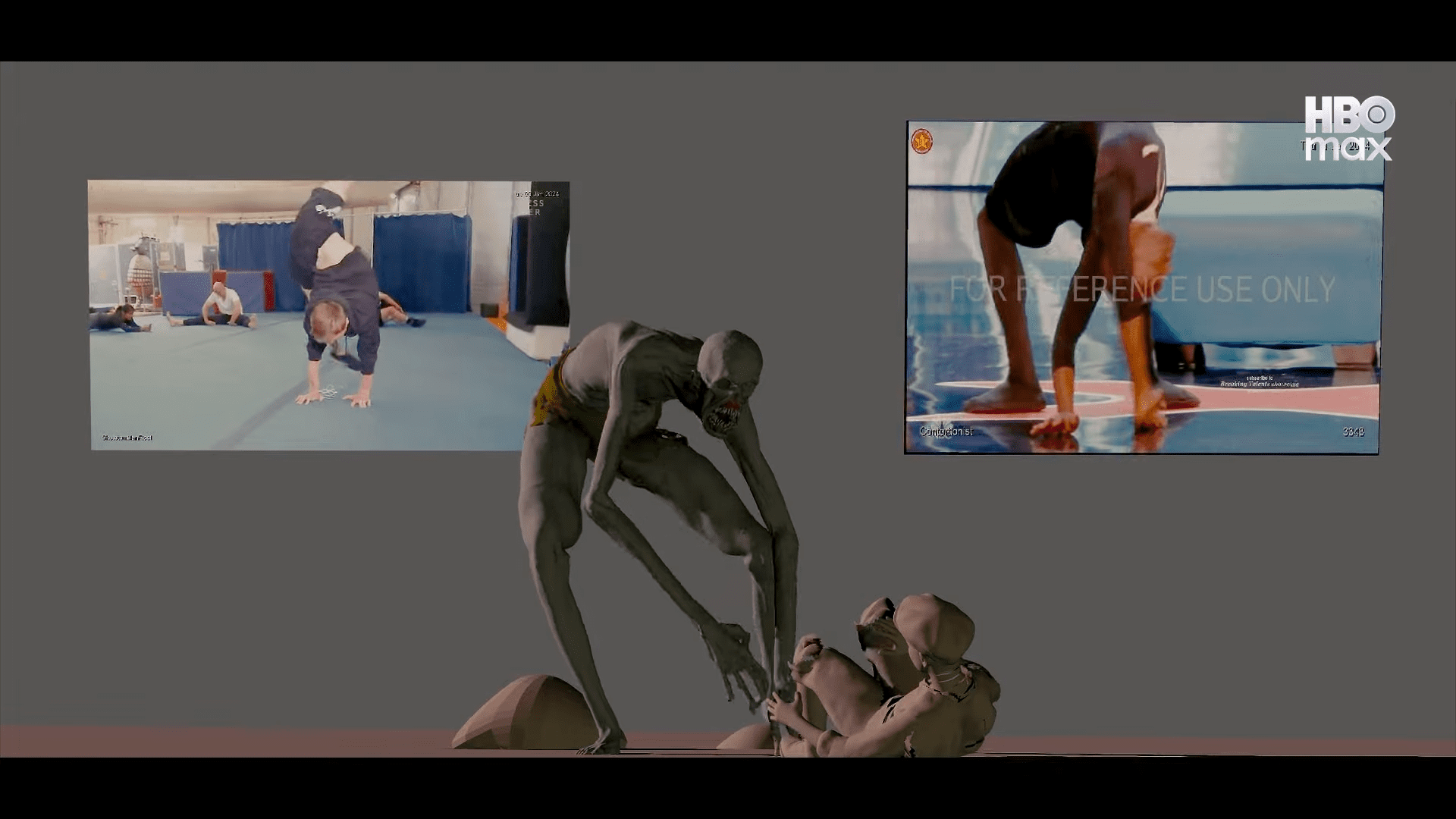
To manage the skeleton man’s transformation, we leveraged existing R&D for rigging morphing characters and match-moving hero assets to stunt doubles. This allowed us to refine the blending for each limb and carefully direct the timing of the proportional changes.
DP: What were the main animation challenges during the chase and transformation beats?

Ellen Hoffmann (LinkedIn | IMDB) was the Animation Supervisor for the Skeleton Man, and before that, she worked in animation at everything from Venom: The Last Dance to Blackhat to Game of Thrones to Oblivion to Stranger Things.
Ellen Hoffmann: The challenge was transforming Peter’s natural run into the Skeleton Man motion: a long-limbed, heavy creature stumbling to the ground, lunging forward with power, a bit more towards gorilla-like jumps. The animation was created across multiple bodies with different proportions, requiring specific areas to be carefully matched so we could seamlessly blend from one to the next.
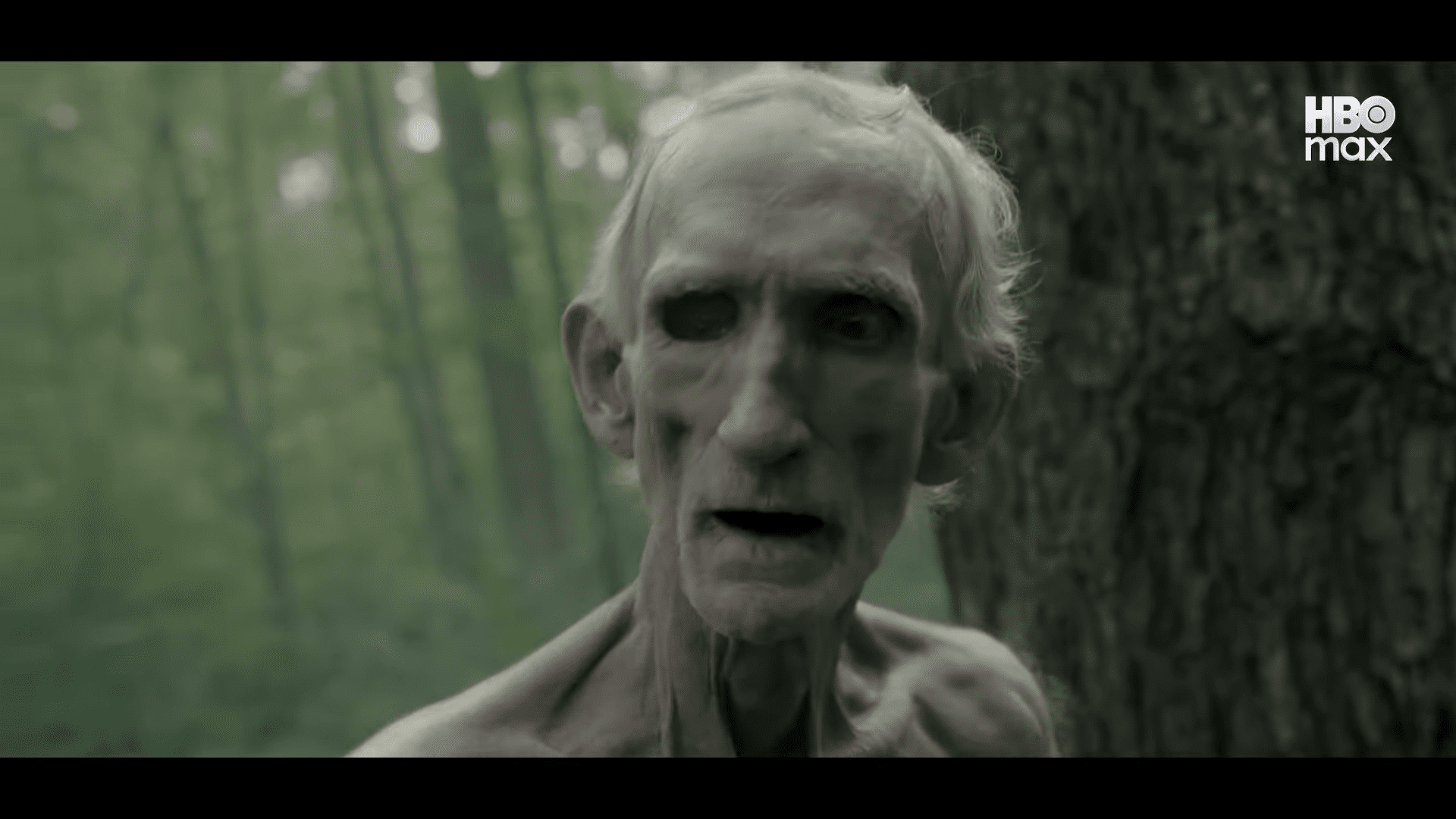
While the rig allowed us to scale individual body parts independently, the head transformation was more complex. Additional facial shapes were introduced to drive the nose transformation and further widen the jaw. The client wanted the entire transformation to happen fully in front of the camera, and by incorporating a strong roar motion, we were able to seamlessly transition Peter’s smaller head into the skeleton man’s head.
DP: Looking back, what did you and the team learn from building and animating the Skeleton Man?
Mitch Drain: One lesson I personally came away with from the development of the Skeleton Man is that a humanoid creature, especially one designed to look as if it is almost human, will benefit from the inclusion of design elements and movement that are still relatable as human. Skeleton Man retains a certain amount of Peter, the old man from the sideshow, hopefully enough to maintain a connection between the two throughout the sequence.
DP: Do you have a personal favourite shot or moment in the sequence?
Mitch Drain: The most satisfying shot for me would be the transformation shot. It was one of the most difficult to pull off due to the changing rigs, from Peter, the old man, to the Skeleton Man. We needed this to feel smooth, not obvious, almost subliminal. A particularly interesting aspect of these shots was what was happening with the environment around Skeleton Man. With all CG creatures, interaction with the environment is crucial to creating a convincing visual. The way plants move and collide with the CG character, ground displacement and shadows, while secondary to the creature, are absolutely necessary to the overall visual.
DP: What are you working on next, as far as you are allowed to say?
Mitch Drain: I thoroughly enjoy the horrific and monstrous aspects of VFX work! While there is plenty more of the uncomfortable to come in Digital Domain’s future, I have recently wrapped an action film set in the real world as a palate cleanser!