



The NRW Minister for Culture and Science, Ina Brandes, officially opened the Hochschule Hamm‑Lippstadt’s (HSHL) Visual Effects Laboratory on July 16, 2025. The VFX Lab is at the core of the new bachelor programme Visual Computing and DesignVisual Effects & Virtual Productions, offering students and partners hands-on access to live LEDwall compositing, motion capture, and immersive audio technologies.
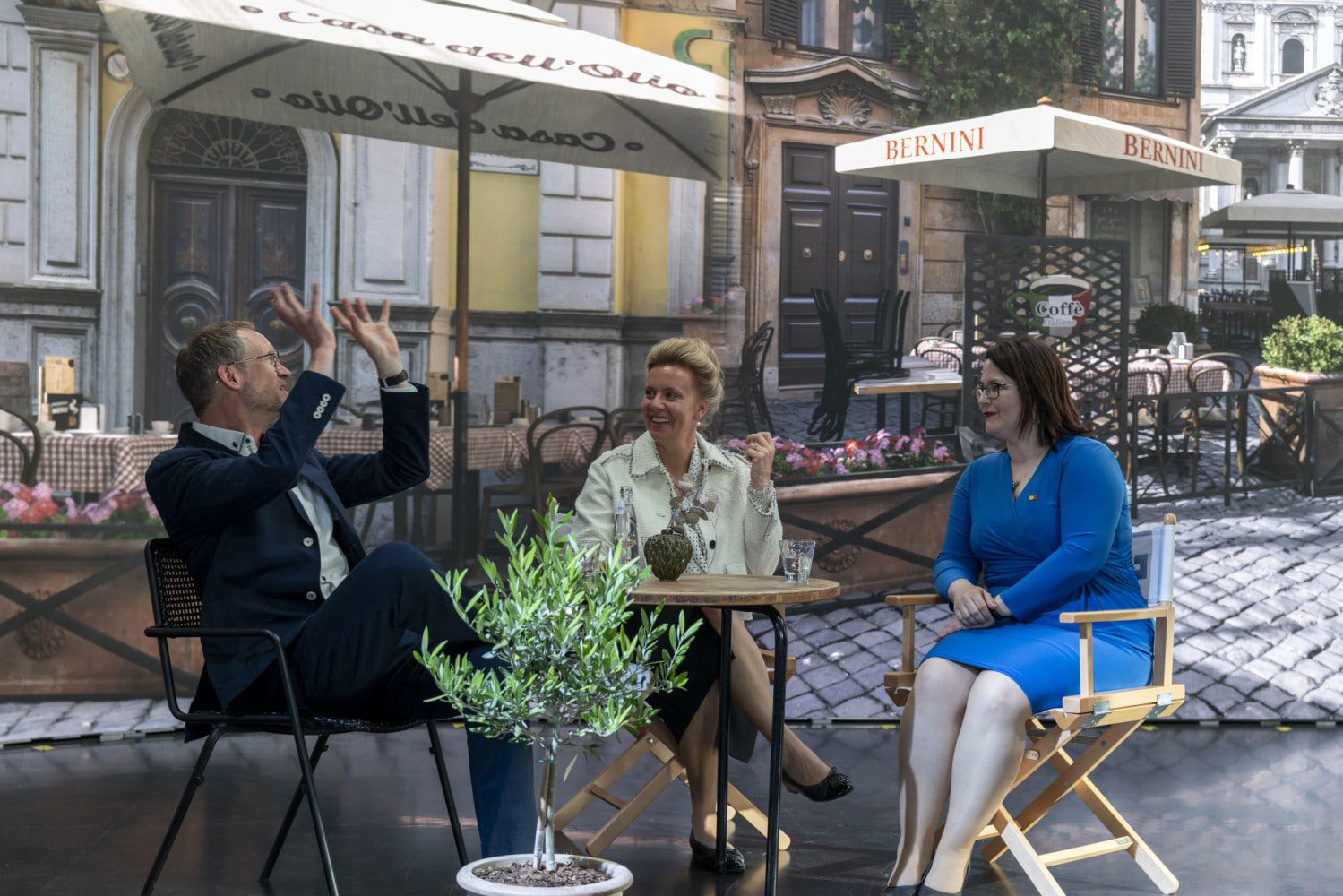
Collaboration with Leading Institutions
The VFX Lab’s launch was supported by a broad coalition of industry and academic players: Filmuniversität Babelsberg KONRAD WOLF, research initiative Digital Locations, the Fernseh und Kinotechnische Gesellschaft (FKTG), the Society of Motion Picture and Television Engineers (SMPTE), and systems integrator ICT AG. Together with project manager Prof. Stefan Albertz (LinkedIn) , Filmuniversität Babelsberg will cohost annual Virtual Production workshops and develop joint film projects leveraging the HSHL setup. SMPTE and FKTG bring standards, networks, and industry insight. Digital Locations ensures research integration. ICT AG has built the studio infrastructure on site, custom fitting lighting, networking, and acoustics and a one-of-a-kind tiltable mobile LED wall.
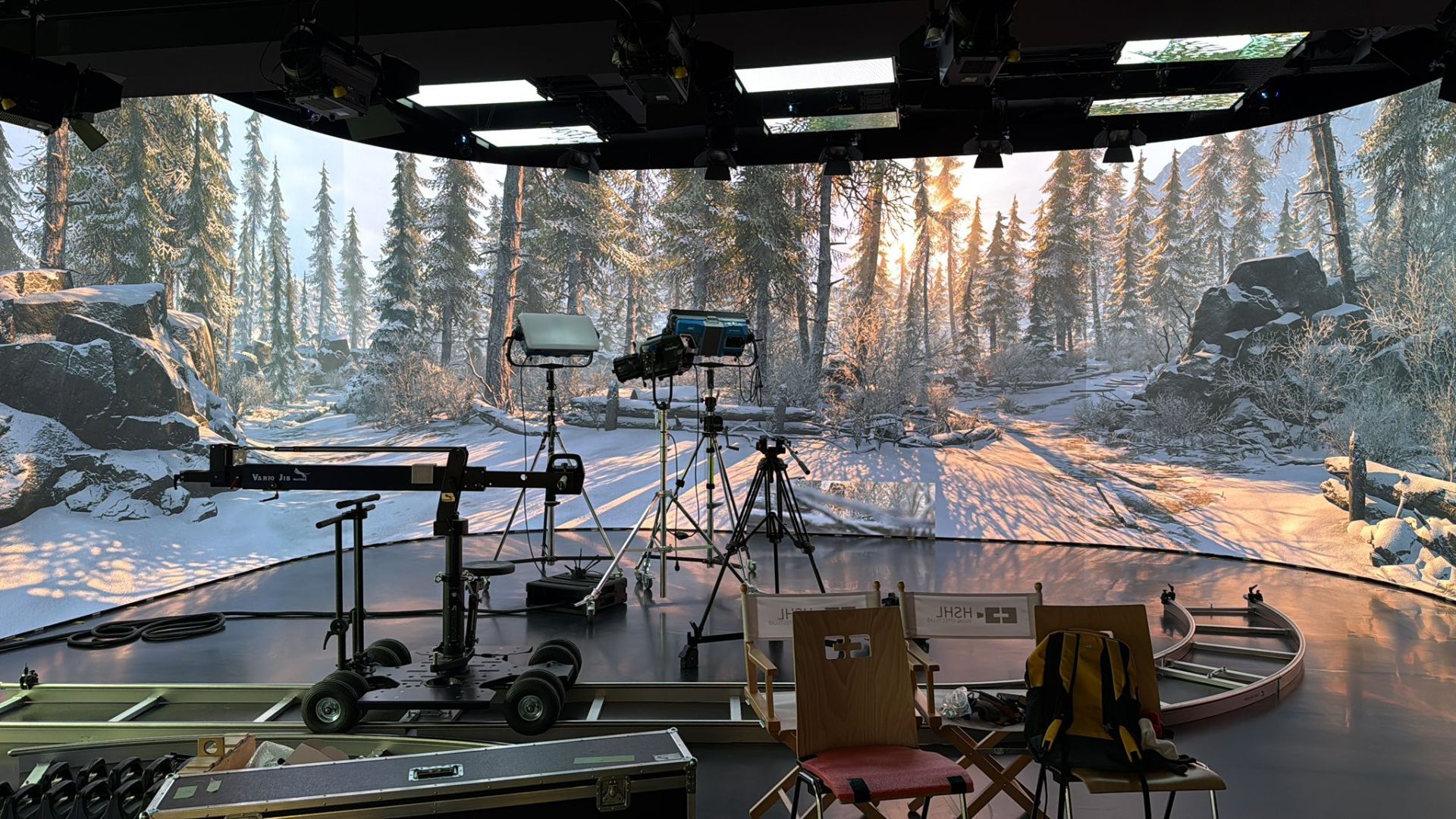
Studio Design: LED‑Wall Meets Real‑Time Pipeline
The studio features high‑resolution LED walls comprised of millions of tiny pixels, offering in‑camera compositing as footage is shot, eschewing chromakey for live visuals. Behind the scenes runs a real‑time graphics pipeline, integrating Unreal and similar engines for live background rendering.
Adjacent to the LED stage is a full‑body motion‑capture array, enabling actors’ live performance to be captured and streamed into virtual environments. This supports use cases from film and TV to games, advertising, live events, and even medical visualisation.
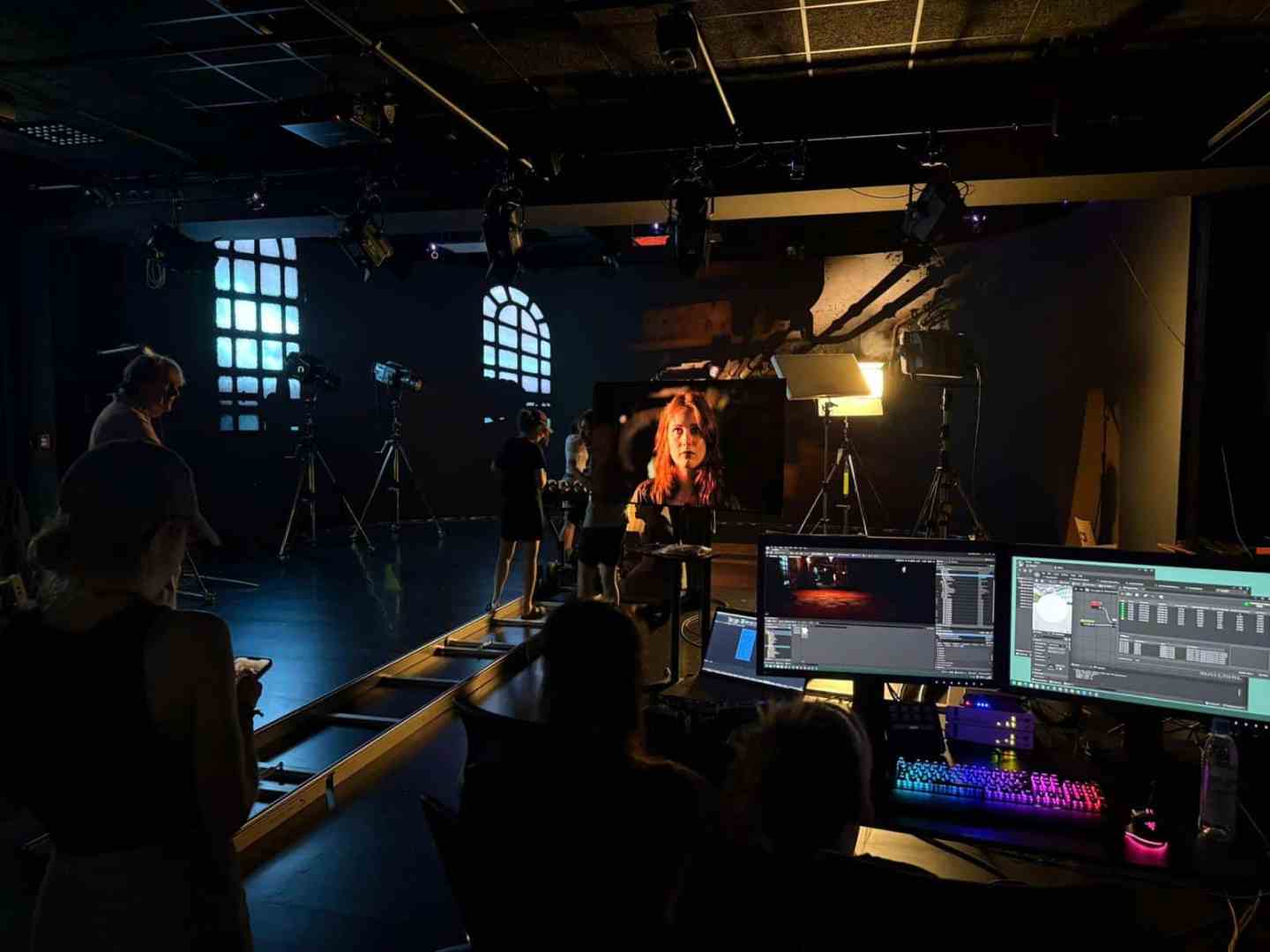
Studio Infrastructure: Tech for Production Scale
The VFX Lab is acoustically treated, air‑conditioned, and built on load‑bearing studio flooring. It features a dedicated external access ramp for large props or vehicles. Climate control supports consistent LED operation. Motion‑capture cameras are ceiling‑mounted in a tidy rig for capture accuracy; audio equipment enables 360° soundtracks.
A control room adjacent to the stage houses real‑time VFX operators, graphics workstation clusters, and network infrastructure—all connected to the LED stage and MoCap rig. The in‑camera workflow is designed for tight pipelines, enabling rapid iteration, pre‑vis, and final image captures in a single pass.
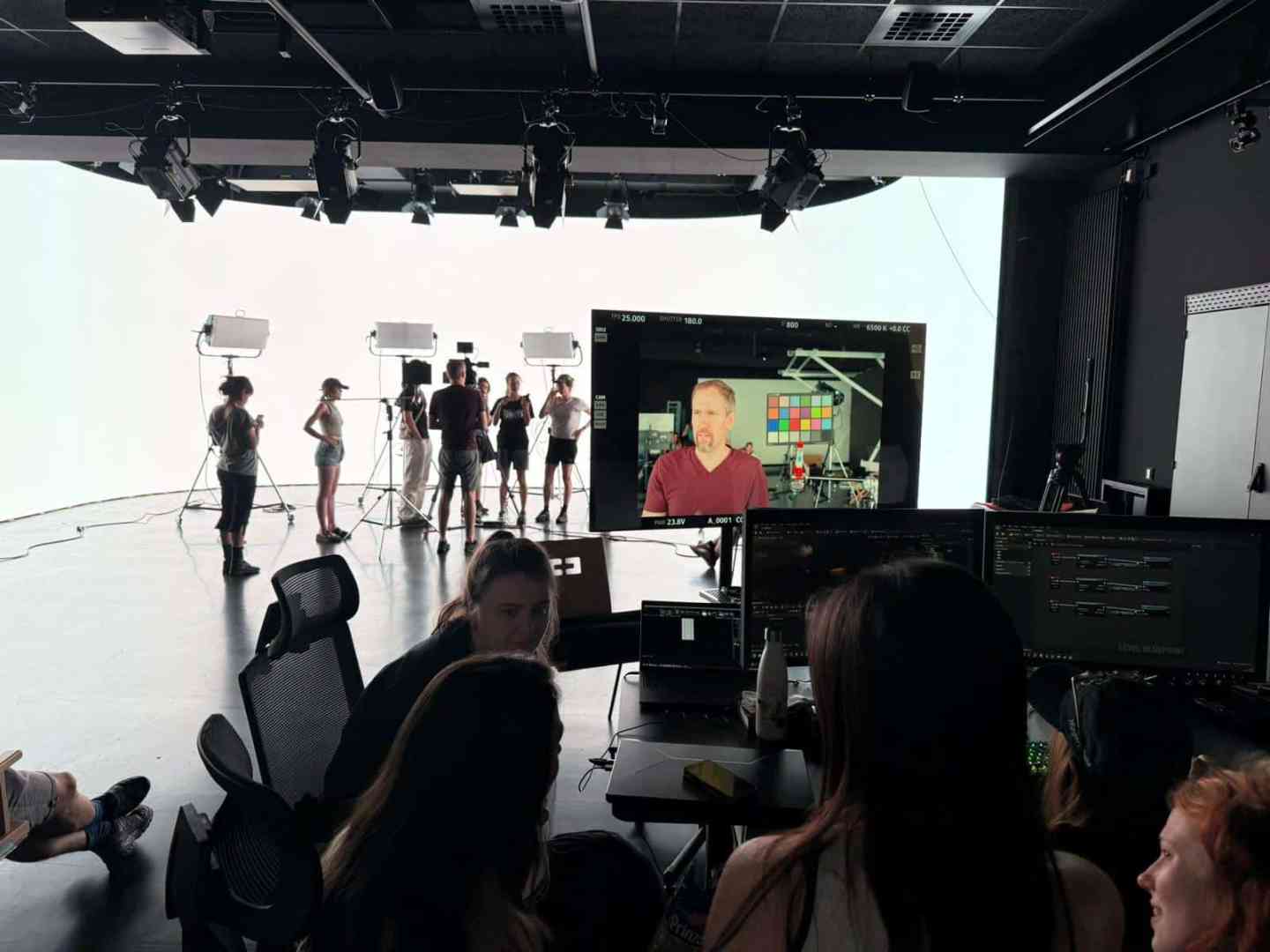
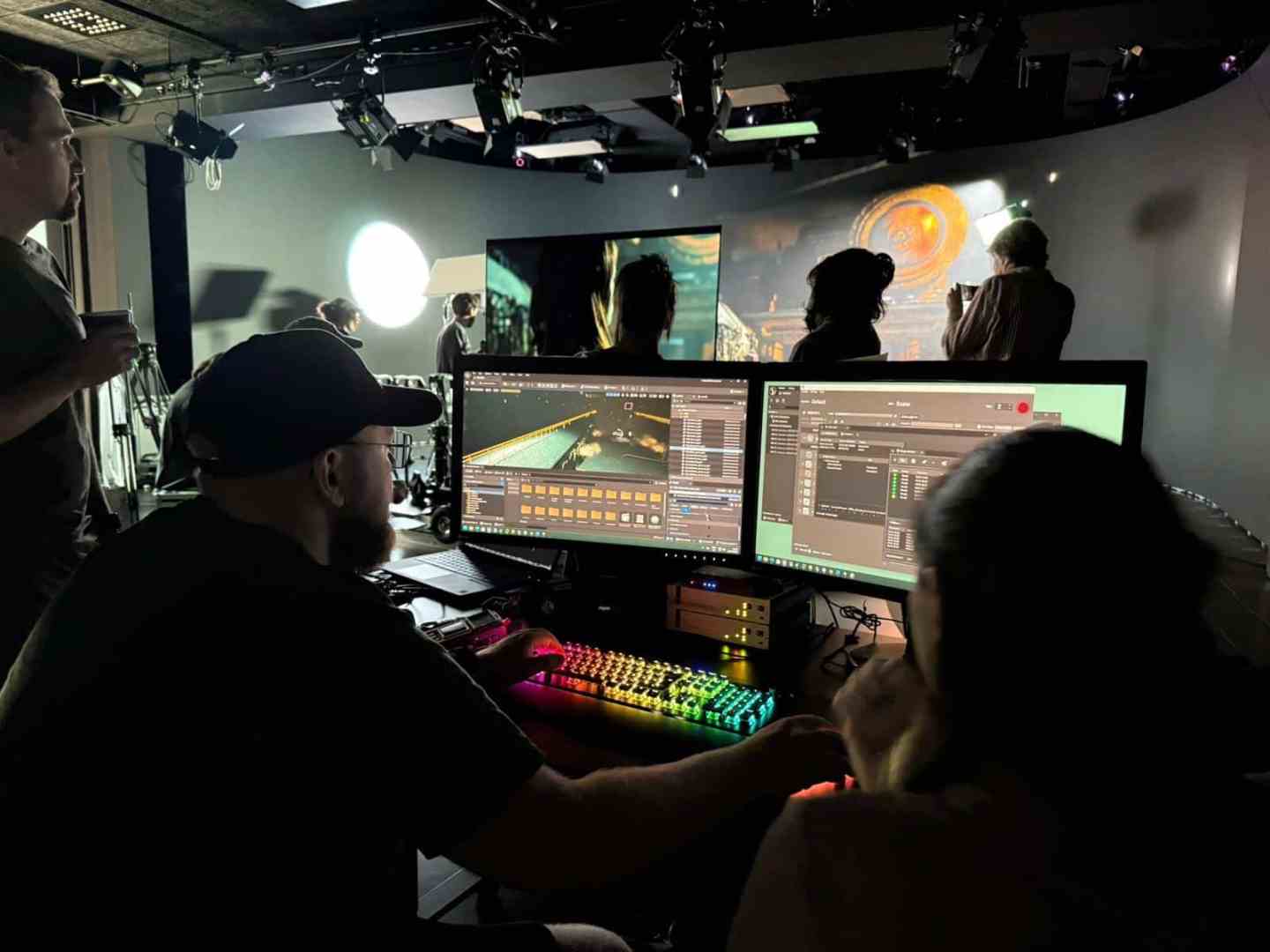
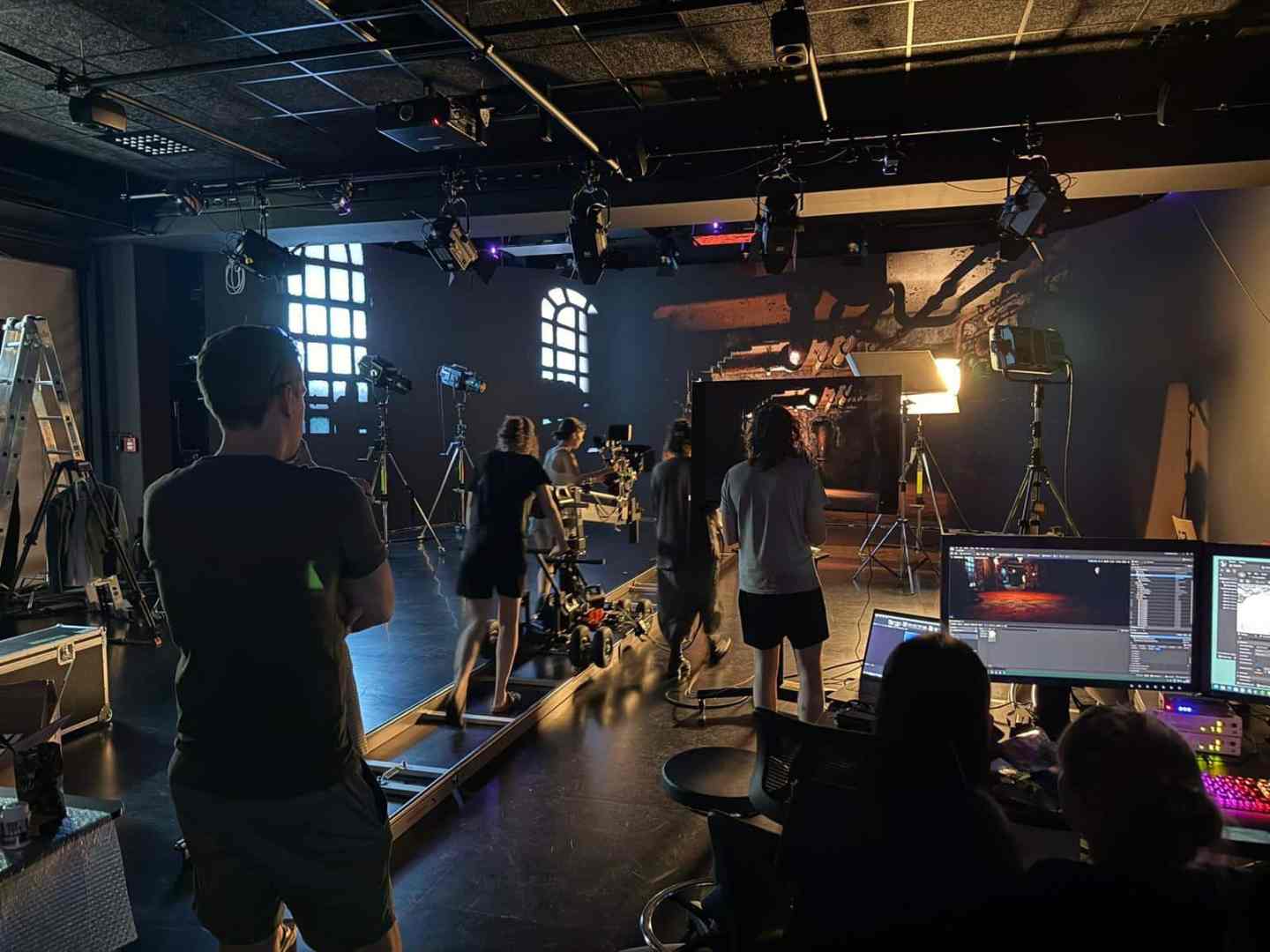
Want to know everything inside? Here is a List for download – and what this all means will be explained soon in a dedicated article – or series of articles!
What This Means for HSHL and NRW
HSHL President Prof. Dr.-Ing. Kira Kastell describes the VFX Lab as unique among German public universities and a milestone for practical teaching and research. Minister Brandes emphasised that producing tomorrow’s skilled VFX, audio‑video engineers, and realtime artists requires hands‑on labs like this.
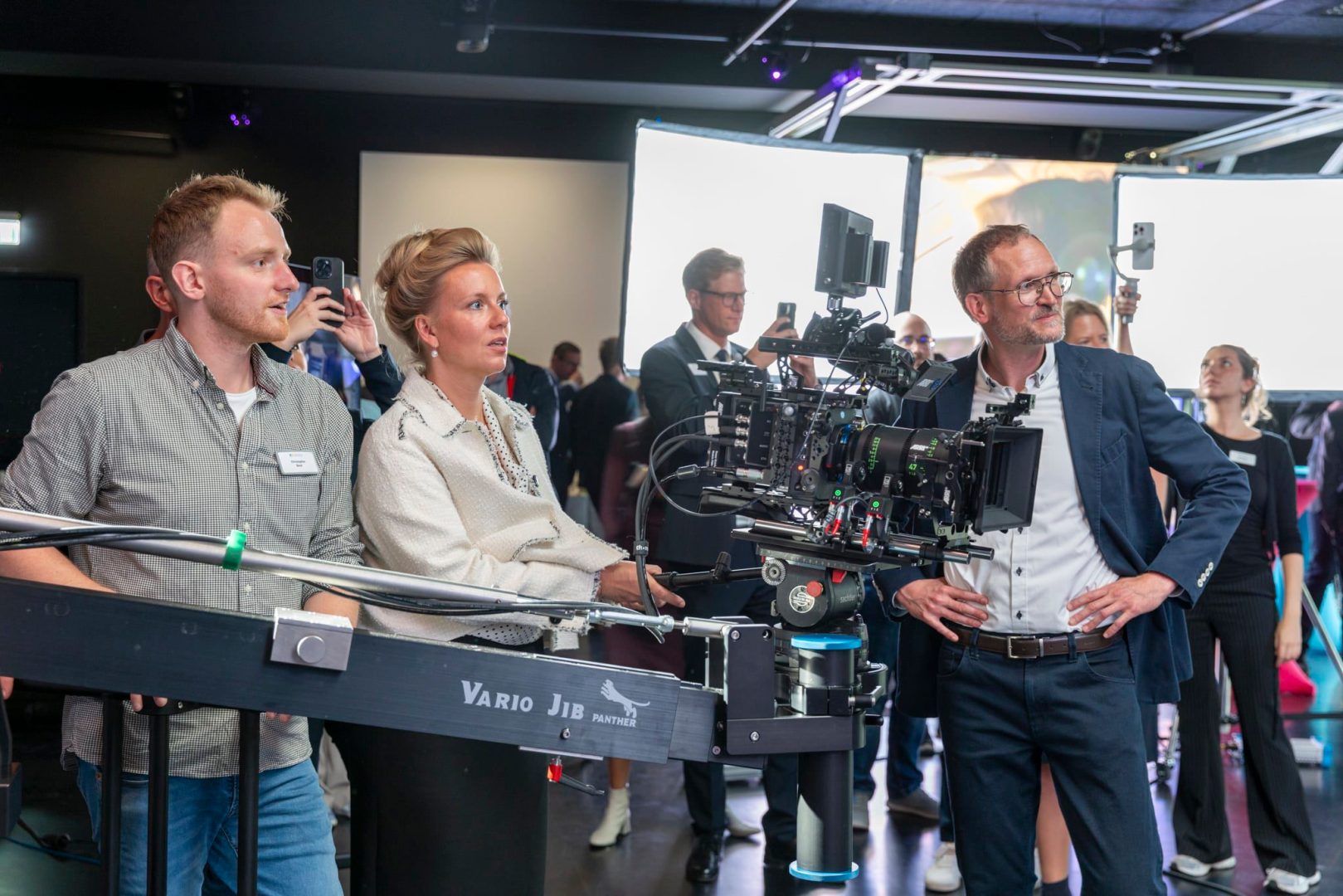
Looking Ahead: Workshops, Projects, Innovation
Annual workshops with Babelsberg students are already planned. Project‑led efforts under Digital Locations, in partnership with SMPTE and FKTG, will explore live‑production pipelines, real‑time workflows, and standards. ICT AG will continue supporting technical expansion as new use cases emerge.
And a deep dive into the technology, features, and every included tool and possible use case is already in the works – Prof. Stefan Albertz promised us in our Podcast!
