



For those who don’t know the tool: Kiri Engine is a photogrammetry app for iOS, Android, and web, built by Kiri Innovations. It processes 3D captures into textured meshes, often used in VFX, games, and AR. The firm now adds produce to its growing scan library.
A produce aisle for 3D artists
Kiri Innovations has released a new asset collection featuring over 140 3D-scanned fruits and vegetables. The pack contains 141 individual models captured using photogrammetry, sourced from users of the Kiri Engine mobile and web app. The assets include both common produce such as apples, bananas, and tomatoes, and less typical items such as mangosteens, lychees, and dragonfruit. Each model comes with production-ready geometry that has been retopologised and UV unwrapped. The data is supplied in both FBX and native Blender formats, making the pack directly usable across most 3D content creation tools.
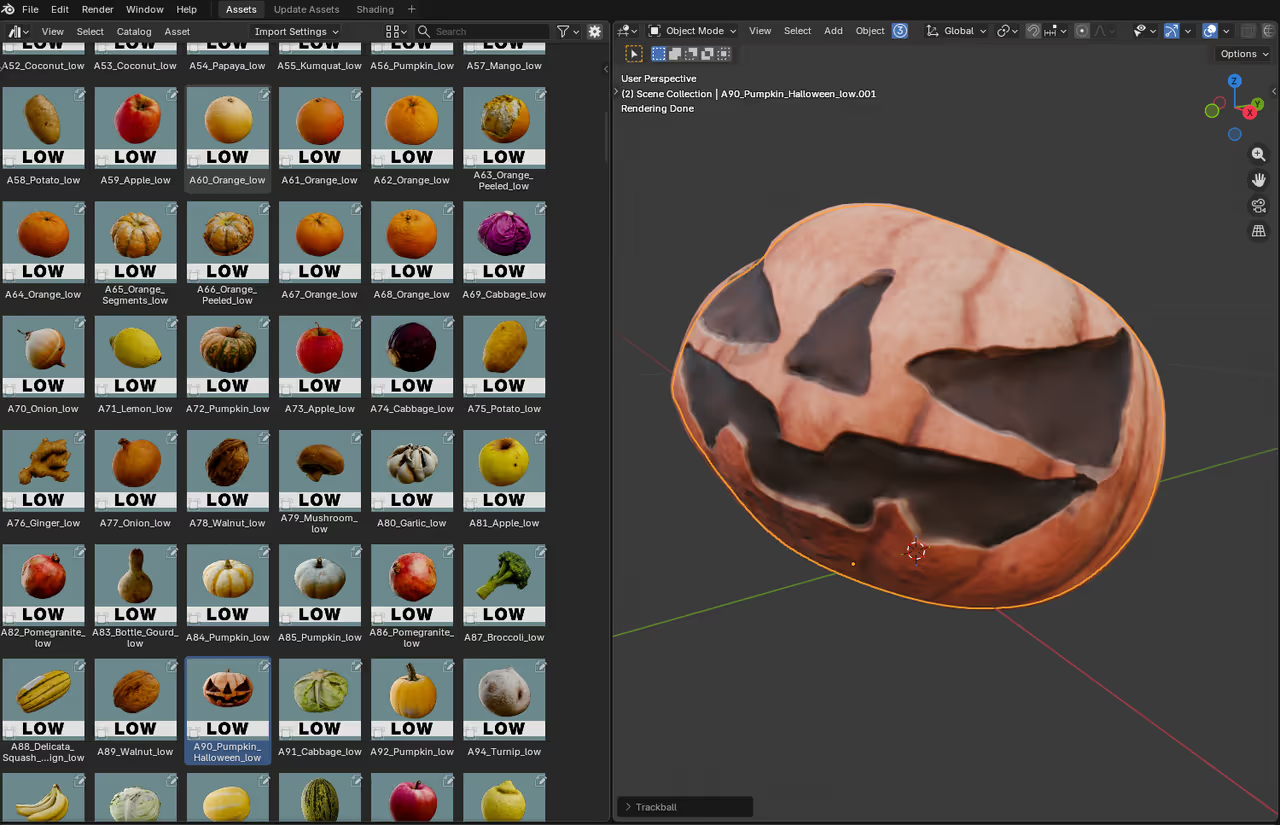
Properly textured and LOD-ready
Every scan includes PBR (physically based rendering) texture sets with colour, normal, ambient occlusion, roughness, and height maps. Texture resolutions reach up to 4K, and the files are provided in JPEG, PNG, and EXR formats for compatibility across different render pipelines. Three levels of detail (LOD) are provided per model, simplifying the use of these assets in realtime engines such as Unreal Engine or Unity. No additional setup appears to be required.
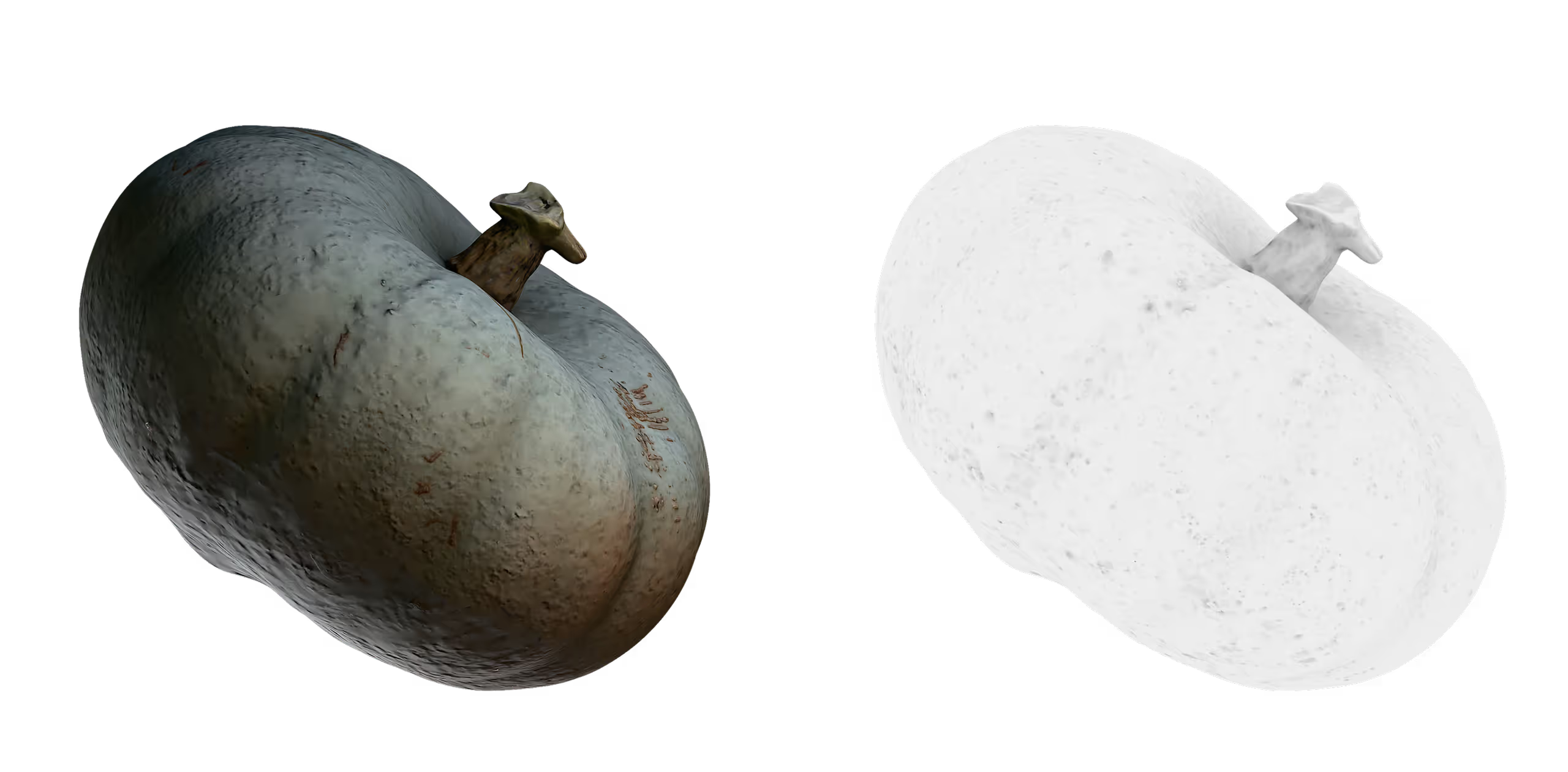
Commercial use without restriction
All 141 assets are distributed under a CC0 licence. This places them in the public domain, allowing full commercial use with no attribution or licensing restrictions. Downloads are available via the Kiri Engine Web platform. A free user account is required to access the pack.
Production reality check
While the scans appear clean and the assets are retopologised, Kiri does not specify polygon counts or per-asset texture resolutions. Artists should test the files in their preferred DCCs before using them in a live production pipeline. File size and compatibility can vary across applications. This release continues Kiri’s ongoing effort to promote user-generated 3D scan sharing and expand its public library. The company positions these assets as examples of the quality achievable with its mobile scanning technology. New tools and content packs like these should always be tested in production environments before use to confirm performance, scale accuracy, and shading consistency.
