



relative.berlin, like many successful studios, began as a group of freelance friends working together in a living room. Over the years, these friends grew closer and added new members to their team to form a holistic company with a passion for creative output at a high aesthetic level. In less than 10 years, the team has realised video productions for global brands such as Universal Music, Mercedes, Honda, McDonald’s and Kinder.
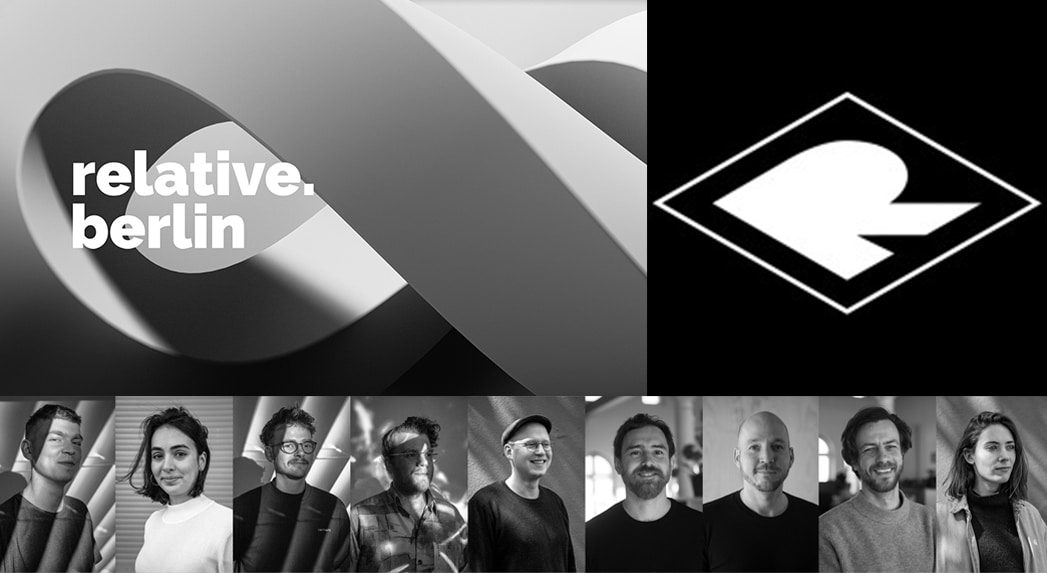 The core group of relative.berlin consists of 10 artists. The perfect mix of aesthetically orientated pixel pushers and playful tech nerds who challenge each other to stay up to date with the latest looks, trends and technical innovations. Starting with motion graphics and 3Danimation, relative. berlin has evolved to apply its expertise in photogrammetry, body motion capture and facial motion capture to real-time animation, VR/AR, digital fashion and almost all forms of CGI.
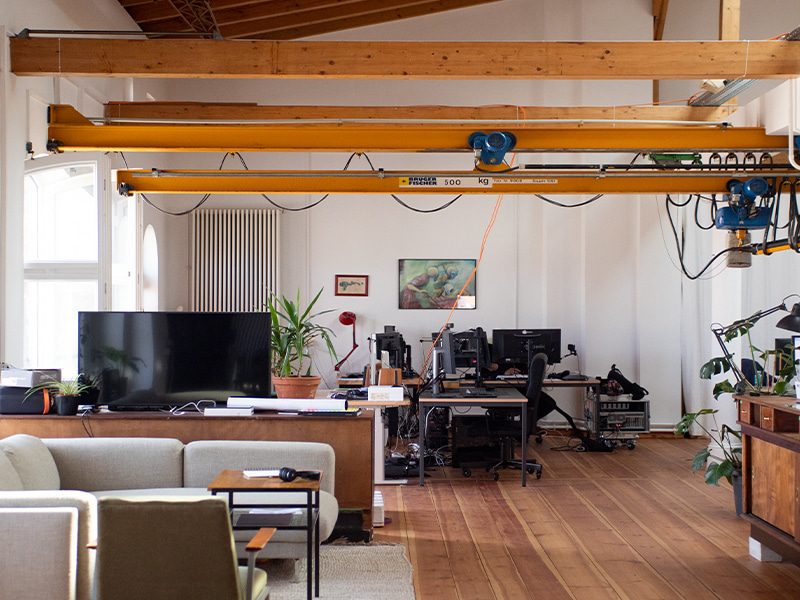 Hello Anders, and welcome to our Reallusion Feature Stories. Please briefly introduce yourself, relative.berlin, and your music project.
Anders Mortensen: Hi, we are a creative studio in the heart of Berlin, so rave culture is part of our DNA. During the pandemic, the lockdown required isolation, which was very problematic for everyone. Art and culture professionals were confronted with deep existential fears. As a studio, we were lucky to be able to continue working on projects during these difficult times and we wanted to give something back to the community.
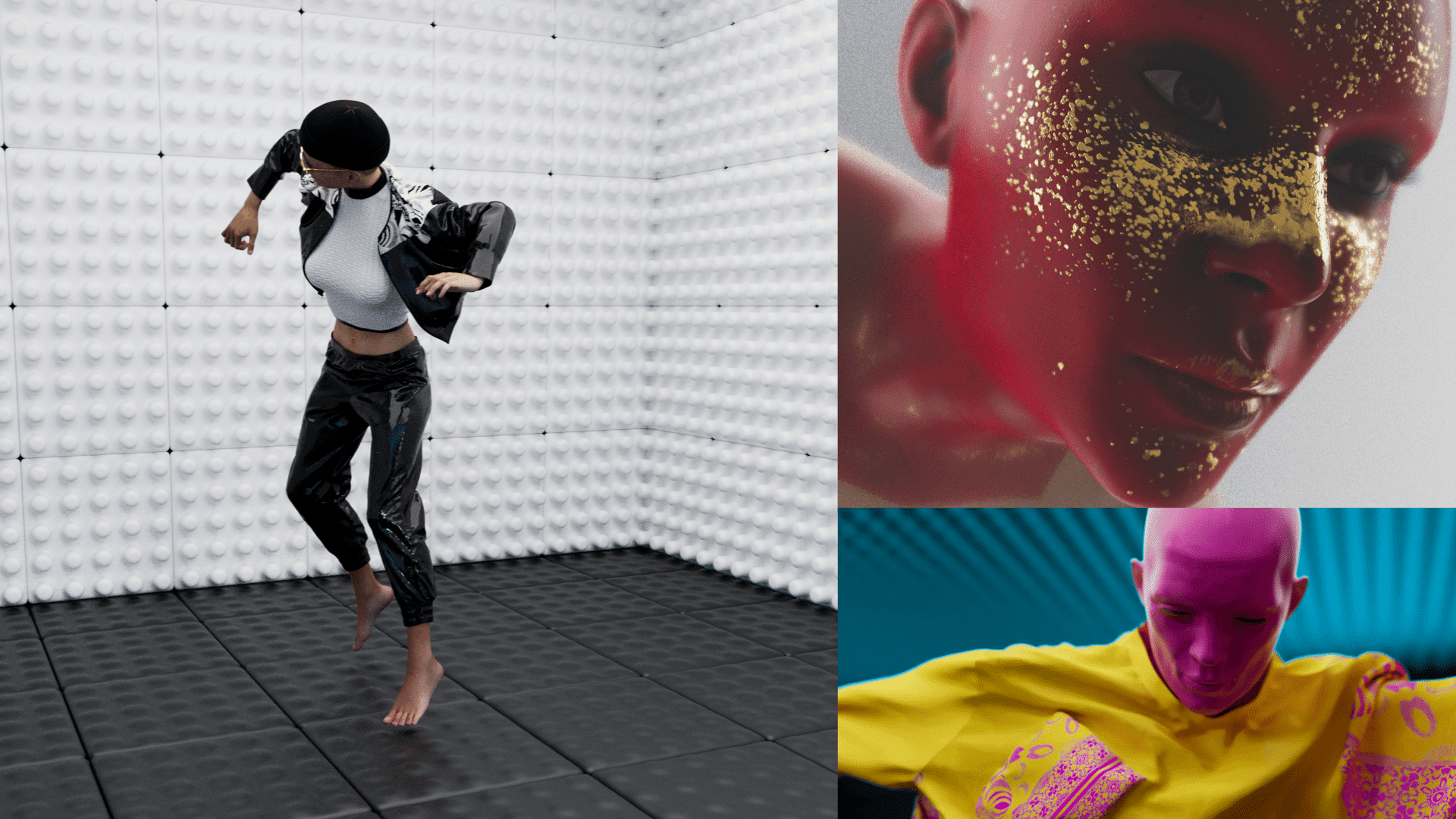
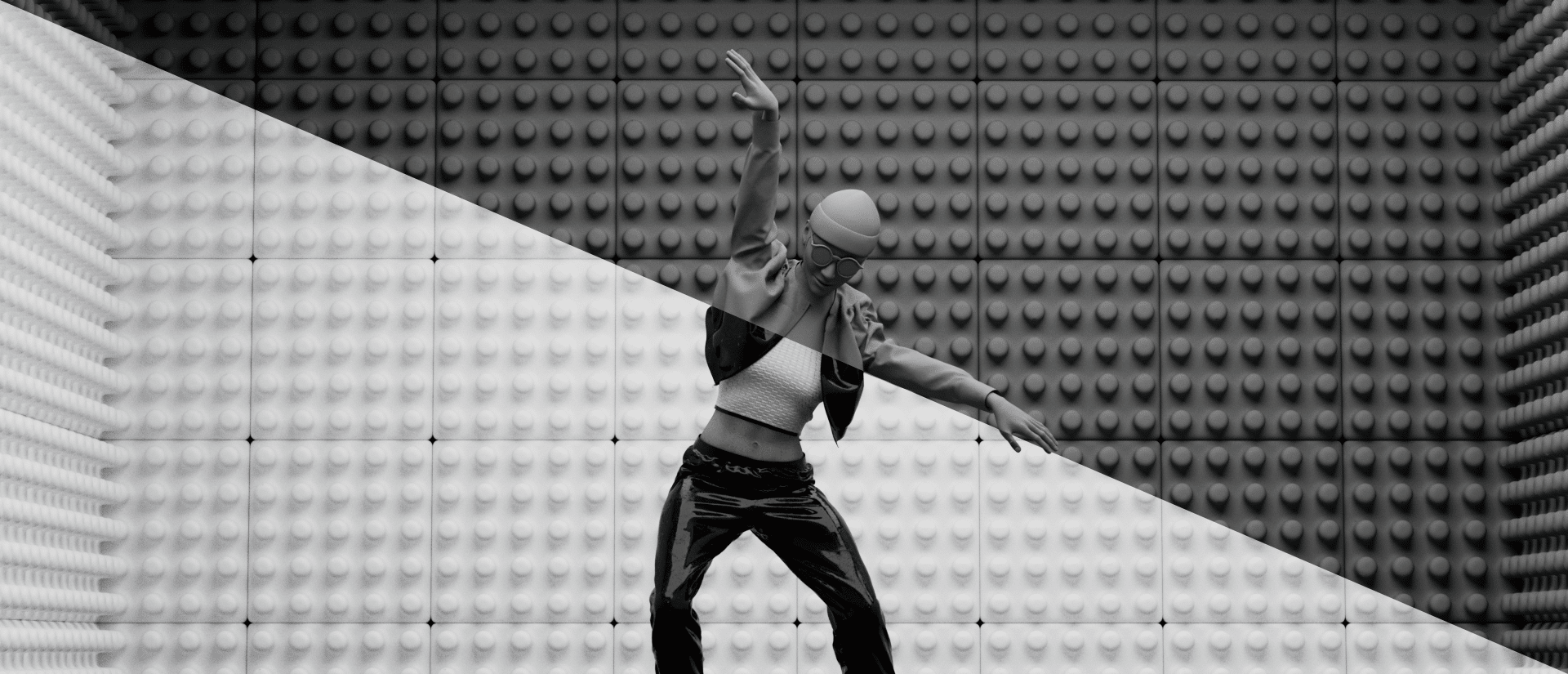
That’s why it was a special pleasure for us to shoot a music video for our good friend DJ Taube and his song“Where To Go?“. The video shows a madman raging in a padded cell while imagining himself on stage in front of thousands, and a lonely dancer expressing his feelings through movement in undefined, confined spaces. It is an expression of our collective feelings about the lockdowns of the last few years, and it was a therapeutic exercise to transform these feelings into art.
A lot of software is used and combined with each other. Can you tell us how long it took your team to familiarise themselves with iClone and Character Creator and understand the whole animation pipeline?
Anders Mortensen: We started our journey in 2021 with Character Creator (CC4) and then combined it with iClone (iC8). Coming from a traditional 3D pipeline, we knew we had some challenges to solve when developing a pipeline for this project. We needed both flexible and fast tools for character animation as we would need around 4 minutes of motion capture data. After a few days of trial and error, we found several ways that we could effectively integrate both Character Creator and iClone into our pipeline.
Can you tell us about some of the latest iClone features used in Taube’s where-to-go music video?
Anders Mortensen: Of course! There are several features that we found very useful during the production process. Firstly, we used the Character Creator to create a 3D model to match our photoshoot dancer. This also made it much easier for us to start the next step in our pipeline, which was to transfer the movements into iClone.
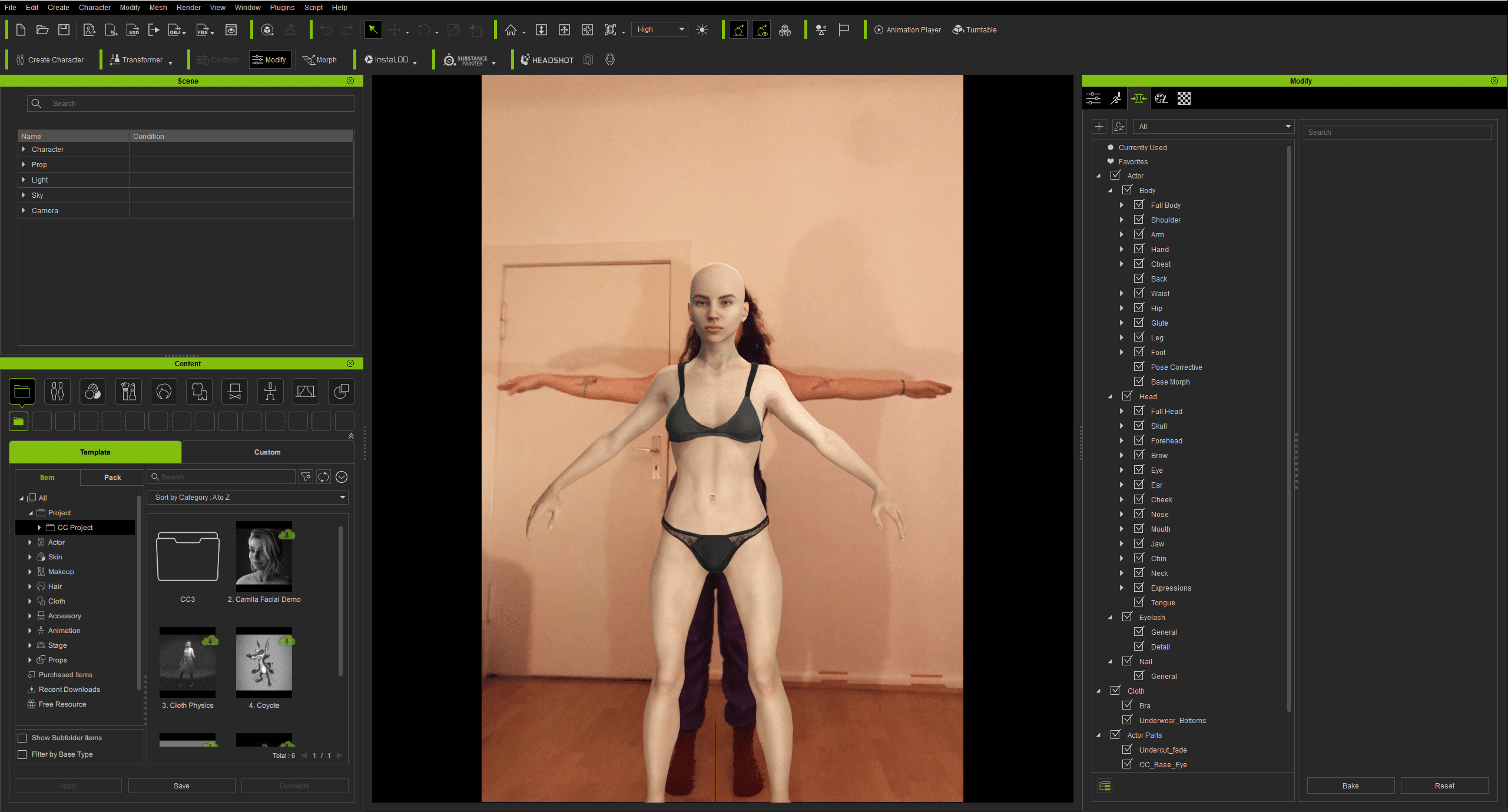 “We had previously trialled other motion capture data preparation software, but in this case that wouldn’t have been an option due to the complexity of the project. The biggest advantage we found in using the Reallusion tools was the ability and variety of options to correct motion capture data in real-time software.”
Anders Mortensen | 3D/2D Generalist at relative.berlin
We used various new features of iClone 8 to set up and prepare the movements, such as motion correction, foot contact, flexible frame rate and other tools for optimisation. This was extremely useful to ensure that we could maintain a fast pipeline for the character animation without losing too much time preparing the movements for the subsequent steps.
Motion Layer System
Particularly handy for us was the newly added feature that allowed us to access our recorded data at both part level and bone level, so we could make even the smallest corrections to all bones. This allowed us to quickly ensure high quality optimisation in our pipeline.
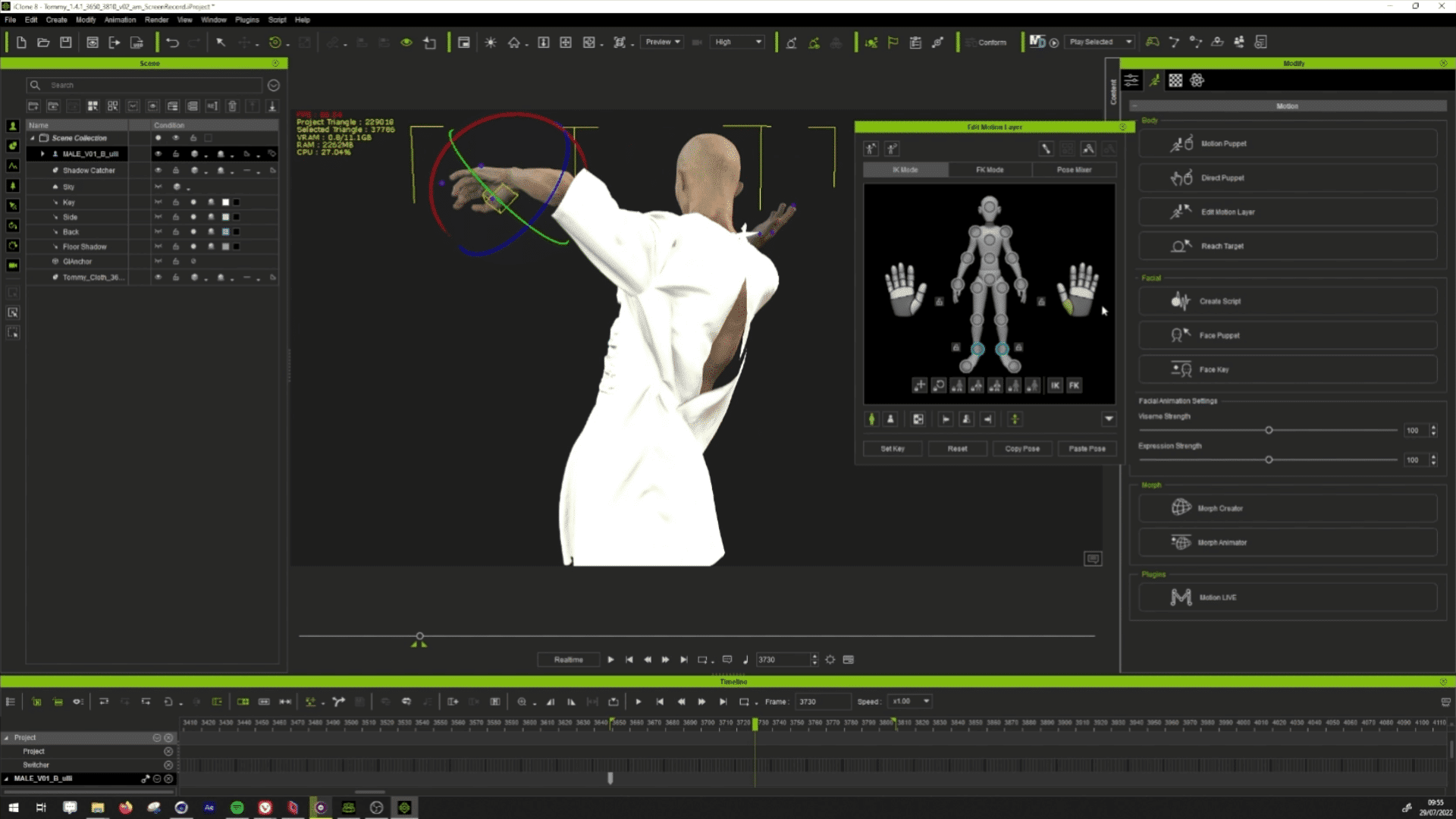
Reach target integration: foot contact and correction
As we had a lot of shots where the feet interacted with the floor, this became an essential and reliable feature during production compared to manual correction. This project involved a lot of stomping on the floor, so this feature helped us a lot in fine-tuning the movements of the crazies.
 Functions for flexible frame rates
When flexible frame rate was introduced in iClone 8, we were sure that this would be a perfect fit for our pipeline as we could now combine assets from different parts of the pipeline in one place instead of having to convert each individual asset. Most importantly, we could now process the recorded motion capture data and cloth simulations without any major issues and even see if there were any errors in real time.
 The characters’ clothing played a major role in this project. Can you tell us what advantages the Reallusion tools offered you?
Anders Mortensen: Importing fabric simulations and checking for possible errors before moving on to the next step in the pipeline saved us a lot of time as we could bring everything together in one place. This part of the workflow also allowed us to customise the transaction data to achieve better and more attractive fabric simulation results. We recognised where there was an opportunity to get an extra ‘oomph’ or create extra space for the simulation to get more detail.
Another important point was the use of Smart Gallery, which allowed people involved in this step of the pipeline to easily share and update files without losing time to import/export.
 We love the way you realise your ideas. Would you tell us a little about what we can expect from you in the near future?
Anders Mortensen: For the future we see ourselves in many different areas of the animation/media industry. As we gain more and more experience in character animation and motion capture, we are confident to take an even bigger step in that direction. We believe that the development of the Metaverse will create a huge demand in character development for avatars and areas such as digital fashion.
We are currently working with a major game manufacturer to deliver high quality animated characters for their products. As we constantly walk the fine line between aesthetics and new technology, we are confident that we will continue to keep our finger on the pulse and push the boundaries of what is possible in these exciting times.
Follow relative.berlin
Website: relative.berlin
Vimeo: vimeo.com/relativeberlin
Instagram: instagram.com/relative.berlin
Facebook: facebook.com/relative.berlin
Behance: behance.net/relativeberlin
