



Summary: The pre-release of Live FX 9.8 brings a suite of new features aimed at improving workflows for virtual production, especially for macOS users. One of the most significant updates is the improved performance over version 9.7, making it possible to handle higher frame rate playback of ProRes plates, larger resolution content, and additional lighting fixtures without compromising performance. The Mac is now a more viable platform for driving virtual productions, from small setups to larger stages.
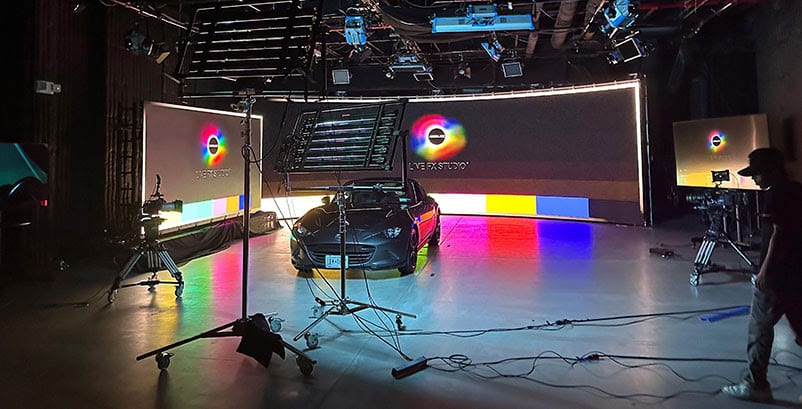
For Mac users, this means that machines ranging from the MacBook Pro to the Mac Studio can now handle high-resolution playback and manage stage lighting setups. Live FX 9.8 also introduces full support for the USD 3D workflow on macOS, further solidifying its capabilities for virtual production.
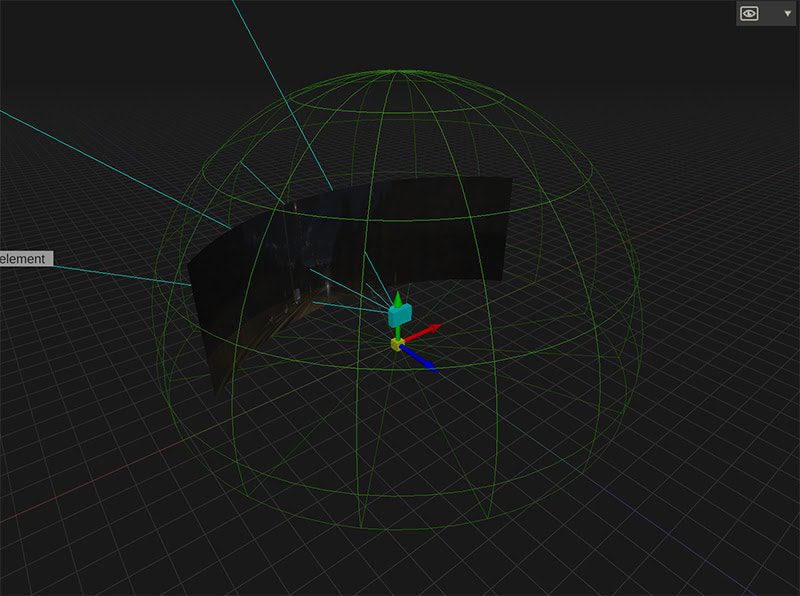
Projection Mapping has been extended to include cylindrical projection, in addition to existing frustum, planar, spherical, and dome options. This expansion provides more flexibility for LED volumes and other projection environments, improving the overall workflow for Unreal Engine and other 3D content users.
Image-Based Lighting has been enhanced with extended pixel mapping capabilities, supporting high-pixel-count fixtures and adding new tools for flipping and fading image content. Users can now seamlessly transition between pixel mapping and solid color outputs, simplifying lighting setups.
A key update is the integration of OpenColorIO v2.3, which offers the latest in color transform and tone mapping technology. Live FX 9.8 also comes with a built-in OCIO config, allowing users to start working with the latest color workflows right away.
For those working with video plate instancing, Live FX has streamlined the process. A new Node Tree simplifies the instancing of single clips across multiple walls, making multi-wall projection setups easier and faster to manage.
Additional smaller updates include support for the HDRi file format, a revised OpenFX implementation, and the introduction of Top View mode for ensuring correct content display on LED volumes. Other quality-of-life improvements, like serialized renders, round out this release.
Live FX 9.8 also supports Unreal Engine content capture via Unreal Texture Share, allowing near-zero-latency transfer without relying on ndisplay. This makes it easier for virtual set extensions and final pixel in-camera visual effects (ICVFX) within Unreal Engine 5.4. The LiveLink plugin remains up to date, providing seamless integration.
Users can explore these new features and more through the official release notes. Tutorials are available, including a new series on projection mapping and a guide for connecting Live FX to DMX-enabled fixtures like the Kino Flo Mimiks.
Before implementing these updates into ongoing projects, a thorough evaluation is recommended to ensure compatibility and performance across specific production environments.
